On September 11, 2001, as the Twin Towers burned, a horrific reality unfolded for those trapped in the inferno: the unbearable heat and smoke forced some to make an unthinkable choice, leading to the haunting images and testimonies of people falling 911. This wasn’t a choice to die, but a desperate, instinctual reaction to escape an immediate, excruciating end. The stories behind these moments, often reduced to a single photograph, reveal a profound human struggle against impossible odds, challenging our understanding of agency and survival in the face of absolute catastrophe.
At a Glance: Understanding the Impossible Choices of 9/11
- Medical Classification Matters: Learn why official records classify these deaths as homicide, not suicide.
- The Unbearable Reality: Grasp the extreme conditions that drove individuals to fall from the towers.
- The Story of ‘The Falling Man’: Explore the iconic photograph, its controversies, and enduring significance.
- Ethical Documentation: Understand the challenges and responsibilities of capturing extreme tragedy.
- Lingering Questions: Delve into the attempts and difficulties of identifying victims in such circumstances.
- Empathy as Our Guide: Discover how to approach these sensitive historical events with respect and understanding.
The Unthinkable Edge: When Survival Meant a Leap of Faith
Imagine being trapped on a skyscraper’s upper floors, a thousand feet in the air, with no way out. Below, the ground. Above and around, an inferno of smoke, flames, and temperatures soaring past 2,000°F. For an estimated 1,300 people above the 91st floor of the North Tower and over 600 above the 76th floor of the South Tower, this was the terrifying reality on 9/11. The intense heat, the suffocating smoke, and the sheer force of the explosions left many with only one horrifying option: to escape the immediate inferno, often by falling.
The New York City medical examiner’s office, in a vital clarification, classifies these deaths as homicide. They weren’t “jumpers” intending suicide, but victims “forced out by the smoke and flames or blown out” — a distinction that acknowledges the victims’ lack of true choice and the horrific circumstances imposed upon them by the terrorist attack. This perspective reframes the very act of falling, moving it from a personal decision to a tragic consequence of an external, murderous force.
Beyond the Frame: The Enduring Impact of ‘The Falling Man’
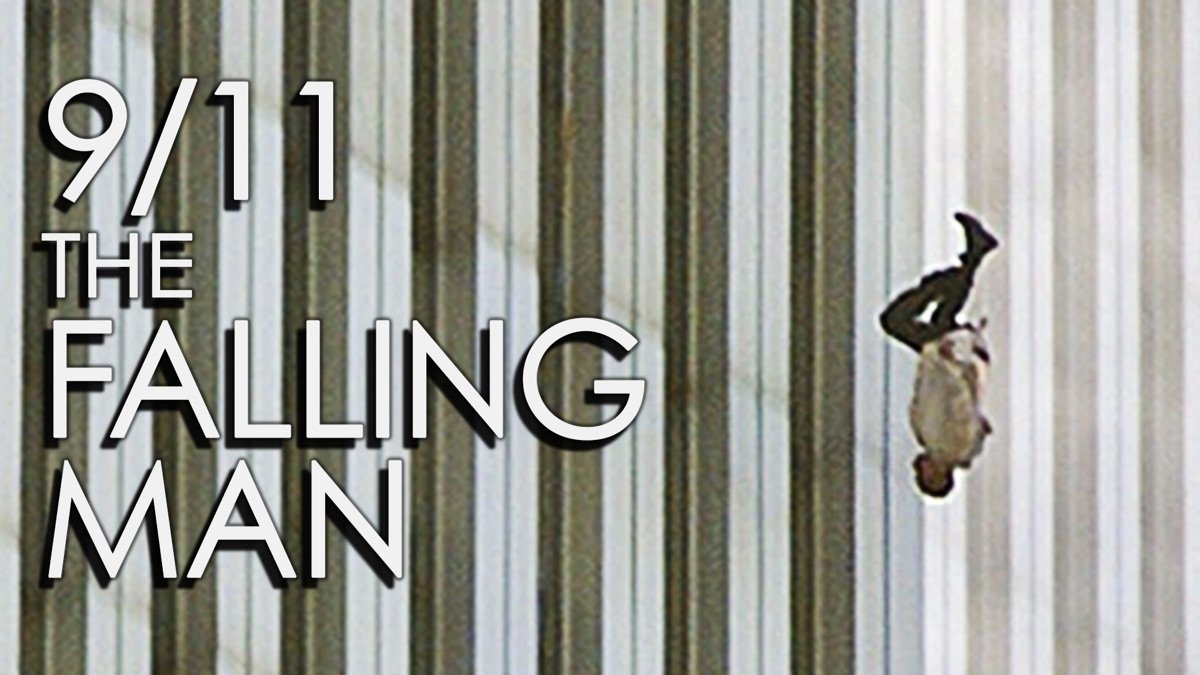
Among the many harrowing scenes of 9/11, one image became particularly emblematic, stirring intense public debate: “The Falling Man.” Captured by Associated Press photographer Richard Drew at 9:41:15 A.M., it shows an unidentified man plummeting headfirst from the North Tower. Drew, initially on a fashion show assignment, found himself drawn to the World Trade Center site, capturing a total of ten to twelve sequences of people falling before the South Tower’s collapse forced him to leave.
The photograph itself, though suggesting a straight descent, is one frame in a sequence showing the man tumbling. It’s a stark, visceral record of a moment that many struggled to comprehend or even look at. When it first appeared on page seven of The New York Times on September 12, 2001, with the caption, “A person falls headfirst after jumping from the north tower of the World Trade Center. It was a horrific sight that was repeated in the moments after the planes struck the towers,” it sparked widespread criticism. Readers found it disturbing, ghoulish, and sadistic, leading to its limited initial publication.
However, over time, the perception shifted. The image resurfaced and gained critical acclaim, with British singer Elton John calling it “the most beautiful image of something so tragic.” Time magazine noted its power lies not in the subject’s identity, but in his transformation into a “makeshift” figure representing all who fell. Drew himself views it as a “very quiet photograph,” hoping it will serve as a memorial, akin to an “unknown soldier,” for those who faced an unimaginable end. This evolving perspective highlights the complex journey society takes in processing collective trauma, moving from initial shock to a search for deeper meaning in the events of 9/11 and the profound desperation that led to these falls. This journey, of understanding the decisions made at the precipice, is central to comprehending The jumpers’ unfathomable desperation.
The Ethical Lens: Documenting Humanity’s Darkest Moments
Richard Drew’s experience with “The Falling Man” illuminates the profound ethical dilemmas faced by photojournalists in crisis zones. How do you capture the truth of a moment—a truth as raw and painful as people falling 911—without exploiting the suffering it depicts? Drew’s intention was to document, not to sensationalize. He instinctively aimed his camera at loud cracking sounds, realizing they were the sound of human bodies hitting the ground, capturing eight sequential photographs of “The Falling Man.”
The public’s initial outrage underscores a crucial tension: the need for documentation versus the human instinct to shield oneself from unbearable realities. This isn’t just about a single photographer; it’s about the collective burden of bearing witness. Drew’s quiet determination to preserve these images, despite the backlash, suggests a belief in their ultimate historical significance. His hope that the image represents an “unknown soldier” speaks to the role of such documentation in creating a collective memory that honors all victims, even those whose stories are too painful to fully grasp.
The Quest for Identity: Naming the Unnamed
One of the most poignant aspects of “The Falling Man” is the persistent question of the subject’s identity. Despite extensive efforts by journalists, official confirmation remains elusive. Canadian journalist Peter Cheney initially speculated it was Norberto Hernandez, a pastry chef at Windows on the World (located on the 106th floor of the North Tower). However, Hernandez’s daughters refuted this due to their religious beliefs.
Later, American journalist Tom Junod, whose September 2003 Esquire article, “The Falling Man,” and a subsequent documentary deeply explored the image, concluded it was not Hernandez. Junod proposed Jonathan Briley, a 43-year-old sound engineer also at Windows on the World, as the likely subject. Briley’s brother Timothy, the restaurant’s executive chef Michael Lomonaco, and his sister Gwendolyn all noted the man’s body type and clothes—specifically an orange t-shirt similar to one Jonathan frequently wore—as strong indicators. Tragically, Briley’s remains were recovered the day after 9/11. Despite these compelling suggestions, the identity of the man in the photograph officially remains uncertain, adding another layer of quiet poignancy to an already tragic image.
Medical Examiner’s Ruling: Homicide, Not Suicide
Understanding the official classification of these deaths is critical to grasping the full horror of what occurred. The New York City medical examiner’s office firmly categorizes the deaths of those who fell from the Twin Towers as homicide. This isn’t a subtle legal point; it’s a compassionate and medically accurate distinction that profoundly impacts how we remember the victims and the event itself.
Their reasoning is clear: the victims were not actively choosing to end their lives in a suicidal act. Instead, they were “forced out by the smoke and flames or blown out” by the immense pressure and heat of the fires raging inside the towers. This means their deaths were a direct consequence of the terrorist attack, a desperate attempt to escape an immediate, excruciating death by fire and smoke. It underscores the lack of agency, the absence of a genuine choice in the face of absolute terror, placing the culpability squarely on the perpetrators of the attack.
A Practical Playbook for Approaching Extreme Crisis Documentation
Navigating the narratives and imagery surrounding events like people falling 911 requires a conscious and empathetic approach. As historical data and powerful visuals emerge, our responsibility is to interpret them with precision and sensitivity.
Understanding the Context of Extreme Crisis Decisions:
- Acknowledge the Impossibility: Recognize that individuals trapped in such infernos faced no “good” options. Their actions were not choices in the traditional sense, but reactions to overwhelming and immediate threats to life.
- Prioritize Official Classifications: Rely on expert designations, like the medical examiner’s homicide ruling, to accurately frame the narrative. This helps counter misinterpretations and respects the victims’ experiences.
- Seek Comprehensive Narratives: A single image, no matter how iconic, rarely tells the whole story. Understand the broader context of the event—the conditions inside the towers, the efforts of first responders, and the experiences of survivors.
Ethical Consumption of Distressing Content:
- Engage with Purpose: If you choose to view graphic content, do so with an educational or empathetic intent, rather than for morbid curiosity. Understand the historical significance and the human toll.
- Consider the Impact: Be mindful of sharing such content. Focus on educational resources and respectful discussions rather than perpetuating sensationalism.
- Recognize Your Own Limits: It’s okay to disengage if the content becomes too overwhelming. Self-care is important when processing traumatic historical events.
Interpreting Visual Documentation:
- Understand the Photographer’s Role: Photographers like Richard Drew act as immediate historians. Their work, though difficult to view, provides crucial evidence and a human face to unimaginable events.
- Beyond the Static Image: Remember that still photographs capture a fraction of a second. As seen with “The Falling Man,” a single image might imply a straight fall, while a sequence reveals tumbling, offering a more nuanced, albeit still horrific, truth.
- Focus on the Message, Not Just the Shock: Look for the deeper meaning and historical lessons conveyed by the imagery, rather than dwelling solely on its immediate shock value.
Quick Answers: Unpacking the Myths of Falling from the Towers
Navigating the complex narrative of 9/11 often involves confronting common misconceptions. Here are some quick answers to prevalent questions about the individuals seen falling from the Twin Towers.
Q: Were the people falling from the Twin Towers “jumpers” who chose to commit suicide?
A: No, the New York City medical examiner’s office officially classifies these deaths as homicide. Victims were “forced out by the smoke and flames or blown out,” not intending suicide. Their actions were a desperate, instinctual reaction to escape an immediate, excruciating death by fire and smoke.
Q: How many people were estimated to have fallen or jumped from the towers?
A: An estimated 200 people were witnessed falling from the upper levels of the Twin Towers. All but three were from the North Tower.
Q: What were the conditions inside the towers that led people to fall?
A: Individuals were trapped above the impact zones, facing extreme heat (estimated over 2,000°F or 1,090°C), suffocating smoke, and rapidly deteriorating structural integrity. The choice to fall was often a final, desperate act to escape an unbearable and agonizing death within the building.
Q: Why was “The Falling Man” photograph so controversial initially, and why did its perception change?
A: Initially, the photograph was deemed disturbing, ghoulish, and sadistic by many readers, leading to limited publication. Its raw depiction of death was too confronting immediately after the attacks. Over time, its perception evolved, gaining acclaim as a powerful, symbolic image representing the human tragedy and desperation of 9/11, akin to an “unknown soldier.”
Q: Has “The Falling Man” in the iconic photograph ever been officially identified?
A: No, the identity of “The Falling Man” has never been officially confirmed. While strong indicators suggest Jonathan Briley, a sound engineer at Windows on the World, official confirmation has not been made due to the circumstances.
Reflecting on the Unspeakable
The phenomenon of people falling 911 stands as one of the most agonizing footnotes in the tragic history of September 11, 2001. It forces us to confront the limits of human endurance and the unimaginable choices that can be thrust upon individuals in the direst of circumstances. By understanding the context—the extreme heat, the suffocating smoke, the medical examiner’s classification of homicide—we can move beyond simplistic labels and acknowledge the profound tragedy and lack of agency these victims experienced.
As we look back, the documentation of these events, through photographs like “The Falling Man,” serves not to sensationalize, but to educate and memorialize. It’s a somber reminder of human vulnerability and resilience, urging us to approach such historical moments with deep empathy, precision, and respect for the lives lost and the unspeakable choices they were forced to make. The enduring questions surrounding identity and the ethical implications of bearing witness continue to shape our collective memory, pushing us to remember not just the event, but the profound human stories woven within its darkest hours.










