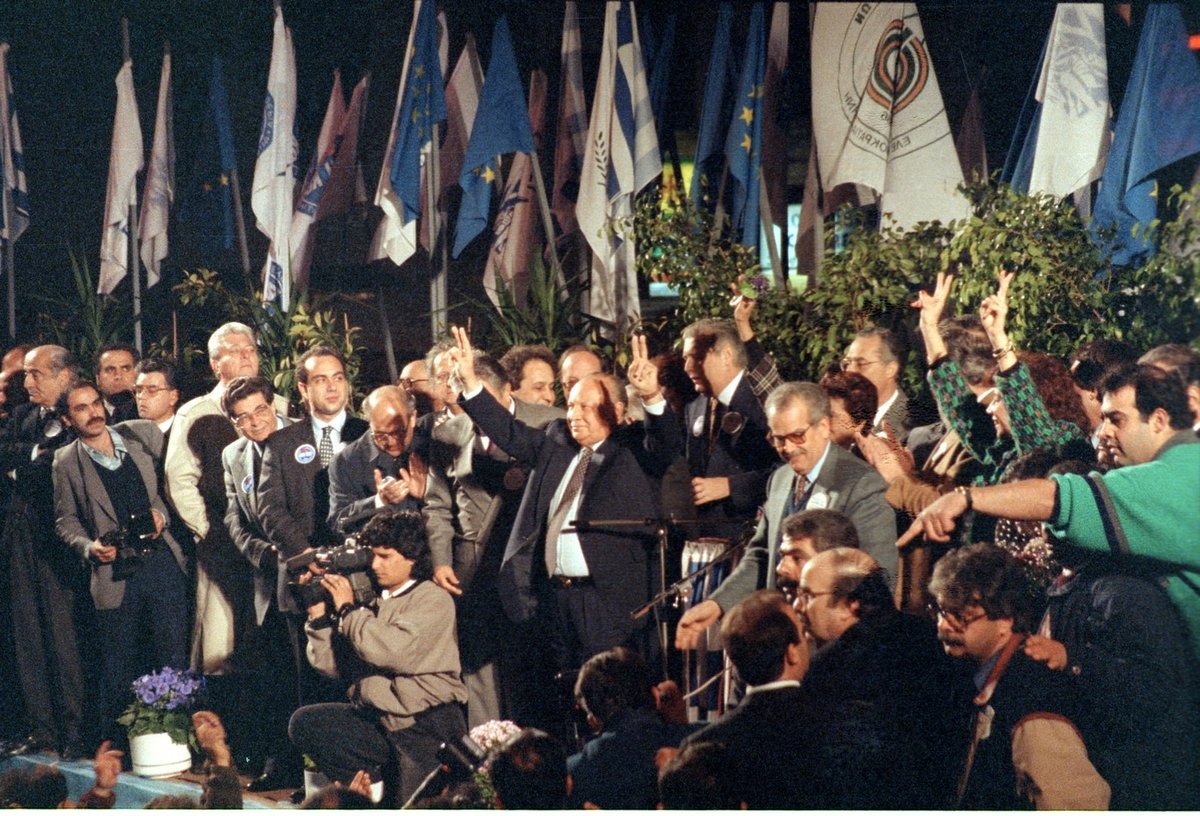
The year 1993 often feels like a bridge, marking the definitive end of the Cold War era and the nascent stirrings of our hyper-connected present. Truly, the important events in 1993 weren’t isolated incidents but seismic shifts—politically, socially, and technologically—that laid much of the groundwork for the global landscape we navigate today. From geopolitical realignments to the very first tremors of modern terrorism on American soil, 1993 was a year of profound redefinition, demanding we look beyond the headlines to understand the underlying currents shaping our collective future.
At a Glance: Understanding 1993’s Enduring Impact
- Geopolitical Reshaping: Witness the “Velvet Divorce,” the formal launch of the European Single Market, and critical diplomatic steps in the Middle East and post-Soviet arms control.
- The Dawn of Modern Terrorism: Experience the shock of the first World Trade Center bombing and related global terror acts, signaling a new era of security challenges.
- Shifting Social Landscapes: Observe milestones in civil rights, the Waco standoff, and women advancing into previously restricted roles in politics and the military.
- Cultural & Media Milestones: Chart the explosion of blockbusters like Jurassic Park and record-breaking television viewership, hinting at media’s growing global reach.
- Foreshadowing the Digital Age: While not yet mainstream, events subtly pointed to the increasing importance of information and the double-edged sword of technological advancement.
- Lessons for Today: Identify how the responses to 1993’s crises offer enduring insights into managing international relations, domestic security, and societal change.
The Geopolitical Chessboard Reshaped: A New World Order Emerges
The early months of 1993 were particularly vibrant with political reconfigurations, marking a decisive turn from the Cold War’s rigid bipolarity towards a more complex, multipolar world. Nation-states were redefining their borders, economies were integrating, and old conflicts were seeking new resolutions.
The “Velvet Divorce” and European Integration: A Blueprint for Self-Determination
January 1, 1993, saw Czechoslovakia formally dissolve into the Czech Republic and Slovakia—a remarkably peaceful separation dubbed the “Velvet Divorce.” This event provided a critical case study in national self-determination, demonstrating how deeply rooted ethnic and historical identities could lead to peaceful state formation. Simultaneously, a larger, more ambitious project was underway: the 12-member European Economic Area (EEA) officially formed a vast free trade zone, effectively creating the European single market. This economic integration wasn’t just about goods and services; it was a profound political statement about cooperation and shared destiny, attempting to bind nations together to prevent future conflict. For policymakers today, these events highlight the twin forces of nationalist aspiration and transnational integration, often pulling in opposite directions.
Middle East and Bosnian Conflict: Tensions and Tentative Steps
Global conflict wasn’t absent, but its nature was evolving. The protracted Bosnian War continued, with factions meeting in January to discuss an end to hostilities, though the conflict would sadly rage on. On the other hand, a quiet breakthrough in the Middle East saw Israel recognize the PLO not as a criminal entity but as a legitimate representative of the Palestinian people in January, directly paving the way for the historic Oslo Negotiations. This shift from confrontation to dialogue, even if fraught with future challenges, underscored the potential for diplomacy to reshape seemingly intractable conflicts. Meanwhile, the US, UK, and France launched bombing attacks in southern Iraq in January, targeting sites related to illegal weapons programs, an early signal of the international community’s post-Gulf War stance against rogue states.
US Leadership Transition and Global Role: A Fresh Start
January 20, 1993, ushered in a new era of American leadership with the inauguration of Bill Clinton as the 42nd US President. His presidency began with significant domestic policy initiatives, such as the signing of the Family and Medical Leave Act in February, demonstrating a focus on social welfare. Globally, Clinton’s administration quickly faced challenges, including the ongoing situation in Iraq and the need to define America’s role in a post-Cold War world. A pivotal moment for arms control occurred on January 3, when the START II treaty was signed in Moscow by George H. W. Bush and Boris Yeltsin, aiming for significant reductions in strategic nuclear arsenals. This treaty, though it faced a complex ratification process, represented a continuation of superpower efforts to de-escalate nuclear threats, a critical undertaking in an era of shifting global power dynamics.
The political landscape of 1993, from the separation of states to the signing of international treaties and changes in national leadership, truly laid the foundation for decades to come. To understand the full scope of these broader political and digital transformations, it’s worth exploring the comprehensive guide: Explore 1993’s political and digital revolutions. This era underscores the continuous interplay between national sovereignty and international cooperation.
A World Under Threat: Terrorism and Domestic Upheaval
If 1993 showcased the promise of diplomatic progress, it also starkly revealed the rising specter of organized violence, both international and domestic. The nature of threats was changing, moving from state-on-state confrontation to more diffuse, non-state actors and internal tensions.
First World Trade Center Bombing: A Precursor to a New Era
On February 26, 1993, a bomb exploded in the parking garage beneath the World Trade Center in New York City. Six people were killed, and over 1,000 were injured. While initially perceived as a domestic incident by some, the investigation quickly revealed international links, identifying Ramzi Yousef as the mastermind. This attack was a chilling precursor, demonstrating the vulnerability of civilian targets and marking a significant escalation in global terrorism. It forced a re-evaluation of security protocols in major urban centers and highlighted the emergence of ideologically driven, non-state actors as potent threats, a challenge that continues to evolve.
Waco and the Branch Davidians: A Nation Divided on Authority
The siege at the Branch Davidian compound in Waco, Texas, began on February 28, 1993, when federal agents attempted to execute search warrants, leading to a deadly shootout. This initiated a 51-day standoff that culminated tragically on April 19, when the compound burned down, killing 76 people, including leader David Koresh. The Waco incident ignited a national debate about government overreach, religious freedom, and the use of force. It became a rallying cry for anti-government groups and significantly shaped public perception of federal law enforcement for years to come. The lessons from Waco continue to influence discussions around crisis negotiation, de-escalation tactics, and the balance between individual liberties and public safety.
Global Waves of Terror: Bombay and the IRA
Beyond American shores, other significant acts of terrorism shocked the world. On March 12, 1993, Bombay (now Mumbai), India, was hit by 13 coordinated bomb blasts, killing 257 and injuring 1,400. Targets included financial hubs like the Bombay Stock Exchange and commercial centers. These attacks, later linked to organized crime and geopolitical tensions, demonstrated the devastating impact of urban terror and the complex motivations behind such acts. In the UK, the IRA continued its campaign, notably bombing Warrington twice in March, causing fatalities and significant injuries. These events collectively underscored a global shift in conflict, where civilian populations increasingly became direct targets, forcing governments worldwide to reconsider their security strategies.
Social Fault Lines and Cultural Milestones: Progress and Persistent Challenges
Amidst political and security upheavals, 1993 also saw significant movements in social justice, shifts in cultural norms, and the breaking of long-standing barriers. The year was a microcosm of ongoing societal evolution.
Civil Rights, Race, and Justice: Unfinished Business
The legacy of civil rights continued to resonate strongly. January 18, 1993, marked the first time Martin Luther King Jr. Day was observed as a federal holiday in all 50 US states, a symbolic but powerful acknowledgment of his enduring impact. However, the struggle for racial justice was also painfully evident. In Los Angeles, the Rodney King civil rights trial saw two police officers convicted in March for violating King’s rights during his 1991 arrest, a verdict that followed the previous year’s widespread riots and underscored persistent tensions between communities and law enforcement. Across the Atlantic, the April 22 murder of Black teenager Stephen Lawrence in London, a racially motivated attack, ignited a public inquiry into police handling of the case, revealing deep-seated institutional racism within the UK police force. These events were stark reminders that the fight for equality and justice was far from over.
Women Breaking Barriers: New Roles and Recognition
1993 was a landmark year for women assuming prominent roles. On February 11, Janet Reno made history as the first female US Attorney General, appointed by President Clinton. In April, the US Air Force announced it would now allow women to fly combat aircraft, a monumental shift that dismantled a long-standing barrier. Even in the realm of symbolic representation, Maya Angelou became the first African American woman to read a poem at a US Presidential Inauguration in January, delivering “On the Pulse of Morning.” Internationally, Kim Campbell became Canada’s first female Prime Minister in June, signaling a broader trend of women ascending to the highest echelons of political power. These achievements were not just individual successes but indicators of a broader societal movement towards greater inclusivity and equal opportunity.
The Entertainment & Sports Landscape: Record Breakers and Tragedies
Culturally, 1993 offered both soaring highs and heartbreaking lows. In sports, Michael Jordan reached 20,000 career NBA points in January, demonstrating his continued dominance, while the Dallas Cowboys defeated the Buffalo Bills in Super Bowl XXVII. The cinematic world was forever changed by the June release of Steven Spielberg’s Jurassic Park, which shattered box office records, becoming the highest-grossing film to date and demonstrating the power of CGI to create immersive worlds. Yet, tragedy struck on March 31 when Brandon Lee, son of Bruce Lee, died on the set of The Crow due to a prop gun accident, a stark reminder of the dangers inherent in filmmaking. In the sports world, a shocking incident occurred on April 30 when world No. 1 tennis player Monica Seles was stabbed in the back by a spectator during a match in Hamburg, an act that sidelined her for two years and had a profound impact on player security.
The Nascent Digital Echoes: The Unseen Revolutions
While the term “digital revolution” might evoke images of the late 90s dot-com boom, 1993 subtly laid some of the groundwork, demonstrating the increasing power of media, information dissemination, and the early challenges posed by nascent technology. The groundwork was less about widespread internet access and more about the interconnectedness starting to be felt through other mediums.
Early Glimmers of a Connected World: Media’s Expanding Reach
The impact of media was undeniable. An estimated 90 million Americans tuned in to Michael Jackson’s interview with Oprah Winfrey in February, a staggering viewership that highlighted the power of broadcast television to create shared national experiences and disseminate information instantaneously. Film, too, was pushing boundaries. Robert Rodriguez’s “El Mariachi” debuted at the Toronto Film Festival in January, becoming one of the lowest-budget films to gross $1 million, a feat made possible by evolving distribution methods and word-of-mouth amplified through early networks, foreshadowing the democratization of content creation and consumption that digital platforms would later enable. These events, though not explicitly “digital,” represented the burgeoning capacity for mass communication to shape public discourse and cultural touchstones.
Technology’s Double Edge: A Glimpse into Future Threats
The digital revolution, even in its nascent stages, was already revealing its darker side. In June, David Gelernter, a computer scientist at Yale University, was seriously injured by a mail bomb sent by the Unabomber. This early attack targeted an individual deeply involved in the advancement of computer science and hinted at the future complexities where technology itself, and those who pioneer it, could become targets of anti-modernist or extremist ideologies. It was a subtle, yet potent, reminder that technological progress, while offering immense potential, also introduced new vulnerabilities and new forms of conflict.
Lessons from the Brink: A 1993 Playbook for Today
Looking back at the important events in 1993 isn’t just an exercise in historical recall; it’s a vital opportunity to extract lessons that remain deeply relevant for today’s leaders, organizations, and citizens.
Recognizing Systemic Shifts Early
1993 taught us that major transformations often begin subtly. The “Velvet Divorce” and the European Single Market were not sudden explosions but the culmination of deep-seated political and economic currents. The first World Trade Center bombing was not an isolated act but a warning of a new global threat matrix. The actionable takeaway here is to cultivate foresight: pay close attention to seemingly localized or minor events, as they can be harbingers of systemic shifts on a grander scale. Implement robust intelligence gathering and analysis across diverse sectors, not just traditional security.
The Persistence of Conflict, The Promise of Diplomacy
While violence flared in Bosnia and bombs detonated in major cities, 1993 also showed the enduring power of diplomacy, as evidenced by the Israeli-PLO recognition and the START II treaty. This duality suggests that effective engagement requires a multi-pronged approach: strengthening defensive capabilities while simultaneously investing in complex, often frustrating, diplomatic processes. Leaders must be prepared for long-term negotiations, understanding that foundational shifts—like the shift away from criminalizing the PLO—are often necessary precursors to peace.
Cultural Resonance and Media’s Amplified Voice
The unprecedented viewership for the Oprah/Jackson interview and the box office success of Jurassic Park highlighted that media was rapidly becoming a central player in shaping public perception and driving global conversations. For anyone seeking to influence or understand modern society, 1993 underscored the growing importance of narrative, image, and accessible communication. It’s a reminder to craft messages with impact, consider diverse channels, and understand how quickly information—and misinformation—can spread and solidify public opinion.
Quick Answers: Clarifying 1993’s Impact
Q: Was 1993 primarily a year of political or social change?
A: 1993 was profoundly a year of both. Politically, it saw the redrawing of borders (Czechoslovakia), major economic integration (EU Single Market), and a shift in US foreign policy focus. Socially, it addressed ongoing civil rights issues (Rodney King, Stephen Lawrence), celebrated milestones for women in leadership (Janet Reno, USAF), and grappled with domestic extremism (Waco). These changes were deeply intertwined, with political shifts often driving or responding to social pressures.
Q: How did the events of 1993 influence the rise of digital technology?
A: While direct “digital revolutions” were not mainstream in 1993, the year provided crucial context for what was to come. Events like the massive viewership of the Oprah/Jackson interview demonstrated the growing power of mass media and instant communication, hinting at the potential for global connectivity. The success of low-budget films like “El Mariachi” suggested new avenues for content distribution and audience reach, precursors to digital platforms. Even the Unabomber’s attack on a computer scientist highlighted the increasing societal relevance—and potential vulnerabilities—associated with technological advancement, laying the psychological groundwork for later debates around tech and society.
Q: What was the most significant geopolitical event of 1993?
A: While several events held significant weight, the formal establishment of the European Single Market on January 1, alongside the peaceful dissolution of Czechoslovakia, arguably had the most far-reaching geopolitical implications. These events collectively demonstrated a new phase of post-Cold War European identity: one characterized by deeper economic integration and the peaceful redefinition of national sovereignty, setting a precedent for international cooperation and self-determination that continues to shape global politics.
Navigating the Aftermath: A Lasting Legacy
The reverberations of 1993 continue to echo through our contemporary world. The political architectures forged then, the methods of conflict resolution attempted, and the new threats unmasked, all form an intricate tapestry that still influences international relations and domestic policy. Understanding these formative moments allows us to recognize the deep historical roots of today’s challenges and opportunities. For those who study geopolitics, social movements, or technological evolution, 1993 offers a compelling case study—a year where the seeds of both progress and peril were sown, shaping the world we know today in profound and often unexpected ways.










