The year 1993 wasn’t just another spin of the calendar; it was a potent cocktail of political upheaval, nascent digital shifts, and stark global realities. As Bill Clinton stepped into the Oval Office, the world braced for a new American chapter, but the tapestry of key events in 1993 was already being woven with threads of conflict, cultural breakthroughs, and foundational changes that would ripple for decades. From international diplomacy to domestic terror, this year laid crucial groundwork.
At a Glance: The Year’s Defining Moments
- A New Era in Washington: Bill Clinton’s inauguration signaled a generational shift in American politics, quickly followed by significant policy initiatives and early controversies.
- Geopolitical Reshaping: The formal split of Czechoslovakia and the European Economic Area’s expansion marked a new chapter for post-Cold War Europe, while global conflicts intensified.
- Shadows of Terrorism: Major attacks, including the first World Trade Center bombing and devastating blasts in Bombay, highlighted an escalating threat on the world stage.
- Cultural & Social Milestones: Blockbuster cinema, sports records, and pivotal legal cases captivated audiences and sparked societal dialogue.
- Digital and Media Transitions: While not yet mainstream, the year saw early indicators of how information and entertainment would soon transform.
The Changing of the Guard: Political Transitions and New Directions
January 20, 1993, wasn’t just a date; it was a transition point. Bill Clinton’s inauguration as the 42nd U.S. President marked a generational shift, embodying a new Democratic vision after years of Republican leadership. His inaugural poem, “On the Pulse of Morning,” delivered by Maya Angelou, itself became a historic moment. This political hand-off wasn’t merely symbolic; it set the stage for rapid policy shifts, from the signing of the Family and Medical Leave Act in February to the contentious “Don’t Ask, Don’t Tell” policy regarding homosexuals in the military by July.
Globally, the political landscape also saw significant restructuring. January 1 witnessed the formal, peaceful dissolution of Czechoslovakia into the Czech Republic and Slovakia, a rare example of a state dividing amicably. Václav Havel’s election as the first president of the Czech Republic in late January symbolized this new chapter. Across Europe, the 12-nation European Economic Area created a vast free-trade zone, anticipating deeper economic integration. Meanwhile, the signing of the START II treaty between the U.S. and Russia in early January signaled ongoing efforts to de-escalate the nuclear arms race, even as new geopolitical tensions emerged elsewhere. For a broader perspective on how these political tectonic plates shifted throughout the year, you might want to delve into the comprehensive overview provided at Explore 1993’s Major Revolutions.
A World Under Strain: Conflicts, Terrorism, and Humanitarian Crises
While diplomacy sought to build bridges, conflict continued to define much of 1993. The Bosnian War escalated, with factions meeting in January to seek an end, yet violence persisted. A Bosnian Army ambush in Kravica on January 7 underscored the brutal reality on the ground, leading later to the UN declaring Srebrenica a “safe zone” in April – a tragic irony given future events.
The year also brought a chilling new dimension to global security: modern terrorism. On February 26, a bomb ripped through the World Trade Center in New York City, killing six and injuring over 1,000. It was a stark wake-up call to the vulnerability of domestic targets. Just two weeks later, on March 12, a series of 13 bombs devastated Bombay (Mumbai), India, killing 257 and injuring 1,400. In Europe, the IRA continued its campaign with bombings in Warrington, England, in March and a massive truck bomb in Bishopsgate, London, in April, causing widespread destruction and civilian casualties. These events collectively foreshadowed a new era of asymmetric warfare and civilian-targeted attacks that would become a defining feature of the coming decades.
Domestically, the 51-day standoff at the Branch Davidian compound in Waco, Texas, gripped the nation. Starting with a Bureau of Alcohol, Tobacco, and Firearms raid on February 28 that left federal agents and cult members dead, the siege ended catastrophically on April 19 when the compound burned, killing 76, including leader David Koresh. This incident sparked intense debate about government overreach and the handling of such crises. Elsewhere, US forces launched missile strikes on Iraqi intelligence headquarters in Baghdad in June in response to an alleged plot to assassinate former President George H. Bush, demonstrating a continued willingness to use force in the post-Gulf War era.
Cultural Currents and Societal Flashpoints
Beyond politics and conflict, 1993 was a vibrant year for culture and a critical one for social justice. In cinema, “Farewell My Concubine” premiered to critical acclaim, later winning the Palme d’Or at Cannes, while films like “Groundhog Day” and Steven Spielberg’s “Jurassic Park” — the latter becoming the highest-grossing film to date — dominated the box office. The release of “El Mariachi” at the Toronto Film Festival showcased how low-budget independent films could achieve mainstream success, hinting at future changes in film production and distribution.
Music and sports also created iconic moments. Whitney Houston’s “I Will Always Love You” broke records for its chart longevity, and Prince famously changed his name to an unpronounceable symbol, challenging commercial norms. In sports, the Buffalo Bills’ incredible 32-point comeback against the Houston Oilers in an NFL playoff game became the biggest in NFL history, a testament to resilience. Michael Jordan crossed the 20,000 career point mark faster than almost anyone, while Brian Lara scored his first test century, signaling emerging legends. However, the year also saw tragedy, with NHL star Mario Lemieux revealing his Hodgkin’s lymphoma diagnosis and tennis star Monica Seles being stabbed on court, abruptly halting her career.
Socially, America grappled with justice and discrimination. The federal civil rights trial for the Los Angeles police officers involved in the Rodney King beating began, with two officers eventually found guilty. The murder of two-year-old James Bulger in the UK and the racially motivated killing of teenager Stephen Lawrence in London sparked national outrage and exposed deep societal wounds, leading to future reforms. The passing of legendary wrestler André the Giant and the tragic on-set death of Brandon Lee during the filming of “The Crow” also marked somber notes in popular culture.
Nature’s Fury and Environmental Wake-Up Calls
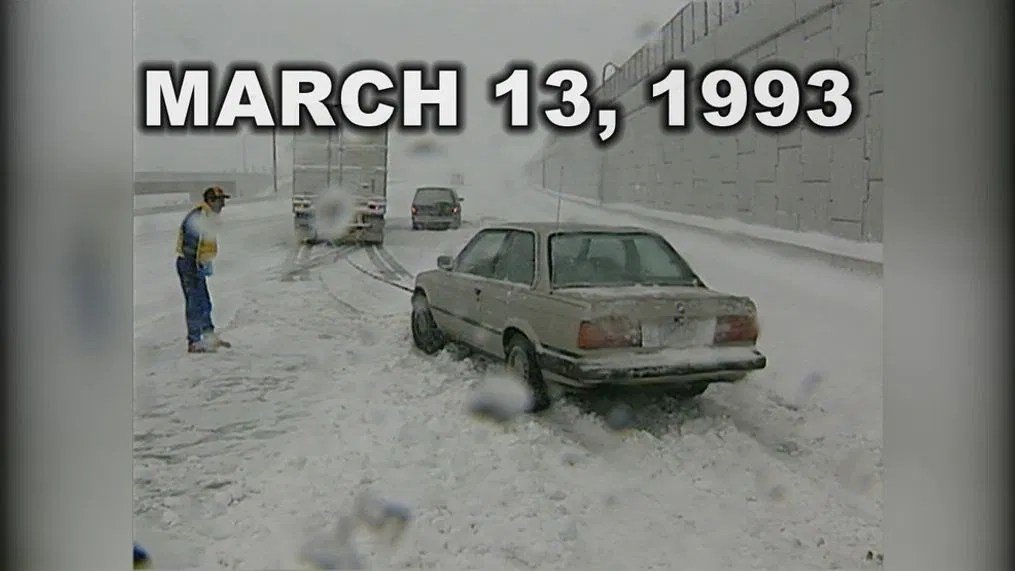
1993 also served as a stark reminder of humanity’s vulnerability to natural forces and industrial accidents. The MV Braer oil tanker ran aground off the Shetland Islands in January, spilling 84,700 tons of crude oil and causing an environmental disaster. In March, the “Great Storm of 1993,” a massive cyclonic event, swept across the eastern U.S., bringing record-breaking low temperatures and snow from Cuba to Quebec, highlighting the potential for extreme weather events.
Tragic accidents also punctuated the year. The Polish ferry MS Jan Heweliusz capsized in a Baltic Sea storm in January, killing 55 people in one of Poland’s deadliest peacetime maritime disasters. A powerful 7.8 magnitude earthquake struck off Kushiro, Japan, in January, causing significant damage and loss of life. Later, in May, a methane explosion in a South African coal mine claimed 50 lives, and in June, a coastal landslide in Scarborough, UK, saw the Hollbeck Hall Hotel collapse into the sea. These incidents underscored the ongoing challenges of industrial safety, disaster preparedness, and environmental protection.
What 1993 Taught Us: A Playbook for Understanding Pivotal Years
Looking back at the key events in 1993, we can distill several enduring lessons relevant to understanding how significant historical moments coalesce:
- Leadership Transitions are Multi-faceted: A change in presidential leadership isn’t just about a new face; it initiates a cascade of policy shifts, personnel changes, and often, a re-evaluation of national priorities both at home and abroad. Clinton’s start was emblematic of this, navigating inherited challenges while trying to carve out his own path.
- The Evolving Face of Conflict: 1993 demonstrated a grim shift in the nature of conflict. While traditional state-level agreements like START II continued, the rise of intra-state conflicts (Bosnia) and non-state actors (WTC bombing, IRA) signaled a more complex and often more diffuse threat landscape. Understanding this evolution is crucial for grasping modern security challenges.
- Media as a Defining Lens: The extensive coverage of events like Waco, the Rodney King trial, and cultural phenomena like Michael Jackson’s interview with Oprah showcased the amplifying power of media. It wasn’t just reporting events; it was shaping public perception, driving narratives, and influencing policy discussions in real-time. This laid groundwork for our digitally saturated information age.
- Societal Fault Lines Remain: Despite progress, the events surrounding the James Bulger and Stephen Lawrence murders, alongside the Rodney King trial, revealed persistent issues of racial injustice, societal violence, and systemic biases. These moments are critical reminders that societal change is a long, often painful process requiring constant vigilance and reform efforts.
- The Interconnectedness of Global Challenges: From environmental disasters like the Braer oil spill requiring international response to terrorist acts with global implications, 1993 highlighted that major events rarely occur in isolation. Economic, political, social, and environmental factors are deeply intertwined, demanding a holistic understanding.
Quick Answers: Unpacking the Year’s Legacy
Q: What was the biggest political shift in 1993?
A: The inauguration of Bill Clinton represented a significant generational and ideological shift in American politics, moving away from the Reagan-Bush era. Internationally, the peaceful dissolution of Czechoslovakia into the Czech Republic and Slovakia was a major geopolitical event, showcasing a rare example of amicable state separation.
Q: How did 1993 foreshadow future conflicts?
A: The first World Trade Center bombing and the Bombay bombings were early, devastating examples of modern, large-scale terrorist attacks targeting civilians. These events signaled a significant shift in global security threats, moving towards asymmetric warfare and highlighting vulnerabilities that would sadly be exploited again in the future.
Q: Were there any major tech breakthroughs in 1993?
A: While the widespread public adoption of the internet was still a few years away, 1993 saw crucial developments in media and information dissemination. The success of low-budget films like “El Mariachi” hinted at changing production and distribution models, and the growing influence of major media events like Michael Jackson’s interview with Oprah showed how mass communication was evolving, laying crucial groundwork for the digital revolution to come.
Q: What was the significance of the Waco siege?
A: The Waco siege became a highly controversial flashpoint between a religious cult and federal authorities, culminating in a tragic fire. It sparked national debate over government tactics, religious freedom, and the appropriate use of force in such standoffs, leaving a lasting mark on public perception of federal law enforcement.
The Enduring Echoes of 1993: Looking Forward
The key events in 1993 weren’t just isolated incidents; they were threads in a larger tapestry, defining the early post-Cold War world and setting the stage for the 21st century. It was a year where optimism for a “new world order” collided with resurgent conflicts and novel threats. Understanding this pivotal year offers valuable insight into the forces that continue to shape our present, from evolving political dynamics to the persistent challenges of security, justice, and societal change. The year serves as a potent reminder that even as one chapter closes, many new, often unpredictable, ones are already beginning to unfold.










