Stepping back to 1994 often feels like revisiting a pivotal year, a time capsule brimming with profound shifts and cultural touchstones that still resonate today. Yet, beyond the blockbuster movies and iconic TV shows, there are countless interesting facts about 1994 that often get overlooked, shaping everything from technology to global politics in ways we might take for granted now. This deep dive aims to refresh your memory and unveil the less-trodden paths of a truly remarkable year.
At a Glance: Key 1994 Revelations
- Global Foundations Were Reshaped: From South Africa’s first Black president to a new European tunnel and major trade agreements.
- Tech’s Future Began Taking Shape: The very first “smartphone,” the launch of Amazon and Yahoo!, and the console that changed gaming forever.
- Pop Culture’s Golden Age Ignited: Unprecedented cinematic achievements and the debut of TV’s most beloved friends.
- Unforgettable Personalities & Unexpected Triumphs: Legends made history in politics, sports, and intellectual pursuits.
- Hidden Legacies of Scandal & Science: Behind the headlines, critical events in justice and discovery unfolded.
- Everyday Life: A Glimpse into the Past: How much a soda cost, and the sheer scale of global populations.
The World Transformed: Geopolitical Earthquakes and New Connections
Nineteen ninety-four wasn’t just a year for pop culture; it was a foundational period for global affairs, laying groundwork that still defines international relations. On May 10th, the world watched as Nelson Mandela was elected South Africa’s first Black president, an electrifying moment symbolizing the end of apartheid and a beacon of hope for post-colonial nations. Just four days earlier, on May 6th, the Channel Tunnel officially opened, literally connecting the UK and France and fostering a new era of European integration.
Economically, the North American Free Trade Agreement (NAFTA) officially took effect on January 1st, fundamentally altering trade relationships across Canada, Mexico, and the United States. While these events brought progress, the year also bore witness to immense tragedy: the Rwandan Genocide began in April, leading to an estimated 800,000 deaths in a harrowing 100-day period. Domestically in the U.S., the midterm elections saw Republicans gain control of the House of Representatives for the first time in 40 years, signaling a significant political shift.
Tech’s Early Seeds & Internet’s First Bloom
Before smartphones were ubiquitous, before Amazon delivered everything to your door, and before the internet was a household name, 1994 quietly planted the seeds for our digital future. Sony released the first PlayStation console in Japan on December 3rd, launching a gaming empire that would revolutionize home entertainment. This wasn’t just a new console; it was a shift in how gaming was perceived, moving beyond cartridge-based systems to a CD-ROM format that allowed for richer, more complex games.
Meanwhile, IBM introduced the Simon Personal Communicator, widely considered the first “smartphone.” It wasn’t sleek, but it combined a mobile phone with PDA features like email, fax, and a touchscreen. Later in the year, Netscape Communications released Netscape Navigator, a web browser that made the burgeoning World Wide Web accessible and popular for the masses. This marked a turning point, moving the internet from a niche academic tool to a public utility. On July 5th, Jeff Bezos founded Amazon, initially envisioning it as an online bookstore, while Jerry Yang and David Filo founded Yahoo! in January, starting as a simple web directory that would evolve into an internet giant. Even hardware saw innovation with the introduction of the Zip Drive, a high-capacity floppy disk alternative crucial for data storage in its day.
A Cinematic & Television Renaissance: The Year of the Icon
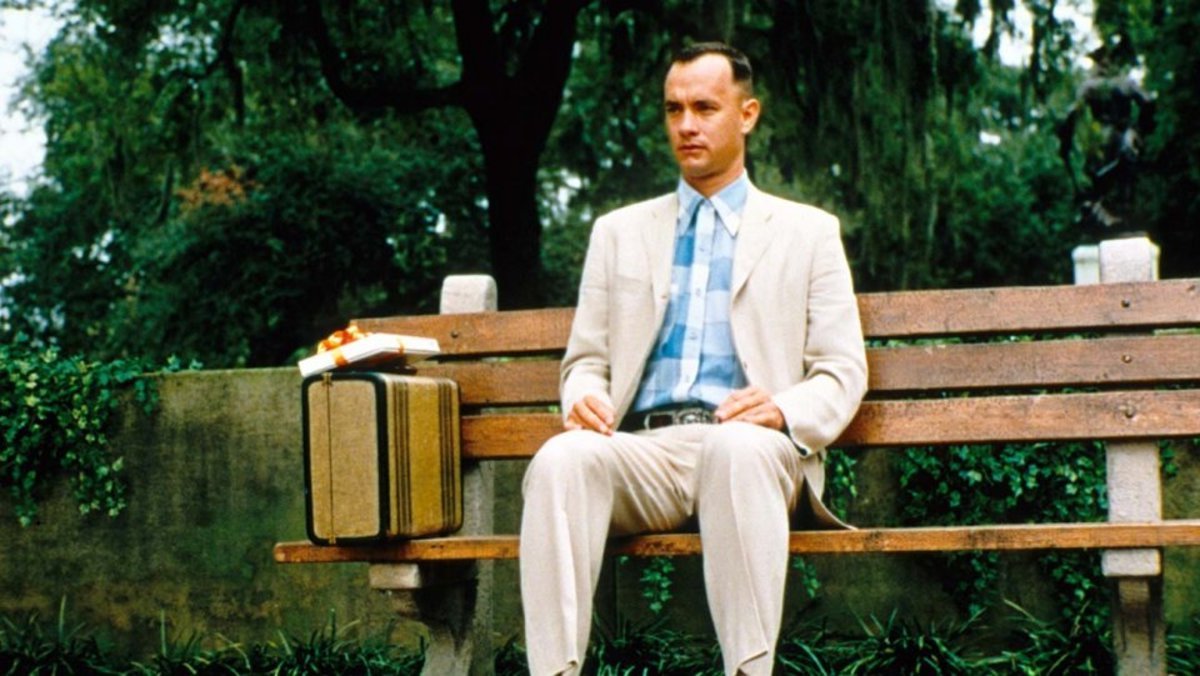
Nineteen ninety-four delivered an unparalleled slate of cinematic masterpieces and launched one of the most beloved sitcoms in history, cementing its place as a cornerstone of pop culture. Iconic films like Forrest Gump, The Lion King (which premiered on June 15th), Pulp Fiction, True Lies, and The Shawshank Redemption all hit theaters. True Lies made history as the first film with a production budget exceeding $100 million, pushing the boundaries of blockbuster spectacle.
For one incredible week in October, five legendary films—Pulp Fiction, Forrest Gump, The Shawshank Redemption, The Lion King, and even Jurassic Park (released in 1993 but still drawing audiences)—were all simultaneously playing in theaters, a rare convergence of cinematic greatness. While many remember these 1994 releases, it was Schindler’s List, released in late 1993, that took home the Best Film Oscar at the 1994 Academy Awards ceremony, recognized for its profound impact. On the small screen, Friends premiered on September 22nd, introducing us to Ross, Rachel, Monica, Chandler, Phoebe, and Joey, characters who would define a generation. Cartoon Network also ventured into adult animation with Space Ghost Coast to Coast, its first series aimed at an older audience. See 1994’s iconic launches for more on how these entertainment titans shaped the decade.
Soundtracks of a Shifting Era
Music in 1994 reflected a diverse landscape, from R&B ballads to grunge protests and the emergence of new fashion trends. Boyz II Men’s “I’ll Make Love To You” dominated the charts, a testament to the enduring power of vocal harmony. In a groundbreaking moment, Lisa Loeb & Nine Stories’ “Stay (I Missed You)” became the first #1 hit without the backing of a major record label, a precursor to today’s independent artist success stories.
The music industry also faced challenges, with Pearl Jam canceling their summer tour due to frustration over Ticketmaster’s service charges, sparking a major debate about concert pricing. Beyond the songs, 1994 left a mark on popular culture in unexpected ways: The Beastie Boys are credited with coining the term “mullet” for the infamous “business in the front, party in the back” hairstyle in their song “Mullet Head.” The “Beanie Babies Mania” also began this year, transforming simple plush toys into a collector’s phenomenon, and the Wonderbra was invented, changing the lingerie industry.
Titans and Triumphs: Unforgettable Personalities of 1994
The year spotlighted individuals whose accomplishments spanned politics, entertainment, science, and sports, etching their names into history. As mentioned, Nelson Mandela’s election was paramount, solidifying his status as a global icon. Time Magazine named Pope John Paul II “Man of the Year,” recognizing his significant moral and spiritual leadership on the world stage.
In a remarkable feat of cross-media dominance, Michael Crichton achieved a rare triple crown: he had a #1 film (as screenwriter for Jurassic Park), a #1 novel (Disclosure), and a #1 TV show (ER) simultaneously. Not to be outdone, Tim Allen mirrored this success in one November week, with a #1 movie (The Santa Clause), a #1 TV show (Home Improvement), and a #1 NY Times bestselling book (Don’t Stand Too Close to a Naked Man). Beyond entertainment, 45-year-old George Foreman staged an incredible comeback, regaining the Heavyweight World Champion title, while mathematician Andrew Wiles finally proved Fermat’s Last Theorem, an enigma for over 350 years, earning him $700,000. Miss America was Kimberly Aiken, and Miss USA was Lu Parker.
Echoes in Sport: Victories and Vacuums
Nineteen ninety-four was a year of dramatic highs and lows in the sporting world. Brazil claimed its fourth FIFA World Cup title, solidifying its legendary status in international soccer. In American sports, the Dallas Cowboys won Super Bowl XXVIII, the Houston Rockets clinched the NBA Championship, and the New York Rangers hoisted the NHL Stanley Cup, ending a 54-year drought.
However, not all was celebratory. The Major League Baseball Players Association strike resulted in a canceled World Series, a stark reminder of labor disputes’ impact on beloved traditions. Amidst this, Michael Jordan made a highly anticipated return to the NBA on March 18th, rejoining the Chicago Bulls after his brief foray into minor league baseball. Furthermore, 1994 marked a significant shift in Olympic scheduling: it was the last year the Winter and Summer Olympics occurred in the same year, moving forward to separate two-year cycles.
The Underbelly of the Year: Scandals and Tragedies
Beyond the triumphs, 1994 was also punctuated by high-profile scandals and poignant losses that captured the public’s attention and revealed darker aspects of society. The “O.J. Simpson White Bronco Car Chase” on June 17th became a televised spectacle, unfolding live as millions watched the former football star evade arrest following the murders of Nicole Brown Simpson and Ron Goldman, setting the stage for one of the most publicized trials in history.
The figure skating world was rocked by the Tonya Harding-Nancy Kerrigan rivalry, which culminated in an attack on Kerrigan. Despite the controversy, Nancy Kerrigan went on to win an Olympic Silver Medal, captivating audiences with her resilience. A more private scandal involved the marriage of rising R&B star Aaliyah (15) to R. Kelly (28) on August 31st; the marriage was annulled just months later, on February 7, 1995.
The year also mourned significant losses. Kurt Cobain’s suicide on April 5th sent shockwaves through the music world, marking the end of Nirvana and an era of grunge. Serial killer Jeffrey Dahmer was killed in prison, bringing a grim end to his notorious chapter. Beloved comedian John Candy and former President Richard Nixon also passed away. A somber legislative response to tragedy was the enactment of the Driver’s Privacy Protection Act, making it illegal to release private addresses from motor vehicle records, a direct response to the 1989 murder of actress Rebecca Schaeffer, whose stalker obtained her address this way.
Scientific Leaps and Celestial Events
While many looked to Earth for news, science in 1994 was reaching for the stars and peering into the very building blocks of life. In a spectacular celestial event that captivated astronomers worldwide, Comet Shoemaker-Levy 9 collided with Jupiter in July, providing an unprecedented opportunity to study planetary impacts. Closer to home, astronauts successfully repaired the Hubble Space Telescope in December, restoring its full observational capabilities and paving the way for breathtaking discoveries. Unseen by the public at the time, but profoundly significant, the cloning of Dolly the sheep began in 1994, marking a monumental step in genetic engineering that would be revealed years later.
The Fabric of Everyday Life in 1994
Beyond the headlines, life in 1994 had its own rhythms and costs. If you were grocery shopping, you might have paid about $1.99 for 10 oz Cheez-it crackers or a 40 oz bottle of Heinz Ketchup. A 12-pack of Coca-Cola would also set you back around $1.99. A daily newspaper cost a quarter. For advertisers, a Super Bowl ad commanded a price of $900,000, a far cry from today’s multi-million dollar slots. The world population stood at approximately 5,564,000,000 people, a figure that continues to grow exponentially. Culturally, 1994 was also the Chinese zodiac Year of the Dog, symbolizing loyalty and honesty.
Deciphering 1994’s Enduring Legacy: A Practical Playbook
Understanding these interesting facts about 1994 isn’t just a trip down memory lane; it’s about recognizing the interconnected events that sculpted the world we inhabit. Think of it as a playbook for appreciating how historical moments build upon each other:
- Spot the “Firsts”: Identify foundational moments like the first PlayStation, the first “smartphone” (IBM Simon), or Amazon’s founding. These aren’t just isolated facts; they are the genesis of entire industries. Ask yourself: how did this “first” enable subsequent innovations?
- Connect the Cultural Dots: How did Friends and The Lion King set new benchmarks for TV and film? Consider the simultaneous presence of five iconic films in theaters—this wasn’t just coincidence, but a peak period of creative output that reflected audience appetites. What does this tell you about the cultural zeitgeist?
- Recognize Global Interdependence: Mandela’s election, NAFTA, and the Channel Tunnel opening weren’t isolated political events. They represent a growing global interconnectedness that defined the post-Cold War era. How did these political shifts influence economic and social trends?
- Unpack the “Why” Behind the Scandal: The O.J. Simpson chase or the Tonya Harding saga were more than sensational news; they exposed deeper societal issues about celebrity, justice, and media consumption. What lingering questions or systemic issues did these events highlight?
- Trace Technological Evolution: From Netscape Navigator popularizing the internet to the Zip Drive’s role in data storage, 1994 shows technology in transition. How do these older technologies compare to what we use today, and what lessons can be learned about technological adoption?
Quick Answers: Common 1994 Conundrums
Q: What was the biggest technological innovation of 1994?
A: While several groundbreaking technologies emerged, the release of the Sony PlayStation in Japan and the popularization of the internet by Netscape Navigator stand out as having the most profound and lasting impact on consumer technology and global communication, respectively. The IBM Simon also holds the distinction of being the first “smartphone.”
Q: How did 1994 change world politics?
A: 1994 marked monumental shifts, most notably with Nelson Mandela’s election as South Africa’s first Black president, symbolizing a new era for democracy and equality. The Channel Tunnel opening physically connected Europe, and NAFTA reshaped North American trade, demonstrating a move towards greater international integration and economic blocs.
Q: Which films truly defined the cinematic landscape of 1994?
A: Forrest Gump, The Lion King, Pulp Fiction, and The Shawshank Redemption are widely considered the defining films of 1994. Their critical acclaim, box office success, and enduring cultural impact solidified the year as a golden age for cinema, especially notable given their simultaneous presence in theaters.
Q: What major sports event did NOT happen in 1994?
A: Due to a players’ strike, there was no Major League Baseball World Series champion in 1994, marking a rare and disappointing void in the sports calendar.
Q: Why is 1994 considered such a pivotal year for pop culture beyond Friends and The Lion King?
A: Beyond the immediate blockbusters, 1994 launched transformative gaming with the PlayStation, pioneered web browsing with Netscape, and saw independent music break through. It was a year where technology, entertainment, and social movements converged to lay the groundwork for the digital, globalized culture we experience today.
Your 1994 Lens: Reflecting on a Transformative Year
Nineteen ninety-four wasn’t just a year; it was a nexus of change, a moment when the analog world began its rapid transition into the digital age, and global political landscapes were fundamentally redrawn. By delving into these fascinating, often overlooked facts, we gain a deeper appreciation for the foundation laid three decades ago—a foundation that continues to influence our technology, our entertainment, and our interconnected world. It reminds us that history isn’t just a series of dates, but a complex tapestry of innovation, challenge, and enduring human spirit.










