The year 1994 wasn’t just a calendar page; it was a seismic shift, a collision of celebrity scandal, cultural upheaval, and technological leaps that etched itself into memory. From the infamous slow-motion pursuit of a white Bronco to the tragic end of a music icon and a figure skating feud that gripped the nation, ‘big events 1994’ redefined public spectacle and forever altered how we consumed news and pop culture. It was a year where the absurd met the profound, leaving an indelible mark that resonates even today.
At a Glance: Navigating the Defining Moments of 1994
- Understanding Media Scrutiny: How celebrity scandals like O.J. Simpson’s chase and the Tonya Harding/Nancy Kerrigan saga transformed news consumption and set the stage for reality TV.
- The Echo of a Generation: The profound impact of Kurt Cobain’s death on music, youth culture, and the end of grunge’s mainstream dominance.
- Beyond the Headlines: Discover the significant sporting achievements, technological breakthroughs (like PlayStation), and political shifts that also shaped 1994.
- Cultural Crossroads: See how films, TV, and music captured the zeitgeist, balancing escapism with deeper societal reflections.
- Identifying Lasting Legacies: Recognize which ‘big events 1994’ planted seeds for future trends in entertainment, technology, and public discourse.
When the Story Became the Spectacle: O.J. Simpson and the White Bronco
June 17, 1994, wasn’t supposed to be a groundbreaking day. But by evening, a low-speed chase across Los Angeles freeways had captivated an estimated 95 million viewers, turning a police pursuit into an unprecedented live television event. This was the O.J. Simpson White Bronco chase, a surreal, unfolding drama that brought the mundane act of driving a car into the heart of America’s living rooms.
Before the Bronco became a cultural icon, O.J. Simpson was a celebrated football star and actor, a symbol of American success. His dramatic flight from authorities, broadcast live by news networks interrupting NBA Finals coverage, introduced a new era of event television. It wasn’t just news; it was a real-time thriller, blurring the lines between true crime and entertainment, foreshadowing the 24/7 news cycle and reality TV genres that would soon dominate. The spectacle itself became bigger than the underlying tragedy, forcing a national conversation on race, celebrity, and justice under an intense media glare.
The Ice Storm: Tonya Harding, Nancy Kerrigan, and the Sports Scandal of the Century
If O.J. Simpson provided the high-speed chase, the saga of figure skaters Tonya Harding and Nancy Kerrigan delivered pure, unadulterated melodrama. This was a story of contrasting images: Kerrigan, the elegant darling, and Harding, the gritty, working-class athlete. Their rivalry escalated into a real-life soap opera when, just weeks before the 1994 Winter Olympics in Lillehammer, Kerrigan was attacked, her knee clubbed by an assailant later linked to Harding’s ex-husband and bodyguard.
The incident exploded into a media frenzy, transforming a niche sport into front-page news. It was a perfect storm of victimhood, villainy, and intense athletic competition playing out on a global stage. The public devoured every twist and turn, forming strong opinions and debating the fine line between personal ambition and criminal intent. This scandal not only defined the Lillehammer Olympics but also highlighted the public’s insatiable appetite for celebrity drama, forever changing how sports narratives could intersect with tabloid culture.
The Silence of Grunge: Kurt Cobain’s Tragic Farewell
April 5, 1994, marked another devastating ‘big event 1994’ that sent shockwaves through a generation. Kurt Cobain, the enigmatic frontman of Nirvana, was found dead by suicide in his Seattle home. His death was more than just the loss of a musician; it symbolized the end of an era for grunge, the alternative rock movement he had spearheaded.
Cobain was a reluctant icon, his raw lyrics and anguished voice resonating deeply with a generation feeling alienated and misunderstood. Nirvana’s music challenged the slick commercialism of 80s rock, offering an authentic, albeit sometimes despairing, soundtrack for youth angst. His passing left a profound void, prompting widespread grief, introspection about mental health, and debates about the pressures of fame. It marked a definitive cultural turning point, leading to a scramble for what would define the next wave of music and youth identity.
Beyond the Headlines: Global Stages and Technological Leaps
While these three stories dominated headlines, 1994 was rich with other significant global and technological shifts that shaped the modern world. It was a year of tangible progress and new beginnings, balancing the dramatic with the innovative.
Sports Spectacle: World Cups and Championship Rings
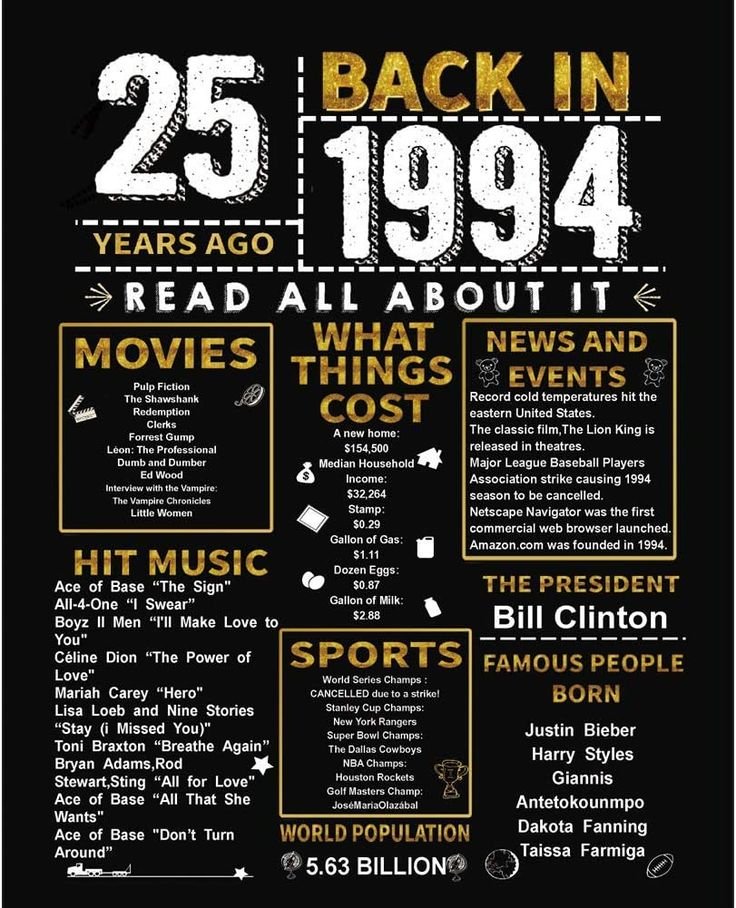
Sports offered both triumph and unexpected halts in 1994. The FIFA World Cup, hosted by the United States, saw Brazil clinch the trophy, bringing global soccer to new heights of popularity in America. The Winter Olympics in Lillehammer, beyond the Harding-Kerrigan drama, showcased athletic excellence and global unity. American sports celebrated new champions: the Dallas Cowboys won Super Bowl XXVIII, the Houston Rockets took the NBA title, and the New York Rangers ended a 54-year Stanley Cup drought. However, the year also witnessed a major setback with the cancellation of the World Series due to a Major League Baseball Players Association strike, a significant moment that disappointed fans and highlighted labor tensions.
Opening New Gateways: Infrastructure and Retail
In Europe, the Channel Tunnel finally opened, connecting the UK and France beneath the sea, a monumental engineering feat that reshaped cross-border travel. The UK also launched its first National Lottery, quickly becoming a fixture of weekly life. On the retail front, Lidl opened its first UK supermarkets, beginning its journey to becoming a major player in the grocery market. These events reflected a period of both national development and international connectivity.
The Digital Dawn: Online News and Gaming Futures
1994 quietly laid foundations for our digital future. The Daily Telegraph launched as the first online daily newspaper, a pioneering move into digital journalism that few could have predicted would become the standard. More significantly, Sony introduced the PlayStation, a gaming console that would revolutionize the industry and bring sophisticated 3D graphics into homes worldwide. The seed for Beanie Babies mania was also sown this year, demonstrating a different kind of consumer phenomenon centered around collectibles. These innovations, though sometimes overshadowed by immediate headlines, were ‘big events 1994’ for their long-term impact on how we consume media and entertainment. For a deeper dive into these and other pop culture phenomena, you can further Explore 1994 pop culture.
Pop Culture’s Evolving Landscape: Friends, Films, and Fads
Away from the intense drama of real-life events, 1994’s entertainment landscape offered both escapism and new benchmarks. It was a year that saw the premiere of iconic TV shows and films that would define the decade.
Television’s New Guard
The small screen introduced game-changers. Beyond existing hits like Seinfeld and ER, 1994 brought us Friends, a sitcom that would quickly become a global phenomenon, defining friendship, fashion, and coffee shop culture for a generation. Cartoon Network launched Space Ghost Coast to Coast, an early foray into adult animation, signaling a shift in audience targeting. New channels like Sky Sports 2 and VH1 also launched, diversifying the broadcasting landscape and catering to more specialized interests.
Cinematic Masterpieces and Blockbuster Hits
Cinema delivered a mix of critically acclaimed masterpieces and box office titans. While Schindler’s List won Best Film at the 1994 Oscars (for its 1993 release), films released in 1994 included the cultural touchstone Forrest Gump, the animated classic The Lion King, and Quentin Tarantino’s genre-defining Pulp Fiction. Arnold Schwarzenegger’s True Lies became the first film to boast a production budget exceeding $100 million, a new benchmark for Hollywood blockbusters. It was also the rare year where figures like Michael Crichton and Tim Allen held the #1 spot in movies, TV, and books concurrently, showcasing their widespread cultural influence.
Music’s Diverse Chart Toppers
The music scene was vibrant and eclectic. Lisa Loeb made history with “Stay (I Missed You),” becoming the first artist to have a number one hit without being signed to a major label. Other chart dominators included Boyz II Men’s “I’ll Make Love To You” and Wet Wet Wet’s “Love Is All Around.” The year also saw significant album debuts, including Oasis’s Definitely Maybe and Jeff Buckley’s Grace, both of which would go on to be highly influential. Pearl Jam’s decision to cancel their summer tour over Ticketmaster’s service charges highlighted growing tensions within the industry regarding artist control and fan access.
Small Moments, Big Indicators: The Fabric of Daily Life
Beyond the grand spectacles and cultural shifts, 1994 was also defined by myriad smaller developments that, in retrospect, offer telling insights into the era.
From a fashion perspective, the term “mullet” was popularized by the Beastie Boys in their song “Mullet Head,” cementing the “business in front, party in back” hairstyle into popular lexicon. The Wonderbra was invented, sparking conversations about fashion and body image. In more practical terms, the Driver’s Privacy Protection Act made it illegal to release private addresses, a critical step towards digital privacy.
Even sports underwent subtle changes, with the NFL switching from gunshots to whistles to signal the end of quarters, a small but notable evolution in game-day experience. Super Bowl ad prices hit $900,000, a clear indicator of the event’s growing commercial power. And away from the drama, Bill Gates purchased Leonardo da Vinci’s Codex Hammer for over $30 million, a testament to the burgeoning tech wealth and its foray into historical preservation. These seemingly minor details paint a fuller picture of the dynamic and evolving landscape of ‘big events 1994’.
Lessons from the Lens of 1994: Media, Celebrity, and the Public Eye
Looking back at ‘big events 1994’, it’s clear the year was a crucible for modern media and celebrity culture. The O.J. Simpson chase didn’t just happen; it was broadcast, shaping the template for how major news events unfold as live, communal experiences. The Tonya Harding-Nancy Kerrigan feud demonstrated the public’s ravenous appetite for real-life villains and heroes, long before reality TV normalized such narratives. Kurt Cobain’s death underscored the immense pressure on public figures and the devastating impact when those pressures become overwhelming.
The year taught us that public perception can be as powerful as legal verdict or critical acclaim. It showed the nascent power of the internet and gaming to transform leisure. Ultimately, 1994 provided an early masterclass in the spectacle economy, where attention became a currency, and big events, whether tragic or triumphant, were instantly globalized and endlessly dissected.
Quick Answers: Debunking 1994’s Enduring Questions
Q: Did the O.J. Simpson car chase directly influence reality TV?
A: Absolutely. The live, unscripted, suspenseful nature of the White Bronco chase, watched by millions, was a powerful precursor to reality television. It proved that real-life drama, unfolding in real time, could command massive audiences and shape national conversations.
Q: Was the Tonya Harding/Nancy Kerrigan scandal a turning point for sports media?
A: Yes. It elevated a sports rivalry into a full-blown celebrity scandal, showing how personal drama, crime, and athletic competition could merge into a captivating narrative that transcended the sports section, garnering immense mainstream attention and setting a precedent for similar media frenzies.
Q: How did Kurt Cobain’s death change the music industry?
A: His death marked the definitive end of grunge’s mainstream dominance and forced a re-evaluation of celebrity, mental health, and the pressures of fame within the music industry. It created a void that artists across genres rushed to fill, influencing subsequent waves of alternative and indie music.
Q: What was the biggest technological innovation of 1994?
A: While several technologies were important, the launch of the PlayStation arguably had the most profound long-term impact on pop culture and entertainment. It democratized sophisticated gaming, bringing 3D graphics and immersive experiences to a mass market, fundamentally changing the landscape of home entertainment.
Q: Were there any positive big events in 1994 that are often overlooked?
A: Many. The opening of the Channel Tunnel, the global appeal of the FIFA World Cup in the U.S., the re-establishment of the University of Erfurt in Germany, and the launch of the first online daily newspaper were all significant, positive developments reflecting progress, connectivity, and innovation, often overshadowed by the major scandals.
The Enduring Echo of a Pivotal Year
The ‘big events 1994’ collectively painted a portrait of a world on the cusp. It was a year where technology was quietly laying the groundwork for digital revolutions, while human drama—both tragic and scandalous—played out on a grand, unprecedented scale. The O.J. Simpson chase, the Tonya Harding/Nancy Kerrigan saga, and Kurt Cobain’s untimely death weren’t just isolated incidents; they were cultural touchstones that revealed our collective fascination with celebrity, justice, and the shifting boundaries of media.
From the emergence of iconic entertainment to groundbreaking global infrastructure, 1994 wasn’t merely a collection of headlines. It was a year that redefined public attention, accelerated cultural shifts, and left an undeniable blueprint for the decades that followed, shaping our understanding of what constitutes a truly “big event.”










