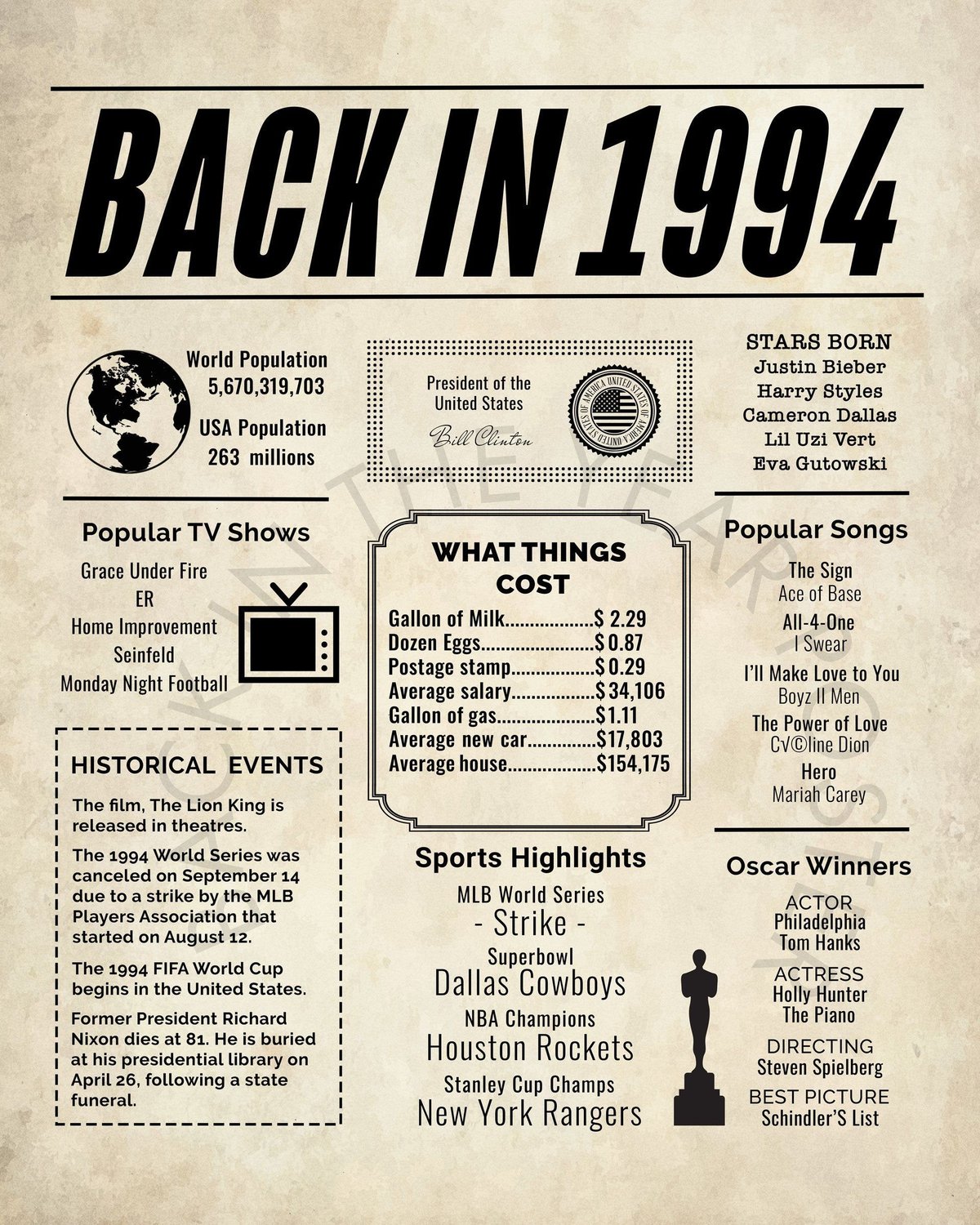
1994 wasn’t just another year; it was a societal hinge point, a chaotic yet creatively fertile period where major events from 1994—from televised scandals to groundbreaking cultural launches—reshaped our collective consciousness. We witnessed the dramatic intertwining of celebrity, crime, innovation, and global shifts, setting precedents that continue to influence how we consume media, engage with pop culture, and understand the impact of public spectacle.
At a Glance: Key Takeaways from 1994
- Scandals as Spectacle: 1994 saw unprecedented media coverage of high-profile controversies, particularly the O.J. Simpson chase, transforming news into live, communal events.
- Cultural Launchpad: The year birthed iconic entertainment like Friends, The Lion King, and the PlayStation, whose influence remains potent decades later.
- Technological Seeds: Beneath the headlines, companies like Yahoo and Amazon began their quiet ascent, laying foundational groundwork for the digital age.
- Shifting Norms: From fashion and music to legal precedents (like the Driver’s Privacy Protection Act), 1994 marked distinct shifts in social behavior and public policy.
- Sports & Science Milestones: Global sporting events underwent structural changes, while significant intellectual achievements, like the cracking of Fermat’s Last Theorem, pushed the boundaries of human knowledge.
The Unraveling: Scandals That Defined the Year
If 1994 had a defining characteristic, it was the way high-stakes scandals seized public attention, morphing into real-time pop culture phenomena. These weren’t just news stories; they were televised spectacles that united a nation in collective shock and fascination, fundamentally altering the media landscape.
The most electrifying example was undeniably the O.J. Simpson White Bronco Car Chase on June 17. What began as a fugitive pursuit, with Simpson allegedly holding a gun to his head, unfolded live on television, riveting millions. This event blurred the lines between news and entertainment, turning a police pursuit into an unmissable national drama, complete with a lawyer reading a suicide note from O.J. to the police. It taught us how rapidly a personal crisis could become a public obsession, setting a new benchmark for live, continuous news coverage.
Before Simpson, the Tonya Harding and Nancy Kerrigan ice skating rivalry had already primed the public for high-stakes drama. The attempt by friends of Tonya Harding (including her husband Jeff Gillooly) to injure Nancy Kerrigan ahead of the U.S. Figure Skating Championship captivated the world. Both skaters were eventually banned from the sport after the 1994 Winter Olympics, illustrating how intense competition could spill over into real-world sabotage, irrevocably linking their names to scandal.
Beyond these two titans of controversy, other events highlighted the pressures and pitfalls of public life. The private marriage of 15-year-old Aaliyah to 28-year-old R. Kelly on August 31, later annulled, sparked significant discussion about age and consent in celebrity relationships. Even Michael Jordan, during his foray into baseball, cut communication with Sports Illustrated after their “Bag It, Michael” cover story questioned his career path, showing the intense scrutiny even cultural giants faced. These incidents collectively underscored a growing public appetite for dramatic, often salacious, celebrity news, a trend that continues to shape our media consumption. For a broader look at the cultural shifts happening alongside these headline-grabbing moments, you might want to delve deeper into the trends of the year: Explore 1994 Pop Culture.
Cultural Earthquakes: Launches and Legacies
Amidst the swirling controversies, 1994 also proved to be a remarkably fertile ground for groundbreaking cultural touchstones that would define a generation. This was the year entertainment reshaped itself, launching icons that remain globally recognizable.
On the small screen, two shows premiered that would change television forever: Friends and ER. Friends quickly became a major cultural symbol, its witty banter and relatable characters capturing the zeitgeist of young adulthood. ER, a medical drama, also debuted to massive popularity, showcasing the talent of screenwriter Michael Crichton, who simultaneously had a #1 novel (Disclosure) and was the screenwriter for Jurassic Park that year. These shows demonstrated television’s power to create immersive worlds and iconic characters that resonated deeply with viewers.
Cinematically, 1994 was a powerhouse. The Lion King roared into theaters, becoming a beloved animated classic, featuring Matthew Broderick as adult Simba’s speaking voice and Joseph Williams for singing. This film, alongside hits like Forrest Gump, Pulp Fiction, and The Shawshank Redemption, made October 1994 a unique moment in cinema history, with all five playing simultaneously. The Santa Clause was the highest-grossing film, and True Lies became the most expensive film ever made at its release with over a $100 million budget.
In the realm of music, the landscape was equally vibrant. Boyz II Men’s ‘I’ll Make Love To You’ was the top song, showcasing R&B’s continued dominance. Meanwhile, The Offspring released Smash, which ascended to become the highest-selling indie album ever, signaling a shift in the music industry. Lisa Loeb made history as the first artist to have a number one hit (‘Stay’) without being signed to a record label, highlighting the burgeoning power of independent artists. The 25th anniversary of Woodstock brought legends like Bob Dylan and Red Hot Chili Peppers, drawing 350,000 attendees, proving the enduring appeal of live music festivals. Tragically, the music world also mourned the loss of Kurt Cobain, whose death by suicide in April marked a somber end to the grunge era.
Beyond the screens and sound waves, Beanie Babies Mania began, demonstrating the power of collectibles. The Wonderbra was invented, shaping fashion trends. The Beastie Boys coined the term “mullet” in their song “Mullet Head,” cementing a hairstyle’s iconic status. And the PlayStation was released, eventually eclipsing the Sega Saturn to become a titan in the gaming world, laying the groundwork for a massive industry shift.
Shifts in Sport, Science, and Society
1994 wasn’t just about cultural consumption and celebrity drama; it was also a year of significant structural changes in global sports, monumental scientific achievement, and critical social shifts that continue to affect us today. These major events from 1994 quietly redefined how we organize competitions, celebrate intellect, and protect individual privacy.
In the world of sports, 1994 brought about a pivotal change for the Olympic Games, as the Winter and Summer Olympics began to be held in separate years, with only the Winter Games occurring that year. This alteration streamlined the global sporting calendar. Brazil claimed victory in the 1994 World Cup, a highlight for international football. North American sports also saw their share of milestones: the 45th NHL All-Star Game was played in New York City, and the 44th NBA All-Star Game in Minneapolis. Even the NFL made a subtle but significant change, switching from a gunshot to a whistle to signal the end of a quarter, improving player safety and clarity.
Intellectually, 1994 marked a monumental achievement in mathematics: Andrew Wiles cracked Fermat’s Last Theorem, a problem that had stumped mathematicians for centuries. His triumph, earning him $700,000, underscored the enduring human drive for discovery and problem-solving, showcasing the pinnacle of abstract thought.
The digital revolution also had its quiet beginnings. Yahoo and Amazon were founded, two companies that would grow to become foundational pillars of the internet age. While Yahoo initially focused on email and chat, Amazon started by selling books, foreshadowing their future dominance in information and e-commerce, respectively. These were not explosive launches but subtle introductions of technologies that would fundamentally reshape how we interact with the world and each other.
Socially and legally, 1994 addressed privacy concerns with the enactment of the Driver’s Privacy Protection Act. This legislation, making it illegal to release private addresses, was a direct response to the 1990 death of actress Rebecca Schaeffer, who was shot by an obsessed fan. This event highlighted the critical need for personal data protection in an increasingly interconnected world. The year also saw the resolution of a landmark case: Stella Liebeck successfully sued McDonald’s after receiving third-degree burns from spilled coffee, resulting in warnings like “Caution, Hot!” on coffee cups and a broader re-evaluation of product liability and consumer safety.
Beyond the Headlines: Unexpected Impact & Lasting Echoes
While many major events from 1994 captured headlines, others had a quieter, yet equally profound, ripple effect, illustrating the diverse ways a single year can shape human endeavor and society. These moments often reveal the unsung heroes, the innovative uses of media, and the quirky decisions that carry long-term consequences.
Consider the remarkable work of Kevin Briggs, a San Francisco Highway Patrol Officer, who, since 1994, has talked approximately 200 people out of suicide on the Golden Gate Bridge. This ongoing dedication highlights a quiet heroism, a commitment to human connection in moments of ultimate despair, and a lasting legacy of hope.
Media, often seen through the lens of entertainment or scandal, also demonstrated its power for social good. Soul Asylum’s music video for ‘Runaway Train’ was a pioneering effort, featuring photos of missing children and remarkably helping to find 25 of the 36 children showcased. This creative use of a pop culture platform for a serious social cause set a precedent for public service campaigns embedded within popular media.
In the business world, 1994 was a year of shrewd decisions and peculiar product definitions. George Foreman began earning 40% of profits from Foreman grill sales, a deal that would make him over $200 million by 1999, illustrating the immense value of celebrity endorsement when paired with a successful product. Meanwhile, Procter & Gamble engaged in a legal battle, arguing that Pringles were only 42% potato flour to avoid a 17.5% potato products tax in Britain, showcasing the intricate and sometimes absurd world of corporate tax strategy. These seemingly minor business dealings would, in their own ways, influence future marketing and manufacturing.
Beyond these specific impacts, 1994 saw notable deaths that marked the end of eras. The rock world mourned Kurt Cobain, a voice of a generation. The entertainment industry lost beloved comedian John Candy. Disgraced US President Richard Nixon also passed away at 81, closing a controversial chapter in American political history. These losses, alongside other events, underscored the relentless march of time and the continuous evolution of cultural and political landscapes.
Your 1994 Playbook: Understanding a Transformative Year
Understanding the major events from 1994 isn’t just a historical exercise; it’s a way to appreciate the dynamic interplay between culture, technology, and society that continues to evolve. The year offers a practical playbook for recognizing how individual moments coalesce into larger trends and how media shapes our perception of reality.
Key Lessons from the Era:
- Media as a Real-Time Spectacle: 1994 proved that live, unfolding events, particularly those involving public figures, could captivate an entire nation. The O.J. Simpson chase wasn’t just news; it was a blueprint for modern event television, emphasizing instantaneous, continuous coverage.
- The Blurring of Lines: The Harding-Kerrigan rivalry, Aaliyah’s marriage, and Michael Jordan’s media spat showed how easily the personal lives of celebrities, athletes, and public figures could become public domain, often with dramatic and lasting consequences.
- Tech’s Quiet Revolution: While not as flashy as the scandals, the founding of Yahoo and Amazon, alongside the PlayStation’s debut, demonstrated that foundational technological shifts often begin subtly. The groundwork for future giants was laid without immediate fanfare.
- Culture’s Ever-Evolving Canvas: From grunge fashion to the comfort wear revolution, from the birth of Friends to the enduring magic of The Lion King, 1994 underscored the fluid nature of pop culture, constantly reinventing itself while retaining timeless elements.
- The Power of Narrative: Whether it was the media’s portrayal of scandals, the storytelling of Forrest Gump, or the investigative journalism leading to the Driver’s Privacy Protection Act, 1994 reinforced that narratives—both factual and fictional—are potent forces in shaping public opinion and policy.
Deciphering modern legacies requires looking back at years like 1994 to understand the origins of today’s media saturation, the enduring power of iconic entertainment, and the continuous evolution of our digital and social landscapes. The decisions made, the products launched, and the events that unfolded in that single year continue to echo in our present, offering insights into societal momentum.
Quick Answers: Unpacking 1994’s Defining Moments
What were the biggest scandals of 1994?
The two biggest scandals that captured national attention in 1994 were the O.J. Simpson White Bronco Car Chase, a live televised event, and the Tonya Harding and Nancy Kerrigan ice skating rivalry, which involved an attack on Kerrigan. Both stories dominated media coverage and sparked widespread public discussion.
How did 1994 change pop culture?
1994 significantly changed pop culture by launching iconic television shows like Friends and ER, blockbuster films such as The Lion King and Pulp Fiction, and the revolutionary PlayStation console. It also saw the rise of Beanie Babies, the invention of the Wonderbra, and distinct shifts in music and fashion, marking it as a truly transformative year.
Were there any major tech breakthroughs in 1994?
Yes, 1994 was a pivotal year for technology. Yahoo and Amazon were founded, laying the groundwork for two internet giants. Additionally, the PlayStation was released, revolutionizing the gaming industry and becoming more successful than its direct competitor, the Sega Saturn.
What was unique about the Olympics in 1994?
1994 was unique for the Olympics because it marked the first time the Winter and Summer Olympics were held in separate years. Previously, they had taken place in the same year. Only the Winter Olympics occurred in 1994 as part of this new staggered schedule.
How did media consumption change in 1994?
Media consumption began to change significantly in 1994 due to events like the live televised O.J. Simpson chase, which set a precedent for real-time, continuous news coverage as a national spectacle. The rise of shows like Friends and ER also solidified television’s role in creating shared cultural experiences, while the founding of Yahoo hinted at future shifts towards digital information and communication.
The Enduring Echo of 1994
The major events from 1994 paint a vivid picture of a year teetering between profound cultural innovation and unprecedented public spectacle. It was a period that laid the groundwork for how we interact with technology, consume entertainment, and react to the dramatic unfolding of public life. From the quiet launches of future tech giants to the roaring success of cinematic and television masterpieces, and the shocking narratives that dominated headlines, 1994 wasn’t just a year; it was a turning point. Understanding its complexities helps us appreciate the enduring legacies that continue to shape our world, reminding us that even the most chaotic moments can be fertile ground for lasting impact.










