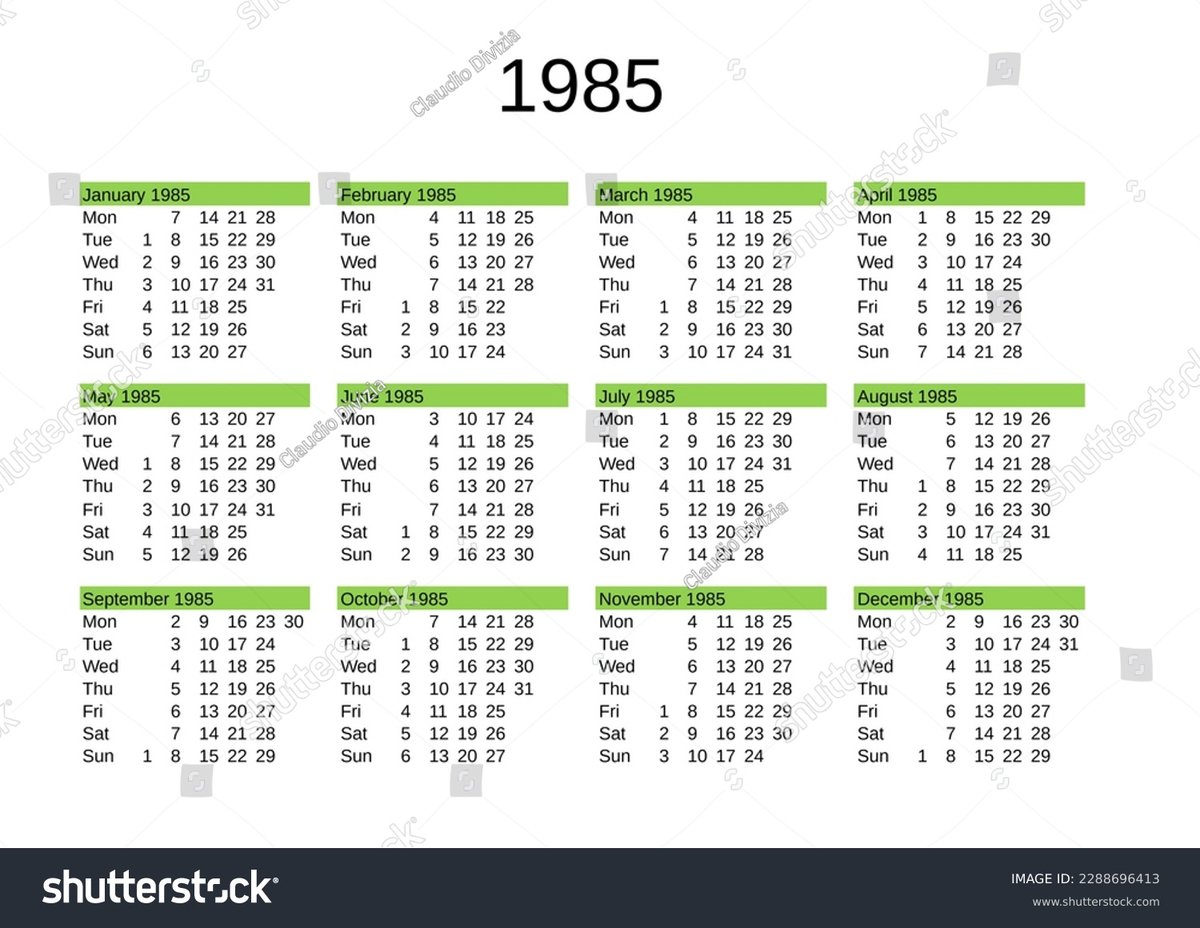
The year 1985 wasn’t just another notch on the calendar; it was a pivot point where breakthroughs in technology and global shifts collided with stark human tragedies, profoundly reshaping the world as we knew it. From the quiet click of the first internet domain name to the roaring crowd united by a charity anthem, this year painted a complex picture of human ingenuity, global challenges, and the enduring spirit that emerged from both triumph and adversity.
At a Glance: What Defined 1985
- Geopolitical Foundations Shifting: A new Soviet leader, Mikhail Gorbachev, signaled significant global changes.
- Digital Seeds Planted: The very first internet domain was registered, alongside early steps in mobile communication and consumer computing.
- Humanitarian Powerhouse: Artists united for an iconic cause, demonstrating the potent impact of collective action.
- Environmental Alarms Sounded: Crucial scientific discoveries brought pressing ecological concerns to the forefront.
- Shadows of Disaster and Conflict: A series of devastating events, both natural and man-made, underscored the fragility of life and societal tensions.
Geopolitical Chessboard: New Players, Enduring Struggles
In 1985, the world watched as the Cold War dynamics began a subtle, yet profound, shift. On March 11, Mikhail Gorbachev ascended to General Secretary of the Communist Party of the Soviet Union. His arrival marked the beginning of “glasnost” (openness) and “perestroika” (restructuring) – policies that would eventually lead to the dissolution of the Soviet Union itself. His initial moves, like the unilateral freeze on SS-20 intermediate-range nuclear missiles in Europe on April 7, offered a glimmer of hope for reduced East-West tensions.
Meanwhile, the anti-apartheid struggle in South Africa intensified. Nelson Mandela, still imprisoned, defiantly rejected President P.W. Botha’s conditional release offer in January and February, stating he would not accept freedom while the ANC remained banned and apartheid persisted. The international community, including through artistic endeavors discussed later, amplified pressure. Although the South African government announced plans to repeal the Prohibition of Mixed Marriages Act and parts of the Immorality Act in April, these were seen as minimal concessions against a backdrop of continued repression, exemplified by the banning of several newspapers later that month.
Across the globe, other conflicts simmered. In Nicaragua, Daniel Ortega was inaugurated as president in January, offering amnesty to U.S.-backed rebels. Hezbollah officially formed in Lebanon in February, adding another complex layer to the volatile Middle East. These events highlight a period of significant international flux, where old orders were being challenged and new forces were taking shape, setting the stage for decades to come.
Unveiling History’s Depths and Environmental Alarms
The year 1985 saw humanity peer deeper into its past and grasp the fragile future of its planet. On January 9, a joint American-French expedition led by Robert Ballard and Jean-Louis Michel made headlines worldwide with the discovery of the wreck of the RMS Titanic off the coast of Newfoundland. This monumental find reignited public fascination with the ill-fated liner and provided invaluable insights into deep-sea exploration and preservation.
Just a few months later, on May 16, scientists from the British Antarctic Survey published a groundbreaking paper revealing a significant depletion of the ozone layer over Antarctica – the now-infamous “ozone hole.” This discovery was a stark wake-up call, providing irrefutable evidence of human impact on the global environment and galvanizing international efforts to address industrial pollution and greenhouse gas emissions.
Earlier in the year, the U.S. Pentagon released a report acknowledging the potential for a “nuclear winter,” a chilling concept that suggested a full-scale nuclear war could trigger catastrophic climate change. This, coupled with the Indian government filing a lawsuit against Union Carbide Corporation in April over the devastating Bhopal gas leak disaster, underscored a growing global consciousness about environmental responsibility and the potential consequences of technological advancement.
Tech’s Quiet Revolution: The Dawn of Connectivity
While the big headlines captured geopolitical drama and natural wonders, a quieter revolution was brewing in the world of technology that would fundamentally alter daily life. On January 1, the first British mobile phone call was made, a nascent step in wireless communication that would explode in the coming decades. This seemingly small event laid foundational groundwork for a mobile-first world.
March 15, 1985, marked another subtle yet seismic shift: the registration of symbolics.com, the first internet domain name. This simple act of assigning a human-readable address to an online entity was a critical step in making the nascent internet accessible and navigable beyond academic and military circles. Just two months later, in a less celebrated but equally significant moment, the first unsolicited commercial email, or “spam,” was sent by Gary Thuerk to ARPANET users, foreshadowing the digital communication challenges that would soon emerge.
Beyond the internet, personal computing continued its march forward. IBM released PC DOS 3.1 in April, introducing crucial support for local area networking. On the consumer front, Microsoft Excel launched for the Macintosh in May, bringing a powerful spreadsheet application to a wider audience. Photography enthusiasts got a taste of the future with the Minolta Maxxum 7000 in February, the world’s first autofocus single-lens reflex (SLR) camera, making high-quality photography more accessible. These innovations, though perhaps not immediately recognized for their full potential, were the tiny acorns from which today’s digital forest would grow. For a broader look at how these and other shifts in pop culture and tech reshaped the world, delve into our pillar article: How 1985 reshaped the world.
Pop Culture’s Resonant Echoes: Uniting Voices and Visuals
Pop culture in 1985 wasn’t just entertainment; it was a powerful force for change and connection. No single event embodied this more than the recording of “We Are the World” on January 28. Featuring 45 prominent artists, this charity single, released internationally on March 7, became an anthem for famine relief in Africa, raising millions and showcasing the unifying power of music. It quickly ascended to number one on the Billboard Hot 100 in April, becoming a global phenomenon.
Music festivals also hit new highs. The inaugural Rock in Rio festival in Brazil in January attracted an astounding 1.38 million attendees over ten days, establishing itself as a global benchmark for large-scale music events. Meanwhile, individual hits like Foreigner’s “I Want To Know What Love Is” and New Edition’s “Mr. Telephone Man” dominated the airwaves, while Paul Hardcastle’s poignant single “19” topped the UK charts, reflecting on the Vietnam War.
Television and film also made their mark. The House of Lords held its first televised debate in January, a move towards greater transparency in British politics. Australia’s enduring soap opera ‘Neighbours’ premiered in March, becoming a global cultural export. Roger Moore’s final turn as James Bond graced screens with ‘A View to a Kill’ in May, closing an iconic chapter for the spy franchise. These cultural touchstones provided both escape and a lens through which to view the rapidly changing world.
Tragedy’s Shadow: Disasters and Social Upheaval
Amidst the breakthroughs, 1985 was also marked by profound tragedies, both natural and man-made, which laid bare vulnerabilities and deep-seated societal tensions. January began with sorrow: Eastern Air Lines Flight 980 crashed in Bolivia, killing all 29 aboard, followed by the devastating Awash rail disaster in Ethiopia, claiming at least 428 lives. A severe Arctic cold wave gripped the United States in January, causing at least 126 fatalities and inflicting $1.2 billion in damage to Florida’s citrus industry.
Later in the year, nature unleashed further fury. A powerful cyclone struck Bangladesh in May, killing over 11,000 people and leaving hundreds of thousands homeless. China experienced a magnitude 6.3 earthquake in April, adding to the global toll of natural disasters.
Human-instigated tragedies were equally grim. The abduction and murder of DEA agent Enrique “Kiki” Camarena in Mexico in February by drug cartels highlighted the brutal realities of the burgeoning drug trade. In Northern Ireland, an IRA mortar attack on an RUC base in February killed nine officers. Perhaps most controversially in the United States, on May 13, Philadelphia police dropped a bomb on the headquarters of the MOVE organization, resulting in the deaths of 11 people (including five children) and the destruction of 61 homes – a stark and tragic instance of urban conflict. Serial killer Richard Ramirez, the “Night Stalker,” began his reign of terror in March. These events served as chilling reminders of the ongoing challenges of violence, crime, and social justice.
Sports Milestones: Records, Upsets, and New Icons
The world of sports in 1985 offered moments of breathtaking achievement, dramatic upsets, and the emergence of future legends. Wayne Gretzky, already a phenomenon, scored his 50th goal in the Edmonton Oilers’ 49th game of the NHL season on his 24th birthday in January, a testament to his unparalleled dominance.
In basketball, the NCAA championship game delivered one of the greatest upsets in history: the 8th-seed Villanova Wildcats stunned the powerhouse Georgetown Hoyas 66-64 on April 1. This David-and-Goliath victory remains a classic underdog story. On the professional front, a young Michael Jordan made his NBA debut with the Chicago Bulls in February, giving the world a first glimpse of a generational talent, while Larry Bird scored a franchise-record 60 points for the Boston Celtics in March.
Boxing saw the professional debut of an 18-year-old Mike Tyson in March, winning by first-round technical knockout – a sign of the ferocious power that would soon make him a world champion. In endurance sports, Libby Riddles became the first woman to win the grueling Iditarod Trail Sled Dog Race in Alaska in March. And in May, Danny Sullivan famously secured his first Indianapolis 500 victory in a race known as the “Spin and Win,” demonstrating incredible skill and nerve. These athletic feats provided moments of national pride and individual glory, showcasing the pinnacle of human performance.
A Practical Playbook: Spotting the Signals of Change
Looking back at 1985, several patterns emerge that offer insight into how transformative periods unfold:
- The Power of Collective Action: “We Are the World” wasn’t just a song; it was a blueprint for how popular culture could mobilize massive resources for a cause. Its success demonstrated that well-coordinated, highly visible initiatives can transcend borders and political divides to address global issues.
- Early Tech Signals Are Key: The first mobile call and internet domain name didn’t immediately change the world, but they were crucial indicators of where technology was headed. Recognizing these nascent developments, even when they seem niche, is vital for understanding future disruptions.
- Environmental Awareness Builds Incrementally: The ozone hole discovery was a scientific breakthrough, but it built on years of research and growing concerns. Major environmental shifts are often preceded by scientific consensus slowly building, eventually forcing public and policy attention.
- Geopolitical Shifts Can Be Sudden, Yet Fueled by Long-Term Currents: Gorbachev’s rise was significant, but it stemmed from underlying economic and social pressures within the Soviet system. Understanding long-term historical currents helps contextualize seemingly abrupt political changes.
Quick Answers: Understanding 1985’s Core Impacts
Q: What was the most significant humanitarian event of 1985?
A: The recording and release of “We Are the World” by USA for Africa stands out as a monumental charity effort, uniting dozens of prominent artists to raise millions for famine relief in Africa.
Q: What major political change occurred in the Soviet Union?
A: Mikhail Gorbachev was appointed General Secretary of the Communist Party, initiating reforms like glasnost and perestroika that would ultimately lead to the end of the Cold War and the dissolution of the Soviet Union.
Q: What groundbreaking discovery related to history was made in 1985?
A: The wreck of the RMS Titanic was discovered on January 9 by a joint American-French expedition led by Robert Ballard and Jean-Louis Michel.
Q: Were there any major environmental revelations in 1985?
A: Yes, the British Antarctic Survey published a paper in May revealing significant ozone depletion over Antarctica, widely known as the “ozone hole,” which became a crucial alert about human impact on the planet.
Q: What key technological advancements started to emerge?
A: 1985 saw the first British mobile phone call, the registration of the first internet domain name (symbolics.com), the launch of Microsoft Excel for Macintosh, and the world’s first autofocus SLR camera (Minolta Maxxum 7000).
The Echoes of a Transformative Year
The year 1985 was a crucible, forging many of the realities we navigate today. It was a time when global communication began its sprint towards ubiquity, humanitarian efforts proved their unifying power, and scientific revelations challenged our stewardship of the planet. While breakthroughs offered tantalizing glimpses of progress, the year’s tragedies served as somber reminders of enduring human struggles and the stark consequences of natural forces and societal conflicts. Reflecting on 1985 means acknowledging this intricate tapestry of innovation, compassion, and loss, recognizing how its threads continue to weave through our modern world, shaping our challenges and inspiring our resilience.










