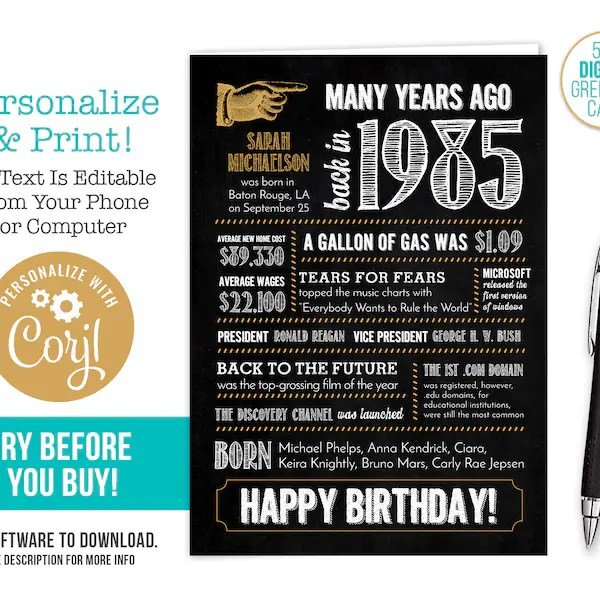
In 1985, the world wasn’t just changing; it was accelerating. From the launch of iconic technologies to pop culture moments that defined a generation, the year delivered an incredible density of events. Diving into the interesting facts about 1985 reveals a pivotal period where decisions, innovations, and cultural shifts began to lay the groundwork for our modern digital and globally connected society. It was a year where seemingly disparate threads – a nascent operating system, a blockbuster movie, and a global concert – wove together to create an irreversible tapestry of change.
At a Glance: How 1985 Still Echoes Today
- Digital Foundations Laid: Microsoft Windows 1.0 and the first
.comdomain registered, planting seeds for the internet and graphical computing. - Pop Culture’s Power: Blockbuster films like Back to the Future and The Goonies, alongside global music events like Live Aid, cemented pop culture’s role in shaping collective consciousness.
- Global Activism & Politics: Live Aid demonstrated the power of collective action, while Gorbachev’s rise signaled shifts in global geopolitics.
- Gaming Revolution: The North American launch of the Nintendo Entertainment System (NES) transformed home entertainment and video gaming.
- Business Lessons: The “New Coke” debacle offered a timeless case study in consumer loyalty and brand strategy.
- Sporting Milestones: From Michael Jordan’s rookie year to WrestleMania’s debut, legends were born and new spectacles created.
The Dawn of Digital Futures: How 1985 Tech Set the Stage
Think about your daily digital life: your computer’s graphical interface, the websites you visit, the video games you play, even your mobile phone. Many of these staples owe their foundational moments to 1985. It wasn’t about fully formed products, but the nascent steps that would eventually birth empires.
Microsoft, for instance, released Windows 1.0. This wasn’t the slick, multitasking behemoth we know today, but a rudimentary operating system with a graphical user interface (GUI) designed to run on top of MS-DOS. It represented a crucial shift from command-line interfaces, moving computing closer to the visual, intuitive experience we expect. While initially clunky and often overshadowed by Apple’s Macintosh, Windows 1.0’s introduction was a commitment to a future where navigating a computer wouldn’t require coding knowledge but rather a mouse click. Its debut hinted at a world where personal computing would become accessible to the masses, changing everything from office work to personal productivity.
Even more foundational for our connected world was the birth of the commercial internet. Symbolics.com was registered on March 15, becoming the first .com domain. Just a couple of months earlier, on January 1st, nordu.net was registered as the first domain under the newly introduced Domain Name System (DNS). Imagine a world without easy-to-remember domain names, relying instead on complex IP addresses. DNS was the critical invention that made the internet navigable for ordinary people, turning a technical marvel into a practical tool. These registrations weren’t flashy news headlines at the time, but they quietly laid the bedrock for e-commerce, social media, and the entire digital economy that would explode in the following decades.
Meanwhile, a different kind of digital revolution was taking hold in living rooms. The Nintendo Entertainment System (NES) launched in North America, forever altering the landscape of home video gaming. With groundbreaking titles like Super Mario Bros. and The Legend of Zelda, the NES didn’t just sell consoles; it revitalized a video game industry that had suffered a major crash a few years prior. It introduced iconic characters and gameplay mechanics that are still celebrated and emulated today, fostering a multi-billion dollar industry and shaping the childhoods of millions.
And lest we forget, the first mobile phone call in the UK was made by Vodafone. This single call was a precursor to the ubiquity of smartphones and instant global communication. The devices were bulky, the service expensive, but the concept of untethered communication was a powerful promise that would fundamentally change personal and professional interactions. These technological milestones weren’t just “facts”; they were the initial blueprints for the modern world.
Pop Culture’s Seismic Shifts: Movies, Music, and Media That Defined an Era
If 1985 was a blueprint for technology, it was also a masterclass in pop culture. The year produced an extraordinary lineup of entertainment that didn’t just entertain but often reflected, and sometimes even shaped, societal aspirations and anxieties.
On the silver screen, few films captured the year’s spirit quite like “Back to the Future.” Starring Michael J. Fox as Marty McFly, this film grossed over $212 million, blending sci-fi, comedy, and nostalgia in a way that resonated deeply. It wasn’t just a box office hit; it became a cultural touchstone, sparking conversations about time travel, destiny, and the quirky dynamics of small-town life. Its enduring popularity showcases how a well-crafted story can transcend its era. Another gem, “The Goonies,” directed by Richard Donner and produced by Steven Spielberg, took audiences on a thrilling treasure hunt, perfectly encapsulating the adventure and camaraderie of childhood. These films, alongside action blockbusters like “Rambo: First Blood Part II” and “Rocky IV,” offered escapism and heroism at a time of geopolitical tension. More thoughtful releases like “The Color Purple” and “The Breakfast Club” explored deeper social themes, proving cinema’s power to both entertain and provoke.
Music, too, reached a new crescendo. The year opened with the impactful release of “We Are the World,” a charity single written by Michael Jackson and Lionel Richie and recorded by USA for Africa. This song wasn’t just a hit; it was a global phenomenon, raising millions for famine relief in Africa and demonstrating the unprecedented power of music to unite for a cause. It built on the momentum of Band Aid’s “Do They Know It’s Christmas?” from the previous year, setting a new standard for celebrity activism.
Madonna solidified her status as a global icon with her “Like a Virgin” album reaching No. 1 and her accompanying tour. Her bold style and provocative performances challenged norms and captivated audiences, laying the groundwork for how pop stars would engage with their public for decades to come. Beyond individual artists, the very institutions of music were evolving: the Rock and Roll Hall of Fame was announced on August 5, marking a formal recognition of rock’s cultural significance. New bands like Guns N’ Roses and Public Enemy formed, hinting at the diverse sounds that would soon dominate the airwaves.
On television, the landscape was equally vibrant. “The Golden Girls” premiered, quickly becoming a beloved sitcom for its sharp wit and groundbreaking portrayal of older women. “Miami Vice” became a cultural phenomenon, influencing fashion, music, and even interior design with its pastel colors and synth-pop soundtrack. VH-1 launched, carving out a niche for adult contemporary music videos, while “The Cosby Show” reigned as the No. 1 show, dominating ratings and shaping family sitcoms. The debut of “Calvin and Hobbes” in newspapers offered a daily dose of philosophical humor, charming readers worldwide and quickly gaining a massive following for its intelligent commentary and beautiful artwork. For a broader context of how these phenomena collectively shaped the era, consider delving into How 1985 reshaped the world.
Global Stages and Political Tides: Reshaping the World Order
Beyond entertainment, 1985 was a year of profound political and historical shifts, many of which continue to impact our world today. These events weren’t just headlines; they were pivotal moments of change, conflict, and cooperation.
A major turning point came with Mikhail Gorbachev becoming the leader of the Soviet Union. His ascent ushered in a new era of Soviet policy, characterized by glasnost (openness) and perestroika (restructuring). These policies would dramatically reshape the Soviet Union and its relationship with the West, eventually leading to its dissolution. His first meeting with U.S. President Ronald Reagan at the Geneva summit was a critical initial step in thawing Cold War tensions, marking the beginning of a dialogue that would lead to significant arms control treaties.
The spirit of global solidarity seen in “We Are the World” found its ultimate expression in the Live Aid concerts. Organized by Bob Geldof and Midge Ure, these monumental events were held simultaneously in London and Philadelphia, raising millions for Ethiopian famine relief. Live Aid was more than just a concert; it was a powerful demonstration of the potential for mass media and celebrity influence to mobilize humanitarian action on a global scale. It showcased unprecedented coordination and a shared sense of responsibility, setting a precedent for future large-scale charity events.
Not all global events were so harmonious. Greenpeace’s flagship, the Rainbow Warrior, was bombed by French intelligence agents in New Zealand, sinking the ship and killing one crew member. This act of state-sponsored terrorism against an environmental organization sparked international outrage and highlighted the intense, sometimes dangerous, stakes of environmental activism.
In Europe, the Schengen Agreement was signed, an ambitious pact that would eventually lead to the creation of Europe’s Schengen Area, allowing passport-free travel across much of the continent. This agreement was a visionary step towards greater European integration and freedom of movement, profoundly impacting how Europeans live, work, and travel.
The year also brought stark reminders of humanity’s vulnerability to natural disasters. The eruption of the Nevado del Ruiz volcano in Colombia claimed 23,000 lives, and an 8.0 magnitude earthquake in Mexico City destroyed hundreds of buildings and killed thousands. These tragedies underscored the immense power of nature and the ongoing challenges of disaster preparedness and response. On the geopolitical stage, Britain formally agreed to return Hong Kong to China in 1997, marking a significant milestone in post-colonial history.
Sporting Legends and Unforgettable Moments
1985 was also a year packed with sporting drama, new legends, and groundbreaking events that captivated fans worldwide.
A burgeoning basketball superstar, Michael Jordan, was named NBA Rookie of the Year for the Chicago Bulls. While his true legendary status would come later, 1985 marked the official start of a career that would redefine basketball and athlete endorsements. Across the arena, professional wrestling hit a new peak with the inaugural WrestleMania event at Madison Square Garden. Featuring larger-than-life characters like Hulk Hogan and Mr. T, WrestleMania I launched a spectacle that blended sport and entertainment, forever changing the wrestling industry and establishing a model for pay-per-view events.
Baseball saw its own share of history. The Kansas City Royals won the World Series, defeating their cross-state rivals, the St. Louis Cardinals, in a thrilling seven-game series. On an individual level, Pete Rose broke Ty Cobb’s All-Time Hit Record with his 4,192nd hit on September 11th, a monumental achievement that etched his name deeper into baseball lore (he finished his career with 4,256 hits). In football, the San Francisco 49ers defeated the Miami Dolphins in Super Bowl XIX, and in a memorable moment, Chicago Bears lineman William “The Refrigerator” Perry, all 305 pounds of him, scored a touchdown, delighting fans and showcasing the fun side of the sport.
Tennis saw new stars emerge, with 17-year-old West German Boris Becker becoming the youngest man to win Wimbledon. His electrifying serve and fearless play signaled a changing of the guard in men’s tennis. Martina Navratilova continued her dominance in the women’s game, securing another Wimbledon title. Further north, Libby Riddles made history as the first woman to win the Iditarod Trail Dog Sled Race, proving endurance and skill knew no gender boundaries in one of the world’s toughest races. These moments weren’t just victories; they were narratives of human achievement, pushing boundaries and inspiring generations.
Commercial Triumphs and Quirky Flops: Business and Beyond
Beyond the grand narratives of pop culture and global politics, 1985 also offered intriguing insights into commerce, consumer behavior, and everyday life.
Perhaps the most famous business blunder of the year was Coca-Cola’s introduction of “New Coke” on April 23. In an attempt to re-energize its brand, Coke changed its secret formula, prompting widespread backlash from loyal customers. The outcry was so intense that within three months, the original formula was brought back as “Coca-Cola Classic.” This incident became a legendary cautionary tale in marketing, demonstrating the deep emotional connection consumers have with established brands and the perils of ignoring that loyalty.
Amidst these shifts, new enterprises were taking root. Notable companies that started in 1985 include Blockbuster Video, which would revolutionize home movie rentals before being disrupted by digital streaming decades later; Cinnabon, proving the enduring appeal of a simple, delicious treat; and Qualcomm, a company that would become a giant in wireless technology. These startups highlight the entrepreneurial spirit of the era and the constant cycle of innovation.
On the automotive front, new vehicle models like the radically designed Ford Taurus and Mercury Sable were released on December 1st. These cars represented a bold departure from traditional American car design, with their aerodynamic styling influencing the industry for years to come. In a nod to history fading, Route 66 was officially removed from the U.S. Highway System, marking the end of an era for the iconic road that symbolized American freedom and westward expansion.
Finally, 1985 marked the birth year for a constellation of future stars across various fields, including actress Gal Gadot, musician Bruno Mars, actress Anna Kendrick, soccer legend Cristiano Ronaldo, actress Kaley Cuoco, swimming icon Michael Phelps, and tech visionary Sam Altman. Their birth in this pivotal year adds another layer of intrigue to how 1985 truly shaped the modern world.
Quick Answers: Common Questions About 1985
Q: Was 1985 truly a unique year, or just another year in the 80s?
A: 1985 stands out because it hit a critical mass of foundational shifts. While part of the broader 80s trend, it saw the simultaneous emergence of key technologies (Windows 1.0, .com domains, NES), global political changes (Gorbachev), and cultural movements (Live Aid, iconic movies/music) that laid direct groundwork for the 21st century. It wasn’t just a year in the 80s; it was a year that profoundly defined the future trajectory of the 80s and beyond.
Q: How did the tech of 1985 compare to today’s standards?
A: The tech of 1985 was incredibly rudimentary by today’s standards. Windows 1.0 was a simple GUI overlay, not a full operating system. The internet was a niche academic/military network, not the global commercial entity it is now. Mobile phones were car-sized bricks. However, 1985 was crucial because it introduced the concepts and initial products that would evolve into our modern digital tools, demonstrating foresight even if the execution was basic.
Q: What’s the biggest lesson from the “New Coke” debacle?
A: The New Coke debacle teaches a timeless lesson about consumer loyalty and brand identity. It showed that for deeply entrenched products, consumers don’t just buy a taste; they buy a history, an identity, and a feeling. Changing a core product without understanding its emotional significance can lead to severe backlash, even if the new product tests well in blind taste tests. It emphasizes the power of brand heritage over perceived “improvements.”
Q: Did Live Aid really make a lasting impact?
A: Yes, Live Aid had a profound and lasting impact. Beyond raising significant funds for famine relief, it set a precedent for large-scale, celebrity-driven humanitarian efforts. It demonstrated the unparalleled power of mass media (especially MTV) to mobilize global audiences for social causes, influencing subsequent charity concerts and campaigns. It fostered a heightened sense of global responsibility among younger generations.
The Enduring Echoes of a Transformative Year
The interesting facts about 1985 are more than just historical footnotes; they are the genesis points for much of our contemporary world. From the visual cues on your computer screen to the global village connected by the internet, from the way we consume entertainment to the way we respond to humanitarian crises, the year 1985 planted seeds that continue to bear fruit today. It stands as a testament to how rapidly technology, culture, and geopolitics can converge to create truly transformative change. Understanding this pivotal year isn’t just about looking back; it’s about recognizing the origins of our present and gaining perspective on the forces that continue to shape our future.










