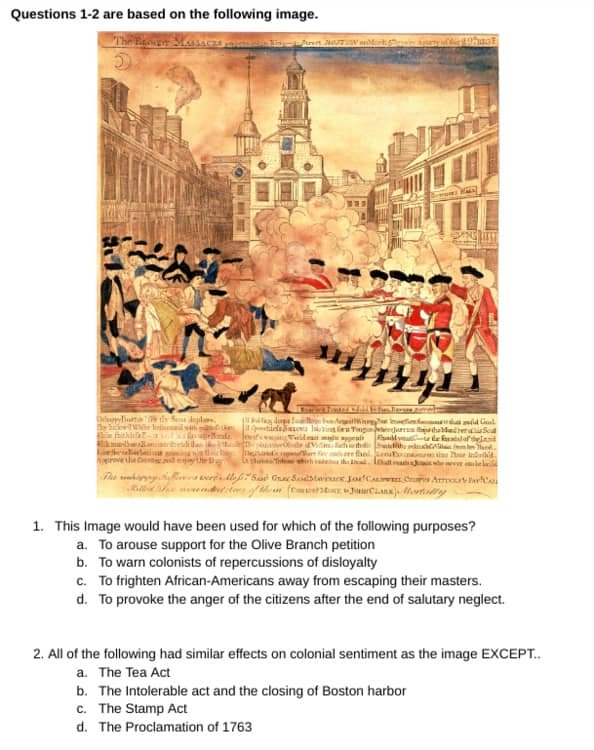
The timer starts, you flip to the first page, and you’re not met with simple trivia. Instead, you see a political cartoon from the 1890s, dense with symbols and competing arguments. The modern APUSH multiple choice questions aren’t designed to see if you’ve memorized every date and name; they’re built to test if you can think, analyze, and argue like a historian. Mastering this section is less about flashcards and more about strategy.
This is your guide to deconstructing the stimulus-based questions that make up 40% of your exam score. We’ll break down the question types, the historical skills you need, and a repeatable process to tackle any document, chart, or image the College Board throws your way.
At a Glance: Your MCQ Game Plan
- Master the First 15 Seconds: Learn to analyze the source attribution before reading the stimulus to instantly gain crucial context.
- Identify the Stimulus Type: Understand how to approach a primary source document, a historian’s argument, or a data set differently.
- Target Key Historical Skills: Focus on the three skills that dominate the MCQ section: contextualization, sourcing, and making connections.
- Spot the Traps: Recognize and eliminate common wrong-answer patterns, like correct facts from the wrong time period or thematically irrelevant statements.
- Manage the Clock: Adopt a pacing strategy that keeps you moving and prevents getting bogged down on a single tough question.
It’s a Skills Test, Not a Trivia Game
First, let’s get the mechanics out of the way. The Multiple Choice Question (MCQ) section is the first part of your exam: 55 questions in 55 minutes, accounting for 40% of your total score. The one-minute-per-question pace is no accident; it forces you to be efficient and strategic.
Unlike old-school history tests that rewarded pure memorization, today’s APUSH exam is built around historical thinking skills. Every question set—typically 3-4 questions tied to a single “stimulus”—is a small analytical puzzle. The stimulus could be anything:
- A letter from a colonial farmer
- An excerpt from a modern historian’s book
- A political cartoon about Gilded Age monopolists
- A map showing westward expansion
- A chart detailing immigration patterns
Your job isn’t just to know about the Gilded Age; it’s to use the cartoon to analyze a specific perspective from the Gilded Age. The best way to get a feel for this unique format is to work with official materials. Reviewing authentic prompts and stimuli is essential, so it’s a good idea to Get APUSH exam practice directly from the source. This ensures you’re training for the real test, not a generic imitation.
The College Board weights the periods heavily toward the middle of U.S. history. Expect the bulk of questions (10-17% for each period) to come from Periods 3 through 8 (1754–1980). The bookend periods—1 (1491–1607) and 9 (1980–Present)—are far less represented, making up only 4-6% of the questions each.
Decode the Stimulus: Your First 15 Seconds Are Critical
When you see a new stimulus, your impulse might be to dive right into the text or image. Resist it. The most valuable information is often in the small italicized text right below or above the source. Spend the first 10-15 seconds analyzing this attribution.
Start with the Source Attribution (The “Tagline”)
Before you read a single word of the stimulus itself, find the source information and ask these questions:
- Who wrote this? Is it a president, a journalist, an activist, a historian? Their role shapes their perspective.
- What is it? A private letter, a public speech, a government report, a scholarly article? This tells you the intended audience and purpose.
- When was it created? The date places the source in its immediate historical context. A document from 1859 about slavery is fundamentally different from one written in 1839.
Case Snippet: Two Views on Government
- Stimulus A: “Thomas Jefferson, Letter to James Madison, 1787.”
- Stimulus B: “Alexander Hamilton, Report on Public Credit, 1790.”
Before reading either, you already know you’re looking at a debate between a Democratic-Republican and a Federalist. You can anticipate arguments about states’ rights versus a strong central government. This context is your anchor.
Identify the Stimulus Type and Adjust Your Approach
Once you have the context, quickly identify what kind of source you’re dealing with. Your analytical lens should change depending on the type.
| Stimulus Type | Your Primary Goal | Example Question Focus |
|---|---|---|
| Primary Source Document | Identify the author’s point of view (POV), purpose, and immediate historical situation. | “The excerpt was most likely a response to which of the following developments?” |
| Secondary Source Excerpt | Pinpoint the historian’s central argument or interpretation. | “The author’s argument most directly challenges which earlier historical interpretation?” |
| Visual Source (Cartoon/Photo) | Decode the symbolism, main message, and the perspective being promoted or attacked. | “The cartoon is best understood as a criticism of which Gilded Age trend?” |
| Data/Map (Chart/Graph) | Identify the main trend, pattern, or change over time depicted in the data. | “The data in the chart most strongly supports which conclusion about post-WWII society?” |
| This initial analysis frames your thinking. You’re no longer just a reader; you’re an investigator looking for specific clues. |
The Three Historical Thinking Skills That Dominate the MCQ
While the APUSH framework lists several skills, the MCQ section disproportionately tests three. If you can master them, you’ll be prepared for the vast majority of questions.
Skill 1: Developments and Processes (The “What?”)
This is the most straightforward skill. These questions ask you to identify what a source is about or what event it describes. They test your reading comprehension within a historical context.
- What it sounds like: “The excerpt best reflects which of the following developments?” or “The sentiments expressed in the passage most directly contributed to…”
- How to handle it: Focus on the main idea of the stimulus. What is the author’s primary point? What is the chart’s most obvious trend? Don’t get lost in minor details.
Skill 2: Sourcing and Situation (The “Who, Why, and When?”)
This skill is all about using the source attribution you analyzed in your first 15 seconds. It asks you to place the document itself into a specific context.
- What it sounds like: “The author’s point of view was most likely influenced by…” or “The source is best understood in the context of the debate over…”
- How to handle it: Connect the “Who, What, When” from the tagline to the content of the stimulus. Why would this person at this time hold this opinion?
Skill 3: Making Connections (The “How and Why?”)
These are often the most challenging questions. They ask you to connect the stimulus to broader historical trends, causes, effects, or other time periods. This category includes causation, comparison, and contextualization.
- What it sounds like: “The trend shown in the graph was a long-term cause of…” (Causation) or “The ideas in the excerpt are most similar to the ideas of…” (Comparison) or “The development in the excerpt is best understood in the context of…” (Contextualization).
- How to handle it: Think bigger. Move beyond the specific stimulus and connect it to the major themes of the era. If the stimulus is about the Second Great Awakening, a contextualization question might ask how it relates to the rise of abolitionism or women’s rights movements.
A 4-Step Playbook for Every Question Set
Turn these concepts into a repeatable process. For each set of 3-4 questions, follow these steps to work efficiently and accurately.
- Analyze the Source (15 seconds): Read the attribution first. Who, what, when? Establish the immediate context.
- Scan the Stimulus (30 seconds): Now, read the document or analyze the image. Your goal isn’t deep mastery; it’s to get the gist. For text, focus on the first and last sentences. For a chart, find the axis labels and the biggest trend. For a cartoon, identify the main characters and symbols.
- Attack the Questions: Read the first question. Underline key phrases like “most directly” or “in the context of” to identify which historical skill is being tested. Connect the question back to a specific part of the stimulus.
- Eliminate Wrong Answers Systematically: This is where you score points. Don’t look for the right answer; look for the three wrong ones. Wrong answers in APUSH multiple choice questions often fall into predictable traps.
How to Spot and Eliminate Trap Answers
Be on the lookout for these common distractors:
- The Wrong Time Period: The answer is a historically accurate statement, but it happened decades before or after the stimulus. If the stimulus is from 1790, an answer about the Missouri Compromise (1820) is out.
- The Thematic Mismatch: The answer is true and from the correct time period, but it doesn’t actually answer the question being asked. A question about the economic causes of the Civil War might have a distractor about the social impact of the Second Great Awakening. True, but not relevant.
- The Oversimplification or Extreme Generalization: The answer uses words like “all,” “never,” or “always” and makes a sweeping claim that ignores historical nuance. The stimulus might show one example of labor unrest, but an answer claiming “all Gilded Age workers were violent revolutionaries” is an overstatement.
- The “Almost Right” Answer: This is the most devious trap. The answer choice is mostly correct but contains one small, inaccurate detail that invalidates the whole thing.
By actively hunting for these errors, you can often eliminate two choices immediately, dramatically increasing your odds even if you have to make an educated guess.
Quick Answers to Common Questions
Let’s tackle some of the most frequent concerns students have about APUSH multiple choice questions.
Q: Do I need to know every single historical fact and date to do well?
A: No. The stimulus-based format is designed to give you the context you need to answer the questions. You don’t need to know the exact date of Shay’s Rebellion, but you do need to understand the broader context of post-Revolutionary economic turmoil and weak central government under the Articles of Confederation to interpret a document about it. Focus on major trends, themes, and turning points.
Q: What’s the real difference between a “most directly reflects” and a “best understood in the context of” question?
A: This is a crucial distinction. “Most directly reflects” asks for a proximate, or immediate, cause or effect. It’s what’s happening right there in the document. “Best understood in the context of” asks for the broader historical background—the larger movement, trend, or debate that the stimulus is a part of. Think of it as a zoom lens: “most directly” is zoomed in, while “context of” is zoomed out.
Q: I’m a slow reader. How can I possibly manage one minute per question?
A: Don’t read for depth; read for purpose. This is called “strategic reading.” After analyzing the source and reading the question, you know what you’re looking for. Scan the stimulus specifically for the phrase, idea, or data point that will help you answer that question. If you’re really pressed for time, a high-risk/high-reward strategy is to read the questions before even looking at the stimulus. This can help you target your reading, but you may miss the overall gist of the source.
Q: Should I ever leave a question blank?
A: Never. The APUSH exam does not penalize you for incorrect answers. If you’re stuck, eliminate any answers you know are wrong, take your best educated guess, and move on. Wasting three minutes on one question is a far bigger mistake than guessing incorrectly.
From Theory to Action
Your success on the APUSH multiple choice questions comes down to a methodical, repeatable process. It’s not about having a flash of brilliant insight on every source; it’s about applying a consistent framework of analysis under pressure.
Start practicing this four-step process—Source, Scan, Question, Eliminate—with timed sections. At first, it will feel slow and mechanical. But with repetition, it will become second nature. You’ll begin to instantly categorize stimuli, anticipate question types, and spot trap answers. This isn’t just test prep; it’s training you to think like a historian, which is the entire point of the course.










