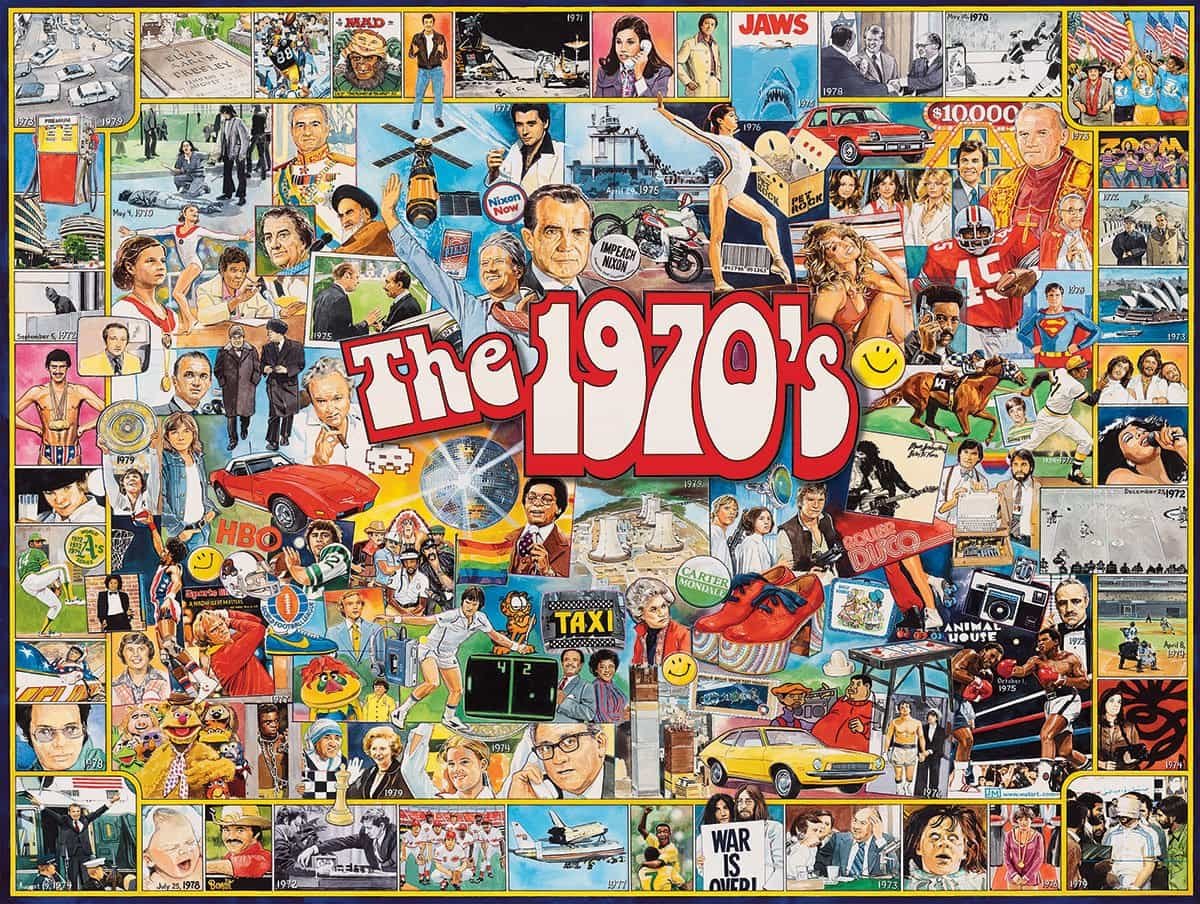
If you ask someone what was the 70s decade known as, you’ll likely get a quick-fire list of clichés: disco, bell bottoms, and Watergate. But those images only skim the surface of a deeply conflicted and transformative period in American history. The 1970s was a decade of paradox—a time of intense self-reflection and hedonistic escape, of cynical disillusionment and powerful social progress. Its nicknames reflect this complex identity, painting a picture of a nation grappling with its past and uncertain of its future.
The 70s wasn’t a party; it was the complicated morning after. It was the decade America woke up, looked in the mirror, and began the messy work of figuring out who it was now that the post-war dream seemed to be over.
At a Glance: Understanding the 70s’ Monikers
- The “Me Decade”: Learn why writer Tom Wolfe famously branded the 70s with this name, linking it to a cultural shift from collective protest to individual self-discovery.
- The “Hangover Decade”: Unpack the widespread disillusionment following the Vietnam War and the Watergate scandal, which shattered public trust in institutions.
- The “Pivot of Power”: Discover how the decade was a crucial turning point for social movements, including feminism, gay rights, and environmentalism, alongside the rise of a new conservative “Silent Majority.”
- The Decade of Contradictions: See how explosive creativity in film and music coexisted with economic stagnation and a national “crisis of confidence.”
The “Me Decade”: A Turn from ‘We’ to ‘I’
The most enduring label for the 1970s is undoubtedly “The Me Decade.” Coined by author and journalist Tom Wolfe in his seminal 1976 New York magazine essay, the term captured a seismic shift in the American psyche. The collective idealism of the 1960s—civil rights marches, anti-war protests, and communal living—seemed to fracture and turn inward.
Wolfe argued that post-war prosperity had allowed a generation to move beyond basic needs and focus on a new frontier: the self. This wasn’t just about selfishness. It was a profound pivot toward personal fulfillment, self-realization, and what he called the “alchemical dream” of remaking one’s own personality.
From Protest Marches to Primal Screams
The evidence for this inward turn was everywhere. The grand, unified social movements of the 60s gave way to a splintered landscape of personal growth fads and therapeutic subcultures.
- Therapy and Self-Help: Pop psychology went mainstream. Books like I’m OK – You’re OK (1967) became 70s bestsellers. Therapies like est (Erhard Seminars Training) and primal scream therapy promised personal breakthroughs.
- Spiritual Exploration: Many Americans, disillusioned with traditional institutions, explored Eastern religions, Transcendental Meditation, and various New Age spiritual practices.
- The Body as a Temple: The jogging and fitness craze took off, symbolizing a new focus on perfecting the individual body rather than society as a whole.
This turn was a direct response to the perceived failures of the previous decade. When changing the world proved to be a messy, violent, and perhaps impossible task, the impulse to at least change oneself became incredibly powerful.
The “Hangover Decade”: Waking Up to a Harsh Reality
If the 60s were the wild party, the 70s were the grim, throbbing hangover. This moniker captures the profound sense of disillusionment that permeated the decade, a direct result of promises broken and innocence lost. The optimism that defined much of the post-war era evaporated, replaced by a deep-seated cynicism.
Political Betrayal and a Lost War
Two monumental events were the primary architects of this national malaise: the Vietnam War and the Watergate scandal.
The Vietnam War ended not with a triumphant victory, but with the humiliating fall of Saigon in 1975. For the first time, America had unequivocally lost a major military conflict. The psychic toll was immense, leaving a legacy of division, unresolved trauma for veterans, and a public wary of foreign intervention.
At home, the Watergate scandal confirmed Americans’ worst fears about their government. The break-in in 1972 unraveled into a vast conspiracy of lies and abuses of power, culminating in President Richard Nixon’s resignation in 1974. The scandal shattered the public’s trust in the presidency and proved that even the highest office was not immune to corruption. This one-two punch of political and military failure was devastating. These events were part of a broader cascade of crises that defined the era. See how the ’70s changed America by fundamentally altering the relationship between citizens and their government.
The Economic Hangover: Stagflation’s Stranglehold
Adding to the gloom was a sputtering economy. The 70s introduced a frustrating new economic reality called “stagflation”—a toxic mix of high unemployment (stagnation) and skyrocketing prices (inflation).
The 1973 Oil Crisis, triggered by an OPEC embargo, sent shockwaves through the country. It led to gas rationing, long lines at the pump, and the jarring realization that America’s prosperity was vulnerable to foreign powers. For the average family, stagflation meant their paychecks bought less and job security was a thing of the past. The American dream of ever-increasing prosperity suddenly seemed like a fantasy.
More Than Malaise: A Decade of Pivots and Progress
While cynicism was a dominant mood, it’s a mistake to write off the entire decade as a downer. The 70s was also known as a crucial “Pivot of Power,” a time when social and political fault lines shifted, creating the foundations of the America we live in today.
The Rise of New Social Movements
The seeds planted in the 60s blossomed into powerful, organized movements in the 70s.
- The Women’s Movement: Second-wave feminism gained significant traction. Congress passed the Equal Rights Amendment (ERA) in 1972 (though it ultimately failed to be ratified), and the Supreme Court’s landmark Roe v. Wade decision in 1973 established a woman’s constitutional right to an abortion.
- The Gay Rights Movement: The 1969 Stonewall Uprising ignited a new era of activism. The first Gay Pride parades were held in 1970, and the American Psychiatric Association removed homosexuality from its list of mental illnesses in 1973.
- The Environmental Movement: Growing concern over pollution culminated in the first Earth Day in 1970. This groundswell of public support led to the creation of the Environmental Protection Agency (EPA) and the passage of landmark legislation like the Clean Air Act and the Clean Water Act.
The Counter-Revolution: The “Silent Majority” Finds Its Voice
In response to these progressive movements, a powerful conservative counter-movement emerged. Tapped into by Richard Nixon as the “Silent Majority,” this coalition of socially conservative, often suburban and rural voters felt left behind by the cultural changes of the 60s. This “New Right” became a formidable political force, organizing around issues like opposition to the ERA, abortion, and busing, setting the stage for the Reagan Revolution of the 1980s.
A Cultural Guide to the 70s’ Contradictions
The decade’s split personality is perfectly reflected in its culture. It was an era of gritty realism and fantastical escapism, of introspective artists and communal dance floors.
| The “Me Decade” Vibe (Individual & Gritty) | The “Hangover” Response (Escapist & Communal) |
|---|---|
| Music: Introspective singer-songwriters like Joni Mitchell and James Taylor. | Music: Escapist disco anthems (Bee Gees) and nihilistic punk rock (The Ramones). |
| Film: Dark, character-driven “New Hollywood” films like Taxi Driver and Chinatown. | Film: The birth of the blockbuster with Jaws and Star Wars offering pure spectacle. |
| Lifestyle: The inward focus on self-help, therapy, and the jogging craze. | Lifestyle: The collective, anonymous release of the disco nightclub. |
| Technology: The birth of the personal computer (Apple, Microsoft), empowering the individual. | Technology: The rise of video games like Pong, offering a shared, simple escape. |
Quick Answers: Debunking Common 70s Myths
Q: Was the 70s just about disco and bell bottoms?
No. While visually iconic, disco was a specific subculture that peaked in the latter half of the decade. The 70s musical landscape was incredibly diverse, spawning punk rock, funk, Southern rock, heavy metal, and the golden age of the singer-songwriter. Bell bottoms were popular, but so were leisure suits, platform shoes, and more natural, earthy styles.
Q: Did the “Me Decade” mean everyone was selfish?
Not exactly. The term described a cultural shift away from the large-scale social movements of the 60s toward a new emphasis on personal consciousness, therapy, and spiritual exploration. For many, the idea was to “fix” oneself as a prerequisite to engaging with the world, a reaction to the burnout from the previous decade’s activism.
Q: Was the entire decade depressing and cynical?
The cynicism was real, but it coexisted with incredible creativity and progress. The 70s saw groundbreaking advances in women’s rights and gay rights, the birth of the modern environmental movement, and technological leaps that gave us the personal computer and the video game industry. President Carter’s famous “Malaise” speech actually diagnosed a “crisis of confidence,” but the decade was also full of resilience and innovation.
Q: Why is the 70s sometimes called the “Brown Decade”?
This nickname refers to the dominant color palette of the era. The vibrant, psychedelic colors of the late 60s gave way to earth tones: avocado green, harvest gold, orange, and lots of brown. This aesthetic appeared in everything from fashion and home décor (shag carpeting) to cars, reflecting a more muted, naturalistic, and sometimes drab mood.
The 1970s resists easy definition. It was a messy, uncomfortable, and deeply consequential period of transition. The nicknames it earned—”Me Decade,” “Hangover Decade,” “Pivot of Power”—are not competing labels but facets of a complex whole. They describe a nation shedding the skin of its post-war certainty and beginning the awkward, painful, and ultimately necessary process of becoming the country it is today. It was the decade America grew up.










