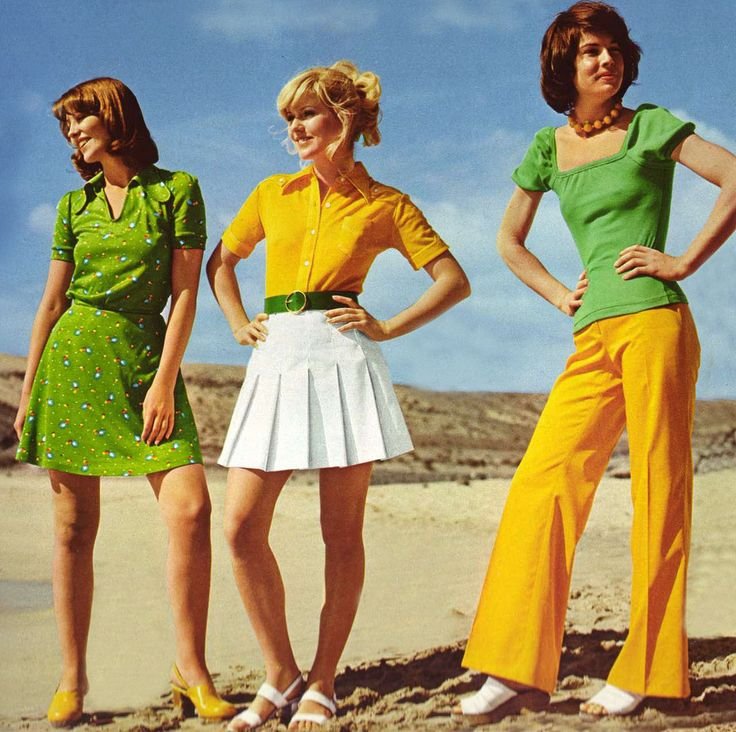
When people ask, “what was the 70s known for,” the answer is rarely simple. It was a decade of jarring contradictions—a 10-year hangover from the idealism of the 60s, dressed in polyester and clouded by economic anxiety. It was the era of gas lines and Watergate, but also the birth of the blockbuster, the personal computer, and the modern environmental movement. More than just a bridge between two more celebrated decades, the 1970s was a crucible where modern America was forged.
The decade stripped away old certainties. Trust in government evaporated, the seemingly endless post-war economic boom sputtered to a halt, and cultural norms were challenged from every direction. It was a messy, complicated, and deeply influential period that set the stage for the world we live in today.
At a Glance: The Decade’s Defining Themes
To grasp the 70s, you need to understand the powerful cross-currents that shaped it. Here’s what you’ll take away:
- Political Disillusionment: The Watergate scandal and the end of the Vietnam War shattered America’s faith in its leaders and institutions.
- Economic Turmoil: The twin crises of an oil embargo and “stagflation” introduced a new sense of economic vulnerability.
- Cultural Explosions: A stark contrast emerged between the hedonism of disco and the raw rebellion of punk rock, while Hollywood reinvented itself with the summer blockbuster.
- The Dawn of Modern Tech: The quiet founding of Apple and Microsoft laid the groundwork for the digital revolution.
- Social Progress and Pushback: Landmark victories for women’s rights and gay liberation gained momentum, even as they faced significant opposition.
From Watergate to Vietnam: A Crisis of Confidence
The decade began with the nation already fractured by the Vietnam War, and a political scandal would soon break what little trust remained. This erosion of faith in government is central to understanding what the 70s was known for.
The Watergate Scandal: More Than a “Third-Rate Burglary”
What started in 1972 as a bungled break-in at the Democratic National Committee headquarters in the Watergate office complex unraveled into a constitutional crisis. The ensuing investigation exposed a vast conspiracy of illegal wiretapping, political espionage, and a cover-up that reached the highest levels of President Richard Nixon’s administration.
For two years, the country was captivated by televised hearings and the dogged reporting of journalists like Bob Woodward and Carl Bernstein. The scandal culminated in 1974 with President Nixon’s resignation—the first and only time a U.S. president has done so. The impact was profound: it permanently soured public opinion on politicians and solidified the role of investigative journalism as a check on power.
The Lingering Shadow of Vietnam
The Vietnam War, the defining conflict of the 1960s, cast a long shadow over the 1970s. In 1970, the nation was horrified when National Guardsmen opened fire on unarmed students protesting the war at Kent State University, killing four. The event symbolized the deep, violent chasm dividing the country.
The official end of U.S. involvement didn’t come until the Paris Peace Accords in 1973, but the war’s true finale was the dramatic fall of Saigon in 1975. The images of desperate Vietnamese civilians clinging to American helicopters became an enduring symbol of a bitter and divisive defeat. The war left America with a legacy of dead and wounded, a traumatized generation of veterans, and a deep-seated reluctance to engage in foreign conflicts, known as the “Vietnam Syndrome.”
These political upheavals were just one part of a larger story of a nation in transition. For a complete timeline of these landmark moments, see our comprehensive guide on How the 70s reshaped America.
When the American Dream Hit a Pothole: Stagflation and Oil Shocks
For decades after World War II, Americans had enjoyed seemingly limitless prosperity. The 1970s brought that assumption to a screeching halt. The economy became a source of daily anxiety, defined by new terms and new hardships.
Understanding “Stagflation”
Economists and citizens alike were baffled by a new, toxic economic condition: stagflation. This was a painful combination of:
- Stagnant economic growth and high unemployment.
- High inflation, meaning the cost of everything from bread to cars was soaring.
Traditionally, inflation and unemployment moved in opposite directions. This new reality meant that not only were people losing their jobs, but the money they did have was worth less every day. It defied conventional economic wisdom and left policymakers struggling for a solution.
The 1973 Oil Crisis: Lines at the Pump
The abstract problem of stagflation became painfully real in October 1973. In response to U.S. support for Israel during the Yom Kippur War, the Organization of Arab Petroleum Exporting Countries (OPEC) declared an oil embargo.
The effect was immediate and chaotic. Gas prices quadrupled, and supply dwindled. Americans faced hours-long lines at gas stations, fuel rationing, and government-mandated lower speed limits. The crisis was a stark wake-up call, revealing America’s deep dependence on foreign energy and ushering in an era of smaller, more fuel-efficient cars from Japan.
A Cultural Kaleidoscope: From Disco Balls to Punk Rock Riffs
While politics and economics were bleak, American culture was vibrant, fragmented, and explosive. The 70s produced some of the most iconic and contradictory movements in music, film, and fashion.
The Soundtrack of a Divided Decade
Two musical genres defined the era, and they couldn’t have been more different.
- Disco: On one side was the polished, danceable, and escapist sound of disco. With anthems like the Bee Gees’ “Stayin’ Alive” and epicenters like New York’s Studio 54, disco was a cultural phenomenon. It offered a space of glamour and liberation, particularly for gay and minority communities who found a home on the dance floor.
- Punk Rock: As a direct reaction, punk rock emerged from gritty clubs like CBGB. Bands like The Ramones in the U.S. and The Sex Pistols in the U.K. stripped rock and roll down to its raw, angry basics. Their three-chord anthems were a snarling rejection of corporate rock, political corruption, and the polished sheen of disco.
Blockbusters are Born: The New Hollywood
The film industry underwent a revolution. The gritty, director-driven cinema of films like The Godfather (1972) and Taxi Driver (1976) captured the decade’s cynical mood.
At the same time, two films created an entirely new business model. Steven Spielberg’s Jaws (1975) became the first-ever summer blockbuster, a high-concept thrill ride marketed to a massive audience. Two years later, George Lucas’s Star Wars (1977) took it a step further, revolutionizing special effects and creating a pop-culture juggernaut that proved franchises were the future.
Planting the Seeds for the Modern World
Beyond the headlines, quiet but monumental shifts in technology and society were taking place. These developments didn’t fully mature until later decades, but their roots are planted firmly in the 70s.
The Personal Computer Revolution Begins
The 1970s was not the decade of the home computer, but it was the decade of its conception.
- In 1975, Bill Gates and Paul Allen founded Microsoft to create software for an early hobbyist computer.
- In 1976, Steve Jobs and Steve Wozniak founded Apple Computer in a garage, launching the Apple I.
- In 1971, engineer Ray Tomlinson sent the first-ever email and introduced the “@” symbol for addresses.
These were the foundational moments of the digital age. The idea of a computer on every desk was still a fantasy, but these pioneers were building the infrastructure that would make it a reality.
Social Movements Find Their Voice
The activism of the 60s evolved and consolidated into powerful movements that achieved landmark successes.
- Feminism: The women’s liberation movement scored its most significant legal victory in 1973 with the Supreme Court’s decision in Roe v. Wade, which established a woman’s constitutional right to an abortion.
- Gay Liberation: Building on the momentum of the 1969 Stonewall Uprising, the first Pride marches were held in 1970 in cities like New York and Los Angeles, transforming a plea for tolerance into a public demand for rights and recognition.
- Environmentalism: The first Earth Day was celebrated on April 22, 1970, mobilizing an estimated 20 million Americans. This massive public demonstration spurred the creation of the Environmental Protection Agency (EPA) and the passage of crucial legislation like the Clean Air and Clean Water Acts.
How the 70s Echoes Today: A Quick Reference
The events of the 1970s weren’t just historical footnotes; they created ripple effects that continue to shape our current reality.
| 1970s Development | Today’s Legacy |
|---|---|
| Watergate Scandal | Heightened media scrutiny of politicians; lasting public distrust in government. |
| 1973 Oil Crisis | Ongoing debates about energy independence and the strategic importance of fossil fuels. |
| Founding of Apple/Microsoft | The entire digital infrastructure of modern life, from smartphones to the internet. |
| Roe v. Wade Decision | The deeply divisive political and legal battles over reproductive rights. |
| Birth of the Blockbuster | The modern movie industry’s focus on tent-pole franchises and global marketing. |
| First Earth Day | The mainstream environmental movement and global climate change policy debates. |
Unpacking Common Questions About the 1970s
Q: Was the 70s really all about disco and bell-bottoms?
No. While fashion and music are powerful symbols of the era, they often overshadow the profound political and economic anxieties that defined daily life for most Americans. The 70s was a decade of deep substance, marked by a crisis of faith in government, economic hardship, and the start of technological and social revolutions.
Q: Why is the 70s often called the “hangover” decade?
This term reflects the sense of disillusionment that followed the turbulent optimism of the 1960s. The 70s was when the bills for the previous decade’s conflicts and social upheavals came due. The nation grappled with the fallout from Vietnam, the limits of American power, and the end of the post-war economic boom.
Q: How did the 70s change the American family?
The decade saw significant shifts in family structures. Divorce rates began to climb, more women entered the workforce out of both necessity and choice, and the traditional nuclear family model was increasingly questioned. These trends challenged long-held social norms and redefined American home life.
Q: What was the biggest technological shift of the 1970s?
While the Concorde’s supersonic flights and the Voyager space probes captured the public imagination, the most impactful innovation was the microprocessor. This “computer on a chip,” developed in 1971, was the quiet engine behind the personal computer revolution and countless other digital technologies. Its invention was arguably the single most important technological event of the decade.
The 70s: A Decade of Endings and Beginnings
To truly answer “what was the 70s known for,” you have to see it as a decade of profound transition. It was a period when many of America’s post-war assumptions—about its invincible military, its unshakable economy, and the integrity of its leaders—crumbled.
But from that wreckage, a new world began to emerge. The seeds of the digital age were planted, environmental consciousness became a powerful political force, and social movements for the rights of women and gay people won battles that reshaped society. The 70s was uncomfortable, uncertain, and often unglamorous, but it was undeniably the decade that drew the blueprint for the 21st century.










