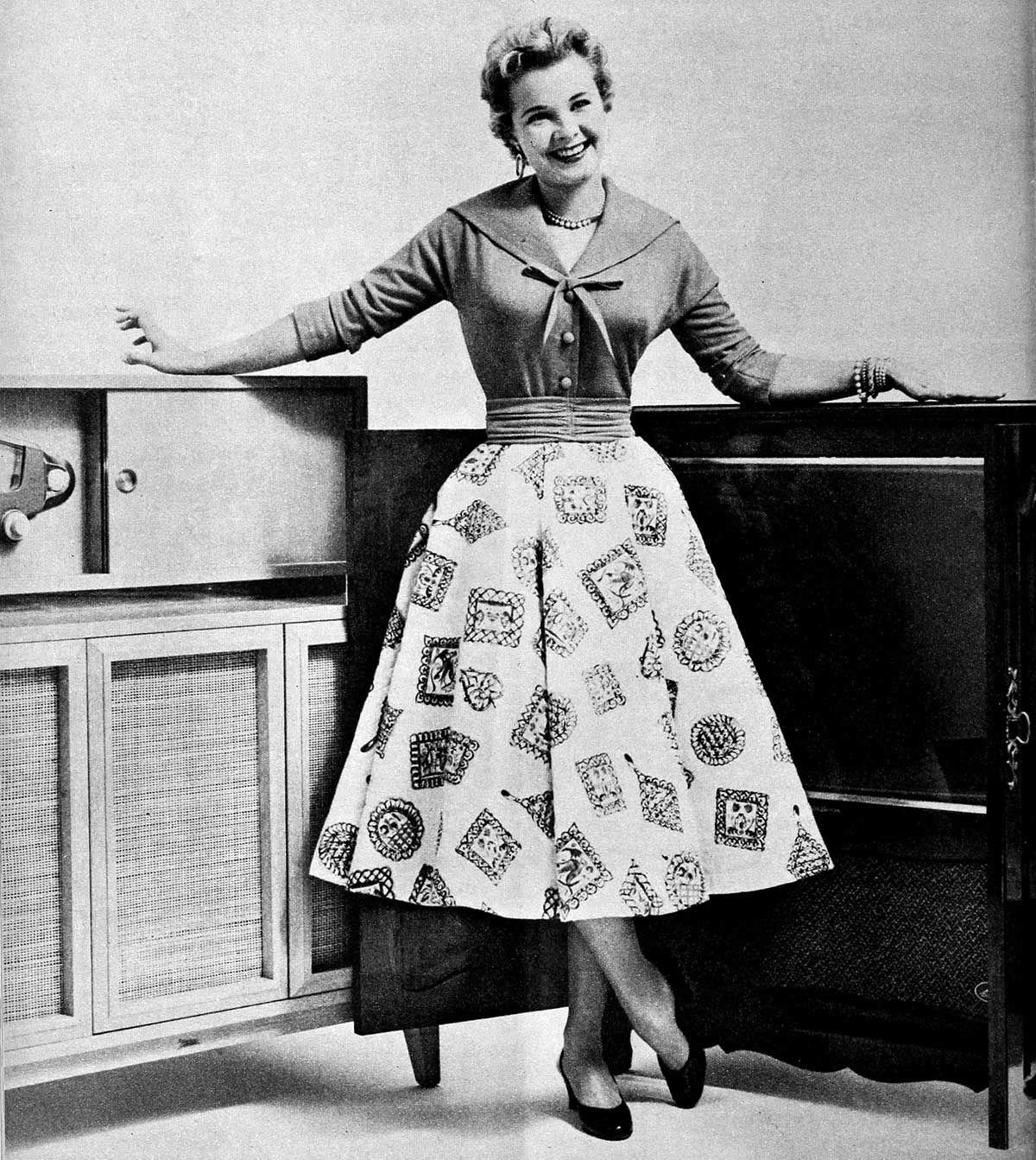
Beyond the idyllic images of poodle skirts and shiny new Chevrolets, the most pivotal 1950s historical events were forged in the crucible of nuclear anxiety, global ideological conflict, and a profound struggle over the definition of freedom. This wasn’t a decade of simple nostalgia; it was a period of intense pressure that fractured old norms and laid the foundation for the modern world, from the global balance of power to the layout of our cities and the makeup of our DNA.
The decade’s defining characteristic was a series of chain reactions: a Soviet satellite launch triggered a revolution in American education, a single woman’s refusal to give up her bus seat ignited a nationwide movement for civil rights, and the fear of communism abroad reshaped personal liberties at home.
At a Glance: Key Transformations of the 1950s
This article unpacks the critical events that defined the decade. You’ll gain a clear understanding of:
- The Cold War’s Solidification: How the world was formally divided into two armed camps, leading to proxy wars and a constant nuclear threat.
- The American Social Contract Rewritten: The forces behind the suburban boom, the rise of consumer culture, and the first major cracks in racial segregation.
- The Dawn of the Techno-Scientific Age: Key breakthroughs in space, medicine, and computing that set the stage for the 21st century.
- Cultural Rebellion and Conformity: The twin forces of a rising youth culture and the pressure to conform in a decade of anxiety.
The World Remade: A New Global Order Takes Shape
The ashes of World War II gave way not to peace, but to a tense, bipolar standoff. The 1950s was the decade when the lines of the Cold War were drawn in concrete and steel, creating a new global reality. To grasp the full scope of this era, understanding How the 50s shaped America provides a comprehensive framework for both foreign and domestic shifts.
From Iron Curtain to Armed Alliances
The ideological divide Churchill called the “Iron Curtain” became a formal military reality. This wasn’t just a war of words; it was a global chessboard where every move was a potential trigger for conflict.
- NATO vs. Warsaw Pact: The North Atlantic Treaty Organization (NATO), formed in 1949, solidified the Western alliance. The Soviet Union responded by creating the Warsaw Pact in 1955, formalizing the Eastern Bloc’s military command. This created two massive, opposing armies in Europe, institutionalizing the Cold War for decades.
- The European Economic Community (EEC): In a move to prevent future European wars and counter Soviet influence, six nations founded the EEC in 1957. This was the precursor to the European Union, a monumental step toward economic integration built on the lessons of two world wars.
Proxy Wars: When the Cold War Turned Hot
The superpowers avoided direct conflict, but they fueled brutal wars across the globe. These were not minor skirmishes; they were devastating conflicts that defined the future of entire nations.
Case Snippet: The Korean War (1950–1953)
The war began with North Korea’s invasion of the South and quickly became an international conflict, with the U.S. leading a UN coalition against North Korean and Chinese forces. After three years of brutal fighting and millions of casualties, the war ended in a stalemate. The armistice signed in 1953 re-established a border near the original 38th parallel, a division that remains a flashpoint today. The Korean War set a precedent for Cold War “limited wars” and cemented the U.S. policy of communist containment.
The seeds of another major conflict were sown in 1954 when the Geneva Accords ended the First Indochina War, temporarily dividing Vietnam at the 17th parallel. This partition laid the groundwork for the future Vietnam War.
Global Flashpoints of the 50s
| Event | Year | Key Players | Outcome & Lasting Impact |
|---|---|---|---|
| Suez Crisis | 1956 | Egypt, Israel, UK, France, US, USSR | Egypt nationalized the canal. The US & USSR pressured the invaders to withdraw, signaling a major shift in global power away from Britain and France. |
| Hungarian Revolution | 1956 | Hungarian Rebels, Soviet Union | A nationwide revolt against Soviet rule was brutally crushed by the Soviet military. It exposed the brutal reality of Soviet control over the Eastern Bloc. |
| Cuban Revolution | 1959 | Fidel Castro, Fulgencio Batista | Castro’s forces overthrew the U.S.-backed Batista dictatorship, establishing a communist state just 90 miles from Florida and creating a new Cold War hotspot. |
The American Experience: Prosperity, Fear, and the Fight for Justice
While the world was being carved into spheres of influence, American society was undergoing its own dramatic transformations. Economic prosperity existed alongside deep-seated anxieties and a burgeoning movement for civil rights that would challenge the nation’s core identity.
The Rise of Suburbia and Consumer Culture
The post-war economic boom, fueled by the G.I. Bill and manufacturing might, created a new American dream.
- The Baby Boom: With roughly 4 million babies born each year throughout the decade, the population surged. This demographic explosion created immense demand for housing, schools, and consumer goods.
- Levittown and the Suburbs: To meet the housing demand, developers like William Levitt pioneered mass-produced, affordable suburban homes. Places like Levittown, New York, became symbols of this new lifestyle—a single-family home, a car in the driveway, and a yard for the kids.
- A Culture of Credit: The first credit cards and a deluge of television advertising fueled a consumer-driven economy. Families bought new cars, washing machines, and televisions, embracing a level of material comfort unimaginable just a decade earlier.
The Shadow of the Red Scare
This prosperity was haunted by the Second Red Scare. The fear of communist infiltration reached a fever pitch, driven by Senator Joseph McCarthy.
McCarthyism in Action:
From 1950 to 1954, McCarthy’s Senate committee held highly publicized hearings, accusing government officials, artists, and academics of being communists or sympathizers. While he never proved most of his wild accusations, the process itself—being called before the committee—was enough to destroy careers and lives. The term “McCarthyism” became synonymous with making unsubstantiated, damaging accusations based on fear and paranoia.
The Civil Rights Movement Gains Unstoppable Momentum
The 1950s was the decade the Civil Rights Movement moved from legal challenges to mass popular action, laying the groundwork for the landmark victories of the 1960s.
1. The Legal Turning Point: Brown v. Board of Education (1954)
In a unanimous decision, the Supreme Court declared that state-sponsored segregation in public schools was unconstitutional, overturning the “separate but equal” doctrine established in 1896. Chief Justice Earl Warren wrote that separate educational facilities are “inherently unequal.” This ruling provided the legal foundation for the fight against all forms of segregation.
2. The Spark of Mass Resistance: The Montgomery Bus Boycott (1955–1956)
On December 1, 1955, Rosa Parks, a respected community member and activist, was arrested for refusing to give her bus seat to a white man in Montgomery, Alabama. This was the catalyst for a planned, 382-day boycott of the city’s bus system by its Black citizens. The boycott, organized by leaders including a young Dr. Martin Luther King Jr., was a masterclass in nonviolent resistance and economic pressure. It ended when the Supreme Court ruled that segregation on public buses was unconstitutional. The boycott thrust Dr. King into the national spotlight and proved the power of organized, nonviolent protest.
The decade closed with the passage of the Civil Rights Act of 1957, the first federal civil rights legislation since Reconstruction. While its protections were limited, it was a crucial symbolic step and created the Civil Rights Division of the Justice Department.
The Technological Leap: Sputnik, DNA, and the Polio Vaccine
The anxieties of the Cold War and the optimism of the post-war boom combined to fuel an unprecedented explosion in science and technology.
The Space Race and the Nuclear Age
The launch of a beachball-sized satellite by the Soviet Union on October 4, 1957, sent shockwaves through the United States.
- Sputnik 1: The successful launch of the world’s first artificial satellite was a stunning technological and propaganda victory for the USSR. It created a “Sputnik crisis” in the U.S., sparking fears that America was falling behind in science and technology.
- The U.S. Response: The government responded swiftly. In 1958, President Eisenhower created the National Aeronautics and Space Administration (NASA) to lead the nation’s civilian space efforts. Funding for science and math education skyrocketed. In 1959, NASA introduced the Mercury Seven, America’s first astronauts, officially kicking off the race to the moon.
Simultaneously, the nuclear arms race escalated dramatically. The U.S. tested its first hydrogen bomb in 1952, a weapon hundreds of times more powerful than the atomic bomb. The Soviets followed suit in 1953. The launch of the USS Nautilus in 1954, the world’s first nuclear-powered submarine, further transformed military strategy.
Medical and Scientific Miracles
Away from the battlefield, groundbreaking discoveries were changing human life itself.
- The Polio Vaccine (1955): Dr. Jonas Salk’s development of a safe and effective polio vaccine was a public health triumph. Polio had been a terrifying scourge, disabling and killing thousands each year. The vaccine’s arrival was met with widespread public relief and celebration.
- The Discovery of DNA (1953): James Watson and Francis Crick published their discovery of the double helix structure of DNA. This unlocked the secrets of heredity and laid the foundation for virtually all of modern biology and genetic engineering.
- The First Commercial Computer (1951): The UNIVAC I was delivered to the U.S. Census Bureau, marking the beginning of the computer age. While these room-sized machines were nothing like today’s devices, they were the first step toward the digital revolution.
Quick Answers to Common Questions
Q: Was the 1950s really as simple and happy as it’s portrayed on TV?
A: Not at all. While there was widespread economic prosperity for many white Americans, the decade was defined by deep anxieties. These included the constant threat of nuclear annihilation (“duck and cover” drills were common in schools), the paranoia of McCarthyism, and the immense social tension of the growing Civil Rights Movement. The “idyllic” image often ignores the systemic racism, sexism, and intense pressure to conform that characterized the era.
Q: Did rock and roll really cause a youth rebellion?
A: Rock and roll was more of a symptom than a cause, but it became a powerful symbol and soundtrack for a growing generational divide. Artists like Elvis Presley, Chuck Berry, and Little Richard blended blues, country, and gospel into a sound that was energetic, raw, and overtly sexual to many adults. It gave young people a cultural identity distinct from their parents and became intertwined with feelings of restlessness and non-conformity, as seen in films like Rebel Without a Cause (1955).
Q: How did television change America in the 1950s?
A: Massively. At the start of the decade, TV was a luxury; by 1960, nearly 90% of American homes had one. It homogenized culture, creating shared national experiences like watching I Love Lucy. It also became the most powerful advertising medium ever created, driving the consumer economy. Furthermore, television brought major historical events, from McCarthy’s hearings to the Civil Rights struggle, directly into American living rooms, shaping public opinion in a new and immediate way.
A Decade of Unfinished Revolutions
The 1950s did not neatly resolve the conflicts it began. The Cold War would continue for decades, the Civil Rights Movement faced its most violent struggles in the 1960s, and the cultural shifts started by the Beat Generation and rock and roll would explode into the counterculture.
However, the events of this decade set the trajectory. The world was permanently divided into new power blocs. American society was reshaped by the suburbs, the television, and the tireless fight for racial equality. And the launch of a tiny satellite set humanity on a course for the stars. The 1950s was the launchpad for the world we live in today.










