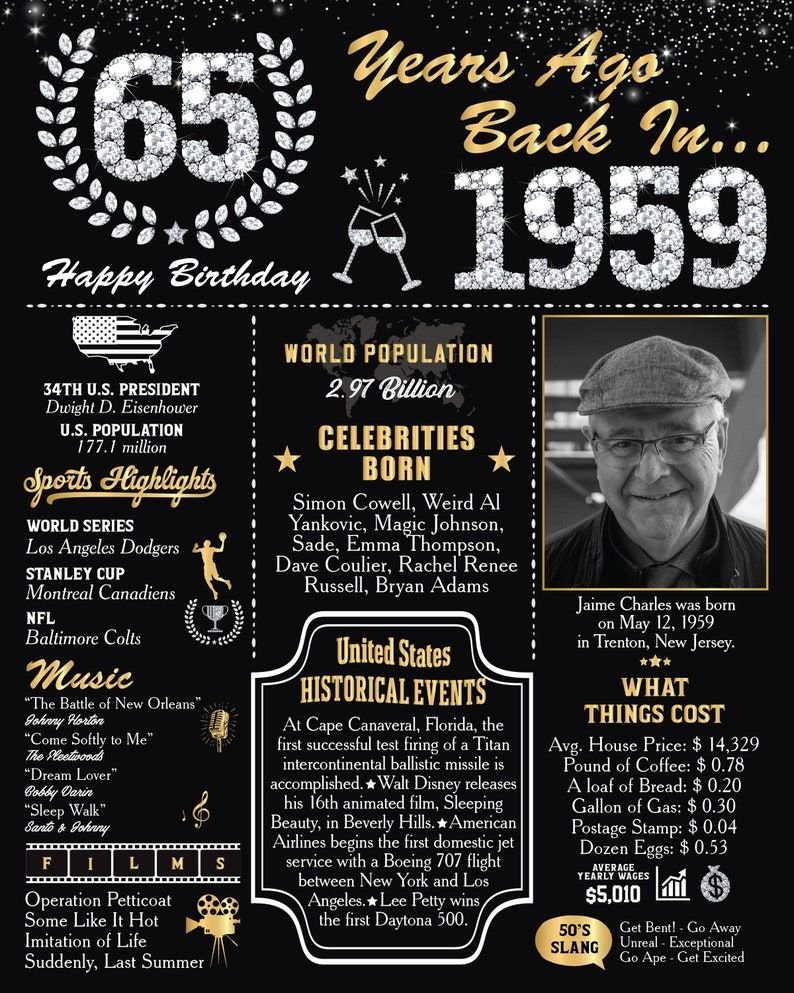
The year 1959 was a study in American contrasts. While families gathered around new television sets to watch the nation’s first astronauts be introduced, they also mourned the sudden loss of rock and roll’s brightest stars. The 1959 events in America redrew the country’s physical map with two new states, pushed its technological ambitions into Earth’s orbit, and laid the cultural groundwork for the decade to come, all while the chill of the Cold War deepened just off the Florida coast. It was a year of immense optimism shadowed by growing anxiety.
At a Glance: What 1959 Forged in America
- A Redrawn Nation: Discover how Alaska and Hawaii’s admission as the 49th and 50th states completed the modern American map and altered its strategic and cultural identity.
- The Space Race Heats Up: Learn about the key US milestones, from launching the first weather satellite to selecting the heroic Mercury Seven astronauts.
- Cultural Bedrock: See how the introduction of the Barbie doll, the premiere of The Twilight Zone, and the first-ever Grammy Awards created lasting cultural touchstones.
- A Generational Shock: Understand the impact of “The Day the Music Died” and the payola scandal that rocked the burgeoning music industry.
- Seeds of Change: Explore the quiet but significant steps in the Civil Rights Movement and the rapidly souring relationship with a newly revolutionary Cuba.
A New American Map: The Union Welcomes Alaska and Hawaii
In 1959, the United States physically transformed, adding two non-contiguous states that expanded its geographic and cultural horizons. These weren’t just new territories; they were strategic and symbolic additions that reshaped the nation’s identity on the world stage.
From “Seward’s Folly” to the 49th State
On January 3, 1959, Alaska officially shed its territorial status and became the 49th state. The move was the culmination of a long campaign, finally pushed over the line by the territory’s strategic importance in the Cold War. Its proximity to the Soviet Union made it a critical outpost for defense and surveillance.
The admission was celebrated with the debut of a new 49-star American flag on July 4th, a design that would prove to be the shortest-lived in U.S. history. For many Americans, Alaska was still a remote, icy frontier, but its statehood firmly cemented it as an integral part of the nation’s future.
Aloha, Statehood: Hawaii’s Path to the Union
Just as Americans were getting used to 49 stars, Congress moved to add a 50th. President Dwight D. Eisenhower signed the Hawaii Admission Act on March 18, and following a referendum, Hawaii officially became the 50th state on August 21.
Hawaii’s statehood was a landmark moment. It was the nation’s first island state and the first with a majority non-white population, a significant step in the country’s evolving understanding of its own diversity. The addition of these two states marked the end of an era of continental expansion and finalized the 50-state union we know today.
Reaching for the Stars: America’s Scramble in the Space Race
While the Soviet Union seemed to dominate the headlines with its Luna probes, 1959 was the year America’s space program found its footing and, just as importantly, its heroes. The focus shifted from just launching hardware to capturing the public’s imagination with the promise of sending a man into the cosmos.
The Mercury Seven: Naming the Nation’s First Heroes
On April 9, NASA held a press conference in Washington, D.C., to introduce its first class of astronauts. Scott Carpenter, Gordon Cooper, John Glenn, Gus Grissom, Wally Schirra, Alan Shepard, and Deke Slayton—the Mercury Seven—became instant national icons. They were military test pilots, the embodiment of the “right stuff,” and their selection transformed the abstract Space Race into a human drama.
This announcement was a masterful piece of public relations, giving Americans a team to root for in the high-stakes competition against the Soviets. It signaled that the U.S. was serious not just about satellites, but about manned spaceflight.
Primate Pioneers and Photographic Firsts
Before sending up its human heroes, NASA needed to prove it was possible. On May 28, two monkeys, a rhesus named Able and a squirrel monkey named Baker, were launched 300 miles high in the nosecone of a Jupiter rocket and recovered alive. Their successful mission was a critical biological proof-of-concept for manned spaceflight.
America also made crucial advances in seeing our planet from a new perspective.
- Vanguard 2 (February 17): The world’s first weather satellite was launched, tasked with mapping Earth’s cloud cover. Though it wobbled, it was a pioneering step in using space to monitor our own planet.
- Pioneer 4 (March 3): This probe became the first U.S. spacecraft to escape Earth’s gravity and enter into a solar orbit, a major achievement in interplanetary navigation.
- Explorer 6 (August 7): This satellite transmitted the first rudimentary television image of Earth from orbit, a grainy but historic snapshot of our world from afar.
While the Soviets were the first to reach the Moon’s vicinity, American efforts were rapidly building the technological and human foundation for the decade of space exploration to come. This intense competition became a defining feature of the era. See how 1959 changed the world through this and other global rivalries.
The Birth of Icons and the Day the Music Died
American culture in 1959 was a mix of forward-looking optimism and shocking tragedy. New forms of entertainment and consumer goods emerged that would define a generation, while the music world faced a devastating loss and a crisis of integrity.
A Plastic Revolution: The Debut of the Barbie Doll
At the American International Toy Fair in New York on March 9, the Mattel toy company introduced a doll unlike any other. Named Barbie, she wasn’t a baby to be cared for but a teenage fashion model with an adult figure and an extensive wardrobe. Critics were skeptical, but Barbie was an instant commercial success. She represented a new, aspirational type of play for girls and became one of the most iconic and enduring toys ever created.
A Generational Shockwave
On February 3, a small plane crashed in a snowy Iowa field, killing three of rock and roll’s most promising young stars: Buddy Holly, Ritchie Valens, and J.P. “The Big Bopper” Richardson. The event, later immortalized in Don McLean’s song “American Pie,” became known as “The Day the Music Died.” It was a profound shock to a generation of young fans and marked a symbolic end to the first innocent era of rock and roll.
A New Dimension of Entertainment
The year also saw the launch of new cultural institutions:
- The Grammy Awards (May 4): The National Academy of Recording Arts and Sciences held its first awards ceremony, recognizing artistic achievement in the music industry.
- The Twilight Zone (October 2): Rod Serling’s anthology series premiered, using science fiction and fantasy to explore complex social and moral issues. Its masterful storytelling and twist endings made it a television classic.
- The Payola Scandal (November 22): The underbelly of the music industry was exposed when famed DJ Alan Freed was fired amid allegations that he accepted payments—or “payola”—from record labels to play their songs. The scandal led to congressional hearings and tarnished the image of rock radio.
Understanding 1959’s Legacy: Technology and Tensions
Beyond pop culture and space, 1959 was a pivotal year for the technologies that would build the modern world and the geopolitical tensions that would threaten it.
A Table of Technological Leaps
Several key innovations in 1959 laid the groundwork for the information age and reshaped both the office and the battlefield.
| Date | Innovation | Significance |
|---|---|---|
| Oct 5 | IBM 1401 Computer | A revolutionary business computer that made data processing accessible to more companies. |
| Dec 14 | Xerox 914 Copier | The first commercially successful plain-paper photocopier, which transformed office work. |
| Dec 30 | USS George Washington | The first nuclear-powered ballistic missile submarine, a key Cold War deterrent. |
Seeds of Conflict: Cuba and Civil Rights
Two major social and political developments in 1959 would have repercussions for decades.
- A New Cuba: After Fidel Castro’s forces overthrew the Batista regime, the U.S. officially recognized the new government on January 7. But the relationship quickly deteriorated as Castro consolidated power and enacted radical reforms. By December 11, a secret CIA memo was already recommending action against him, setting the stage for decades of hostility.
- A Step Toward Integration: On September 18, eight African-American students, known as the “Memphis State Eight,” desegregated Memphis State University. Their brave and quiet entry was a significant, if less nationally publicized, victory in the ongoing struggle for civil rights.
Quick Answers to Key Questions About 1959 in America
Why were Alaska and Hawaii admitted as states in the same year?
This was largely a political balancing act. At the time, Alaska was seen as a likely Democratic stronghold, while Hawaii was expected to lean Republican. Admitting them together was a bipartisan compromise designed to maintain the existing balance of power in the U.S. Senate.
Was the US “winning” the Space Race in 1959?
By most metrics, no. The Soviet Union was still widely considered the leader. In 1959 alone, the Soviets launched Luna 1 (first to fly by the Moon), Luna 2 (first to impact the Moon), and Luna 3 (first to photograph the far side of the Moon). The U.S. achievements, while significant, were part of a determined effort to catch up.
What was the “Payola” scandal?
It was a major music industry scandal where record companies were found to be bribing radio DJs to give their songs more airtime. The practice artificially inflated a song’s popularity. The scandal led to congressional hearings and the downfall of several prominent DJs, most notably Alan Freed, who had helped popularize the term “rock and roll.”
How did the Barbie doll change the toy industry?
Barbie was revolutionary because she was an adult-figured doll that encouraged aspirational play, allowing children to imagine future careers and lifestyles. She was also one of the first toys to be heavily marketed directly to children through television commercials, a strategy that reshaped the entire toy industry.
From Statehood to Stardom: The Enduring Impact of 1959
The events of 1959 fundamentally altered America’s geography, culture, and ambitions. The nation grew to its final 50-state configuration, embraced its first astronaut heroes, and created cultural products like Barbie and The Twilight Zone that remain influential today.
Yet, it was also a year that planted the seeds of future conflict. The tragic plane crash in Iowa marked a loss of innocence for a generation, the payola scandal revealed the commercial pressures corrupting a new art form, and the revolution in Cuba created a Cold War flashpoint just 90 miles from American shores. More than just a year on a calendar, 1959 was the launchpad for the turbulent, transformative decade that would follow.










