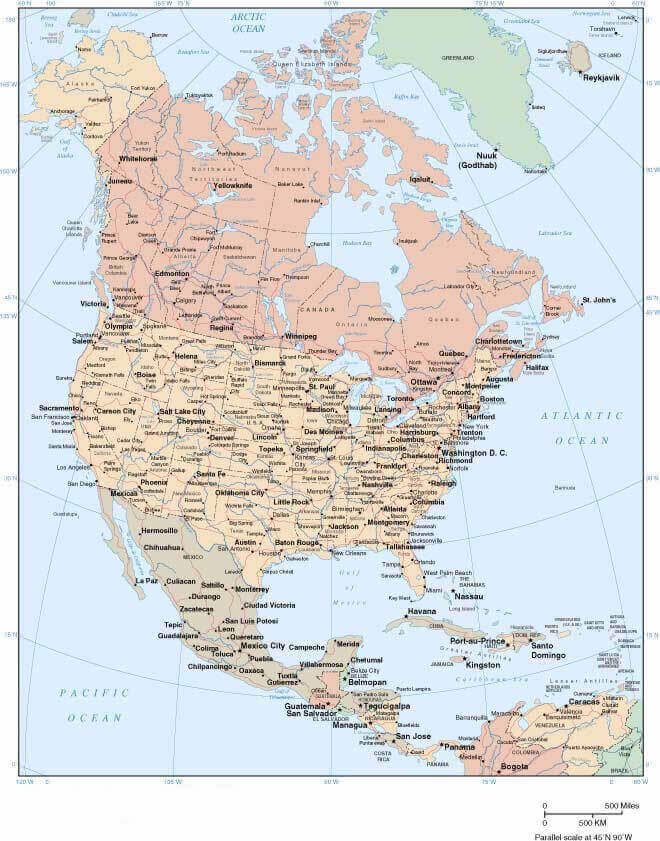
The story of america in 1860 is one of a nation holding its breath. On the surface, it was a country of immense growth and potential, with 31.4 million people pushing westward, laying railroad tracks, and building factories. But beneath this veneer of progress was a deep, unhealed wound: the institution of chattel slavery. This single issue had poisoned political discourse for decades, and the presidential election of 1860 would prove to be the final, fatal spark that ignited the fires of disunion and civil war.
At a Glance: The Nation on the Brink
- Economic & Social Divide: Understand the starkly different worlds of the industrial North and the agrarian, slave-based South.
- The Fateful Election: Analyze the four-way presidential race of 1860 and see why Abraham Lincoln’s victory was both mathematically likely and politically catastrophic for national unity.
- The Secession Crisis: Trace the rapid, chain-reaction of secession as Southern states began leaving the Union, starting with South Carolina.
- Arguments for Disunion: Grasp the legal and ideological arguments Southern leaders used to justify secession, centered on the preservation of slavery.
- Key Decisions: Identify the critical choices made by leaders like Abraham Lincoln, Stephen Douglas, and James Buchanan that pushed the nation from crisis to open conflict.
A Nation of Two Minds: The North-South Divide
To understand the crisis of 1860, you have to see the United States not as one country, but as two distinct societies forced to share a single government. Their economic systems, social structures, and core values were increasingly at odds. This wasn’t just a political disagreement; it was a fundamental conflict over the nation’s identity and future.
The Economic Chasm: Factories vs. Plantations
The North was rapidly industrializing. Its economy was a dynamic mix of manufacturing, finance, small-scale farming, and massive infrastructure projects like railroads and canals. Cities like New York, Philadelphia, and Boston swelled with European immigrants who provided a vast pool of wage labor for factories and workshops. This free-labor ideology, the idea that a person could work for wages and improve their station in life, was central to the Northern identity.
The Southern economy, in contrast, was overwhelmingly agrarian and static. Its immense wealth was built on a single foundation: enslaved labor. “King Cotton” was the region’s dominant crop, and its cultivation was brutally labor-intensive. The South’s entire social and economic hierarchy—from the wealthy planter elite who owned hundreds of enslaved people to the small-time farmers who aspired to—was predicated on the belief in white supremacy and the permanent institution of slavery. They had little manufacturing, fewer railroads, and viewed the North’s reliance on “greasy mechanics” and immigrants with a mixture of disdain and fear.
The Moral & Political Impasse
This economic divergence fueled a moral and political one. Abolitionist sentiment, while still a minority view in the North, was growing. More mainstream was the “Free Soil” movement, which argued that while slavery might be tolerated where it existed, it absolutely could not be allowed to expand into the new western territories. For Northerners, the West represented the future—a place for free white men to build farms and live without competing against the planter elite and their enslaved workforce.
For Southerners, this was an existential threat. They believed they had a constitutional right to take their property, including enslaved people, anywhere in the nation. Limiting slavery’s expansion, they argued, was the first step toward abolishing it entirely. This would not only destroy their economy but upend their entire social order. It was on this non-negotiable point—the future of slavery in the West—that all attempts at compromise finally shattered.
The Election That Broke America
The presidential election of 1860 was the moment the nation’s political system buckled under the weight of these divisions. Four major candidates ran for president, a clear sign of a fractured body politic.
A Fractured Democratic Party
The Democratic Party, once a powerful national institution, split apart along sectional lines.
- Northern Democrats nominated Stephen A. Douglas of Illinois. He championed “popular sovereignty,” the idea that settlers in each new territory should vote for themselves whether to allow slavery.
- Southern Democrats, viewing Douglas as a traitor for not guaranteeing the right to slavery everywhere, walked out of the convention. They nominated their own candidate, Vice President John C. Breckinridge of Kentucky, on a platform demanding federal protection for slavery in all territories.
This split was a gift to the Republicans. By dividing the Democratic vote, it made a Republican victory virtually certain.
The Rise of Lincoln and the Republicans
The young Republican Party nominated Abraham Lincoln, a former congressman from Illinois known for his sharp intellect and moderate stance. The Republican platform was a carefully constructed document designed to win the North: it opposed the expansion of slavery into the territories but promised not to interfere with it in the states where it already existed.
To Southerners, this distinction was meaningless. They heard only one thing: a hostile, purely Northern party had captured the presidency and intended to encircle them, slowly strangling their way of life. Lincoln didn’t even appear on the ballot in ten Southern states, yet he won the election outright with a commanding majority in the Electoral College by sweeping the populous free states. The election’s outcome set the stage for the entire conflict, a decade explored in depth in the complete 1860s American Civil War Guide.
The Candidates of 1860: A Quick Breakdown
| Candidate | Party | Stance on Slavery’s Expansion | Core Support |
|---|---|---|---|
| Abraham Lincoln | Republican | Prohibit it in all territories. | The North |
| Stephen A. Douglas | Northern Democrat | Let settlers decide via popular sovereignty. | North, with some border state support. |
| John C. Breckinridge | Southern Democrat | Federally protect it in all territories. | The Deep South |
| John Bell | Constitutional Union | Ignore the issue; focus on preserving the Union. | Border states (e.g., Virginia, Tennessee) |
The Dominoes Fall: From Secession to Confederation
Lincoln’s victory was the trigger. Southern radicals, known as “fire-eaters,” had warned for months that a “Black Republican” in the White House would mean immediate disunion. They were true to their word.
South Carolina Leads the Charge
On December 20, 1860, a special convention in South Carolina voted unanimously to secede from the Union. Their official “Declaration of the Immediate Causes Which Induce and Justify the Secession” was brutally clear. It condemned the North for electing a man “whose opinions and purposes are hostile to slavery” and for denying Southern “rights of property in slaves.” There was no ambiguity; they left to protect slavery.
Within six weeks, six other Deep South states followed:
- Mississippi (January 9, 1861)
- Florida (January 10, 1861)
- Alabama (January 11, 1861)
- Georgia (January 19, 1861)
- Louisiana (January 26, 1861)
- Texas (February 1, 1861)
Forging the Confederacy
In February 1861, delegates from these seven states met in Montgomery, Alabama. They quickly formed a new government: the Confederate States of America. They drafted a constitution that was largely a copy of the U.S. Constitution but with a few key differences—it explicitly protected the institution of slavery in all its territories and guaranteed the rights of slaveholders. They elected Jefferson Davis, a Mississippi senator and former Secretary of War, as their provisional president. The Union was broken.
An Interregnum of Inaction
A dangerous power vacuum existed between Lincoln’s election in November 1860 and his inauguration in March 1861. During this four-month “lame-duck” period, the outgoing president, James Buchanan, was paralyzed by indecision.
Buchanan, a Democrat sympathetic to the South, declared secession illegal. However, he also claimed that the federal government had no constitutional authority to use force to stop it. His inaction allowed the seceding states to organize their new government, seize federal forts, arsenals, and custom houses within their borders without resistance. The Confederacy was able to arm and solidify itself while Washington watched, seemingly helpless.
Meanwhile, Abraham Lincoln had to walk a political tightrope. From his home in Springfield, Illinois, he tried to calm fears, repeating that he had no intention of disturbing slavery where it existed. But he refused to compromise on the core principle of his election: slavery would not expand. He remained firm that the Union was “perpetual” and that secession was the “essence of anarchy.” The stage was set for a confrontation.
Answering the Core Questions About 1860
Was the war really about slavery or states’ rights?
This is a common point of confusion. The historical record is clear: the “states’ right” that Southern leaders were fighting to protect was the right to own and enslave other human beings. The secession documents of the states themselves, like Mississippi’s, explicitly state, “Our position is thoroughly identified with the institution of slavery—the greatest material interest of the world.” The conflict was fundamentally about slavery.
Could the Civil War have been avoided after Lincoln’s election?
It’s highly unlikely. By 1860, the lines had been drawn too firmly. Decades of failed compromises (the Missouri Compromise, the Compromise of 1850, the Kansas-Nebraska Act) had eroded all trust. For the leaders of the Deep South, Lincoln’s election represented a permanent shift in national power. They believed the North was now strong enough to attack their institution, and they chose to leave rather than risk that future.
Why didn’t the North just let the South go?
There were several reasons. Many Northerners felt a deep, patriotic commitment to the Union created by the founding fathers. Economically, the industrial North relied on Southern cotton and the Southern market, and the Union’s breakup would have been a disaster. Finally, Lincoln and others argued that allowing secession would prove to the world that democratic-republican government was a failure, unable to hold itself together.
The Point of No Return
The events of 1860 were not a sudden rupture but the violent culmination of a long-simmering crisis. For decades, political leaders had stitched together fragile compromises to keep the nation from flying apart over slavery. But by 1860, the divisions were too deep, and the political will for compromise was gone.
Abraham Lincoln’s election was not the cause of the Civil War, but it was the final trigger. It confirmed the South’s deepest fears and propelled them to take the drastic step of secession. The fragile republic that was america in 1860 was shattered. The arguments were over, and a new, terrible chapter of American history—one to be written in blood and fire at places like Fort Sumter, Bull Run, and Gettysburg—was about to begin.










