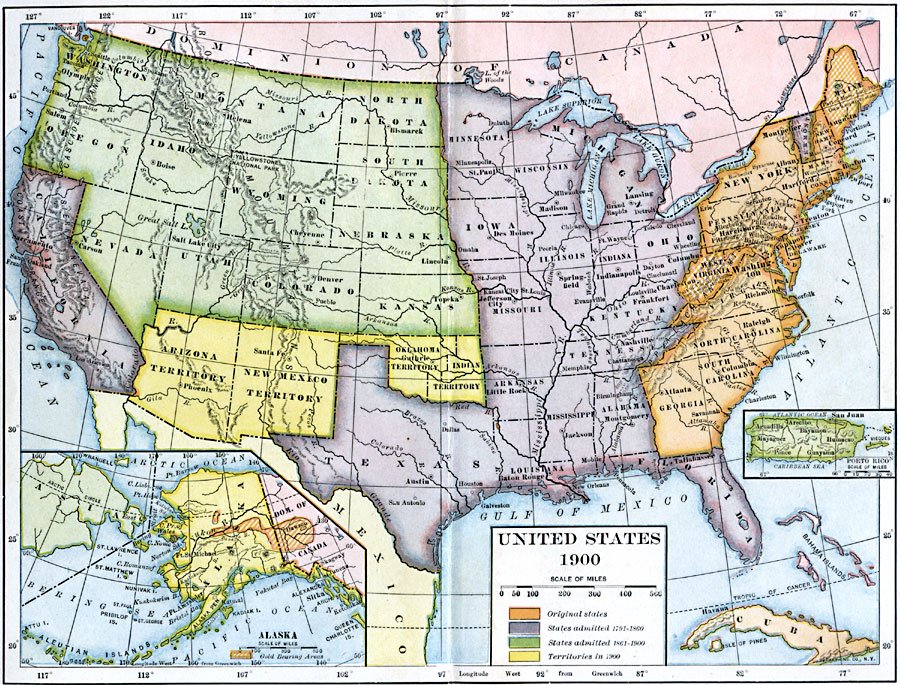
The turn of the century found the United States in a state of explosive, often chaotic, transformation. It was a nation flexing new muscles on the world stage, yet struggling with deep-seated problems at home. Understanding America in the 1900s isn’t just about looking at old photographs of horse-drawn carriages alongside early automobiles; it’s about dissecting the decade that laid the foundational blueprints for modern government, corporate power, and the very idea of what it means to be an American. This was the decade where the nation decided it couldn’t just grow bigger—it had to grow smarter and fairer, too.
At a Glance: Key Takeaways from the First Modern Decade
- The Progressive Era’s Mandate: Discover how leaders like Theodore Roosevelt responded to public outcry over corporate excess and corruption, fundamentally changing the role of government.
- The Rise of Corporate Titans: Learn how giants like U.S. Steel and Ford Motor Company were born, and how the government began its long-running battle to regulate them.
- A Nation of Newcomers: Understand the staggering impact of nearly 9 million immigrants who arrived between 1901 and 1910, reshaping American cities and culture forever.
- World-Changing Innovations: See how the Wright brothers’ first flight and Henry Ford’s Model T were not just inventions, but catalysts that redefined the limits of human experience.
- The Modern Presidency is Born: Grasp how Theodore Roosevelt, the “accidental president,” used his executive power to create the energetic, activist presidency we recognize today.
The Progressive Impulse: A Nation Demands Reform
The Gilded Age of the late 19th century had built towering fortunes and vast industrial power, but it left a wake of urban poverty, political corruption, and dangerous working conditions. By 1900, the country was simmering with a desire for change. This widespread movement for social, political, and economic reform became known as the Progressive Era.
From Tragedy to the “Square Deal”
The catalyst for federal action came unexpectedly. On September 6, 1901, President William McKinley was shot by an anarchist at the Pan-American Exposition in Buffalo, New York. He died eight days later, and his 42-year-old Vice President, Theodore Roosevelt, was sworn in. Many powerful business leaders were terrified of the energetic, reform-minded Roosevelt, but he promised to continue McKinley’s policies.
He did—for a while. But Roosevelt’s own vision for America soon took center stage. He called his domestic program the “Square Deal,” promising that the common person would get a fair shake. This wasn’t about dismantling capitalism but about regulating it to ensure it served the public good. This single decade laid a foundation of reform, innovation, and global ambition that would echo throughout the century. To understand how these seeds blossomed through world wars and social revolutions, you can Read about 20th Century America in our main guide.
Taming the Trusts: A New Role for Government
One of the biggest fears for average Americans was the power of “trusts”—massive corporate monopolies that controlled entire industries, from oil to sugar to railroads. They could crush competition and set any price they wanted. Roosevelt’s administration took them on directly.
- Case Snippet: The Northern Securities Showdown: In 1902, Roosevelt’s Justice Department sued the Northern Securities Company, a massive railroad trust created by titans like J.P. Morgan and James J. Hill. The business world was stunned. In 1904, the Supreme Court ordered the trust to be dissolved. This victory earned Roosevelt the nickname “trust buster” and signaled that the White House, not Wall Street, was ultimately in charge.
This wasn’t an anti-business crusade. Roosevelt distinguished between “good” trusts that were efficient and “bad” trusts that stifled competition. His goal was regulation, not destruction, a principle that continues to shape government oversight today.
Protecting the Public: Safe Food and Wild Lands
The rapid, unregulated growth of industry put consumers and the environment at risk. Muckraking journalists exposed these dangers, and the public demanded action.
Upton Sinclair’s 1906 novel The Jungle, a horrifying exposé of Chicago’s meatpacking industry, was the final straw. Though intended to promote socialism, its graphic descriptions of rats, poison, and even human remains being ground into sausage sickened the nation. Within months, a disgusted and horrified Congress passed two landmark laws:
- The Pure Food and Drug Act: Forbade the manufacture, sale, or transportation of adulterated or mislabeled foods and drugs.
- The Meat Inspection Act: Required federal inspection of all meat sold across state lines.
At the same time, Roosevelt, an avid outdoorsman, championed the cause of conservation. Alarmed by the rapid depletion of the nation’s natural resources, he used his executive authority to set aside over 230 million acres of land for national forests, wildlife refuges, and parks.
Building the Machine: Industry, Urbanization, and Innovation
While politicians debated in Washington, the country was being rebuilt from the ground up by steel, steam, and human ambition. By 1900, the United States was an undisputed industrial colossus, leading the world in manufacturing, agriculture, and railroad infrastructure.
The Engines of a New Economy
Two industries, more than any others, powered this growth: steel and oil. Andrew Carnegie’s steel mills produced the skeletons for skyscrapers and bridges, while John D. Rockefeller’s Standard Oil provided the kerosene that lit homes and the lubricants that greased the nation’s machinery.
The sheer scale was unprecedented. U.S. Steel, formed in 1901, was the first billion-dollar corporation in the world. Standard Oil controlled an estimated 90% of the U.S. oil refining market. This concentration of power was breathtaking, but it also fueled the Progressive push for regulation that would ultimately lead to Standard Oil’s breakup by the Supreme Court in 1911.
The Great Migration: Cities Bursting at the Seams
The factories and mills acted as powerful magnets, pulling in people from two directions: rural America and overseas. Between 1901 and 1910, an astonishing 8,795,386 immigrants arrived, mostly from Southern and Eastern Europe. This flood of new arrivals dramatically changed the face of American cities.
By 1910, 54% of the population lived in urban areas. New York, Chicago, and Philadelphia became sprawling metropolises of diverse, often crowded, neighborhoods. This rapid urbanization brought immense challenges—overcrowded housing, poor sanitation, and strained social services—that became central concerns for Progressive reformers.
The Assembly Line Blueprint: Henry Ford’s Revolution
In 1903, Henry Ford founded the Ford Motor Company. Five years later, in 1908, he introduced the Model T. The car itself was a marvel of simplicity and durability, but the real revolution was in how it was made. Ford perfected the moving assembly line, a system that drastically cut production time and costs.
This wasn’t just about building cars; it was a new philosophy of mass production. By making the Model T affordable for the average family, Ford didn’t just sell a product—he created a new way of life centered on mobility and consumerism that would define the American century.
A Framework for Understanding the 1900s’ Legacy
The challenges faced and solutions pioneered during this decade set precedents that are still with us. You can see the direct lineage in today’s debates over technology monopolies, consumer protection, and immigration.
| Gilded Age Problem (Late 1800s) | Progressive Era Solution (1900s) | Modern-Day Echo |
|---|---|---|
| Unchecked Monopolies | Trust-busting (e.g., Northern Securities) & regulation | Antitrust lawsuits against big tech companies. |
| Dangerous Consumer Goods | Pure Food and Drug Act (1906) | The Food and Drug Administration (FDA). |
| Political Corruption | Push for direct election of Senators (17th Amend.) | Debates over campaign finance reform. |
| Environmental Exploitation | National Parks & conservation movement | Global climate change policy and land use debates. |
Quick Answers to Common Questions
Q: What defined America in the 1900s?
A: The decade was defined by the Progressive Era, a period of intense social and political reform aimed at fixing the problems caused by industrialization. Key themes include Theodore Roosevelt’s trust-busting presidency, explosive urban growth fueled by mass immigration, and world-changing innovations like the airplane and the mass-produced automobile.
Q: Who was the most important president of the 1900s?
A: Theodore Roosevelt is overwhelmingly considered the most influential president of the decade (1901-1909). His “Square Deal” policies, aggressive use of executive power to regulate corporations, and passionate advocacy for environmental conservation fundamentally reshaped the role of the federal government and the modern presidency.
Q: Was America a world power in the 1900s?
A: Absolutely. By the start of the decade, the U.S. had already established itself as a dominant economic power. It was the world’s largest agricultural and industrial producer, with 193,000 miles of railroad and command of the global steel and oil markets. This economic might was the foundation for its growing political and military influence on the world stage.
Q: Did life really change that much in just ten years?
A: Yes, the pace of change was dramatic. A person living in 1900 existed in a world without flight, with automobiles as a rare novelty for the rich, and with little government protection from tainted food or monopolistic pricing. By 1909, the Wright brothers had flown, the Model T was making cars accessible, and the government had established its right to regulate big business and protect consumers.
A Decade of Blueprints
The 1900s was more than just the opening chapter of a new century; it was the decade where America drew the blueprints for its modern identity. The tensions that defined the era—between big business and government regulation, between native-born citizens and new immigrants, between technological progress and its social consequences—were not resolved. Instead, they were embedded into the nation’s DNA.
The decisions made by Roosevelt in the White House, by Ford in his factory, and by millions of immigrants stepping ashore at Ellis Island created the framework for the century to come. They established an activist federal government, a consumer-driven economy, and a complex, multicultural society. The questions they wrestled with are the same ones we confront today, making the America of the 1900s not a distant, sepia-toned memory, but a living part of our ongoing story.










