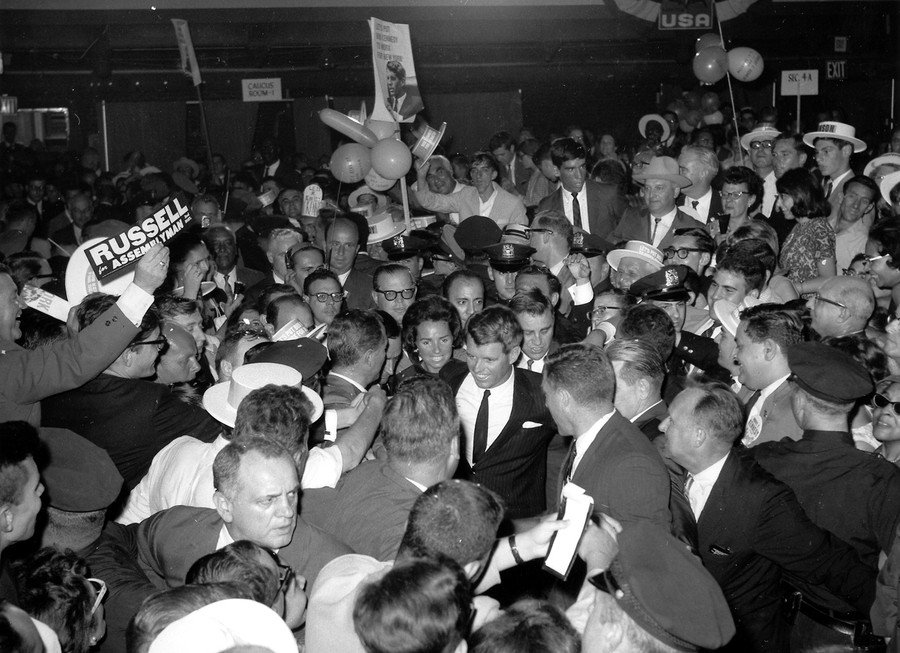
The year 1964 didn’t just happen; it erupted. It was a pressure cooker of a year, where simmering tensions over civil rights, a distant conflict in Southeast Asia, and a new wave of youth culture boiled over, permanently altering the American landscape. Many of the most pivotal 1964 events in history weren’t isolated incidents but interconnected threads that wove a complex, often contradictory, narrative of progress and conflict, hope and apprehension. From the halls of Congress to the jungles of Vietnam and the television sets of 73 million Americans, 1964 was the year the post-war consensus began to crack, and the sixties truly began.
At a Glance: Key Transformations of 1964
- Civil Rights Codified: Understand how the Civil Rights Act of 1964 became the legal backbone of the movement, outlawing segregation and discrimination.
- Vietnam Escalates: Grasp the significance of the Gulf of Tonkin Incident and the subsequent resolution that handed President Johnson a “blank check” for war.
- The British Invade: See how The Beatles’ arrival on American shores was more than a musical fad—it was a cultural phenomenon that redefined youth identity.
- A “Great Society” Envisioned: Learn about President Johnson’s ambitious domestic agenda, the “War on Poverty,” which aimed to reshape American social welfare.
- Technological Leaps: Discover key innovations, from the first Ford Mustang to IBM’s System/360, that signaled a new era of technology and consumerism.
The Fight for Freedom at Home: A Landmark Year for Civil Rights
While the struggle for racial equality had been raging for decades, 1964 marked a legislative and symbolic turning point. It was a year of profound victories achieved through immense sacrifice, underscoring the violent resistance to change.
The year’s events didn’t occur in a vacuum; they were the culmination of years of protest, legal battles, and social upheaval. For a comprehensive timeline of the year’s major happenings, you can Explore 1964’s Defining Moments.
The Civil Rights Act of 1964: A Legislative Revolution
After a grueling 75-day filibuster by Southern senators, President Lyndon B. Johnson signed the Civil Rights Act into law on July 2. This wasn’t just another piece of legislation; it was the most sweeping civil rights law since Reconstruction.
What the Act Did:
- Outlawed Discrimination: It banned discrimination based on race, color, religion, sex, or national origin in public accommodations (like hotels, restaurants, and theaters) and in employment.
- Ended Segregation: It gave the federal government the power to enforce the desegregation of public schools.
- Strengthened Voting Rights: While the Voting Rights Act of 1965 would be more targeted, this act included provisions to bolster voting rights and pave the way for further action.
This act fundamentally changed the legal landscape. For the first time, the federal government had robust tools to dismantle the system of Jim Crow that had defined the American South for nearly a century.
Freedom Summer: A Season of Blood and Progress
The ink on the Civil Rights Act was barely dry when the nation was confronted with the brutal reality of the fight in Mississippi. “Freedom Summer” was a voter registration drive organized by civil rights groups, drawing hundreds of mostly white college students from the North to join Black activists on the ground.
The project was met with immediate and vicious opposition. On June 21, three activists—James Chaney, a Black Mississippian, and Andrew Goodman and Michael Schwerner, two white New Yorkers—disappeared. Their bodies were discovered 44 days later, buried in an earthen dam. They had been murdered by members of the Ku Klux Klan, with the complicity of local law enforcement.
Their deaths shocked the nation and drew massive media attention to the violent repression Black people and their allies faced daily. It made the abstract fight for voting rights terrifyingly concrete and helped galvanize public support for stronger federal protections.
Key Civil Rights Milestones in 1964
| Event | Date | Significance |
|---|---|---|
| 24th Amendment Ratified | January 23 | Abolished the poll tax for federal elections, removing a significant barrier to voting for poor Black and white citizens. |
| Malcolm X forms OAAU | June 28 | After breaking with the Nation of Islam, Malcolm X founded the Organization of Afro-American Unity to promote a more international, Pan-Africanist vision for Black liberation. |
| Civil Rights Act Signed | July 2 | Became the landmark legislation outlawing segregation and major forms of discrimination. |
| MLK Wins Nobel Peace Prize | October 14 | At 35, Martin Luther King Jr. became the youngest-ever recipient, bringing international legitimacy and recognition to the nonviolent civil rights movement. |
The Point of No Return: Vietnam’s Shadow Lengthens
While Americans grappled with domestic turmoil, a conflict 8,000 miles away was quietly escalating into a full-blown crisis. In 1964, Vietnam transformed from a distant advisory mission into the central foreign policy challenge of the decade.
The Gulf of Tonkin Incident: A Murky Justification for War
The defining event was the Gulf of Tonkin Incident. On August 2, 1964, the USS Maddox, a U.S. destroyer conducting electronic espionage off the coast of North Vietnam, engaged with North Vietnamese torpedo boats. The Maddox sustained minimal damage.
Two nights later, on August 4, the Maddox and another destroyer, the USS Turner Joy, reported being under a second, sustained attack in stormy seas. However, doubts emerged almost immediately. The sonar operators were inexperienced, the weather was terrible, and one commander, James Stockdale, later recalled, “I had the best seat in the house to watch that event, and our destroyers were just shooting at phantom targets… There were no PT boats there.”
Despite the conflicting evidence, the Johnson administration presented the attacks as unprovoked aggression.
The Gulf of Tonkin Resolution: A “Blank Check” for War
On August 7, based on the reports of the second attack, a nearly unanimous Congress passed the Gulf of Tonkin Resolution. This crucial document authorized President Johnson “to take all necessary measures to repel any armed attack against the forces of the United States and to prevent further aggression.”
It was not a formal declaration of war, but it effectively gave the President the legal authority to expand the U.S. military presence and conduct operations in Vietnam as he saw fit. The resolution became the legal foundation for the massive escalation of the war over the next several years, a decision that would ultimately divide the country and define a generation.
The British Invasion: Beatlemania Changes Everything
Amid the turmoil of rights and war, a cultural revolution arrived by airplane. On February 7, 1964, The Beatles landed at New York’s JFK Airport to the screams of thousands of fans. Two days later, on February 9, they appeared on The Ed Sullivan Show.
An estimated 73 million people—nearly 40% of the entire U.S. population—tuned in. The performance was a seismic event. For a nation still reeling from the assassination of President Kennedy just 77 days earlier, the Beatles’ energetic, joyful, and rebellious performance was a breath of fresh air.
Their impact was immediate and total:
- Chart Annihilation: By the first week of April, The Beatles held the top five spots on the Billboard Hot 100 chart with “Can’t Buy Me Love,” “Twist and Shout,” “She Loves You,” “I Want to Hold Your Hand,” and “Please Please Me.” This feat has never been repeated.
- Cultural Shift: They changed everything from hairstyles and fashion to the way music was written and recorded. They legitimized the idea of the self-contained rock band that wrote its own songs, paving the way for countless artists.
- Youth Identity: Beatlemania gave a voice and an identity to the burgeoning Baby Boomer generation. It was a joyful rebellion, a stark contrast to the somber political realities of the day.
Quick Answers to Common Questions about 1964
Q: What was the single most important event of 1964?
A: While debatable, the passage of the Civil Rights Act of 1964 is arguably the most significant. It was a foundational legal victory that reshaped American society by outlawing segregation in public places and banning employment discrimination. Its impact is still felt today in legal and social norms.
Q: How did the Gulf of Tonkin Resolution lead to the Vietnam War?
A: The resolution gave President Johnson the legal justification he needed to dramatically escalate U.S. involvement without seeking a formal declaration of war from Congress. It was essentially a political “blank check” that allowed him to commit hundreds of thousands of U.S. troops to Vietnam in the years that followed.
Q: Was the second attack in the Gulf of Tonkin real?
A: Declassified documents and internal reports from the National Security Agency (NSA) have since confirmed that the August 4 attack almost certainly never happened. It was a misinterpretation of intelligence data in a tense and confusing environment. The initial reporting, however, was presented to Congress and the public as fact.
Q: Why was The Beatles’ arrival so impactful?
A: The Beatles arrived at a unique moment. The U.S. was in a period of national mourning after JFK’s assassination. Their upbeat music, charm, and novel appearance provided a welcome and cathartic distraction. More deeply, they represented a new, confident youth culture that was beginning to question the norms of the previous generation.
A Year That Drew the Blueprint for a Decade
The 1964 events in history did more than just fill a calendar; they set the trajectory for the remainder of the tumultuous 1960s. The legislative victory of the Civil Rights Act laid the groundwork for future battles over voting rights and economic justice. The Gulf of Tonkin Resolution opened the door to a devastating war that would fracture American society. And the joyful noise of Beatlemania announced the arrival of a youth culture that would challenge every conceivable authority.
Looking back, 1964 feels like the year the modern world began to take shape. The decisions made in Washington, the blood spilled in Mississippi, and the songs played on the radio created a series of shockwaves that continue to resonate in our politics, culture, and society today. It was a year of profound contradictions—a year of landmark progress and deepening conflict—that proved nothing would ever be the same again.










