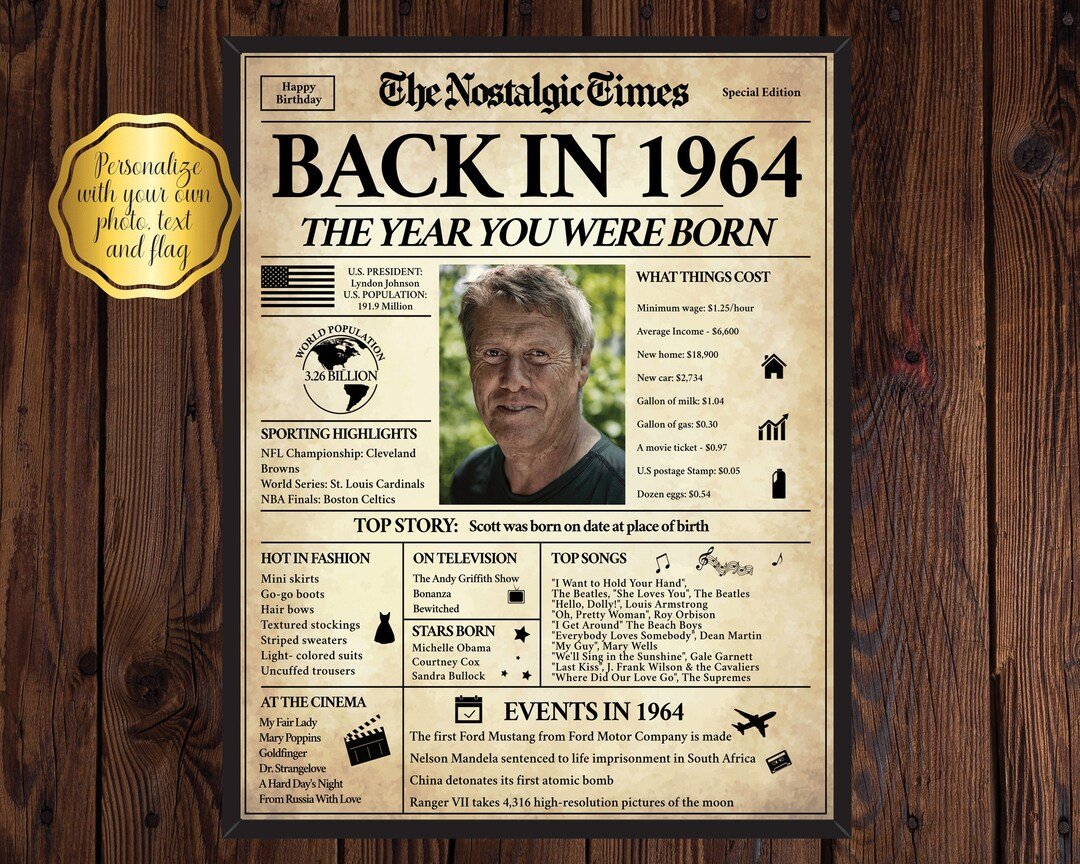
The sheer density of 1964 important events can feel staggering. In a single year, the United States simultaneously passed its most significant civil rights legislation in a century, plunged deeper into a war that would define a generation, and surrendered to a cultural invasion led by four young men from Liverpool. It was a year of profound contradictions—a year of landmark progress and tragic violence, of bold declarations of peace and quiet escalations of conflict. Understanding 1964 is to understand the bedrock on which much of modern America was built.
At a Glance: Key Transformations of 1964
This article breaks down the pivotal moments of 1964, moving beyond a simple timeline to explore the impact of these shifts. Here’s what you’ll uncover:
- Civil Rights Milestones: Learn how the 24th Amendment and the Civil Rights Act of 1964 legally dismantled segregation, and the violent resistance it provoked during Freedom Summer.
- The Vietnam Escalation: Understand the critical role of the Gulf of Tonkin Resolution in granting President Johnson broad war powers, fundamentally changing America’s involvement in Southeast Asia.
- The War on Poverty: Discover how LBJ’s “Great Society” vision and the War on Poverty began, aiming to reshape the nation’s social safety net.
- The British Invasion: See how The Beatles’ arrival in America wasn’t just a pop culture moment but a seismic cultural shift that signaled a new era for music, fashion, and youth identity.
- Technological and Cultural Leaps: Explore other key developments, from the Ford Mustang’s debut and the first bullet train to the invention of the BASIC programming language, that signaled a rapidly modernizing world.
The Battle for the Soul of America: Civil Rights in 1964
While many forces shaped the year, the struggle for civil rights was its undeniable moral centerpiece. The year began with a major legislative victory and descended into one of the most brutal summers of the movement.
The momentum was palpable from the start. On January 23, the 24th Amendment to the Constitution was ratified, officially banning the use of poll taxes in federal elections. This was a crucial step, as poll taxes had been a primary tool for disenfranchising African American and poor white voters in the South for decades.
This victory was a prelude to the main event: the passage of the Civil Rights Act of 1964. After a grueling 75-day filibuster by Southern senators, the bill was finally approved by the Senate on June 19 and signed into law by President Lyndon B. Johnson on July 2. This landmark legislation was sweeping in its scope:
- It outlawed discrimination based on race, color, religion, sex, or national origin.
- It banned segregation in public accommodations, from theaters to restaurants.
- It gave the federal government new powers to enforce desegregation in schools.
But legislation did not equal reality on the ground. The summer of 1964, dubbed “Freedom Summer,” saw hundreds of college students, both Black and white, travel to Mississippi to register African American voters. The response was violent. On June 21, three civil rights workers—James Chaney, Andrew Goodman, and Michael Schwerner—disappeared. Their bodies were discovered weeks later, murdered by the Ku Klux Klan with the complicity of local law enforcement. Their deaths shocked the nation and exposed the deep, violent resistance to change. The year was a microcosm of the entire struggle: monumental legal progress met with horrific, personal sacrifice.
The movement’s moral authority was recognized on the world stage when, on October 15, Dr. Martin Luther King Jr. was awarded the Nobel Peace Prize for his commitment to nonviolent resistance. While these moments stand out, they were part of a much larger tapestry of change. Explore defining 1964 events to see the full scope of this pivotal year.
A President’s Dual Wars: Poverty at Home, Conflict Abroad
Navigating the nation in the wake of President Kennedy’s assassination, Lyndon B. Johnson leveraged his political mastery to launch two “wars” that would define his presidency.
The War on Poverty
In his first State of the Union address on January 8, Johnson declared an “unconditional war on poverty in America.” This wasn’t just rhetoric; it was the cornerstone of his “Great Society” vision, a sweeping set of domestic programs aimed at eliminating poverty and racial injustice. Key initiatives in 1964 included:
- The Economic Opportunity Act: Established programs like Head Start, VISTA (Volunteers in Service to America), and the Job Corps.
- The Food Stamp Act: Signed on August 31, this act made the food stamp program permanent, providing crucial assistance to low-income families.
Johnson’s goal was to build a more equitable nation, believing that a wealthy country could and should eliminate poverty within its borders.
The Gulf of Tonkin and the Point of No Return
While fighting poverty at home, Johnson was facing a deepening crisis in Southeast Asia. In early August, reports emerged of two alleged unprovoked attacks by North Vietnamese patrol boats on the USS Maddox in the Gulf of Tonkin. The details were murky and later proven to be highly questionable, but the Johnson administration presented them to Congress as acts of aggression.
On August 7, Congress passed the Gulf of Tonkin Resolution with overwhelming support. This resolution was not a formal declaration of war, but it gave President Johnson a virtual blank check “to take all necessary measures to repel any armed attack against the forces of the United States and to prevent further aggression.” This single act became the primary legal justification for the massive escalation of the Vietnam War over the next decade. By July, the US had already increased its “military advisors” in South Vietnam to 21,000; the Tonkin Resolution opened the floodgates for hundreds of thousands of combat troops to follow.
The British Invasion and a Culture in Flux
Amid the political turmoil, a cultural revolution was underway, and its soundtrack came from Liverpool. Beatlemania was not a gradual trend; it was an explosion.
| The Beatles’ U.S. Takeover: A 1964 Timeline | Significance |
|---|---|
| Jan. 3 | Jack Paar airs a clip of “She Loves You” on his show, giving many Americans their first glimpse. |
| Jan. 25 | “I Want to Hold Your Hand” hits #1 on the Billboard charts, the first of many. |
| Feb. 7 | The Beatles land at JFK Airport to a frenzy of screaming fans. |
| Feb. 9 | An estimated 73.7 million people-a record at the time-watch their debut on The Ed Sullivan Show. |
| Feb. 11 | Their first U.S. concert is held at the Washington Coliseum. |
| April 4 | The Beatles hold the top five spots on the Billboard Hot 100, an unprecedented feat. |
| The Beatles’ arrival was more than a musical event. Their longer hair, sharp suits, and irreverent charm challenged the clean-cut norms of the early ’60s. They represented a new, exuberant youth culture that was quickly becoming a dominant force in America. | |
| This cultural shift was visible elsewhere, too: |
- The Ford Mustang: Introduced on April 17, this stylish and affordable “pony car” captured the spirit of American freedom and youth, selling over 400,000 units in its first year.
- Muhammad Ali: On February 25, a brash young boxer named Cassius Clay defeated Sonny Liston to become the heavyweight champion of the world. On March 6, he announced he had joined the Nation of Islam and changed his name to Muhammad Ali, a defiant act of religious and racial pride.
- New Voices in Media: Stanley Kubrick’s Cold War satire Dr. Strangelove premiered in January, challenging audiences to question authority. In March, the game show Jeopardy! debuted, becoming an institution.
Quick Answers to Pressing Questions about 1964
Q: Did the Civil Rights Act of 1964 actually end segregation immediately?
No, it did not. The Act provided the legal framework to dismantle Jim Crow, but its enforcement was met with fierce and often violent resistance across the South. It took years of continued activism, federal intervention, and court battles to begin turning the law’s promise into a widespread reality. Events like Freedom Summer demonstrated that the fight was far from over.
Q: What was the real story behind the Gulf of Tonkin incident?
Historians and declassified documents have since revealed that the second “attack” on August 4 almost certainly never happened. It was likely a misinterpretation of radar and sonar signals by a nervous crew. However, the Johnson administration used the ambiguous reports to secure the political authority it needed to escalate the war without a formal declaration, a decision with profound long-term consequences.
Q: Why was Sidney Poitier’s Oscar win so important?
On April 13, Sidney Poitier won the Academy Award for Best Actor for his role in Lilies of the Field. He was the first Black man to win this award. In a year defined by the struggle for basic rights, his achievement at the pinnacle of Hollywood was a powerful symbol of Black excellence and a crack in the entertainment industry’s color barrier.
Q: What other technological milestones happened in 1964?
Beyond the Mustang and IBM’s game-changing System/360 mainframe computer, 1964 was a year of major firsts. In Japan, the Shinkansen “bullet train” began service on October 1, revolutionizing public transport. On May 1, the first program written in the user-friendly BASIC programming language was run at Dartmouth College, a key step toward making computing accessible to a broader audience.
The Legacy of a Turbulent Year
The events of 1964 did not resolve the tensions in American society; they amplified them. The passage of the Civil Rights Act set the stage for decades of struggle over its implementation. The Gulf of Tonkin Resolution committed the U.S. to a disastrous war that would fracture the country. The “War on Poverty” began an enduring debate about the role of government in social welfare.
And through it all, the cultural shifts signaled that the post-war consensus was over. The rebellious energy of rock and roll, the defiance of figures like Muhammad Ali, and the questioning of authority in films and on college campuses were harbingers of the counterculture storm to come. More than just a collection of dates, the 1964 important events represent a fundamental turning point—the moment the simmering conflicts of the 1950s boiled over, setting the agenda for the rest of the 20th century.










