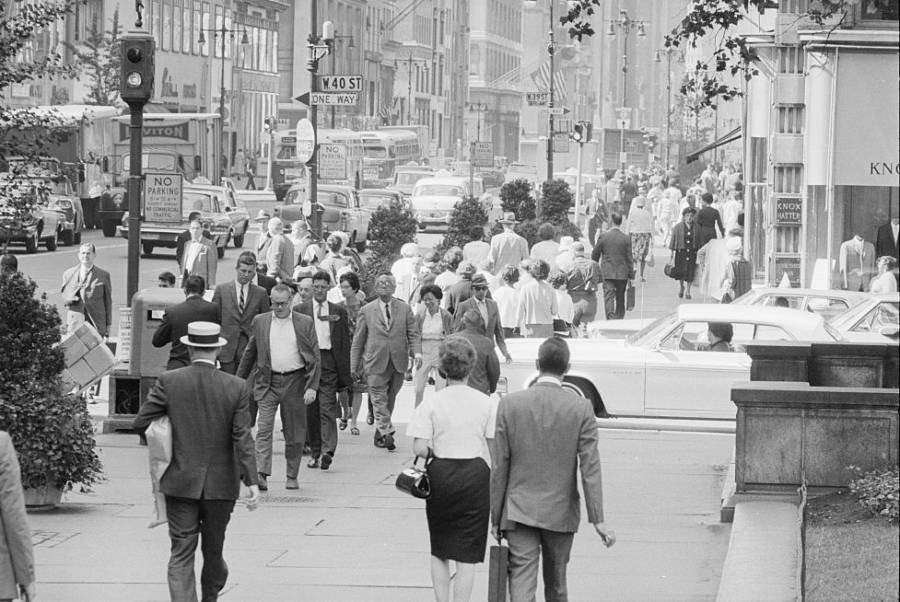
The 1960s didn’t just happen; they erupted. It was a decade of jarring contradictions—a nation that could land a man on the moon while grappling with bitter divisions on its own city streets. The sheer volume of landmark 1960s historical events reshaped the American landscape, forging a new identity through protests, political upheaval, and unprecedented progress. From the hallowed steps of the Lincoln Memorial to the muddy fields of Woodstock, the sixties were a ten-year crucible that tested the nation’s soul and redefined the American dream.
This decade was a collision of the old and the new. The black-and-white certainties of the 1950s gave way to a turbulent, Technicolor reality. It was a time of immense hope and profound sorrow, of peaceful marches and violent riots, of technological marvels and a deeply unpopular war. To understand America today, you must first understand the seismic shifts of the 1960s.
The Sixties at a Glance
Before we dive deep, here’s a snapshot of the forces that defined this transformative decade:
- The Civil Rights Movement: A relentless push for racial equality moved from grassroots activism to landmark federal legislation, fundamentally altering American society.
- The Cold War Heats Up: The ideological battle with the Soviet Union reached a fever pitch with flashpoints in Cuba, Berlin, and the far-flung jungles of Vietnam.
- The Space Race: A high-stakes contest for celestial dominance captured the world’s imagination, culminating in humanity’s first steps on the lunar surface.
- Counterculture and Social Upheaval: A youth-driven movement questioned everything—from war and government to materialism and social norms—unleashing a cultural revolution in music, fashion, and lifestyle.
- A Generation’s War: The Vietnam War escalated from a distant conflict to a national obsession, dividing the country and fueling a powerful anti-war movement.
The Shifting Ground: Civil Rights and the Fight for a Fairer Nation
At the dawn of the decade, the promise of equality was still largely unfulfilled for Black Americans. The 1960s would become the pivotal battleground for the Civil Rights Movement.
The fight began not with a bang, but with a quiet act of defiance. On February 1, 1960, four Black college students sat down at a “whites-only” Woolworth’s lunch counter in Greensboro, North Carolina, and politely asked to be served. Their sit-in sparked a nationwide wave of similar nonviolent protests, signaling that a new, more assertive generation was ready to demand change.
This momentum carried into the halls of power and the heart of the Deep South. In 1962, James Meredith, an Air Force veteran, became the first Black student to enroll at the University of Mississippi, but only after a violent riot that required 3,000 federal troops to quell. The event laid bare the fierce resistance to integration.
The movement reached its moral zenith on August 28, 1963, during the March on Washington for Jobs and Freedom. More than 200,000 people gathered as Dr. Martin Luther King Jr. delivered his transcendent “I Have a Dream” speech, a powerful vision of a racially unified America.
From Protest to Policy
The relentless pressure of marches, sit-ins, and voter registration drives, often met with brutal violence, finally forced a legislative reckoning.
- The Civil Rights Act of 1964: Championed by President Lyndon B. Johnson after Kennedy’s assassination, this landmark law was the most comprehensive civil rights legislation since Reconstruction. It outlawed discrimination based on race, color, religion, sex, or national origin, officially banning segregation in public places.
- The Voting Rights Act of 1965: Following the violent “Bloody Sunday” attack on marchers in Selma, Alabama, this act was passed to dismantle the legal barriers—like literacy tests—that had systematically prevented Black Americans from voting.
Yet, progress was tragically punctuated by loss. The assassinations of Medgar Evers in 1963 and, most devastatingly, Dr. King in 1968 sent shockwaves of grief and anger through the nation. In the wake of King’s murder, a new, more militant phase of the movement emerged, with the cry of “Black Power” echoing calls for self-determination and cultural pride. By the decade’s end, Thurgood Marshall had become the first African American Supreme Court Justice (1967), and the Fair Housing Act of 1968 was passed, but the long, arduous journey toward true equality was far from over.
A New Frontier and a World on the Brink
The decade began with the election of a charismatic young senator, John F. Kennedy, who defeated Richard M. Nixon in the first-ever televised presidential debates. His inaugural address on January 20, 1961, captured the era’s youthful optimism, challenging Americans to “ask not what your country can do for you—ask what you can do for your country.”
But this “New Frontier” was immediately tested by the chilling realities of the Cold War.
Flashpoints of a Global Standoff
The ideological conflict with the Soviet Union wasn’t just a war of words; it was a series of terrifyingly close calls.
- The Bay of Pigs (1961): A clumsy, CIA-backed attempt to overthrow Fidel Castro’s communist government in Cuba ended in disaster, handing Kennedy a humiliating foreign policy defeat just months into his presidency.
- The Berlin Wall (1961): In August, the Soviets abruptly erected a concrete and barbed-wire wall dividing East and West Berlin, creating a stark physical symbol of the Iron Curtain that would stand for nearly 30 years.
- The Cuban Missile Crisis (1962): This was the moment the Cold War almost went nuclear. For 13 harrowing days in October, the world held its breath after U.S. spy planes discovered Soviet offensive nuclear missiles in Cuba. Kennedy ordered a naval “quarantine” of the island, and after a tense standoff that pushed both superpowers to the brink, Soviet Premier Nikita Khrushchev agreed to remove the missiles.
The sense of national optimism was shattered on November 22, 1963, when President Kennedy was assassinated in Dallas, Texas. The event plunged the nation into mourning and elevated Vice President Lyndon B. Johnson to the presidency, a man who would oversee some of the era’s greatest triumphs and its most divisive conflict.
One Giant Leap: The Space Race Reaches the Moon
While tensions simmered on Earth, a new and spectacular arena for Cold War competition opened up in the heavens. The Space Race was about more than just exploration; it was a high-profile battle for technological and ideological supremacy.
Initially, America was losing. In April 1961, Soviet cosmonaut Yuri Gagarin became the first human to orbit the Earth, a stunning achievement that sent a jolt of urgency through Washington. The U.S. scrambled to catch up, sending Alan Shepard on a short sub-orbital flight just weeks later.
Recognizing the immense symbolic power of the race, President Kennedy made a bold and audacious promise in a May 1961 speech to Congress: the United States would commit itself to “landing a man on the Moon and returning him safely to the Earth” before the decade was out. For many, thinking about how this compares to events Sixty years ago today, the sheer scale of the ambition is breathtaking.
NASA’s Mercury, Gemini, and Apollo programs raced against the clock. John Glenn became the first American to orbit the Earth in 1962, a major morale boost. The program faced triumphs and tragedies, including a fire that killed three Apollo 1 astronauts during a launch rehearsal in 1967.
Then, on July 20, 1969, the world watched in awe as the Apollo 11 lunar module, the Eagle, touched down on the Moon’s Sea of Tranquility. As Neil Armstrong descended the ladder, he uttered the immortal words: “That’s one small step for man, one giant leap for mankind.” The moon landing was a singular moment of global unity and a monumental technological achievement that fulfilled Kennedy’s promise with just months to spare.
The War That Defined a Generation: Vietnam
No single event cast a longer shadow over the 1960s than the Vietnam War. What began as a limited advisory role metastasized into a full-scale military conflict that tore the nation apart.
Following a murky naval incident, Congress passed the Gulf of Tonkin Resolution in 1964, giving President Johnson broad authority to escalate U.S. involvement. By 1965, he had ordered sustained bombing campaigns against North Vietnam and committed the first major deployment of ground troops. By the end of 1966, nearly 400,000 American soldiers were in South Vietnam.
As the troop numbers and casualties mounted, so did the opposition at home. The war became the focal point for a massive anti-war movement, primarily led by students and young people. They saw the conflict as an immoral, unwinnable quagmire. Protests grew from small campus teach-ins to huge national demonstrations. In 1965, the first public draft card burnings took place, a potent act of civil disobedience.
The turning point came in January 1968 with the Tet Offensive. Though a military failure for North Vietnam, the massive, coordinated attack shattered the Johnson administration’s narrative that the U.S. was winning the war. Public opinion turned decisively against the conflict. Shaken and politically wounded, Johnson announced in a televised address on March 31 that he would not seek re-election. The war would drag on for years, but the 1960s cemented it as the conflict that would haunt a generation.
Revolution in the Air: Counterculture and Social Change
Beneath the headlines of politics and war, a sweeping cultural revolution was underway. A generation of “baby boomers,” raised in post-war prosperity, began to reject the conformist values of their parents. This “counterculture” movement championed individualism, peace, love, and a deep skepticism of authority.
Key facets of this cultural shift included:
- Music: The decade began with the polished pop of girl groups and surf rock, but the arrival of The Beatles on The Ed Sullivan Show in 1964 unleashed the “British Invasion” and changed everything. Music became the soundtrack of the revolution, evolving into psychedelic rock, folk anthems, and the soulful sounds of Motown. The 1969 Woodstock festival, a massive three-day concert in upstate New York, became the defining moment of the counterculture generation.
- Feminism: Betty Friedan’s 1963 book, The Feminine Mystique, gave voice to the quiet dissatisfaction of millions of American women, igniting the “second wave” of feminism. The passage of the Equal Pay Act (1963) and the founding of the National Organization for Women (NOW) in 1966 marked major steps in the fight for gender equality.
- Gay Rights: For most of the decade, the gay community remained largely invisible and persecuted. That changed in June 1969, when patrons of the Stonewall Inn, a gay bar in New York City, fought back against a routine police raid. The Stonewall Riots marked a crucial turning point, sparking the modern gay rights movement.
These cultural shifts were some of the most enduring Defining Moments of the 60s and the subsequent decades, as their effects continued to ripple through society.
An Era of Turmoil and Tragedy
For all its progress, the decade was also scarred by violence and unrest. 1968, in particular, was a year of profound trauma.
The one-two punch of the assassinations of Martin Luther King Jr. in April and presidential candidate Robert F. Kennedy just two months later left the nation reeling. King’s murder ignited fiery riots in over 100 cities. Kennedy’s death extinguished a beacon of hope for many who saw him as the heir to his brother’s legacy and a voice for unity.
That summer, the nation’s raw divisions were put on display at the Democratic National Convention in Chicago, where anti-war protesters clashed violently with police in what an official report later called a “police riot.” The chaos, broadcast live, painted a grim picture of a nation at war with itself. It was against this backdrop of division and exhaustion that Republican Richard M. Nixon won the presidency, promising to restore “law and order.”
Frequently Asked Questions About the 1960s
What were the three most important events of the 1960s?
While debatable, most historians would point to the passage of the Civil Rights Act of 1964, the escalation of the Vietnam War, and the Apollo 11 moon landing. Each profoundly impacted American domestic policy, foreign policy, and national identity.
How did the 1960s change America?
The 1960s fundamentally reshaped American society. It brought about an end to legal segregation, expanded voting rights, and ushered in new social movements for women and gay rights. It also eroded public trust in government due to the Vietnam War and created deep cultural and political divisions that persist today.
What was the “counterculture”?
The counterculture was a broad youth movement that rejected the mainstream social and cultural norms of the 1950s. It was characterized by its anti-war stance, experimentation with psychedelic drugs, embrace of rock and roll music, and a focus on peace, love, and personal freedom over materialism.
The Legacy of the 1960s: An Echo in Our Own Time
The 1960s did not end neatly on December 31, 1969. The forces it unleashed—the battles for civil rights, the debates over foreign intervention, the challenges to traditional authority, and the quest for personal liberation—continue to echo through the decades.
The decade proved that change, though often painful and turbulent, is possible. It demonstrated the power of ordinary citizens to demand a more just society and hold their leaders accountable. It also left a legacy of deep-seated polarization that continues to define our political landscape.
To look back on the 1960s is to see the blueprint of modern America being drawn in real-time. The struggles and triumphs of that defining decade are not just history; they are the living foundation of the world we inhabit today.










