
Some of the coolest historical events aren’t just dusty dates in a textbook; they’re explosive moments that ripped up the old rules and wrote new ones for humanity. From a single monk’s thesis nailed to a church door to a quiet refusal on a city bus, these pivotal moments show how individuals, ideas, and inventions can redirect the course of civilization. Understanding them isn’t just about knowing the past—it’s about seeing the architecture of the world we live in today.
History is packed with fascinating turning points. While a broad overview helps connect the dots, diving deep into specific types of events reveals the powerful forces at play. For a wider look at these key moments, you can Explore cool moments in history and see how they all fit together.
At a Glance: What You’ll Uncover
- Geopolitical Earthquakes: Discover how single events like the fall of a city or the signing of a document completely redrew the world map and shifted global power.
- The Sparks of Genius: See how specific technological leaps—from the first flight to the first personal computer—unlocked entirely new ways of living and thinking.
- Acts of Defiance: Explore the moments when moral courage, whether from an individual or a massive crowd, challenged the status quo and bent the arc of history toward justice.
- The “Wait, That Really Happened?” File: Uncover quirky but surprisingly impactful moments that prove history has a sense of humor and a flair for the dramatic.
When the World Map Was Redrawn
Some events are so powerful they act like geopolitical earthquakes, sending shockwaves across continents and centuries. They don’t just end one era; they violently give birth to the next.
The Fall of Constantinople (1453)
For over a thousand years, Constantinople was the heart of the Byzantine Empire and a bastion of Christendom. When Ottoman Sultan Mehmed II conquered the city on May 29, 1453, it was more than the end of an empire. It was the closing of a door.
- The Immediate Impact: The primary land-based trade routes from Europe to Asia were now controlled by the Ottoman Empire. This forced European powers like Spain and Portugal to seek alternative sea routes.
- The Ripple Effect: This quest for new trade routes directly triggered the Age of Exploration. Christopher Columbus’s voyage in 1492, sponsored by Spain, was a direct consequence of this geopolitical shift. The conquest also sent Greek scholars fleeing westward, carrying ancient knowledge that helped fuel the Italian Renaissance. It’s a perfect example of how one city’s fall led to a continent’s rebirth and the “discovery” of a new world.
The American Revolution (1775–1783)
The idea of a colony breaking away from a global superpower to form a representative democracy was, at the time, radical. The American Revolution wasn’t just a war; it was a profound philosophical experiment.
The conflict, sparked by grievances like “taxation without representation,” culminated in the Declaration of Independence in 1776—a document that declared all men are created equal. The eventual victory, sealed by the Treaty of Paris in 1783, didn’t just create the United States. It provided a working model for future revolutions and enshrined ideals of liberty and self-governance that would inspire movements across the globe, including the French Revolution just a few years later.
The Fall of the Berlin Wall (1989)
For 28 years, the Berlin Wall was the literal iron in the “Iron Curtain,” a grim symbol of the Cold War’s division between the communist East and the capitalist West. Its fall on November 9, 1989, was stunningly abrupt.
Triggered by public pressure and a fumbled announcement by an East German official, the breach of the wall was a moment of pure, unscripted joy. It was the beginning of the end for the Soviet Union, leading to the reunification of Germany in 1990 and the collapse of communist regimes across Eastern Europe. It stands as one of history’s clearest examples of popular will triumphing over authoritarian control.
The Sparks of Genius: Inventions That Ignited New Eras
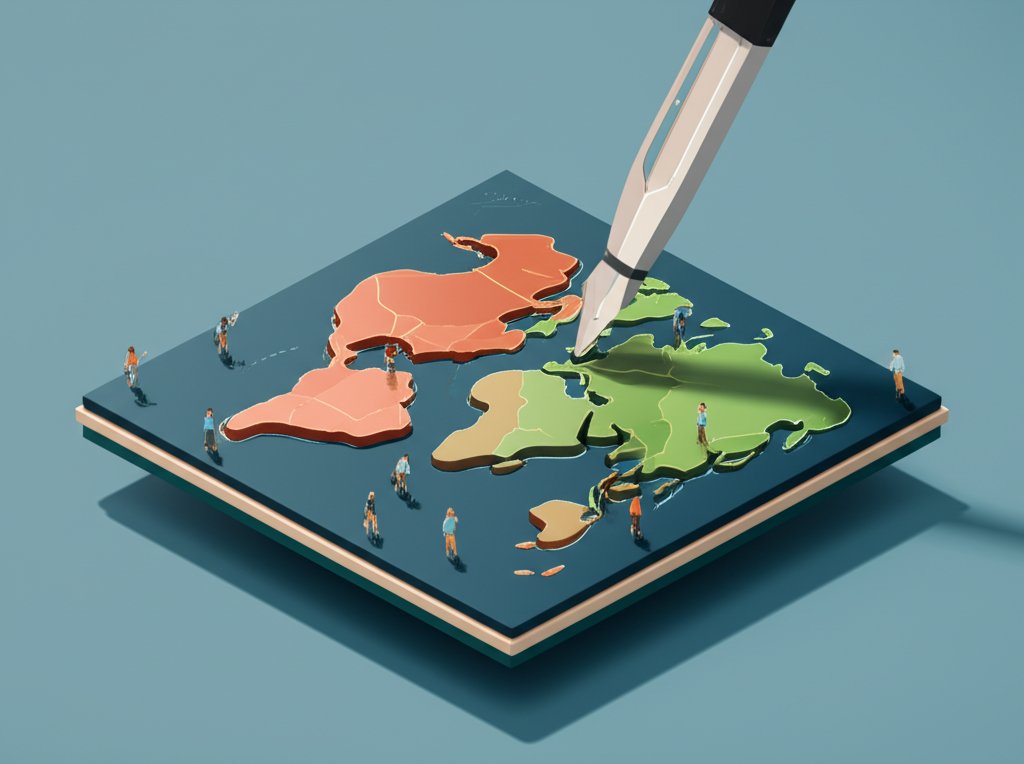
Progress isn’t always gradual. Sometimes, a single invention or achievement serves as a flashpoint, instantly revealing a new future and rendering the old world obsolete.
The Wright Brothers’ First Flight (1903)
On December 17, 1903, on a windy beach in Kitty Hawk, North Carolina, Orville and Wilbur Wright achieved what humans had only dreamed of. Their first powered, controlled flight lasted just 12 seconds and covered 120 feet—shorter than the wingspan of a modern 747.
Yet, that brief moment shattered the perceived limits of human potential. It was the dawn of the aviation age, a breakthrough that would shrink the globe, transform commerce, and fundamentally change the nature of warfare within a generation.
The Moon Landing (1969)
“That’s one small step for man, one giant leap for mankind.” Neil Armstrong’s words on July 20, 1969, were broadcast to over half a billion people on Earth. The Apollo 11 mission was the stunning climax of the Cold War’s Space Race between the United States and the Soviet Union.
More than just a technological triumph, the Moon Landing was a unifying cultural moment. It demonstrated the incredible power of focused, collective effort and inspired millions to pursue careers in science and engineering. It also gave humanity a new perspective on our own planet—a fragile, blue marble alone in the blackness of space.
A Single Voice Can Shake an Empire: Moments of Moral Courage
History often pivots on acts of profound moral courage. These are the moments when an individual or a group stands up against immense power, not with weapons, but with conviction.
Martin Luther Posts the 95 Theses (1517)
When Martin Luther, a German monk, nailed his Ninety-five Theses to the door of Wittenberg’s Castle Church on October 31, 1517, he wasn’t trying to start a revolution. He was trying to start a debate. He challenged the Catholic Church’s practice of selling indulgences (get-out-of-purgatory-free cards).
But thanks to the newly invented printing press, his ideas went viral. His act of defiance sparked the Protestant Reformation, a movement that permanently split Western Christianity, diminished the pope’s political power, and contributed to centuries of religious wars and realignments across Europe.
Rosa Parks’ Bus Protest (1955)
On December 1, 1955, in Montgomery, Alabama, Rosa Parks, a 42-year-old seamstress, quietly refused to give up her bus seat to a white passenger. It wasn’t the first time someone had resisted segregation laws, but her arrest was the spark that ignited a fire.
Her act of defiance triggered the Montgomery Bus Boycott, a 381-day protest that became a foundational event of the American Civil Rights Movement. It launched the career of a young minister named Martin Luther King Jr. and demonstrated the power of nonviolent mass action to challenge and dismantle institutionalized injustice.
How to Spot a “Cool” Historical Event

Not all important events feel “cool.” The coolest historical events often share a few key traits that make them stand out. Use this simple framework to analyze any historical moment.
| Trait | Description | Classic Example |
|---|---|---|
| The Ripple Effect | The event’s consequences spread far beyond its immediate time and place, often in unexpected ways. | The Fall of Constantinople (1453): A city’s capture in the East directly leads to the “discovery” of the Americas in the West. |
| The Hinge Factor | History clearly pivots at this moment. The world “before” is fundamentally different from the world “after.” | The Battle of Hastings (1066): William the Conqueror’s victory fundamentally remakes English culture, language, and politics. |
| The Human Element | A compelling, relatable human story is at its core, showcasing bravery, genius, or defiance. | Jackie Robinson Breaks the Color Barrier (1947): A story of immense personal courage in the face of incredible hostility. |
| The “Wow” Factor | The event contains an element of shock, surprise, or sheer audacity that captures the imagination. | The Moon Landing (1969): Humanity left its home planet and walked on another celestial body. |
Quick Answers to Big Questions
Q: What’s the difference between a “cool” event and just an important one?
A: Importance is about impact; “coolness” is about the story. The Black Death was incredibly important, killing up to 60% of Europe’s population and ending feudalism. But it’s a long, grim plague. The story of a bear named Wojtek helping Polish soldiers load artillery shells during World War II is one of the coolest historical events because it’s unexpected, personal, and reveals a surprising truth about humanity (and bears) in wartime. “Cool” events often have a strong narrative hook.
Q: How do historians know if legendary events like the Trojan War actually happened?
A: They look for corroborating evidence where history and myth overlap. For centuries, the Trojan War, chronicled in Homer’s Iliad, was considered pure myth. But in the 19th century, archaeologists discovered the ruins of a city at a site in modern Turkey that matches the description of Troy. Evidence of a violent conflict around 1200 BCE, the time the war supposedly took place, suggests a real historical event likely inspired the epic legend. History is often a blend of verifiable fact and cultural memory.
Q: What single event had the biggest impact on modern life?
A: While debatable, a strong contender is the Industrial Revolution (c. 1760–1840). It wasn’t a single “moment” but a series of innovations, like the steam engine, that fundamentally changed everything. It shifted humanity from agrarian, rural life to urban, industrial society. This revolution created the modern city, the middle class, global capitalism, and the technological foundation upon which nearly every subsequent invention—from the telegraph to the iPhone—was built.
History Is Still Being Written
The coolest historical events remind us that the world is not static. It can be changed by a single idea, a courageous act, or a bold invention. These moments are not just relics of the past; they are living proof of human potential for breathtaking change. By studying these turning points, we gain a deeper appreciation for the forces that shaped our present—and a better understanding of the role we might play in shaping the future.










