
Consider two founders who both built successful tech companies. The first grew up in a wealthy Silicon Valley suburb, attended Stanford, and had family connections in venture capital. The second grew up in a small, post-industrial town, taught themselves to code, and funded their startup with a second mortgage. Their achievements—the companies they built—might look identical on paper. But the biographical details of their origins completely transform how we understand their journey, their resilience, and the nature of their success. One story is about opportunity, the other about overcoming obstacles. The details are what give a life its texture and meaning.
This isn’t just about judging or comparing; it’s about accurate interpretation. The raw facts of a person’s life are just data points. It’s the context provided by biographical details that turns those data points into a compelling, human story.
At a Glance: What You’ll Learn
- Distinguish Signal from Noise: Learn to identify “keystone” biographical details that unlock deeper insights versus simple background facts.
- The Power of Context: Understand how historical, cultural, and personal context can radically alter the meaning of a single biographical fact.
- An Ethical Framework: Discover how to gather and apply biographical information responsibly, whether for hiring, research, or storytelling.
- Practical Application: Get step-by-step guides for crafting a professional bio and structuring a biographical essay.
From Simple Facts to Defining Moments
At its most basic level, biographical information includes a person’s name, date of birth, and place of residence. But these are merely labels. The truly insightful biographical details are those that reveal motivation, character, and the forces that shaped a person. Think of them as the difference between a map (the basic facts) and a travelogue (the story of the journey).
A complete picture emerges when you move beyond the “what” to the “why” and “how.” For instance, knowing someone has a degree from a prestigious university is a fact. Knowing they were the first in their family to attend college, worked two jobs to pay tuition, and graduated with honors—those are the details that build a narrative of determination. These individual facts are the raw materials of a life story. To understand how they weave together into a cohesive narrative, it helps to first Explore biographical story meaning as a whole framework.
Identifying “Keystone” Details
Not all details carry the same weight. A “keystone detail” is a piece of biographical information that holds the entire structure of a person’s story together. It re-frames everything else you know about them.
- A Formative Experience: A major failure, a significant loss, or an early, unexpected success. For Steve Jobs, being fired from Apple in 1985 is a keystone detail. It explains the motivation behind NeXT and Pixar and adds a redemption arc to his return to Apple.
- A Core Relationship: The influence of a key mentor, a difficult family dynamic, or a lifelong partnership. Marie Curie’s scientific partnership with her husband, Pierre, is central to understanding her work and legacy.
- A Defining Choice: A moment where a person chose a difficult path over an easy one, or vice-versa. Mahatma Gandhi’s decision to practice nonviolent resistance was a choice that defined not only his life but the course of a nation.
When you analyze a life, actively look for these keystones. Ask yourself: “If I remove this detail, does the rest of the story lose its core meaning?” If the answer is yes, you’ve found one.
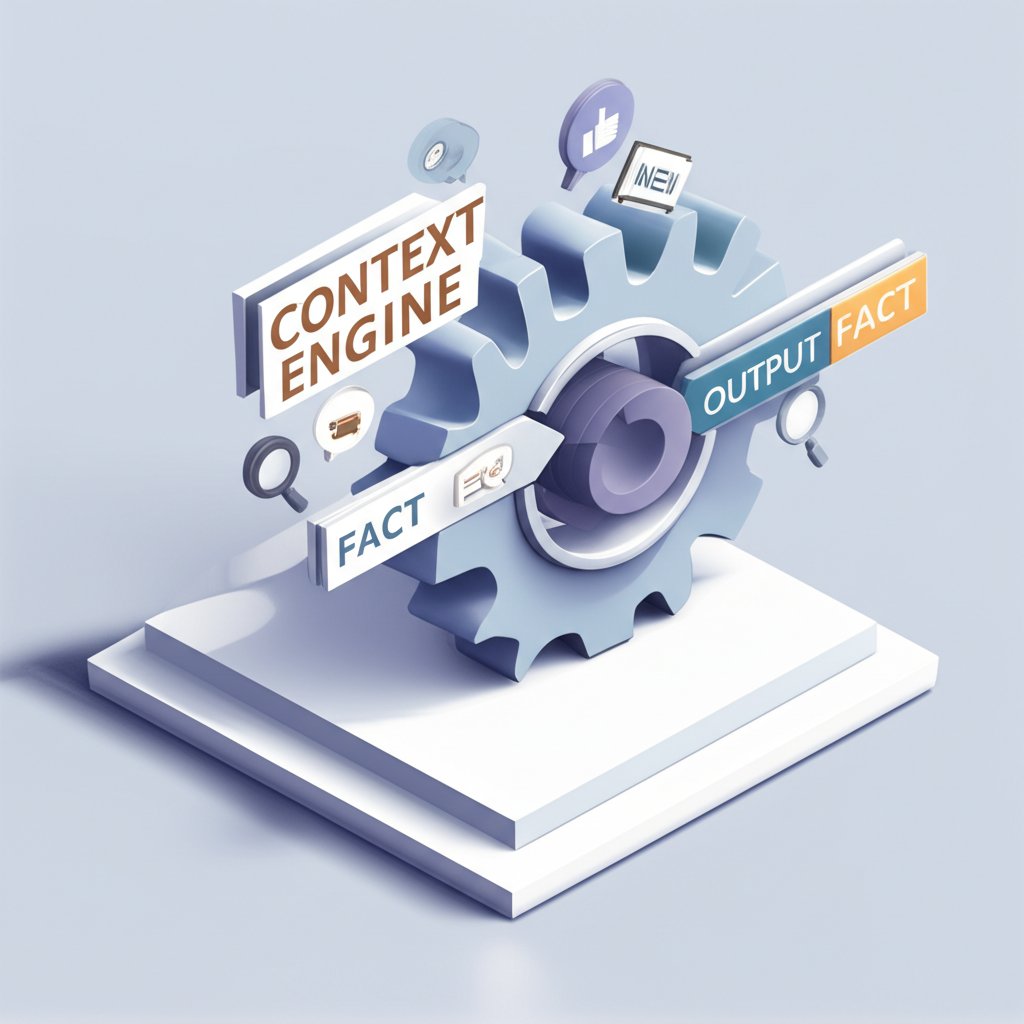
The Context Engine: Why a Fact is Never Just a Fact

A biographical detail without context is like a word without a sentence—it has potential, but its meaning is ambiguous. Context acts as an engine for interpretation, giving a fact its direction and power. The same detail can mean wildly different things depending on the surrounding circumstances.
Consider the simple biographical detail: “Did not complete a university degree.”
| Contextual Filter | Interpretation of “Did Not Complete a University Degree” |
|---|---|
| Historical Era | In 1930, this was the norm for the vast majority of the population. In 2020, it’s a more distinct choice that often requires justification or an alternative path. |
| Socioeconomic Background | For someone from a low-income family, it might signify a lack of opportunity or the necessity of entering the workforce early. For someone from a wealthy family, it might signal rebellion or a deliberate choice to pursue an unconventional path (e.g., a startup). |
| Geographic Location | In a region dominated by skilled trades or agriculture, a university degree might be less relevant to professional success. In a tech or academic hub, its absence is more notable. |
| Subsequent Achievements | If the person is Bill Gates or Mark Zuckerberg, it’s a badge of honor-a symbol of genius that couldn’t be contained by formal education. If the person struggled with unemployment, it’s seen as a potential barrier to success. |
| When evaluating any biographical detail, always ask: |
- What were the societal norms at that time?
- What were the expectations for someone of their background?
- What events were happening in the world that might have influenced their choices?
This practice moves you from being a collector of facts to being a skilled interpreter of a life.
A Practical Playbook for Using Biographical Details
Understanding the theory is one thing; applying it is another. Whether you’re writing about someone else or crafting your own professional narrative, here’s how to put these concepts to work.
For Vetting and Research: The Triangulation Method
Anyone can claim anything, especially online. To ensure the biographical details you’re using are accurate, don’t rely on a single source. Use the triangulation method, a technique borrowed from navigation and social sciences.
- Find at Least Three Independent Sources: Don’t just read three articles that all cite the same original interview. Look for a mix of source types: an official biography, a critical news article, an interview with the person, and perhaps public records or academic papers.
- Identify Points of Consensus: Where do all sources agree? These are your most reliable facts (e.g., dates, job titles, published works).
- Investigate Discrepancies: When sources conflict, it’s often where the most interesting story lies. Why does one account say the company was founded in a garage while another says it was in a well-funded office? This discrepancy might reveal something about the person’s self-mythologizing or a contested history.
- Consider Source Bias: Is the source an official company website (which will present the most positive spin) or a disgruntled former employee? Always ask, “What is this source’s motivation for presenting the details this way?”
For Your Professional Story: Crafting a 75-Word Bio
Many professional platforms, speaker introductions, and author pages require a short biographical statement. The goal is not to list your entire resume but to craft a narrative that connects with your audience.
Here is a simple, three-step formula:
- The Anchor (Who You Are): Start with your full name and your current role or primary identity. This grounds the reader immediately.
- Example: “Dr. Anya Sharma is a leading neuroscientist at the Institute for Cognitive Research…”
- The Bridge (What You’ve Done/Believe): Add a detail that showcases your expertise or a core value. This shouldn’t be a dry fact but a detail that implies a story. Instead of “has 10 years of experience,” try “after a decade pioneering…”
- Example: “…where she leads a team dedicated to understanding the neural pathways of memory. Her work was inspired by her grandfather’s battle with Alzheimer’s.”
- The Destination (Where You’re Going/Why It Matters): Conclude with a statement that connects your past and present to a future goal or a benefit for the reader/audience.
- Example: “She is passionate about translating complex research into practical strategies that can help families facing cognitive decline, and her forthcoming book aims to do just that.”
Written in the third person, this structure quickly establishes credibility, reveals motivation (a powerful biographical detail), and states your relevance to the audience.
For Deeper Analysis: Writing a Biographical Essay
When tasked with writing a biographical essay, your goal is to present an argument about a person’s life, not just a chronological summary of facts.
- Step 1: Select a Subject and an Angle. Don’t just choose a person; choose a question about them. Instead of “The Life of Amelia Earhart,” focus on an angle like “How Amelia Earhart’s mastery of public relations, as much as her aviation skill, cemented her legacy.”
- Step 2: Conduct Focused Research. Gather biographical details, but filter them through the lens of your angle. Look for facts, quotes, and events that support or challenge your thesis.
- Step 3: Create a Thematic Outline. Avoid a simple cradle-to-grave structure. Organize your paragraphs around key themes or arguments that support your thesis. For the Earhart example, your themes might be: 1) Early Branding Efforts, 2) The Role of Her Publisher Husband, 3) Her Writing and Speaking Tours.
- Step 4: Write a Thesis-Driven Introduction. Your first paragraph should introduce the subject and present your central argument (thesis statement) clearly.
- Step 5: Develop Body Paragraphs with Evidence. Each paragraph should start with a topic sentence that makes a point related to your thesis. Then, provide the biographical details, anecdotes, and quotes that serve as evidence.
- Step 6: Conclude with Significance. Your final paragraph shouldn’t just summarize. It should explain the broader significance of your argument. Why does this interpretation of your subject’s life matter? What does it teach us?
Quick Answers to Common Questions
Q: Can you trust biographical details you find on sites like Wikipedia?
A: Treat them as a starting point, not a final destination. Wikipedia can be excellent for getting a general overview and finding primary sources in the reference section. However, because it can be edited by anyone, always verify critical biographical details using the triangulation method mentioned earlier. Cross-reference with academic sources, reputable news archives, and official biographies.
Q: How much personal detail is too much to share in a professional bio?A: The key is relevance. A detail is appropriate if it illuminates your professional motivations, values, or unique qualifications. For example, a financial advisor mentioning they were raised by a single mother who taught them to budget is relevant and humanizing. Mentioning a messy divorce is likely not. Before sharing, ask: “Does this detail help my target audience trust me and understand my professional capabilities?”
Q: Do biographical details pre-determine a person’s life?A: No. This is a common misconception known as determinism. While biographical details like socioeconomic background and place of birth create a set of probabilities and obstacles, they don’t dictate a person’s destiny. The most compelling life stories are often about how individuals responded to, overcame, or leveraged the circumstances they were given. Agency—the power of personal choice—is always part of the equation.
Turning Details Into Understanding
The next time you read a biography, interview a job candidate, or even reflect on your own life, resist the urge to just collect facts. Look for the patterns, the context, and the keystone details that hold the narrative together. A person’s date of birth is data; the story of what it was like to grow up in that specific time and place is what creates understanding.
By learning to see the story behind the facts, you move from being a passive consumer of information to an active interpreter of life itself. Start with your own story: what three biographical details are most essential to understanding who you are today? The answer is the beginning of your unique narrative.










