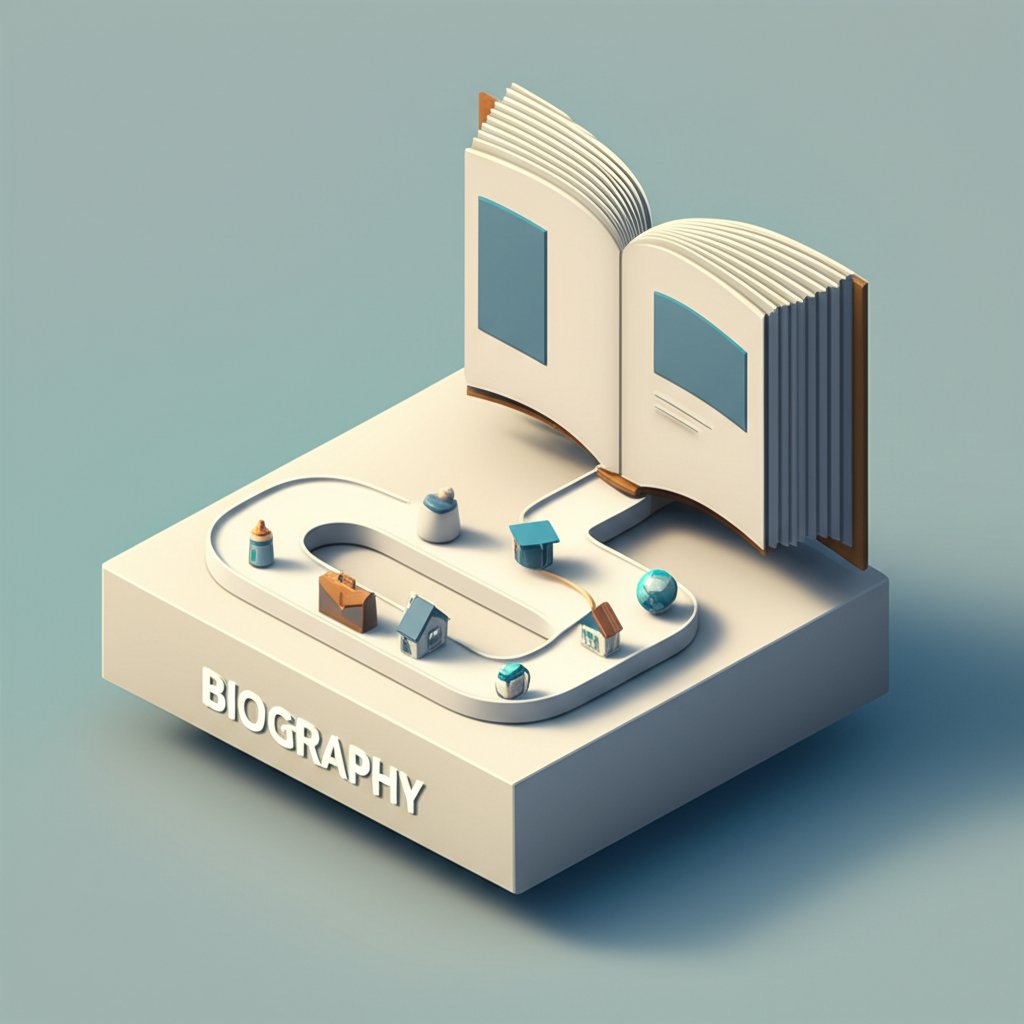
You’re deep inside a compelling story—the triumphs, the private struggles, the moments that changed everything for one remarkable individual. Yet, every detail, every quoted letter, every described scene is anchored in reality. This is the unique power of a nonfiction text written about the life of a person, a genre most of us simply call a biography. It promises the thrill of a great narrative while standing firmly on a foundation of fact.
But where, exactly, is the line between factual reporting and creative storytelling? How can a book feel like a novel yet still be classified as nonfiction? Understanding this distinction is key to appreciating the craft and reading these incredible life stories with a more discerning eye.
At a Glance: The Core of Biography
Before we dive deep, here’s what you need to know about the DNA of a biography:
- Factual Foundation: A biography is, by definition, a work of nonfiction. Its primary commitment is to historical accuracy, built on verifiable evidence.
- Narrative Craft: The biographer’s job is to shape those facts into a compelling, coherent narrative, using storytelling techniques to engage the reader.
- The Power of Evidence: The credibility of any biography rests on the quality and depth of its research—primary sources like letters and diaries are the gold standard.
- Inference, Not Invention: Where facts are missing, a responsible biographer makes educated inferences based on available evidence, signaling their uncertainty to the reader. They do not invent thoughts or dialogue.
- The Author’s Lens: No biography is purely objective. The author’s choices—what to include, what to emphasize, how to interpret events—inevitably shape the final portrait.
The Unseen Scaffolding: Why a Biography Stands on Fact
At its heart, a biography is an act of meticulous reconstruction. A biographer is part detective, part historian, and part journalist, piecing together a life from the fragments left behind. This process isn’t guesswork; it’s a rigorous discipline built on a hierarchy of evidence.
This dedication to verifiable evidence is what firmly separates a true life story from a historical novel. While both might cover the same events, their core promises to the reader are fundamentally different. This distinction is central to understanding the landscape where Biography: Fact Meets Storytelling.
The entire structure of a credible biography is supported by three pillars of research:
- Primary Sources: This is the bedrock. These are raw, direct materials from the period being studied. For a biographer, this includes the subject’s personal letters, diaries, journals, emails, official documents, and recorded interviews. When Ron Chernow wrote his definitive biography Alexander Hamilton, he drew extensively from Hamilton’s own astoundingly prolific writings, allowing the man’s own voice and intellect to drive the narrative.
- Secondary Sources: These are materials created after the fact, often by other historians or journalists. They include other biographies, scholarly articles, and historical analyses. A good biographer uses these to provide context, cross-reference facts, and understand the broader historical landscape their subject inhabited. They might read three different books on the American Revolution to understand the world Hamilton was responding to.
- Interviews and Eyewitness Accounts: For more recent subjects, interviews are crucial. Walter Isaacson’s biography of Steve Jobs was built on more than forty interviews with Jobs himself, plus over a hundred more with family, friends, adversaries, and colleagues. However, even these are treated with caution, as memories can be flawed, biased, or self-serving. A responsible author corroborates these accounts with other sources whenever possible.
From a Pile of Facts to a Compelling Narrative

If a biography were just a chronological list of facts, it would be as dry as a legal deposition. The magic—and the art—lies in how the author shapes this raw material into a story. This is where nonfiction borrows the tools of fiction without breaking its promise of truth.
Finding the Central Theme or Narrative Arc
A life isn’t lived with a clear three-act structure, but a great biography often presents it that way. The author pores over thousands of facts to identify a central theme or question that gives the life meaning and shape.
- Example: The Rise and Fall. A biography of a politician might be framed around their meteoric rise to power and the hubris that led to their downfall. The author selects events and details that illuminate this specific arc.
- Example: The Search for Identity. A life story of an artist might focus on their lifelong struggle to find a unique voice, using their personal letters and early sketches as evidence of that journey.
This isn’t invention; it’s curation. The biographer chooses which threads to follow to make the tapestry of a life understandable.
Setting the Scene with Verifiable Detail
When a biography describes “a cold, windswept morning in November,” it’s not because it sounds poetic. It’s because the author checked historical weather records. When it details the worn furniture in a room, it’s based on estate inventories, photographs, or descriptive letters.
Biographers use sensory details drawn from their research to immerse the reader in a specific time and place. This creates a vivid, novel-like experience that is still 100% factual. They are painting a picture with a palette of verified details.
Walking the Line: A Biographer’s Ethical Toolkit

The most challenging part of writing a nonfiction text about the life of a person is navigating the gray areas—the moments where the historical record is thin, contradictory, or silent. This is where the author’s integrity is tested.
Here��s a breakdown of common challenges and how ethical biographers handle them:
| Challenge | Unethical Approach (Invention) | Ethical Approach (Inference & Transparency) |
|---|---|---|
| Missing Dialogue | Making up verbatim quotes to dramatize a scene. “John slammed the table and shouted, ‘I’ll never agree!'” | Summarizing the conflict based on multiple sources. “According to three attendees’ diaries, the argument was heated. John vehemently opposed the plan.” |
| Inner Thoughts | Stating a subject’s feelings as fact. “She was terrified as she walked on stage.” | Using evidence and careful phrasing to infer emotion. “In her journal that night, she wrote only of ‘trembling hands.’ She must have felt a profound sense of dread.” |
| Gaps in the Timeline | Creating a fictional event to bridge two known periods in the subject’s life. | Acknowledging the gap directly. “For the next six months, Lincoln’s activities are largely unrecorded. We can only speculate about how he processed the news.” |
| Conflicting Accounts | Picking the most dramatic version of a story without question. | Presenting the conflicting evidence to the reader. “While Smith later claimed he was the hero of the event, contemporary reports from Jones and Davis tell a different story.” |
| A trustworthy biography doesn’t hide its limitations. It invites the reader into the process of discovery, showing where the evidence is strong and where it requires careful interpretation. |
Quick Answers to Common Questions
Let’s tackle some of the most frequent questions and misconceptions about the genre.
Q: So, is any part of a biography “made up”?
No. In a work of nonfiction biography, nothing should be fabricated. What is constructed is the narrative—the way the verified facts are selected, arranged, and interpreted to tell a story. The author constructs an argument about a person’s life; they do not invent the events of that life.
Q: How is a biography different from an autobiography?
The key difference is the author. A biography is a nonfiction text written about the life of a person by someone else, aiming for a degree of objectivity. An autobiography is written by the person themselves, offering a firsthand, subjective perspective rich with personal memory and emotion. Both are nonfiction, but their viewpoints are fundamentally different.
Q: What about “biographical fiction” or “historical fiction”?
These are distinct genres. Biographical fiction, like Paula McLain’s The Paris Wife about Ernest Hemingway’s first wife, uses a real person as a protagonist but freely invents dialogue, inner thoughts, and entire scenes for narrative effect. It is a work of fiction inspired by fact, not a work of nonfiction.
Q: Can a biography ever be truly objective?
No, and a good biographer doesn’t pretend it can be. The author’s background, perspective, and even the era in which they write will influence their interpretation. The goal isn’t pure, sterile objectivity; it’s fairness, rigorous research, intellectual honesty, and transparency about the author’s methods and conclusions.
How to Read a Biography Like an Expert
Now that you understand the craft behind the nonfiction life story, you can engage with these books on a deeper level. The next time you pick one up, don’t just read the story—read the book.
Here is a quick-start guide to evaluating the credibility and craft of any biography:
1. Check the Back of the Book First.
Before you even read the first chapter, flip to the end. Is there a detailed section for “Notes,” “Sources,” or a “Bibliography”? A thick, well-organized source section is the single best sign of a serious, well-researched biography. If it’s missing, be skeptical.
2. Listen for the Author’s Voice.
As you read, pay attention to the language. Does the author use cautious, evidence-based phrasing like “it seems likely that,” “she may have felt,” or “the evidence suggests”? Or do they make definitive statements about a person’s inner thoughts and feelings without providing proof? The former signals a careful historian; the latter, a writer taking liberties.
3. Question the Narrative.
Ask yourself: What is the central argument this author is making about this person’s life? Why might they have chosen this particular narrative arc? Understanding the author’s framing helps you see the portrait they are painting, not just the facts they are presenting.
A nonfiction text written about the life of a person is a remarkable achievement—a bridge between the past and present, fact and story. It allows us to learn from the lives of others, understanding not just what they did, but who they were. By appreciating the immense work that goes into honoring the truth while telling a captivating story, you become a more active and insightful reader.










