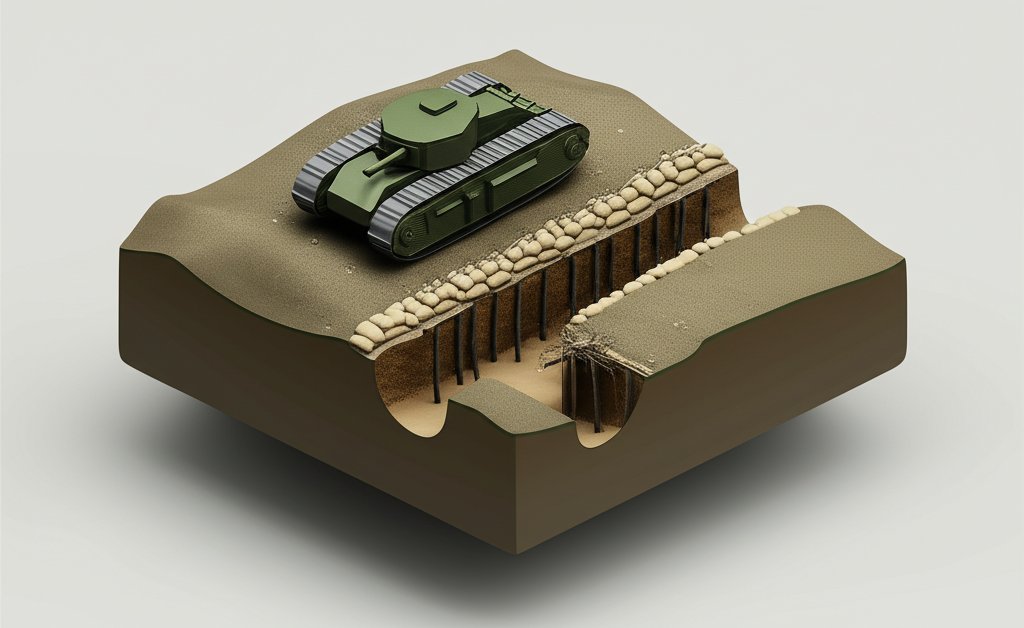
When you picture the great conflicts of the 20th century, what comes to mind? For many, the comparison of world war one vs world war two conjures images of muddy trenches and biplanes on one side, and sprawling naval battles and atomic bombs on the other. While both conflicts reshaped the globe, they were fundamentally different wars—fought for different reasons, with different methods, and leaving behind vastly different legacies.
They weren’t just two chapters in the same story; they were distinct cataclysms with unique DNA. Understanding their core distinctions is key to grasping how our modern world was forged in the fires of these two global struggles.
At a Glance: Key Distinctions Between the Wars
Before we dive deep, here’s a quick overview of what set these conflicts apart:
- The Cause: WWI erupted from a complex web of imperial rivalries, alliances, and nationalism. WWII was a more direct ideological clash, fueled by the unresolved anger from WWI and the rise of aggressive, expansionist regimes.
- The Battlefield: WWI was defined by static trench warfare and attritional battles. WWII was characterized by movement, speed, and combined-arms tactics like the Blitzkrieg, with air power playing a decisive role.
- The Scope: While WWI was a “world war,” its primary battlefields were in Europe and the Middle East. WWII was a truly global conflict, with major theaters in Europe, North Africa, Asia, and the Pacific.
- The Human Cost: WWII was exponentially more destructive, particularly for civilians. The deliberate targeting of cities and the industrialized genocide of the Holocaust created a scale of death and horror unseen in WWI.
- The Aftermath: WWI ended with a flawed peace that sowed the seeds for another war. WWII concluded with the dawn of the nuclear age, the division of the world into two superpower blocs, and the creation of new global institutions like the United Nations.
While this summary gives you the headlines, the real story is in the details. For a complete overview of how these events unfolded and impacted each other, our broader guide offers a foundational look at What set WWI, WWII apart?. Now, let’s explore the critical differences that every student of history should know.
The Spark vs. The Slow Burn: Unpacking the Causes
You can’t understand a conflict without knowing why it started. The origins of WWI and WWII are a study in contrasts—one a tragic, almost accidental cascade into war, the other a deliberate march toward it.
WWI: A Tangle of Alliances and Ambitions
Think of early 20th-century Europe as a room filled with gas leaks. The great powers—Britain, France, Germany, Austria-Hungary, and Russia—were locked in a tense competition for colonies (imperialism), building up massive armies (militarism), and fanning the flames of intense national pride (nationalism).
The final piece of this volatile puzzle was a rigid system of alliances. The Triple Entente (France, Britain, Russia) faced off against the Central Powers (Germany, Austria-Hungary, Italy). This meant a small, regional conflict could quickly pull everyone in.
- The Spark: The assassination of Archduke Franz Ferdinand of Austria-Hungary by a Serbian nationalist on June 28, 1914, was the match that lit the fuse.
- The Cascade: Austria-Hungary, backed by Germany, declared war on Serbia. Russia, allied with Serbia, mobilized its army. Germany, seeing Russian mobilization as a threat, declared war on Russia and its ally, France. When Germany invaded Belgium to attack France, Britain declared war on Germany. Within weeks, the continent was at war.
WWI wasn’t caused by a single villain but by a collective failure of diplomacy, where a web of commitments dragged nations into a war few truly wanted.
WWII: The Unfinished Business of the Great War
The causes of World War II are, in many ways, rooted in the failures of World War I’s conclusion. The Treaty of Versailles, signed in 1919, was meant to secure peace but instead created deep and lasting resentment.
- The Treaty’s Bitter Legacy: The treaty imposed crippling reparations on Germany, forced it to accept full blame for the war (the “War Guilt Clause”), and stripped it of territory and its colonies. This humiliation created fertile ground for extremist politics.
- Rise of Ideologies: The economic turmoil of the Great Depression destabilized democracies and empowered totalitarian regimes. In Germany, Adolf Hitler and the Nazi Party rose to power, promising to restore German greatness. Fascism took hold in Italy under Mussolini, and a militaristic government consolidated power in Japan.
- A Policy of Appeasement: Fearing another war, Western powers like Britain and France initially adopted a policy of appeasement, allowing Hitler to rearm Germany and annex territory (like Austria and parts of Czechoslovakia) in the hope he would be satisfied. This only emboldened him.
- The Trigger: Unlike WWI’s accidental cascade, WWII’s start in Europe was a deliberate act of aggression: Germany’s invasion of Poland on September 1, 1939. This time, Britain and France honored their pledge to Poland and declared war on Germany.
WWII was less an accident and more a consequence—a direct result of unresolved grievances and the rise of ideologies that glorified conquest.
From Trench Stalemate to Global Blitz: The Evolution of Warfare
The 21 years between the end of WWI and the start of WWII saw one of the most rapid and revolutionary periods of military innovation in history. The way the two wars were fought couldn’t have been more different.
On the Ground: Static vs. Dynamic Combat
| Feature | World War I | World War II |
|---|---|---|
| Primary Tactic | Trench Warfare | Blitzkrieg (“Lightning War”) |
| Movement | Static front lines, minimal gains | Rapid advances, encirclements |
| Key Weapons | Machine guns, heavy artillery, poison gas | Advanced tanks, mobile artillery, aircraft |
| Soldier’s Reality | Attritional warfare, “going over the top” | Combined-arms operations, fluid front lines |
| In WWI, defensive technology—namely the machine gun and artillery—had outpaced offensive tactics. The result was a brutal stalemate on the Western Front, where millions died fighting over a few hundred yards of shell-cratered mud. Offensives were massive, bloody affairs like the Battle of the Somme, where the British Army suffered nearly 60,000 casualties on the first day alone. | ||
| By WWII, Germany had perfected a new form of warfare: the Blitzkrieg. This tactic used concentrated forces of tanks (Panzers), motorized infantry, and close air support (dive bombers) to punch through enemy lines, bypass strongpoints, and cause chaos deep in the rear. This emphasis on speed and coordination prevented the static fronts of WWI from ever forming in places like France (1940) and the early stages of the invasion of the Soviet Union (1941). |
In the Air and at Sea: The Rise of New Doctrines
Air power and sea power also evolved dramatically.
- Air Warfare: In WWI, aircraft were fragile contraptions used mostly for reconnaissance, with pilots engaging in chivalrous-seeming “dogfights.” By WWII, air power was a dominant strategic weapon. Massive bomber fleets conducted strategic bombing campaigns to destroy enemy industry and morale (e.g., the Blitz on London, the bombing of Dresden). The Battle of Britain was the first major military campaign fought entirely by air forces.
- Naval Warfare: WWI’s great naval battles, like Jutland, were contests between massive battleships (dreadnoughts). While submarines (U-boats) were a menace, their impact was primarily on merchant shipping. In WWII, the aircraft carrier replaced the battleship as the queen of the seas. Battles like Midway in the Pacific were fought by carrier-based aircraft, with the opposing fleets never even seeing each other. Submarine warfare also became more sophisticated, with German U-boats hunting in “wolf packs.”
Finally, WWII saw the development of game-changing technologies like radar, which was crucial to Britain’s victory in the Battle of Britain, and culminated in the creation of the ultimate weapon: the atomic bomb.
Total War: The Civilian Experience
While civilians suffered in WWI from food shortages and long-range artillery, the concept of “total war”—where the entire nation, including its civilian population and economy, is mobilized for the war effort—was perfected in WWII.
The Home Front Becomes the Front Line
In WWII, the line between soldier and civilian blurred dangerously. Strategic bombing campaigns deliberately targeted urban centers to cripple production and break public will. Cities like London, Coventry, Hamburg, Dresden, and Tokyo were devastated by air raids, killing hundreds of thousands.
This era also saw state-sponsored atrocities on an industrial scale. While WWI included the horrific Armenian Genocide committed by the Ottoman Empire, the Holocaust perpetrated by Nazi Germany during WWII was unique in its systematic, bureaucratic, and industrialized extermination of approximately six million Jews, alongside millions of other targeted groups. This organized mass murder remains a defining horror of the 20th century.
A New World Order: The Geopolitical Aftermath
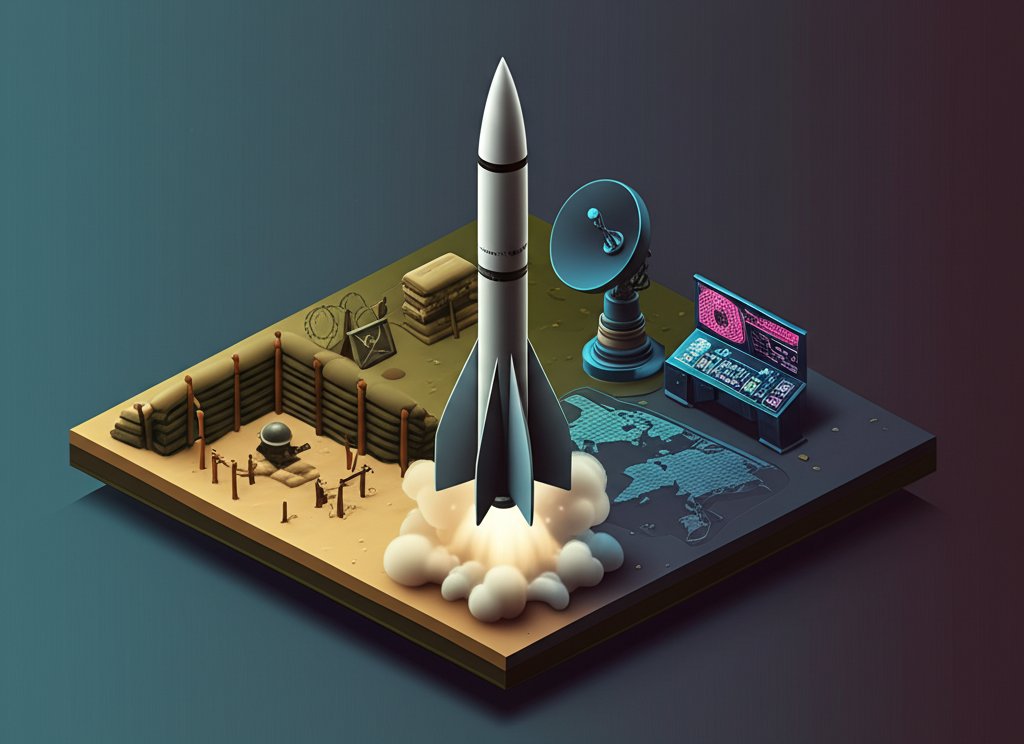
The conclusions of the two wars created profoundly different worlds.
The Aftermath of WWI
- Collapse of Empires: The German, Austro-Hungarian, Russian, and Ottoman empires all disintegrated, leading to the creation of new, often unstable, nations in Europe and the Middle East.
- A Punitive Peace: The Treaty of Versailles placed the full blame and financial burden of the war on Germany, creating a legacy of resentment that fueled the rise of Nazism.
- The League of Nations: An international body was created to prevent future wars, but it was fundamentally weak. It lacked an army and key members (the U.S. never joined), rendering it ineffective at stopping aggression in the 1930s.
The Aftermath of WWII
- Rise of the Superpowers: The old European powers were shattered. The United States and the Soviet Union emerged as the world’s dominant military and ideological powers, setting the stage for the Cold War.
- The United Nations: Learning from the League’s failures, the Allies created the United Nations, a new international body with a Security Council composed of the major victorious powers, giving it more authority to maintain peace.
- The Nuclear Age: The use of atomic bombs on Hiroshima and Nagasaki introduced a new and terrifying reality to international politics, where all-out war between great powers now carried the risk of human extinction.
- Decolonization: Weakened by the war, European colonial empires began to crumble as independence movements gained strength across Africa and Asia.
Quick Answers to Common Questions
Let’s tackle some frequently asked questions about world war one vs world war two.
Q: Was WWII just a continuation of WWI?
Many historians argue that the two conflicts are best seen as a single “European Civil War” or a “Thirty Years’ War” of the 20th century. The Treaty of Versailles was so flawed and created so much instability that it made a second conflict highly likely. However, the distinct ideologies (Fascism vs. Democracy/Communism) and global scope of WWII also make it a unique event.
Q: Which war was deadlier?
World War II, by a significant margin. WWI caused an estimated 17 million military and civilian deaths. Estimates for WWII range from 50 to 80 million deaths. This massive difference is due to the larger scale of the conflict, more lethal weaponry, the deliberate targeting of civilians, and the genocides.
Q: Why was trench warfare so common in WWI but not WWII?
Trench warfare resulted from a technological imbalance where defensive weapons (machine guns) were far superior to offensive tactics. By WWII, the development of tanks, aircraft, and mobile infantry, combined with new doctrines like Blitzkrieg, allowed armies to break through defensive lines and restore movement to the battlefield.
Q: Did the same countries fight in both wars?
Many of the main players were the same—Germany, France, Britain, Russia (as the Soviet Union in WWII), and the U.S. However, the alliances shifted. In WWI, Italy and Japan were Allied Powers. In WWII, they joined Germany to form the Axis Powers. The Ottoman Empire, a Central Power in WWI, no longer existed by WWII, with its successor state, Turkey, remaining neutral for most of the war.
The Final Word: Two Wars, Two Worlds
Comparing world war one vs world war two is not just about listing facts and figures. It’s about understanding a fundamental shift in the nature of conflict. WWI was the tragic, brutal end of an old world—a clash of 19th-century empires fought with 20th-century industrial killing machines. It was a war of attrition, mud, and stalemate that left a generation traumatized and a continent scarred.
WWII was a different beast entirely. It was a global war of ideology and movement, fought with a terrifying new arsenal of technology that erased the distinction between battlefield and home front. It ended not with a flawed treaty but with the total defeat of the Axis powers, the dawn of the nuclear age, and the creation of a new global order defined by the rivalry between two superpowers. One war bled into the next, but the world left behind each time was unrecognizable from the one that came before.










