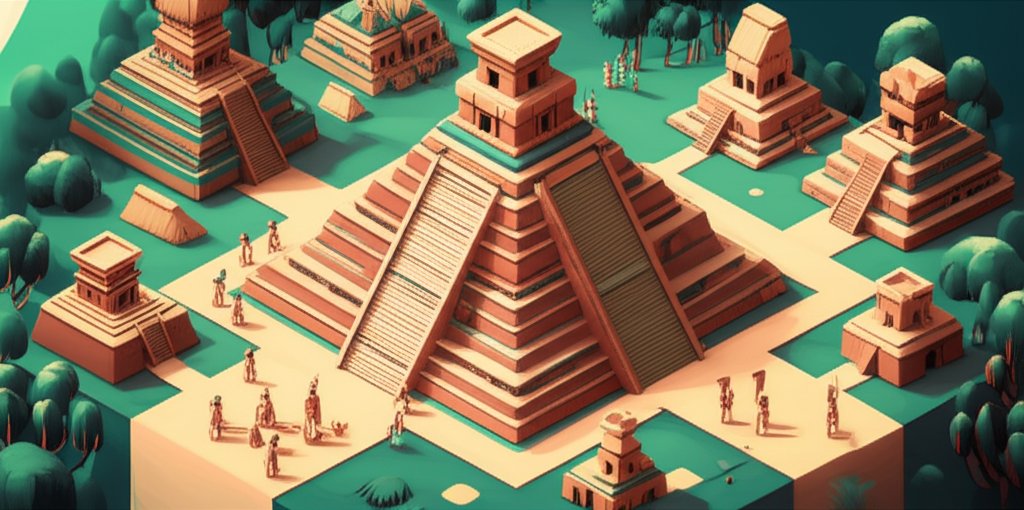
The idea of a single, unified “Mayan Empire” is a persistent myth. In reality, the complex system of mayan government was a dynamic and often volatile tapestry of independent city-states, each vying for power, resources, and divine favor. Instead of a centralized emperor, authority was concentrated in the hands of divine kings who ruled their local domains with a blend of sacred mandate and shrewd political maneuvering, creating a landscape more akin to Ancient Greece than Imperial Rome.
This decentralized structure was both a source of cultural dynamism and chronic instability. Understanding how these rival kingdoms were organized—from the king’s sacred duties to the enforcement of law and the intricate dance of diplomacy and war—is key to grasping the Maya’s incredible achievements and eventual decline.
At a Glance: How Mayan Rule Worked
- Decentralized Power: The Mayan world consisted of numerous independent city-states, not a single empire. Each was a kingdom in its own right.
- Divine Kingship: The king, or k’uhul ajaw (“divine lord”), was the central figure, serving as a political leader, military commander, and chief intermediary with the gods.
- Hierarchical Structure: A rigid social hierarchy placed the king at the top, followed by a powerful council of nobles and priests who assisted in governance.
- Tribute-Based Economy: The government was funded by tribute in the form of goods (food, textiles, ceramics) and labor from commoners, not by currency-based taxes.
- Swift and Severe Justice: The legal system was designed for immediate resolution. There were no prisons; punishments ranged from public shaming and enslavement to execution.
- Constant Rivalry: Warfare, strategic alliances through marriage, and competition for trade routes defined the relationships between city-states.
The Divine King: More Than a Ruler, A Conduit to the Gods
At the heart of any Mayan city-state was the k’uhul ajaw. This was not a king in the European sense of a mere political sovereign; he was considered a living embodiment of divine power, a descendant of the gods whose sacred bloodline gave him the right to rule. This belief was the bedrock of Mayan political structure, granting the king absolute authority in theory, though he relied on a network of elites to govern effectively.
A king’s duties were twofold, blending the spiritual and the terrestrial:
- Chief Priest: The king was responsible for performing the most critical religious ceremonies. This included personal bloodletting rituals, where he would offer his own blood to nourish the gods and ensure cosmic balance. He presided over public events tied to the complex Mayan calendar, ensuring that planting, harvesting, and warfare were all conducted on auspicious dates.
- Supreme Military Commander: In times of war, the king was expected to lead his armies. Stelae and temple carvings frequently depict rulers in full battle regalia, standing over captured enemy lords. A successful military campaign not only brought tribute and territory but also validated the king’s divine favor.
Succession was hereditary, typically passing to the eldest son, known as the b’aah ch’ok (head youth). However, the line of succession could be a point of intense conflict. If a king had no son, the throne might pass to a brother or, in rare but notable cases, to a woman. This fusion of religious and military roles is a defining feature of the most Influential Mayan Rulers, whose monuments consistently portray them as both warriors and high priests.
A King’s Council: The Nobles and Priests Who Shared Power

While the k’uhul ajaw was the ultimate authority, he did not rule alone. An influential council made up of the highest-ranking nobles (almehen, or “one whose father is known”) and powerful priests helped manage the state. This elite group acted as a combination of a privy council, a legislature, and a judicial body.
Think of it less like a modern cabinet and more like a board of directors where every member comes from a founding family with its own power base.
Key Roles Within the Elite Council:
- High Nobles (Sajalob): These were typically the heads of powerful families, often related to the king. Many served as regional governors, ruling over smaller towns and villages within the city-state’s domain. They collected tribute, administered local justice, and raised warriors for the king’s army.
- High Priests (Ah K’in): The priests held immense influence. As masters of the calendar, writing, and astronomy, they interpreted divine will. Their advice was crucial for every major decision, from declaring war to scheduling a coronation. The separation between noble and priest was often blurry, as many high-ranking figures held both political and religious titles.
- Military Leaders (Nacom): While the king was the supreme commander, a dedicated war chief, the nacom, was often elected for a three-year term. This individual was responsible for military strategy and training the army, embodying the state’s martial power.
This system created a delicate balance. A strong king could command the loyalty of his council, but a weak king could be manipulated or even overthrown by ambitious nobles.
The Machinery of a City-State: Administration and Economy
Day-to-day governance required a sophisticated administrative apparatus to manage the flow of resources and information that sustained the elite and funded monumental construction projects.
A System Built on Tribute, Not Taxes
The Mayan economy did not use currency. Instead, the government was funded through a system of tribute paid by commoners. Farmers would give a portion of their maize and other crops, craftspeople would provide pottery, textiles, and tools, and hunters would supply meat and exotic feathers.
This tribute supported the entire non-farming population: the royal court, nobles, priests, scribes, and the standing army. Commoners also owed the state a labor debt, meaning they could be called upon to work on public projects like building temples, palaces, and causeways (sacbeob). Nobles were exempt from this tribute, a key privilege of their class.
The Role of Scribes and Administrators
Literacy was a tool of power, restricted to the elite. Scribes, often younger sons of noble houses, were essential administrators. Using the complex hieroglyphic script, they recorded:
- Royal Histories: Genealogies, births, deaths, and military victories of the ruling dynasty.
- Tribute Records: Detailed logs of goods received from vassal towns.
- Astronomical Data: Precise tracking of celestial events to inform the ritual calendar.
- Diplomatic Correspondence: Messages exchanged between city-states.
These records, carved on stone monuments and painted in codices, were a form of political propaganda designed to legitimize the king’s rule and intimidate rivals.
Law and Order in the Mayan World
Mayan society was governed by a strict and efficient legal code. The goal was not rehabilitation but swift justice and the restoration of social order. There were no prisons; punishment was immediate and often public.
Local leaders or nobles served as judges (batabob) for most civil and criminal cases. For truly serious matters, such as those involving a high-ranking noble or a threat to the state, the k’uhul ajaw himself could sit in judgment.
Punishments were designed to fit the crime and were carried out as soon as a verdict was reached.
| Crime Category | Common Punishments |
|---|---|
| Capital Crimes | Murder, arson, sacrilege (insulting the gods). |
| Punishment: Public execution, often by sacrifice. | |
| Major Crimes | Theft, assault, adultery. |
| Punishment: Enslavement to the victim, heavy fines, public humiliation. | |
| Minor Offenses | Lying, minor disputes. |
| Punishment: Having one’s hair cut short (a deep sign of shame), fines. | |
| Interestingly, nobles were often held to a higher standard. A noble found guilty of a serious crime might face a harsher penalty than a commoner, as their actions were seen as a greater betrayal of the social order. |
The Game of Thrones: Diplomacy, War, and Alliances
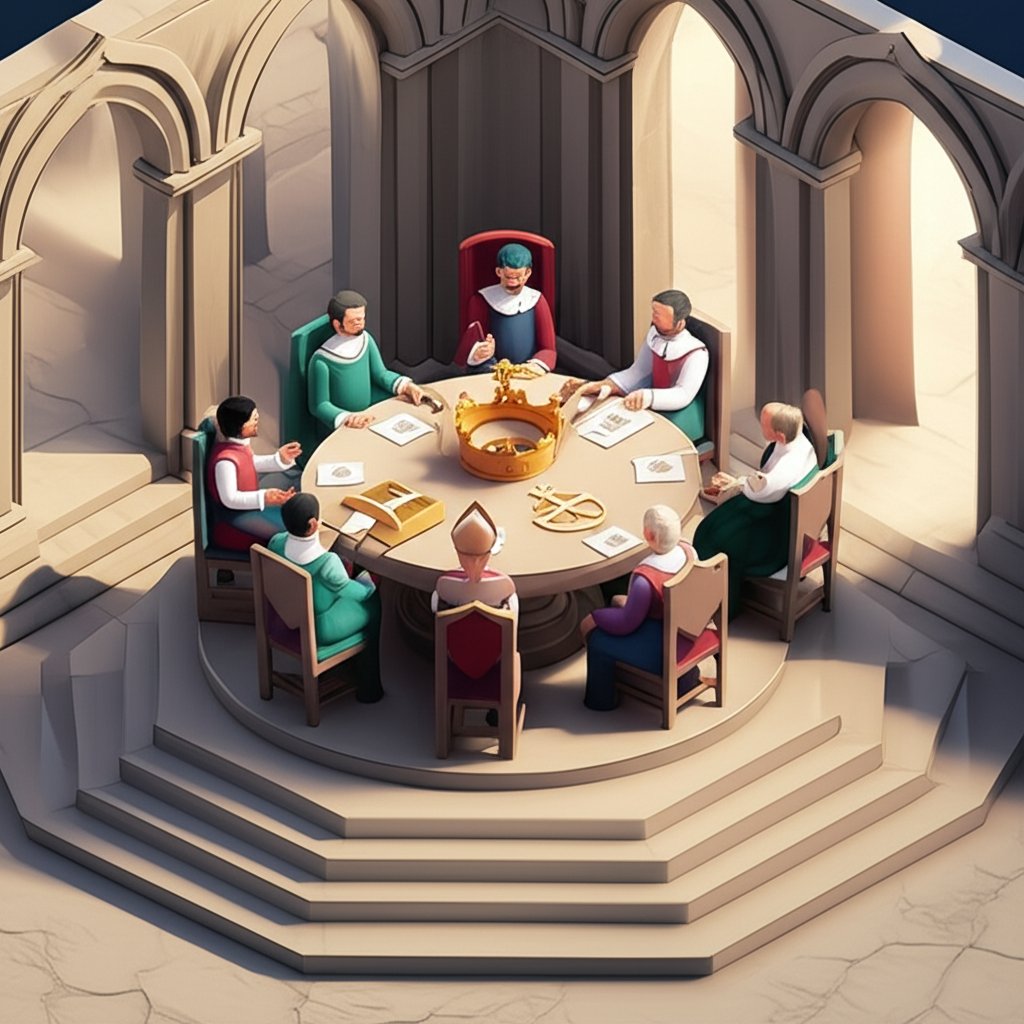
The political landscape of the mayan government was defined by the perpetual “great game” played between rival city-states. Relations were a fluid mix of cautious diplomacy, strategic alliances, and endemic warfare.
Warfare was rarely about total annihilation or occupying vast territories. Instead, it served specific political and religious goals:
- Capturing Rivals: The primary objective was often to capture the enemy king or high-ranking nobles. These captives would be publicly humiliated and eventually sacrificed in elaborate rituals to appease the gods and demonstrate the victor’s power.
- Securing Tribute: A defeated city-state would be forced to pay tribute to the victor, enriching the dominant power and weakening the subordinate one.
- Controlling Trade Routes: Much of the conflict revolved around control of lucrative trade networks for essential and luxury goods like obsidian, jade, salt, and cacao.
Alliances were just as important as military might. These were often sealed through strategic marriages, where a princess from one kingdom would be married to the king of another to create a political and military bond.
Case Snippet: The Tikal-Calakmul Rivalry
For centuries, the Mayan world was dominated by the struggle between the “superpowers” of Tikal and Calakmul. This conflict shaped the political map, forcing smaller city-states to choose sides, much like the Cold War. A city like Naranjo could be a powerful ally of Calakmul at one point, only to be conquered by Tikal decades later. The story of Lady Six Sky, a princess from the Calakmul sphere sent to re-establish a dynasty at Naranjo, shows how women could be used as powerful political tools to cement these critical alliances.
Quick Answers to Common Questions About Mayan Government
Q: Was there a single Mayan emperor?
A: No. This is the most common misconception. The Maya were never unified under one ruler or capital. The political landscape was a shifting mosaic of dozens of independent and semi-independent city-states, each with its own divine king.
Q: How did someone become a king?
A: Kingship was hereditary and patrilineal, passed from father to eldest son. However, the process wasn’t always smooth. A king’s brother could usurp the throne, and royal succession was often a source of internal strife and civil war. If no suitable male heir existed, a woman could rule as queen.
Q: Was social mobility possible for commoners?
A: It was extremely limited but not impossible. The most viable path for a commoner to rise in status was through exceptional success as a warrior. A valiant soldier could be rewarded with land, titles, and wealth, elevating his family’s position. However, breaking into the hereditary nobility was exceptionally rare.
Q: Did women hold political power?
A: Yes, though it was less common than for men. Some women, like Lady Six Sky of Naranjo, ruled as powerful queens in their own right, especially during the Late Classic period. More frequently, royal women wielded significant “soft power” as regents for young sons or as the architects of diplomatic marriages that shaped inter-kingdom alliances.
Putting It All Together: How a Mayan State Made Decisions
To see how these elements connected, consider the practical steps a king might take to wage war, a decision central to Mayan political life.
A Playbook for Royal Action: Going to War
- The Trigger: A rival city-state raids a key trade route, captures a noble ally, or is seen as a growing threat. This provides the casus belli.
- Divine Consultation: The k’uhul ajaw meets with his high priests. They consult the sacred calendar and perform divination rituals to determine if the gods favor war and to select an astrologically auspicious date for the attack.
- The Council of War: The king convenes his council of top nobles (sajalob) and his war chief (nacom). They debate the strategy, assess the risks, and plan the logistics. Loyalties are affirmed, and roles are assigned.
- Mobilization Orders: Scribes issue orders to the regional governors. These batabob are commanded to muster their local militias, gather tribute in the form of supplies (food, weapons), and march their forces to a staging point.
- Public Ritual and Propaganda: Before the army marches, the king leads large public ceremonies. These might include ritual ballgames, dances, and bloodletting sacrifices to rally the populace and secure divine blessing. Stelae might be commissioned to preemptively declare victory.
- The Campaign: The king and his commanders lead the army. The goal is a decisive victory that results in the capture of the enemy king or other high-value individuals, ensuring a political and religious triumph.
This process illustrates how every aspect of the mayan government—divine authority, elite counsel, administration, and religion—was interwoven and mobilized to achieve state objectives. This complex, competitive system fueled centuries of breathtaking artistic and scientific achievement but ultimately proved fragile, unable to withstand the combined pressures of endemic warfare, environmental strain, and social upheaval.










