
Finding genuinely good historical tv shows can feel like a treasure hunt. You press play hoping for an immersive journey, only to be pulled out by clunky dialogue, cheap-looking costumes, or a story that feels more like a Wikipedia summary than a living, breathing world. The best series don’t just recount events; they resurrect an era, letting you walk its streets, understand its people, and feel the weight of its conflicts.
But “good” is subjective. Are you a stickler for accuracy who wants every button and buckle to be correct? Or do you prefer a gripping drama that uses a historical backdrop to tell a timeless human story? This guide is for navigating that choice. We’ll break down the different flavors of historical television, give you a framework for spotting quality, and help you find the perfect series to transport you back in time.
At a Glance: Your Guide to Historical TV
- Understand the Authenticity Spectrum: Learn the key differences between meticulous docudramas, historically-inspired dramas, and historical fantasies.
- Identify the Three Pillars of Quality: Discover how world-building, character-driven narrative, and purposeful storytelling separate the great shows from the merely adequate.
- Match a Show to Your Tastes: Get a quick-start guide to choosing a series based on whether you crave accuracy, romance, political intrigue, or genre-blending action.
- Get Answers to Common Questions: We’ll tackle frequent queries, like how much accuracy really matters and why so many of these ambitious shows get canceled.
The Authenticity Spectrum: From Docudrama to Historical Fantasy
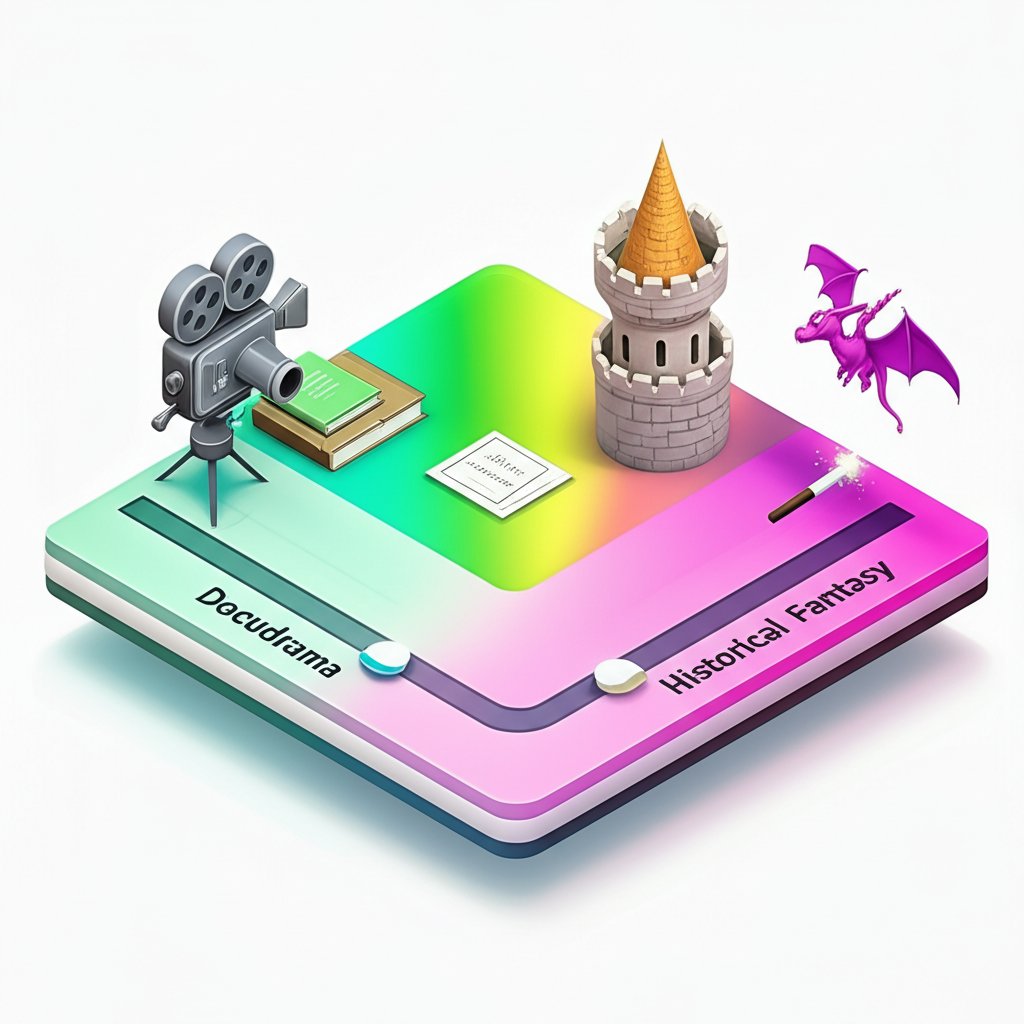
Not all historical series are created equal, nor do they try to be. The first step in finding your next binge-watch is understanding where a show falls on the spectrum from painstaking recreation to imaginative reinterpretation. Knowing a show’s intent helps you manage your expectations and enjoy it for what it is.
This framework is the best way to sift through the huge variety of options available in The best historical TV series and pinpoint exactly what you’re in the mood for.
The Meticulous Recreators
These shows are built on a foundation of rigorous research. Their primary goal is to present a historical event with as much factual accuracy as possible, from the grand political machinations down to the smallest details of daily life.
- Case Snippet: Chernobyl
The creators of HBO’s Chernobyl went to extraordinary lengths to replicate the 1986 disaster. They relied on scientific records, firsthand accounts, and Soviet-era designs to reconstruct the event with harrowing precision. The result is less a drama and more a non-fiction thriller, praised by critics for its unwavering commitment to the historical record. - Case Snippet: John Adams
Based on David McCullough’s Pulitzer Prize-winning biography, this HBO miniseries is a masterclass in historical portraiture. It sticks closely to the documented life of its subject, using Adams’ and his wife Abigail’s own letters to inform the dialogue. It’s a show for those who want to understand the past, not just visit it.
The Inspired Storytellers
This is the most common category for good historical tv shows. These series use a real historical setting and often feature real figures, but they take creative liberties to build a compelling narrative. The private conversations are imagined, relationships are dramatized, and timelines are sometimes condensed for effect. Their goal is emotional truth over factual purity.
- Case Snippet: The Crown
Netflix’s flagship series chronicles the reign of Queen Elizabeth II. While it’s anchored in real events, creator Peter Morgan has always been clear that the intimate, behind-closed-doors scenes are dramatizations. The show’s power comes from using history as a stage to explore universal themes of duty, family, and identity. - Case Snippet: Mad Men
Set in the 1960s advertising world, Mad Men features entirely fictional main characters. Yet, it is obsessively authentic to its era. The show’s creators meticulously researched the period’s fashion, politics, social norms, and even office supplies to create a world that feels completely real, allowing the fictional stories of Don Draper and Peggy Olson to illuminate the cultural shifts of the decade.
The Historical Fantasists
These shows take a real historical period and intentionally mix in elements of fantasy, myth, or the supernatural. They use history as a launchpad for a genre story, blending recognizable settings with imaginative new rules.
- Case Snippet: Britannia
Set during the Roman invasion of Britain in 43 AD, Britannia is a historical fantasy. It pits the Roman army against warrior queens and powerful druids who wield otherworldly magic. It’s a show that uses a real historical conflict to explore themes of faith, power, and resistance through a fantastical lens. - Case Snippet: The Terror
The first season of this AMC anthology series recounts the true story of the Royal Navy’s doomed 1840s Franklin Expedition to find the Northwest Passage. It’s a chillingly accurate survival story—until a supernatural monster begins hunting the crew. The show masterfully combines historical dread with creature-feature horror.
Beyond the Costumes: A Framework for Judging Quality
Once you know what kind of show you’re looking for, how do you spot a truly great one? It comes down to three key pillars that support every memorable historical series.
Pillar 1: World-Building & Authenticity
This is about more than just period-appropriate dresses. Great world-building makes an era feel tangible and lived-in. It’s in the way characters speak, the social etiquette they follow, and the grit or grandeur of their surroundings.
When a show gets this right, the setting becomes a character in itself. Think of the lavish, brutal, and meticulously constructed world of HBO’s Rome, which was so authentic its high production costs ultimately led to its cancellation. Or consider the recent triumph of Shōgun, which immersed viewers in the complex cultural and political landscape of feudal Japan, earning praise for its dedication to authenticity.
Pillar 2: Character-Driven Narrative
History is made by people. The best historical dramas never forget this. The political turmoil or the sweeping battles are just the backdrop for deeply personal stories. We don’t watch The Queen’s Gambit for a lesson on Cold War-era chess; we watch it for Beth Harmon’s struggle with addiction and genius.
Similarly, Peaky Blinders uses post-WWI Birmingham as a crucible to forge the ambition and trauma of its fictional lead, Tommy Shelby. Good historical tv shows ensure the human drama is always at the forefront, giving viewers a relatable anchor in an unfamiliar time.
Pillar 3: Purposeful Storytelling
A great historical series has a point of view. It uses the past to say something meaningful about the present. It’s not just a recitation of events but an exploration of timeless themes.
Derry Girls is a perfect example. Set during the Troubles in 1990s Northern Ireland, it uses the political conflict as a backdrop for a hilarious and heartwarming coming-of-age story about friendship and resilience. It shows how life, in all its absurdity, continues even in the most stressful of circumstances. Self Made: Inspired by the Life of Madam C.J. Walker uses a historical biography to tell a powerful, enduring story about Black female entrepreneurship and breaking barriers.
A Quick Guide to Choosing Your Next Historical Binge

Ready to dive in? Use this simple guide to find a show that fits your preferences.
| If you’re looking for… | Consider these shows… | Why they fit… |
|---|---|---|
| Strict Historical Accuracy | Chernobyl, John Adams, Band of Brothers | These series are docudramas or are based on acclaimed non-fiction books, prioritizing factual retelling. |
| Epic Romance & Adventure | Outlander, Poldark, Bridgerton | These shows center on sweeping love stories set against dramatic historical backdrops like Jacobite Scotland or Regency England. |
| High-Stakes Political Intrigue | The Crown, Shōgun, Rome, The Gilded Age | Dive into the power struggles of royal courts, feudal warlords, and clashing aristocracies. |
| Deep Character Studies | Mad Men, The Queen’s Gambit, Alias Grace | These series use their historical settings to explore the complex inner lives of fascinating individuals. |
| Genre-Bending Thrills | The Terror, Britannia, Knightfall, Peaky Blinders | Get your history with a dose of horror, fantasy, or high-octane crime drama. |
| Stories of Real-Life Icons | Victoria, The Empress, The Law According to Lidia Poët | Follow the compelling true stories of queens, lawyers, and other trailblazers who changed their world. |
Answering Your Questions About Historical TV Shows
Navigating the world of historical drama can bring up some common questions. Here are some quick answers.
How historically accurate do TV shows need to be?
It all comes down to the show’s intent. A docudrama like Chernobyl lives or dies by its accuracy. But for a drama like The Tudors or Bridgerton, the goal is entertainment rooted in a historical “vibe,” not a perfect recreation. Even shows lauded for their detail take liberties. Knightfall‘s historical consultant noted the show intentionally deviated from fact for the sake of its Holy Grail narrative. The best approach is to enjoy them as works of fiction first and history lessons second.
What’s the difference between a period drama and a historical drama?
The terms are often used interchangeably, but there’s a slight distinction. A “historical drama” typically focuses on specific, real-life events or people (John Adams, The Crown). A “period drama” can be broader, sometimes featuring entirely fictional characters whose stories are meant to capture the essence and social fabric of a particular era (Downton Abbey, Call the Midwife).
Can a show with fictional characters still be a good historical TV show?
Absolutely. Fictional characters like Lucius Vorenus and Titus Pullo in Rome or the Crawley family in Downton Abbey serve as the audience’s eyes and ears. They provide a relatable, human-level perspective on sweeping historical changes, making the past more accessible and emotionally resonant than a dry documentary ever could.
Why are so many historical shows canceled after a couple of seasons?
In a word: budget. Recreating the past is incredibly expensive. Lavish sets, detailed costumes, and large casts add up quickly. Shows like Netflix’s Marco Polo and HBO’s Rome were both praised for their epic scale but were ultimately canceled because their massive production costs weren’t sustainable.
Start Your Journey Into the Past Tonight
The perfect historical series is out there waiting for you. The key is to match the show’s ambition to your own viewing appetite. Before you press play on a new series, ask yourself: Am I looking for a history lesson, a human story, or a thrilling escape?
Use the authenticity spectrum—from meticulous recreator to historical fantasy—to find your sweet spot. Whether you want to witness the birth of a nation with John Adams or navigate the treacherous court of Kublai Khan in Marco Polo, there’s a show ready to bring the past to life. Pick a pillar you care about most—be it immersive world-building, compelling characters, or a powerful theme—and prepare to be transported.










