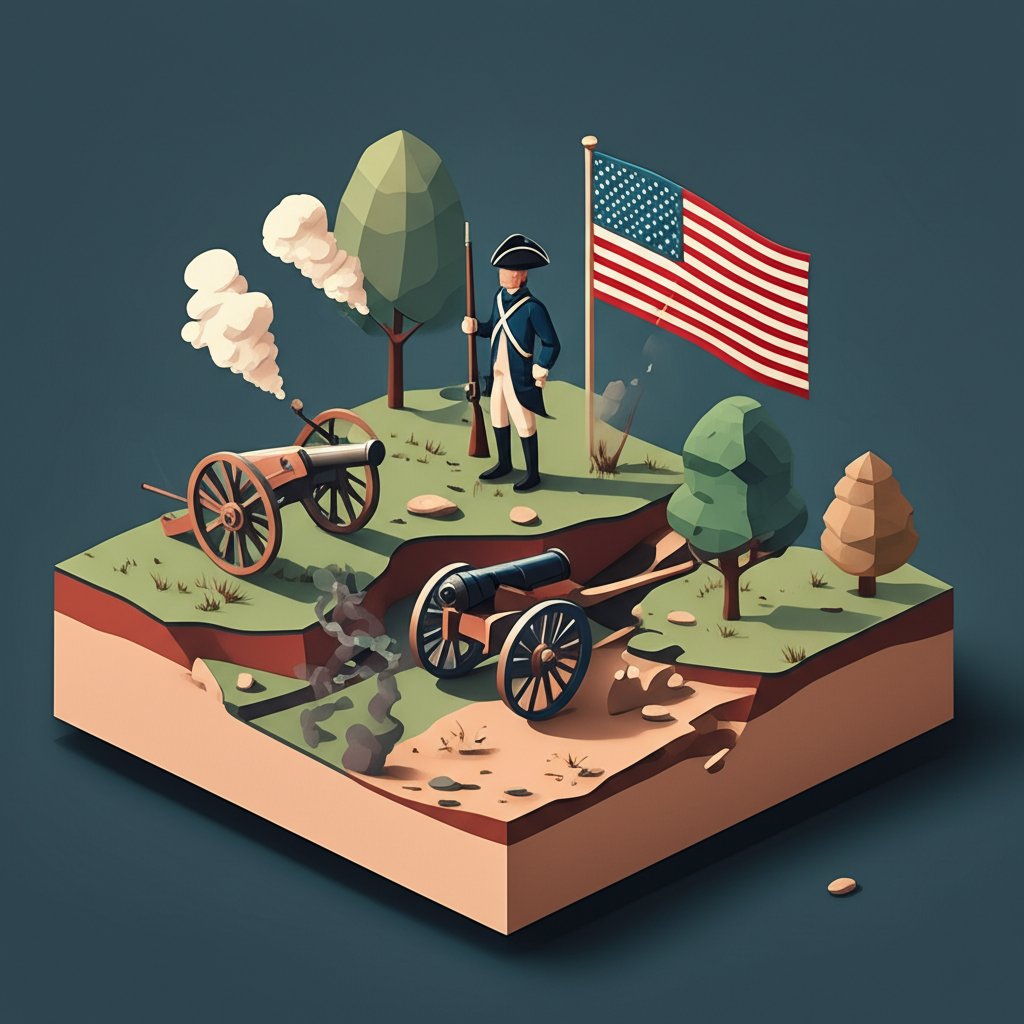
If you ask ten different people what battle was the turning point of the American Revolution, you might get a few different answers. Some will point to the desperate, frozen victory at Trenton; others will gesture to the final triumph at Yorktown. But for a single moment that fundamentally altered the trajectory of the entire war—transforming a colonial rebellion into a global conflict the British couldn’t win—all roads lead to the muddy fields and dense woods of Saratoga, New York.
The American victory at Saratoga in the fall of 1777 wasn’t just another win. It was the strategic masterstroke that convinced the world, and especially France, that the fledgling United States was a cause worth backing. It was the moment the American Revolution went from a possibility to an inevitability.
At a Glance: Why Saratoga Changed Everything
Before we dive into the strategy, the smoke, and the steel, here’s the essential takeaway on why the Saratoga campaign stands as the war’s critical pivot point.
- The Decisive Blow: The American victory at Saratoga resulted in the capture of an entire British army, a stunning military achievement that had seemed impossible.
- It Secured a Powerful Ally: This victory was the proof of concept Benjamin Franklin needed in Paris. It directly convinced France to sign the Treaty of Alliance in 1778, formally entering the war on America’s side.
- The Conflict Went Global: With France’s entry, followed by Spain and the Netherlands, the war expanded far beyond North America. Britain was forced to defend its empire across the globe, stretching its military and financial resources to the breaking point.
- A Massive Morale Boost: The victory reinvigorated the Patriot cause at a time when the British had captured the American capital of Philadelphia, reminding everyone that the fight for independence was far from over.
A War of Moments: Setting the Stage for 1777
A long, grinding war like the American Revolution isn’t won or lost in a single day. It’s a chain of events, of morale soaring and plummeting, of supply lines holding and breaking. By 1777, the war was two years old and had already seen its share of dramatic swings.
The initial patriotic fire of Lexington, Concord, and Bunker Hill—where colonial militiamen proved they could stand up to professional soldiers—had given way to a brutal reality. In 1776, George Washington’s Continental Army was pushed out of New York, beaten and demoralized. The cause seemed all but lost.
Then came Washington’s audacious Christmas crossing of the Delaware River to strike at Trenton. That victory was a shot of adrenaline for the revolution, a crucial morale boost that kept the army from simply melting away. But it didn’t fundamentally change the strategic situation. The British Empire was still the world’s preeminent superpower, and its army was angry.
The British Plan to End the Rebellion

In 1777, the British leadership in London devised what they believed would be the war-winning campaign. The plan was elegant, ambitious, and, on paper, unstoppable.
The goal was to seize control of the Hudson River Valley in New York, a vital artery connecting New York City to Canada. By controlling the Hudson, they could effectively sever New England—the heart of the rebellion—from the rest of the colonies. The revolution, they believed, would then wither and die.
The strategy called for a three-pronged assault:
- General John Burgoyne would lead a large army south from Canada.
- Lieutenant Colonel Barry St. Leger would move east from Lake Ontario.
- General William Howe, the British commander-in-chief, would march his main army north from New York City.
All three forces were to converge on Albany, New York, crushing all Patriot resistance in their path. It was a classic pincer movement designed to be the final checkmate. But from the start, things went wrong for the Crown.
St. Leger’s force was turned back by American defenders. More critically, General Howe, for reasons still debated by historians, chose to move his army to capture the American capital of Philadelphia instead of heading north to support Burgoyne.
Suddenly, “Gentleman Johnny” Burgoyne and his 8,000 men were on their own, marching deeper into the hostile American wilderness, their supply lines stretching ever thinner.
Saratoga: Not One Battle, But a Campaign of Attrition
The “Battle of Saratoga” wasn’t a single clash but a month-long campaign centered around two major engagements. The American forces, under the command of General Horatio Gates, gathered to block Burgoyne’s path south.
While Gates was the official commander, his field general, Benedict Arnold, was the tactical genius and inspirational force on the ground—a fact that would later contribute to his tragic turn.
The First Clash: Freeman’s Farm (September 19)
Burgoyne, confident in his professional Redcoats and Hessian mercenaries, launched an attack. The fighting took place in a clearing known as Freeman’s Farm and raged for hours. American riflemen, led by the legendary Daniel Morgan, picked off British officers from the cover of the dense woods, sowing chaos.
Benedict Arnold repeatedly threw his forces into the fray, fighting the British to a standstill. By the end of the day, Burgoyne’s army held the field, but it was a hollow victory. He had suffered over 600 casualties—double the American losses—and, unlike the Americans who were gaining strength daily, he could not replace his men. His advance was stalled.
The Decisive Blow: Bemis Heights (October 7)
Weeks passed. Burgoyne’s army was trapped. His supplies were dwindling, winter was approaching, and there was no word of reinforcement from General Howe. Desperate, he attempted one more push.
He sent a reconnaissance-in-force of 1,500 men toward the American left flank at Bemis Heights. The Americans pounced. The battle was a disaster for the British from the start.
In a moment of legendary courage (and insubordination, as Gates had relieved him of command), Benedict Arnold galloped onto the battlefield. He rallied the American troops, leading a series of ferocious charges that shattered the British lines and captured key fortifications. Arnold was grievously wounded in the leg at the moment of victory, an injury that would plague him for the rest of his life.
The British were routed, suffering another 600 casualties to America’s 150. Burgoyne’s army retreated to their camp near Saratoga (modern-day Schuylerville), where they were quickly surrounded by a swelling American force that now numbered nearly 20,000.
The Surrender That Shook the World (October 17)
Out of food, out of time, and completely encircled, Burgoyne had no choice. On October 17, 1777, he surrendered his entire army to General Gates.
The sight of nearly 6,000 of the King’s finest soldiers laying down their arms to a colonial army was a spectacle that sent shockwaves across the Atlantic. This wasn’t just a tactical retreat; it was a strategic catastrophe for the British and the clearest signal yet that the Americans could actually win. It was the undeniable turning point of the american war effort.
The Ripple Effect: How Saratoga’s Victory Echoed Across the Atlantic
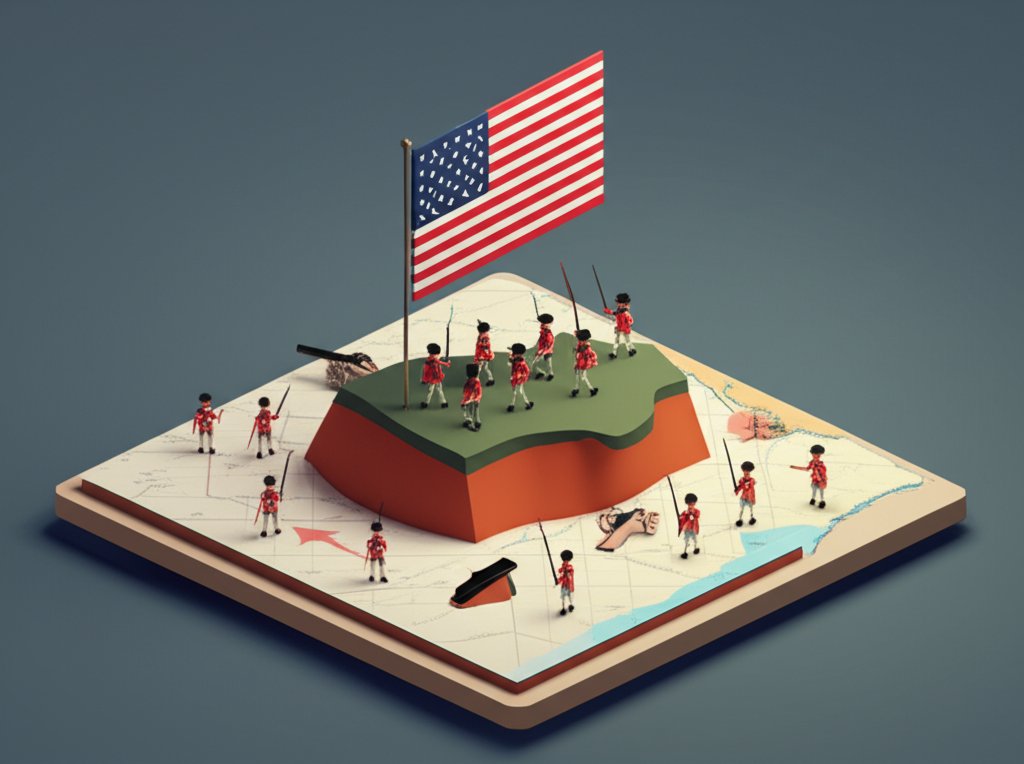
The true significance of Saratoga wasn’t what happened on the battlefield but the diplomatic dominoes that fell afterward. The victory itself was huge, but the consequences were world-altering.
Securing a Powerful Ally: The French Connection
Across the ocean in Paris, Benjamin Franklin had been tirelessly lobbying the French court for support. France, still smarting from its defeat to Britain in the Seven Years’ War, was sympathetic to the American cause and had been providing covert aid.
But King Louis XVI was hesitant to commit to a formal, open alliance. He needed proof that the Americans weren’t just a rabble in arms but a force capable of defeating a British army in a conventional fight.
The news of Saratoga was exactly the proof he needed. When the report of Burgoyne’s surrender reached Paris, it electrified the court. Franklin finally had the leverage he required. In February 1778, France signed the Treaty of Alliance, officially recognizing the United States and committing its formidable military and financial resources to the war.
From Rebellion to World War
French entry changed everything. Suddenly, the British weren’t just fighting to subdue their colonies; they were fighting a global war against their old rival.
- Diverted Resources: The Royal Navy, once able to blockade the American coast at will, now had to defend British holdings in the Caribbean, India, and the English Channel itself.
- Stretched Thin: Redcoats who could have been sent to fight Washington were now needed to defend against potential French invasions elsewhere.
- More Allies: Inspired by France, Spain (in 1779) and the Dutch Republic (in 1780) also joined the war against Britain, further isolating the empire and straining its finances.
Saratoga turned the American Revolution into a conflict that Britain could no longer afford to win. The path to the final victory at Yorktown was paved by French gold, French ships, and French soldiers—support that would never have materialized without Saratoga.
What About Other Battles? Examining the Contenders
To truly appreciate Saratoga’s role, it’s helpful to compare it to the other pivotal moments of the war. While many battles were critical, none altered the fundamental nature of the conflict in the same way.
The Case for Trenton (1776)
Washington’s victory at Trenton was undeniably essential. In the winter of 1776, the Continental Army was on the verge of disintegration. The victory over the Hessians was a masterpiece of leadership that saved the revolution from an early death.
The Verdict: Trenton was the morale turning point. It kept the flame of revolution alive. However, it didn’t secure foreign aid or significantly damage Britain’s long-term ability to wage war. It saved the army, but Saratoga secured the means to win.
The Case for Yorktown (1781)
The surrender of General Cornwallis’s army at Yorktown was the war’s grand finale. It was the decisive battlefield victory that broke the political will of the British Parliament to continue the fight, leading directly to peace negotiations.
The Verdict: Yorktown was the concluding victory, but not the turning point. The victory at Yorktown was a direct consequence of the French alliance secured by Saratoga. Without the French fleet under Admiral de Grasse blockading the Chesapeake Bay and preventing a British rescue by sea, the siege of Yorktown would have failed. It was the ultimate payoff of the strategy that began at Saratoga. Many historians argue that without Saratoga, there is no Yorktown, making the earlier battle the true Turning point of the Revolution.
Other Key Moments
- Bunker Hill (1775): A psychological victory that proved Americans would fight fiercely, but a tactical loss.
- Kings Mountain (1780): A crucial Patriot victory in the South that blunted a British offensive, but its impact was primarily regional.
- Cowpens (1781): A tactical masterpiece that crippled British forces in the South, setting the stage for Yorktown.
Each of these was a vital link in the chain of victory, but Saratoga was the moment the chain was forged into unbreakable steel.
The Enduring Legacy of a New York Battlefield
So when you consider the long, bloody road to American independence, remember Saratoga. It stands apart not just for the courage shown on the field, but for its profound strategic and diplomatic consequences.
It was more than a battle; it was a political earthquake. It validated the American experiment in the eyes of the world, transforming a lopsided fight into a multi-front struggle that a global superpower could not sustain. The road from Saratoga led directly to the French alliance, and the French alliance led directly to the British surrender at Yorktown and the birth of a new nation.
Other moments saved the cause and others ended the fight, but the battles in the forests of upstate New York in 1777 were what truly made the final victory possible.










