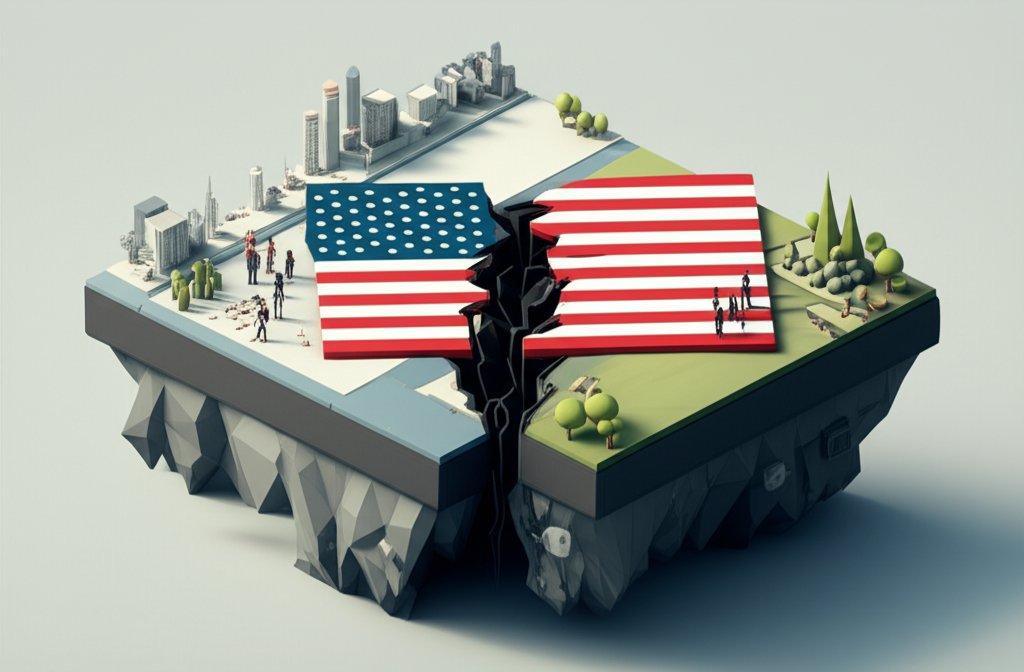
The question “are us and america same” feels like it should have a simple yes or no answer. But in reality, the answer unspools a complex story of geography, identity, and global perception. One term is a precise political entity defined by borders and laws; the other is a sweeping, often contentious, idea. Getting the distinction right isn’t just about semantics—it’s about communicating with clarity and respect, whether you’re drafting a contract or just trying to understand the world a little better.
At a Glance: Key Takeaways
- US vs. America: Understand the difference between the “United States,” a specific sovereign nation, and “America,” a term for two entire continents.
- Context is Everything: Learn when it’s appropriate to use “America” colloquially and when precision (using “US” or “USA”) is critical, especially in formal or international settings.
- Geographical Scope: Recognize that “America” technically includes dozens of countries, from Canada in the north to Argentina in the south.
- Identity and Language: Discover the historical reasons why “American” became the demonym for US citizens and the controversy this sometimes causes.
- Communicate Clearly: Get practical tips to avoid ambiguity and misunderstanding when talking with a global audience.
The Lines on the Map: A Tale of Two Meanings
At the heart of the confusion is the collision of a political name and a geographical one. They overlap, but they are not interchangeable. Understanding where each one belongs is the first step to using them correctly.
What “United States” Precisely Defines
The “United States” is the common and official shorthand for the United States of America. It is a sovereign nation—a federal republic composed of 50 states, the District of Columbia, and several overseas territories.
This name refers to a specific political entity with:
- A defined government (federal, state, and local).
- A single constitution and body of federal law.
- Clearly demarcated borders with Canada and Mexico.
- A population of over 330 million citizens and residents.
Using “United States,” “U.S.,” or “USA” is always technically correct when referring to the country. Think of it like calling the “United Kingdom” the “UK” or the “People’s Republic of China” just “China.” It’s a standard, universally understood name for the nation-state.
The Sweeping Geography of “America”
“America,” on the other hand, is a much broader term. Geographically, it refers to the Americas, the massive landmass in the Western Hemisphere that is typically divided into two continents: North America and South America.
This continental definition includes:
- North America: Canada, the United States, Mexico, and the countries of Central America and the Caribbean.
- South America: Brazil, Argentina, Colombia, Peru, and all other nations on the continent.
So, a person from Canada, Brazil, or Mexico is, geographically speaking, an “American.” This is the primary source of international friction over the term. When a US citizen claims the name “American” exclusively, it can be perceived as ignoring the shared identity of an entire hemisphere. While the distinction between US and USA is a simple matter of abbreviation, the jump to “America” adds this complex geographical layer. For a foundational look at the official names, our guide on What’s the USA vs US difference? provides a clear breakdown.
How “American” Became a National, Not Continental, Identity
If “America” refers to two continents, why did “American” become the exclusive label for people from the United States? The answer is a mix of history, linguistics, and the nation’s rising influence on the world stage.
The Historical Roots of a Shorthand
When European explorers first arrived, they dubbed the entire landmass “America.” As colonies formed, “America” was the “New World.” The “United States of America,” founded in 1776, was the first major independent nation in the Americas to incorporate the continent’s name into its official title.
As the US grew in economic, political, and cultural power throughout the 19th and 20th centuries, its name and identity became globally dominant. “America” evolved into a convenient shorthand, used both by its own citizens and by people around the world to refer to the country.
The Power of a Simple Demonym
A demonym is what you call a person from a particular place. A person from Canada is a Canadian. A person from Mexico is a Mexican. A person from Brazil is a Brazilian.
So, what do you call a person from the United States of America?
The options are surprisingly awkward. “United Statesian” is clunky and has never caught on in English. With no other simple, country-specific adjective available, “American” filled the void. It was easy to say and historically resonant. This linguistic convenience, more than anything, cemented the term as the de facto demonym for US citizens, even with its geographical ambiguity.
A Practical Playbook: When to Use Which Term
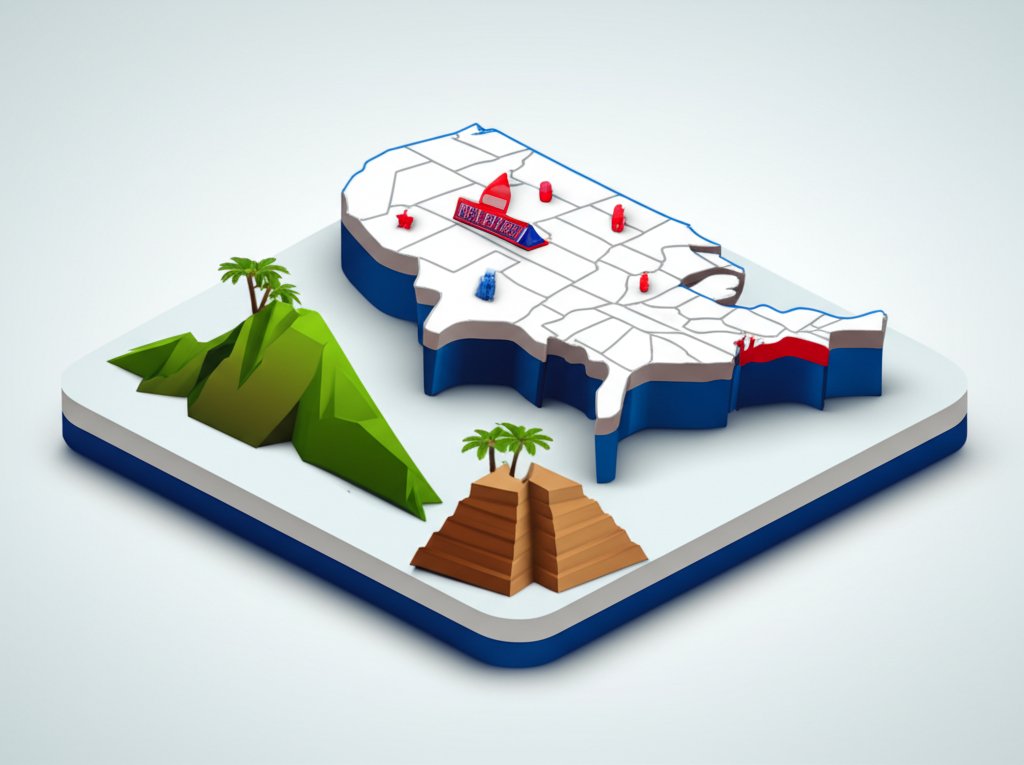
Choosing the right word depends entirely on your audience and your purpose. Using a simple framework can help you communicate with precision and avoid unintended offense.
Your Decision Framework for Clear Communication
Use this simple table to guide your choice. The key is to match your term to the context.
| Scenario | Best Term | Why It Works |
|---|---|---|
| Legal & Official Documents | “United States” or “United States of America” | Provides absolute legal and political precision. There is zero ambiguity in a contract, treaty, or statute. |
| International Business | “United States” or “U.S.” | Shows awareness and respect for a global audience. A client from Argentina is also geographically American. |
| Academic & Formal Writing | “United States” or “U.S.” | Upholds scholarly standards of precision. In fields like Pan-American studies, using “America” for the US is a major faux pas. |
| Casual Conversation (in the US) | “America” | It’s the common, patriotic vernacular. Everyone within the domestic context understands you mean the United States. |
| Marketing & Branding | “America” | Evokes powerful feelings of patriotism, heritage, and identity. A “Made in America” label has more emotional pull than “Made in the U.S.” |
| News & Journalism | “U.S.” or “America” | “U.S.” is standard for neutral, factual reporting. “America” is often used in headlines or opinion pieces to be more evocative. |
Case Snippets: Where Terminology Really Matters
Theory is one thing; real-world application is another. Here’s how these choices play out.
- Snippet 1: The Ambiguous Trade Deal. An e-commerce company drafts an agreement with a supplier in Peru, stating that “all products must comply with standards in America.” This is a legal landmine. Does it mean standards across North and South America? The contract should have specified “comply with United States federal and state standards” to be enforceable.
- Snippet 2: The Diplomatic Gaffe. During a summit of the Organization of American States (OAS), a US diplomat repeatedly refers to his country’s foreign policy as “America’s commitment to the region.” This language, while unintentional, can alienate representatives from the 34 other member nations by implying the US speaks for the entire hemisphere. Using “the U.S. commitment” is more diplomatic and accurate.
- Snippet 3: The Successful Ad Campaign. A car company launches a Super Bowl ad featuring sweeping landscapes, families, and factory workers with the tagline, “Built for the Heart of America.” The campaign is a massive success because it taps into a deep-seated cultural identity. Using “Built for the U.S.” would have been factually correct but emotionally flat.
Quick Answers to Common Questions
Let’s clear up a few lingering misconceptions about the “are us and america same” debate.
Is it wrong to say “America” when referring to the US?
Not necessarily “wrong,” but it can be imprecise and contextually inappropriate. In casual conversations among US citizens, it’s perfectly normal. In a formal or international setting, however, it can come across as ignorant or arrogant. The United States or the U.S. is always the safer, more accurate choice.
Why don’t people from the US have a unique demonym like “Canadians” or “Mexicans”?
It’s a linguistic quirk of history. Alternatives like “United Statesian” sound awkward and never gained popular usage. Because the country’s official name is the “United States of America,” the demonym “American” became the natural default, despite its broader geographical meaning.
Are US and America the same thing legally?
No. Legally and formally, the country is the “United States of America.” The U.S. is its standard abbreviation. Treaties, laws, and official documents will always use “United States” for precision. “America” is a geographical, cultural, and colloquial term, not a legal one for the nation.
Can I use “the States” instead?
Absolutely. “The States” is a very common and well-understood informal term for the U.S., both domestically and internationally. It’s a great “in-between” option—more casual than “United States” but without the geographical ambiguity of “America.”
Choosing Your Words with Purpose
The core of the issue boils down to precision versus colloquialism. “United States” is a precise, unambiguous term for a nation. “America” is a powerful, evocative, and widely used colloquialism that carries both cultural weight and geographical baggage.
The next time you’re writing an email to an international colleague, drafting a formal report, or even just chatting about current events, take a moment to consider your word choice. Ask yourself: Does my audience need the clear-cut precision of “U.S.,” or does the context permit the familiar shorthand of “America”?
Making that conscious choice elevates your communication from casual to globally aware. The debate over whether the US and America are the same is more than a grammar lesson; it’s a reflection of how a nation sees itself and how it is seen by the rest of the world.










