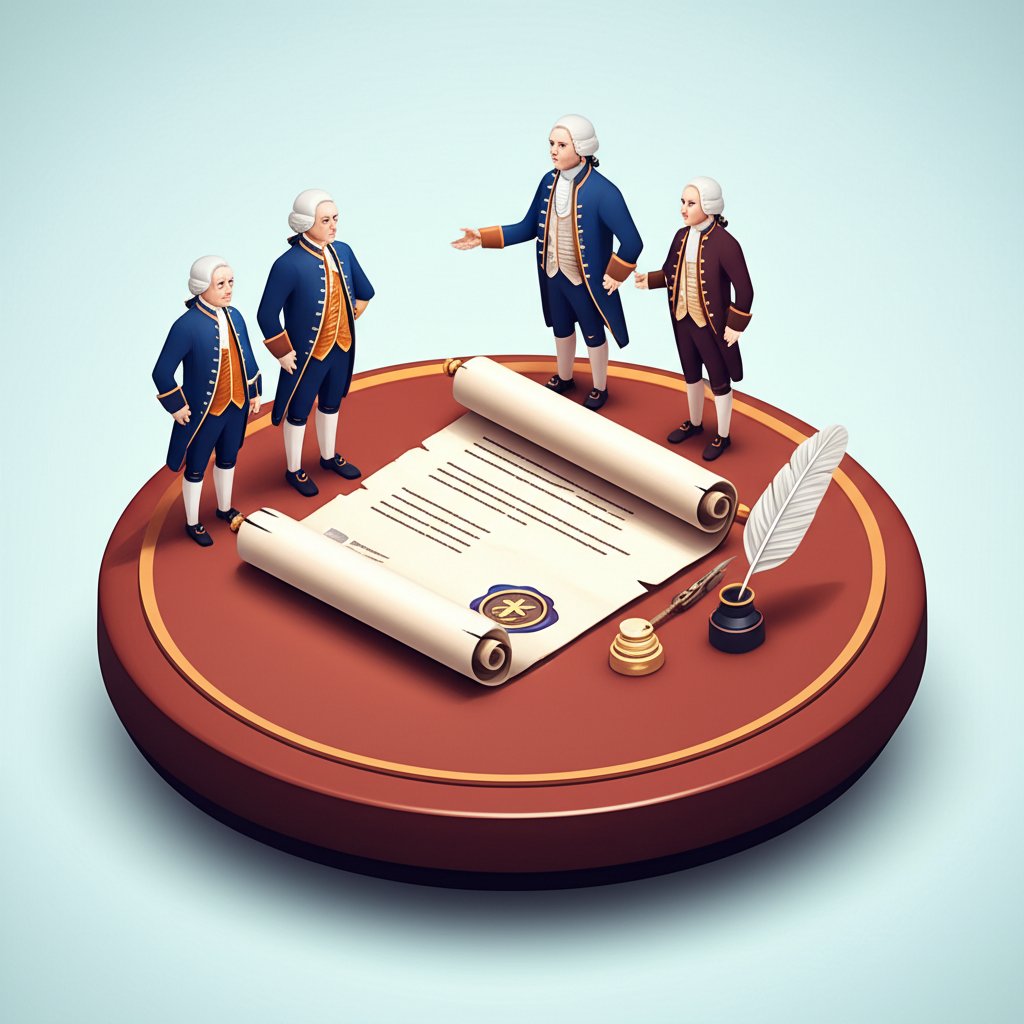
When you see a pic of the Declaration of Independence online, you’re likely looking at an iconic swirl of calligraphy on aged parchment, crowned by the words “In Congress, July 4, 1776.” It feels like a direct window into 1776, but the story is more complex. The image you see is often one of several distinct versions, each created at a different time for a different purpose, and the most common one isn’t even the original from that fateful summer.
Understanding which pic of the Declaration of Independence you’re viewing unlocks a deeper appreciation for the document’s journey. It transforms a static image into a dynamic story of drafting, debating, publicizing, and preserving America’s founding creed.
At a Glance: What You’ll Learn
- How to identify the five most important versions of the Declaration of Independence.
- The crucial difference between the first printed copy and the famous signed parchment.
- Why the clearest, most widespread pic of the Declaration of Independence is actually a 19th-century engraving.
- Practical tips for telling the difference between the 1776 original and its famous 1823 copy.
- Where America’s founding documents are housed today and the story of their preservation.
It’s Not Just One Document: The Key Versions
The Declaration of Independence wasn’t a single, sudden creation. It was a process, and several documents mark its evolution from a revolutionary idea to a national treasure. Each version tells a part of the story.
Jefferson’s “Rough Draught”: The First Spark of Genius
Before the formal parchment came into existence, there was the “Original Rough Draught.” Thomas Jefferson, sequestered in his rented Philadelphia rooms, penned this first version in June 1776. It’s a fascinating look into the creative and collaborative process, full of crossed-out words and margin notes.
This draft wasn’t his alone; he consulted with a “Committee of Five,” including John Adams and Benjamin Franklin, whose suggestions are visible on the page. A pic of this document isn’t clean or stately. It’s a working manuscript, revealing the raw, human effort behind the eloquent final text. For instance, you can see Jefferson’s passionate condemnation of the slave trade, a section Congress later removed. This version, held by the Library of Congress, captures the debate and compromise central to the nation’s founding.
The Dunlap Broadside: The First Public Announcement
On July 4, 1776, after the Continental Congress approved the text, they needed to tell the world. They sent it to a local printer, John Dunlap. That night, Dunlap produced about 200 copies of what is now known as the Dunlap Broadside.
This was the first published version of the Declaration. A pic of a Dunlap Broadside looks very different from the later handwritten one.
- It’s typeset, not handwritten. It looks like a formal poster or flyer.
- It has no signatures. Only the names of John Hancock (President) and Charles Thomson (Secretary) are printed at the bottom.
- Its purpose was speed. These were rushed to the colonies and the Continental Army to be read aloud, spreading the news of independence far and wide.
Only about 26 of these broadsides are known to exist today. Seeing a pic of this version is seeing the Declaration as most Americans first experienced it: as urgent, breaking news.
The Iconic Image: Decoding the Handwritten Masterpiece

When people search for a “pic of Declaration of Independence,” they are almost always looking for the formal, signed version known as the Engrossed Declaration.
This is the document that lives in the National Archives. It was meticulously handwritten on a large sheet of parchment, a process called “engrossing,” and ordered by Congress on July 19, 1776. Its formal title is “The unanimous Declaration of the thirteen united States of America.” Most members of Congress signed it on August 2, 1776, with the final signature added years later.
This is the official, final copy. Its bold heading and the iconic signature of John Hancock are its most recognizable features. However, years of exposure and handling have taken their toll. The original is now severely faded, with much of the text and many signatures barely legible. High-resolution photos from the National Archives reveal the delicate, ghost-like state of the ink. Understanding the journey from a rough draft to this final, signed document provides a richer view of America’s founding. For a broader look at the events and other key visuals, you can See founding story images.
Why Your Textbook Pic is Likely a Replica: The Stone Engraving
Here’s the twist: the crisp, clear, and perfectly legible “pic of Declaration of Independence” you see in most books, articles, and posters is probably not the 1776 original. It’s most likely an 1823 copy known as the Stone Engraving.
By the 1820s, the original Engrossed Declaration was already showing serious signs of aging. Worried it would be lost forever, Secretary of State John Quincy Adams commissioned a printer named William J. Stone to create a perfect facsimile. Stone spent nearly three years meticulously engraving the entire document—text and every signature—onto a copperplate. He then used this plate to print exact copies.
The Stone Engraving was so precise that it became the definitive visual source for the Declaration for over a century. It’s the “master copy” from which most modern reproductions are made. So, when you see a pic with dark, uniform ink and flawless signatures, you are almost certainly looking at Stone’s remarkable 1823 work.
How to Be the Expert: A Spotter’s Guide to Declaration Pics
So, how can you tell which version you’re seeing? It’s easier than you think if you know what to look for.
| Version | Date | Key Visual Cues | Primary Location | What It Represents |
|---|---|---|---|---|
| Jefferson’s Rough Draught | June 1776 | Handwritten, many edits, cross-outs, margin notes. | Library of Congress | The creative process and early debate. |
| Dunlap Broadside | July 4, 1776 | Printed/typeset text, no calligraphic signatures at the bottom. | National Archives | The first public announcement. |
| Engrossed Declaration | Aug. 2, 1776 | Handwritten on parchment, famous signatures, very faded ink. | National Archives | The official, signed record. |
| Stone Engraving | 1823 | Handwritten look but crisp, dark, uniform ink; flawless signatures. | Various Archives | The act of preservation and the source of most modern pics. |
Telltale Signs: Engrossed Original vs. Stone Engraving
Differentiating the two most confused versions comes down to a few details.
- Check the Ink Condition: This is the biggest giveaway. A pic of the original 1776 Engrossed Declaration will show faint, brownish ink, with significant fading and cracking, especially around the signatures. A pic of the 1823 Stone Engraving shows bold, black, consistent text that looks almost brand new.
- Look for the “Secret” Inscription: William Stone added a discreet identifier to his work. On his engraving, if you look closely at the top left edge, you can often find the text: “ENGRAVED by W. I. STONE for the Dept. of State, by order.” The original has no such text.
- Examine the Signatures: On the original, the signatures vary in pressure and thickness, just as you’d expect from 56 different men with quill pens. On the Stone copy, the signatures are remarkably uniform, a result of the engraving process.
More Than a Document: The Declaration in Art
Sometimes, what we think is a pic of the document is actually a famous artistic interpretation of the event.
John Trumbull’s Famous Painting
One of the most enduring images associated with the Declaration is not of the document at all, but John Trumbull’s painting, Declaration of Independence. This massive oil painting, which hangs in the U.S. Capitol Rotunda, depicts the five-man drafting committee presenting their work to the Congress.
It’s a powerful scene, but it’s an idealized one.
- It’s not the signing: The painting shows the submission of the draft on June 28, 1776, not the signing on August 2.
- The room is crowded: Trumbull included 42 of the 56 signers, but they were never all in the room at the same time for this event. He painted them in as he could get them to sit for portraits over the years.
This painting is a pic about the Declaration—a celebration of the moment—rather than a historically precise snapshot. It has done more to shape the popular imagination of the event than any actual document.
Your Questions About Declaration Photos, Answered
Q: Was the Declaration of Independence signed on July 4th?
A: No. The text was formally adopted by the Continental Congress on July 4, 1776. The famous Engrossed Declaration was signed by most delegates nearly a month later, on August 2, 1776. Some members signed even later.
Q: Why is the original Declaration of Independence so faded?
A: Its poor condition is due to a combination of factors. In its early years, it was stored poorly and frequently rolled and unrolled. It was also displayed for decades in a location with direct sunlight. The final blow may have been the process used to create the Stone Engraving, which some historians believe involved pressing a wet sheet against the parchment to lift a direct impression of the ink, damaging it further.
Q: Can I see the real Declaration of Independence?
A: Yes. The original Engrossed Declaration is on permanent display at the National Archives Museum in Washington, D.C. It is housed in a state-of-the-art, titanium-and-gold-plated case filled with inert argon gas to prevent further decay. It rests alongside the U.S. Constitution and the Bill of Rights in the Rotunda for the Charters of Freedom.
Q: Is every online pic of the Declaration of Independence a photo of the Stone Engraving?
A: The vast majority are. The Stone Engraving’s clarity makes it ideal for reproduction. While high-resolution digital scans of the faded 1776 original are available directly from the National Archives, the crisp Stone version remains the go-to image for general educational and illustrative purposes.
From a Simple Pic to a Deeper Story
A pic of the Declaration of Independence is more than just a snapshot of an old document. It’s a key that can unlock a specific moment in the American story—whether it’s the intellectual ferment of Jefferson’s draft, the urgent news of the Dunlap Broadside, the solemn finality of the engrossed parchment, or the reverent preservation of the Stone Engraving.
Next time you encounter one, take a closer look. You now have the tools to see beyond the words and recognize the history captured in the image itself.
- See cross-outs and edits? You’re looking at Jefferson’s personal “Rough Draught.”
- Is it typeset with no signatures? That’s a Dunlap Broadside, the 1776 version of a press release.
- Is the ink faded and blotchy on aged parchment? You’re looking at a photo of the real deal—the 1776 Engrossed Declaration from the National Archives.
- Is the text sharp, dark, and perfectly legible? You’ve almost certainly found the 1823 Stone Engraving, the replica that became an icon in its own right.










