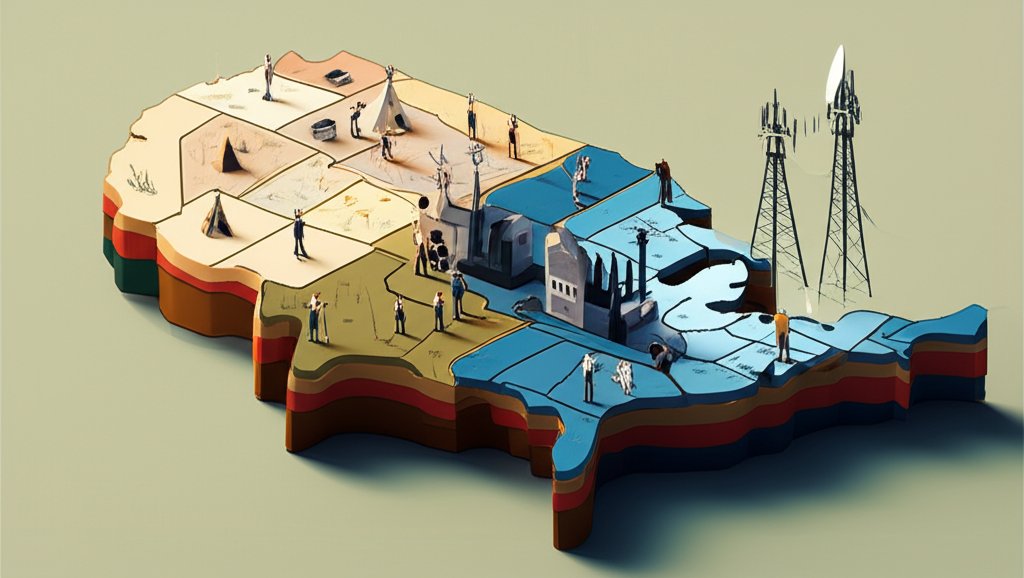
Finding good American history books can feel like navigating a minefield. Many of us remember school textbooks filled with a dry parade of presidents, dates, and sanitized victories—a version of the past that feels flat and disconnected from the vibrant, often contentious, country we live in today. The best books don’t just recite facts; they wrestle with contradictions, introduce us to new voices, and challenge the simple stories we thought we knew.
This guide moves beyond the basics to explore books that reveal the intricate, messy, and fascinating reality of the American story. We’ll look at titles that reframe foundational myths, confront uncomfortable truths, and expand the very map of what we consider “American history.”
At a Glance: What You’ll Find Inside
- Move Beyond Textbook Narratives: Discover books that challenge sanitized, patriotic myths and present a more nuanced picture of the past.
- Explore History from Multiple Perspectives: Learn why accounts focusing on marginalized groups are essential for a complete understanding.
- Confront Difficult Themes Head-On: Find recommendations that tackle the complex histories of racism, xenophobia, and American expansionism.
- Redefine the “Where” and “When” of US History: See how the nation’s story extends beyond the 50 states and long before 1776.
- A Practical Framework for Choosing Your Next Read: Get actionable advice on selecting a book that matches your interests and challenges your assumptions.
Ditching the Simple Story: From Great Men to a Greater Picture
History is often told through the biographies of a few powerful figures. While compelling, this “Great Man” approach can obscure the larger forces and diverse experiences that truly shape events. Good American history books often complicate this, showing how the choices of ordinary people and the clash of big ideas drive the narrative.
For a broader list of essential reads that cover various eras and styles, our main guide can help you Unlock top US history books and build a foundational reading list.
The View from the Ground
A master of narrative history, David McCullough’s 1776 plunges you into the pivotal year of the American Revolution. The story is anchored by an inexperienced George Washington, but its real power comes from its focus on the soldiers, like Nathanael Greene and Henry Knox. You feel the grit, despair, and surprising resilience of the Continental Army. This approach makes history immediate and human.
However, to get a fuller picture, we need to zoom out and change the camera angle entirely. Howard Zinn’s classic, A People’s History of the United States, deliberately inverts the traditional perspective. Zinn chronicles America’s past through the eyes of those often left in the margins: striking factory workers, enslaved peoples, Native Americans, and anti-war protesters. For Zinn, history is a story of conflict between the oppressed and the powerful. Reading McCullough and Zinn back-to-back is a powerful exercise in understanding how the same events can be interpreted in radically different ways.
Questioning the Foundation: Books That Challenge National Myths
Some of the most impactful history books are those that force us to re-examine the core tenets of the American experiment. They ask whether the nation has lived up to its founding ideals and expose the moments where it has dramatically failed.
Jill Lepore’s monumental These Truths: A History of the United States tackles this head-on. She structures her sweeping narrative around the “truths” Thomas Jefferson laid out in the Declaration of Independence: political equality, natural rights, and the sovereignty of the people. Lepore then tracks these ideas through American history, showing how debates and struggles over their meaning—especially in relation to slavery, inequality, and technology—have defined the nation. It’s a comprehensive and often sobering account of American ideals versus American reality.
A more direct and provocative challenge comes from James W. Loewen in Lies My Teacher Told Me. Loewen analyzed a dozen high school history textbooks and found a landscape of misinformation, blind patriotism, and crucial omissions. He points out how textbooks often downplay the brutality of slavery, ignore the violent realities of westward expansion, and present figures like Christopher Columbus as one-dimensional heroes. This book is less a narrative history and more of an exposé on how history is taught and why it matters.
Confronting the Legacies of Racism and Xenophobia
To understand the United States today, you must grapple with its long and painful histories of racial inequality and anti-immigrant sentiment. These are not side stories; they are central to the country’s economic, political, and social development. Two groundbreaking books offer essential frameworks for this understanding.
In Stamped from the Beginning: The Definitive History of Racist Ideas in America, Ibram X. Kendi presents a paradigm-shifting argument. He contends that racist policies are not born from racist ideas; rather, racist ideas are created and promoted to justify and defend discriminatory policies that benefit the powerful. He traces this history through the lives of five key American intellectuals, showing how the insidious logic of racism has adapted and persisted from the colonial era to the present. Winner of the National Book Award, it’s a demanding but profoundly enlightening read.
Erika Lee’s America for Americans: A History of Xenophobia in the United States performs a similar function for the history of immigration. Lee documents how the fear and hatred of foreigners have been a constant presence, not a recent phenomenon. From the Alien and Sedition Acts of the 1790s to the Chinese Exclusion Act and the mass deportations of Mexicans in the 20th century, she reveals a consistent pattern of “othering” new arrivals. Lee shows that while America is a nation of immigrants, it is also a nation shaped by the persistent fear of them.
Expanding the Map: History Beyond the Lower 48
What if the familiar map of the United States is hiding a huge part of the story? Good American history books are increasingly pushing us to think beyond the contiguous 50 states and to look further back in time.
The Hidden Empire and the Ancient Past
Daniel Immerwahr’s How to Hide an Empire reveals the United States as a nation that has possessed significant overseas territories—from the Philippines and Puerto Rico to the Guano Islands—for much of its history. He argues that this colonial past has been deliberately erased from the popular narrative, leading to a profound misunderstanding of America’s role in the world. The book is full of astonishing details, recasting everything from the development of the standardized shipping container to the story of Godzilla as part of this imperial history.
Charles C. Mann’s 1491: New Revelations of the Americas Before Columbus takes us back in time to demolish the myth of a vast, empty wilderness sparsely populated by nomadic tribes. Drawing on recent archaeological and scientific research, Mann reveals that the pre-Columbian Americas were home to massive, sophisticated civilizations that actively shaped their environments. They built cities larger than Paris, engineered new crops like maize, and managed the land in ways we are only now beginning to understand. This book fundamentally reframes the “discovery” of America as an invasion of a thriving, populated world.
A Clash of Civilizations in the West
The story of westward expansion is often told from the perspective of white settlers. S. C. Gwynne’s Empire of the Summer Moon offers a gripping and necessary corrective. It chronicles the 40-year war between the Comanche Nation and the settlers for control of the American West. The Comanches were a formidable power, mastering the horse and dominating a vast territory for generations. Gwynne’s narrative centers on Quanah Parker, the son of a captive white settler and a Comanche chief, who became the tribe’s last and greatest leader. It’s a brutal, cinematic, and unforgettable story of a clash between two worlds.
Your Playbook for Choosing a Complex History
With so many powerful books, where should you start? The right choice depends on what you want to achieve. Use this framework to pick your next read.
| If Your Goal Is To… | Consider This Approach… | Prime Examples from This List |
|---|---|---|
| Experience a compelling, character-driven story | Narrative History | 1776, Empire of the Summer Moon |
| Challenge your fundamental understanding of US history | Revisionist & Critical History | A People’s History, Lies My Teacher Told Me |
| Understand a single, complex theme across time | Thematic History | Stamped from the Beginning, America for Americans |
| Get a comprehensive, modern overview of the entire timeline | Synthesis & Survey History | These Truths, The Civil War Era (by McPherson) |
| Rethink the very boundaries of the American story | Scope-Expanding History | 1491, How to Hide an Empire |
| A Quick Start Guide: |
- Start with a broad synthesis. If you’re looking for a single-volume starting point, Jill Lepore’s These Truths is an excellent choice. It’s modern, well-written, and doesn’t shy away from complexity.
- Pick a theme that makes you uncomfortable. Did you find Kendi’s argument about racist ideas challenging? Or Immerwahr’s discussion of a hidden empire surprising? Lean into that discomfort. The most rewarding reading experiences often come from books that challenge our preconceived notions.
- Read two books on the same topic with different perspectives. Pair McCullough’s 1776 with Zinn’s chapter on the Revolution. Read Gwynne’s account of the Comanches alongside a more traditional telling of westward expansion. This practice reveals how history is an act of interpretation.
Quick Answers to Common Questions
Q: Why do so many modern history books seem so “negative” or “critical”?
A: These books aren’t necessarily negative; they are more inclusive. By focusing on the perspectives of people who were exploited, marginalized, or defeated, they provide a fuller and more accurate accounting of the past. History that only celebrates triumphs and ignores injustices is not history—it’s mythology. Acknowledging complexity and failure is crucial for understanding the nation’s true character.
Q: Are popular, narrative-driven history books by authors like David McCullough still valuable?
A: Absolutely. Great storytelling is essential for making history engaging and accessible to a wide audience. Books like 1776 excel at bringing a specific moment to life with incredible detail and human drama. The key is to see them as one part of a larger conversation. Their value is enhanced when read alongside works that offer different perspectives or a broader structural analysis.
Q: Do I need to read these books in a specific order?
A: Not at all. The best approach is to follow your curiosity. If the Civil War fascinates you, James M. McPherson’s work is a phenomenal place to start. If you’re more interested in America’s global role, pick up How to Hide an Empire. Each of these books stands on its own and provides a powerful lens for understanding the nation’s past.
The goal of reading good American history books isn’t to arrive at a final, settled story. It’s to engage with an ongoing, dynamic argument about who we have been, who we are, and who we want to become. The past is not a static collection of facts to be memorized, but a complex landscape to be explored. Pick a destination that intrigues you, and start the journey.










