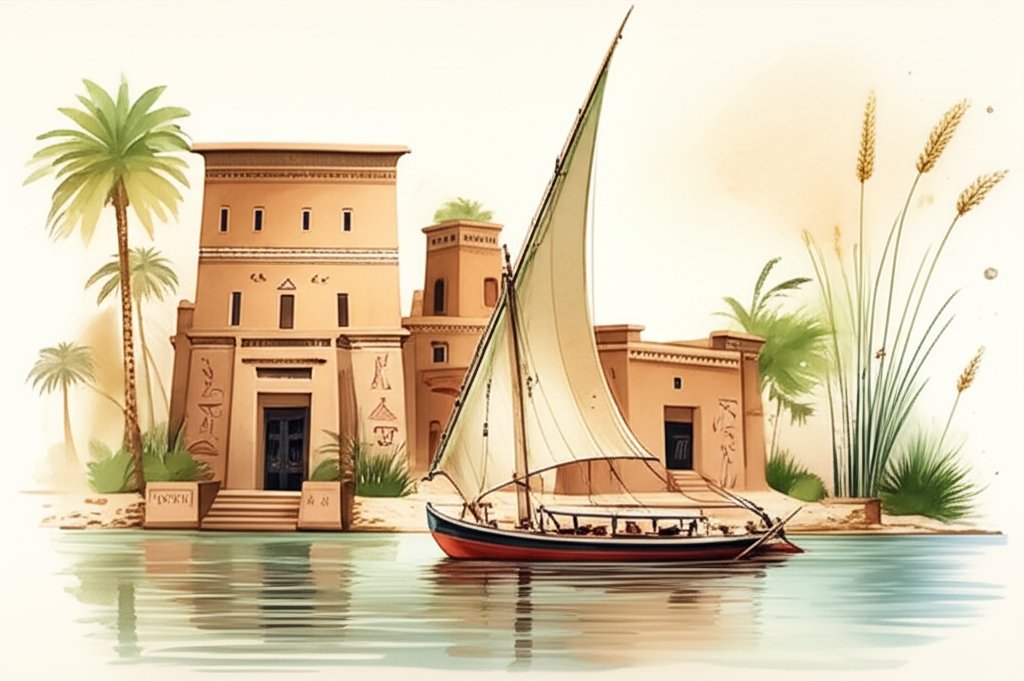
Imagine waking before dawn, the air thick with the smell of the Nile, knowing your family’s survival depends on today’s harvest. That was the reality for the average Egyptian farmer, the unsung hero of a civilization that shaped the world. But what did it really mean to be an Egyptian farmer, beyond the romanticized images?
At a glance:
- Understand the three distinct seasons that governed an Egyptian farmer’s year and how they shaped daily life.
- Learn about the simple yet ingenious tools and irrigation techniques used to coax life from the land.
- Explore the social standing, diet, and potential hardships faced by these vital members of ancient Egyptian society.
- Discover the crops they cultivated and their significance for the whole Egyptian civilization.
- Uncover the taxes paid and where they went to support the ancient Egyptian economy.
The Rhythms of the Nile: Three Seasons, Three Realities for Farmers
The life of an Egyptian farmer was inextricably linked to the Nile River’s annual flood cycle. This cycle dictated the agricultural year, dividing it into three distinct seasons, each with its own demands and challenges.
- Akhet (Flooding Season): From approximately June to September, the Nile overflowed its banks, inundating the fields. Far from being a time of despair, this was a period of renewal. The floodwaters deposited rich, fertile silt, the lifeblood of Egyptian agriculture. But with fields submerged, farmers couldn’t farm. Instead, they were often conscripted to work on state projects, like building pyramids or temples. This was a form of taxation, a contribution of labor to the pharaoh.
- Peret (Growing Season): As the floodwaters receded (around October), the land was ready for cultivation. This was the busiest time of the year for the Egyptian farmer. Oxen pulled wooden plows to prepare the soil. Seeds of wheat, barley, and other crops were scattered by hand, followed by light harrowing to cover them. Irrigation canals, carefully maintained throughout the year, distributed water to the fields. Farmers toiled from dawn till dusk, tending to their crops and praying for a bountiful harvest.
- Shemu (Harvest Season): Beginning around March, the final phase arrived – harvest. Families worked together, using sickles with sharp flint blades to cut the ripe crops. Grains were threshed (separating the grain from the husk) and winnowed (removing the chaff). The harvest was a time of celebration, but also of reckoning. A portion of the crop, often a significant percentage, was paid as taxes to the pharaoh, the temples, or wealthy landowners.
The Egyptian Farmer’s Toolkit: Simple Tools, Remarkable Results
While seemingly basic, the tools used by the Egyptian farmer were surprisingly effective, especially when combined with their knowledge of the Nile’s rhythms.
- Plow: Typically made of wood and pulled by oxen, the plow was essential for breaking up the soil after the floodwaters receded.
- Sickle: A curved blade with a serrated flint edge, the sickle was used to harvest grain crops.
- Hoe: Used for weeding, tilling small areas, and moving earth.
- Shaduf: A counterweighted lever system for lifting water from the Nile or canals to irrigate fields. The shaduf was critical for ensuring a reliable water supply, especially during drier periods.
- Baskets: Essential for carrying seeds, harvested crops, and other materials.
These tools, combined with the ingenuity of basin irrigation, allowed Egyptian farmers to achieve high levels of agricultural productivity. Basin irrigation involved creating walled enclosures to trap floodwaters and allow the silt to settle. Life as an Egyptian farmer depended on this careful management of the Nile.
Daily Grind, Social Standing, and the Egyptian Farmer’s Diet
Life as an Egyptian farmer was physically demanding. Days began before sunrise and ended after sunset, filled with backbreaking labor in the fields.
- Daily Life: Men primarily worked in the fields, plowing, sowing, irrigating, and harvesting. Women were responsible for tasks such as grinding grain, baking bread, brewing beer, weaving linen, and tending to household chores. Children also contributed to the family’s livelihood, helping with tasks such as scaring away birds from the fields.
- Social Hierarchy: While essential to society’s survival, farmers occupied a lower rung on the social ladder. They worked the land owned by the pharaoh, temples, or wealthy nobles and were subject to their authority. That said, Egyptian farmers were greatly respected because of the work that they did and contributions to society.
- Diet: The typical Egyptian farmer’s diet was simple and largely vegetarian. Bread made from emmer wheat or barley was a staple. Other common foods included onions, garlic, cucumbers, and lettuce. Beer, made from barley, was a popular beverage. Fish from the Nile provided a source of protein, but meat was a rare luxury, typically reserved for special occasions.
Crops of the Nile: A Harvest of Diversity
The ancient Egyptian farmer cultivated a diverse range of crops, each playing a vital role in the economy and sustenance of the population.
- Grains: Wheat and barley were the most important crops, forming the basis of the Egyptian diet. They were used to make bread, beer, and other staple foods.
- Vegetables: Onions, garlic, cucumbers, lettuce, and beans were commonly grown for local consumption.
- Fruits: Dates, figs, grapes, and pomegranates were cultivated in orchards, providing a source of sweetness and nutrition.
- Flax: This plant was grown for its fibers, which were used to make linen, a common fabric for clothing.
- Papyrus: Cultivated in the marshy areas along the Nile, papyrus was used to make paper, ropes, sandals, and other essential items.
Paying the Price: Taxes and Hardships of the Egyptian Farmer
While their labor sustained the civilization, Egyptian farmers faced significant challenges.
- Taxation: Farmers were required to pay a significant portion of their crop yield as taxes, often as much as 50%. These taxes supported the pharaoh, the temples, and the army. Failure to pay taxes could result in severe punishment, including beatings and imprisonment.
- Natural Disasters: Both poor and excessive floods could decimate crops, leading to famine and hardship. Pests, such as locusts and rodents, also posed a constant threat to the harvest.
- Disease: The Egyptian farmer was vulnerable to a variety of diseases, including malaria and schistosomiasis (a parasitic disease transmitted through contaminated water).
A Practical Playbook for Understanding the Egyptian Farmer’s Year
Imagine you’re advising a modern agricultural historian studying the Egyptian farmer. Here’s a quick guide:
- Assess the Nile’s Cycle: Was the flood adequate? Too little water meant drought and famine; too much meant destruction of fields and homes.
- Evaluate Labor Demands: Understand that Akhet was not downtime. Farmers were often conscripted for public works projects, a crucial obligation.
- Crop Selection: Understand why wheat and barley dominated. They were drought-resistant and could be stored for long periods.
- Tool Maintenance: Appreciate the ingenuity of simple tools like the shaduf. Its continuous operation was vital during dry spells.
- Social Context: Remember the farmer’s position in society. While respected, they were also subject to the whims of pharaohs and landowners.
Quick Answers: Common Questions About Egyptian Farmers
- Were Egyptian farmers slaves? No, they were not slaves in the strict sense. They were free people who worked the land in exchange for a share of the harvest and were obligated to provide labor for state projects. They occupied the lower-middle class of ancient Egypt.
- Did all farmers own their land? No, most farmers worked on land owned by the pharaoh, temples, or wealthy nobles.
- What happened if the harvest failed? A failed harvest could lead to famine and hardship for the farmer and their family. They might be forced to borrow grain from wealthier landowners, putting them into debt.
- How did the temples influence agriculture? Temples owned vast tracts of land and played a significant role in managing agricultural production, often employing farmers to work their fields.
- Why did the farmers accept the taxing? To show the Egyptian Pharaoh that they submitted to their power and that they were being taken care of. The Pharaoh at the time was considered a god-like figure.
The Legacy of the Egyptian Farmer
The ancient Egyptian farmer’s impact is undeniable. Their ingenuity in harnessing the Nile’s power allowed them to cultivate the land and produce surplus crops, which in turn supported a complex and thriving civilization. Their innovations in irrigation, crop cultivation, and agricultural management laid the foundation for future agricultural practices in the region and beyond. They sustained a civilization for millennia, leaving an enduring legacy that continues to shape our world.