
Ancient history isn’t just dusty dates and forgotten names. It’s a vibrant tapestry woven with incredible inventions, groundbreaking ideas, and epic stories of human triumph and resilience. Spanning from roughly 3000 BC to 500 AD, this era laid the foundation for the world we know today. From the first cities to the rise and fall of mighty empires, exploring ancient history provides invaluable insight into the human condition.
Discover the Cradle of Civilization: Mesopotamia’s Enduring Legacy
Often called the “Cradle of Civilization,” Mesopotamia gave birth to some of humanity’s most fundamental innovations. Imagine a world without the wheel! It was here, between the Tigris and Euphrates rivers, that early civilizations like the Sumerians and Babylonians developed writing, mathematics, and astronomy. Their accomplishments shaped the course of history in profound ways.
Did you know that the Mesopotamians also pioneered agriculture? They learned to cultivate cereal crops like wheat and barley, leading to settled communities and the development of complex societies. Perhaps you’d be interested in learning more about things about history that everyone generally share when discussing the importance of early agriculture?
Marvels of Engineering and Architecture: From Pyramids to Aqueducts
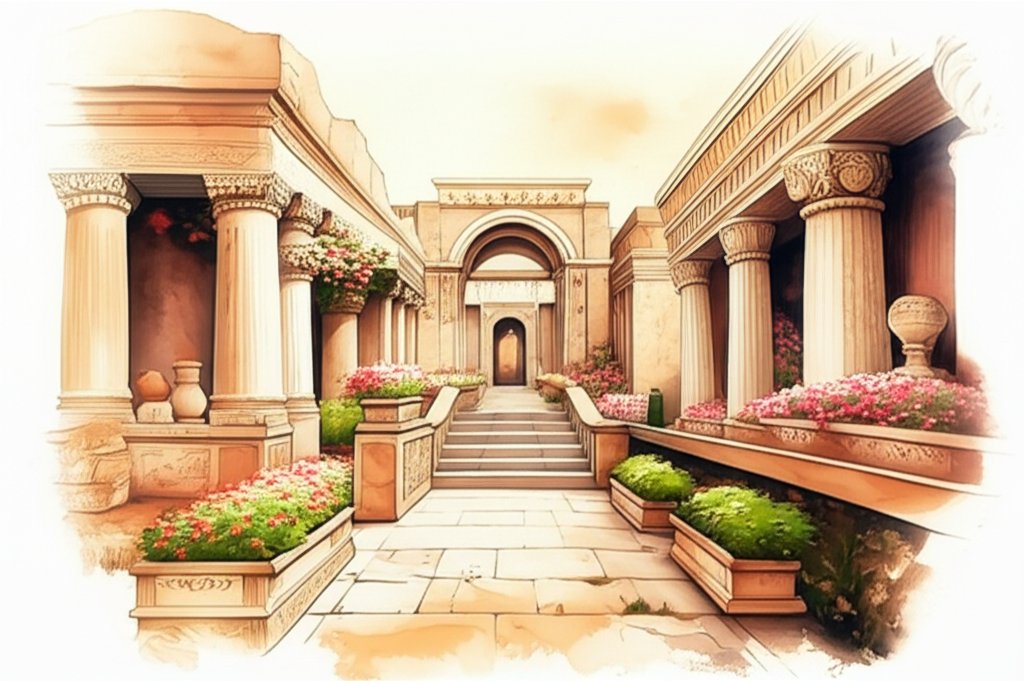
The ancient world was a showcase of remarkable engineering and architectural achievements. The Great Pyramid of Giza, a testament to the ingenuity of the ancient Egyptians, stood as the tallest man-made structure for over 3,800 years. Its precise construction, with millions of stone blocks weighing an average of 2.5 tons each, continues to amaze and inspire awe.
The Romans were also masters of engineering, constructing an extensive network of roads that stretched over 250,000 miles. These roads, built with layers of gravel, sand, lime mortar, and paving stones, facilitated military movement, trade, and communication across their vast empire. Roman aqueducts, another engineering marvel, supplied fresh water to cities and towns, improving sanitation and public health.
Unveiling Ancient Knowledge: Libraries, Texts, and Scientific Breakthroughs
The pursuit of knowledge was a defining characteristic of many ancient civilizations.
- The Library of Ashurbanipal: Located in Nineveh, this library housed a vast collection of clay tablets inscribed with cuneiform script, preserving invaluable knowledge from the ancient world.
- The Library of Alexandria: This ambitious project aimed to collect all the world’s knowledge, housing hundreds of thousands of papyrus scrolls and serving as a hub for scholarship and research.
The Antikythera mechanism, discovered in the early 20th century, offers a fascinating glimpse into the scientific sophistication of the ancient Greeks. This complex device, dating back to around 100 BC, was used to predict astronomical events with remarkable accuracy. If you’re interested in reading trivia about ancient greece on the scientific advancements of people like Archimedes, I think you will expand your knowledge!
Exploring Ancient Cultures and Civilizations: A Journey Through Time
Ancient history is rich with diverse cultures and civilizations, each with its unique contributions to the world.
- Ancient Greece: The birthplace of democracy, philosophy, and the Olympic Games. Athenian democracy, established around 508 BC, allowed eligible citizens to participate in government.
- The Roman Empire: A vast empire that dominated the Mediterranean world for centuries, leaving a legacy of law, language, and architecture.
- The Persian Empire: Known for its tolerance of different cultures and its efficient administration, expanding from modern-day Turkey to India.
- Ancient China: From the Terracotta Army guarding the tomb of Qin Shi Huang to the advancements in silk production and porcelain, China’s contributions are undeniable.
- Indus Valley Civilization: One of the first civilizations, that flourished between 4300-1300 BC
- Mayan Civilization: This civilization excelled in astronomy, developing a highly accurate calendar and observatories.
Laws and Codes: Shaping Ancient Societies

Ancient law codes provide insights into the social structures, values, and beliefs of bygone eras. The Code of Hammurabi, one of the earliest known written legal codes, established a system of justice based on the principle of “an eye for an eye.” These codes regulated various aspects of life, from property rights to family matters, helping to maintain order and stability in ancient societies.
Religion and Mythology: Understanding Ancient Beliefs
Religion and mythology played a central role in the lives of ancient peoples. Ancient Egyptians worshipped a pantheon of gods and goddesses, believing in an afterlife where pharaohs would continue to rule. The Greeks had their own complex mythology, with stories of gods, heroes, and monsters that continue to captivate and inspire. The Kingdom of Aksum, converted to Christianity in the 4th century C.E. under King Ezana. Learning about these belief systems can provide a deeper understanding of ancient history.
A History of Innovation and Legacy
The story of ancient history is one of innovation, adaptation, and enduring legacy. The inventions, ideas, and achievements of these early civilizations continue to shape our world today. By studying ancient history, we can gain a deeper understanding of the human experience and appreciate the remarkable achievements of our ancestors.
Ancient innovations, such as the invention of the alphabet in ancient Phoenicia (1500 BC), is an example of those great leaps.
Exploring ancient history can truly change your perspective. Understanding the past allows us to better navigate the present and build for the future. So, dive in, explore, and uncover the amazing tales that await!










