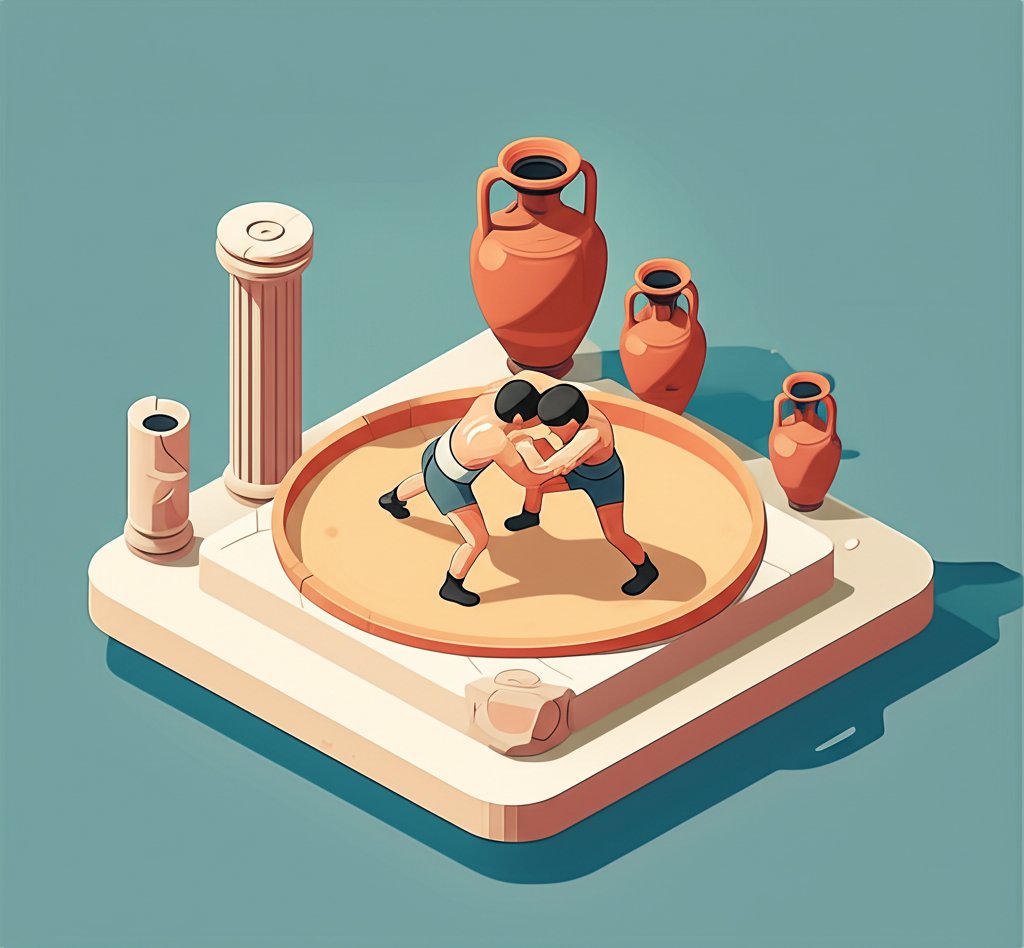
Embark on a captivating journey back to the heart of antiquity, where the very essence of human strength, skill, and spirit intertwined in the hallowed grounds of the arena. Ancient Greek wrestling, known as “pale,” wasn’t merely a sport; it was a profound cultural pillar, shaping ideals of physical prowess, discipline, and even philosophy. While modern wrestling excites with its intricate rules and theatrical displays, imagine a raw, primal contest where legendary ancient Greek wrestlers vied for glory, often unclothed, fueled by the cheers of thousands.
This comprehensive guide will peel back the layers of history, offering definitive ancient greek wrestling facts that will not only surprise but also enlighten. From the brutal simplicity of its rules to the rigorous training of its champions, we’ll delve into the fascinating world of wrestling ancient Greece, revealing why this ancient art remains a foundational element of combat sports today. Prepare to uncover the epic truths behind one of civilization’s most enduring athletic traditions.
The Enduring Legacy of Greek Wrestling: An Overview
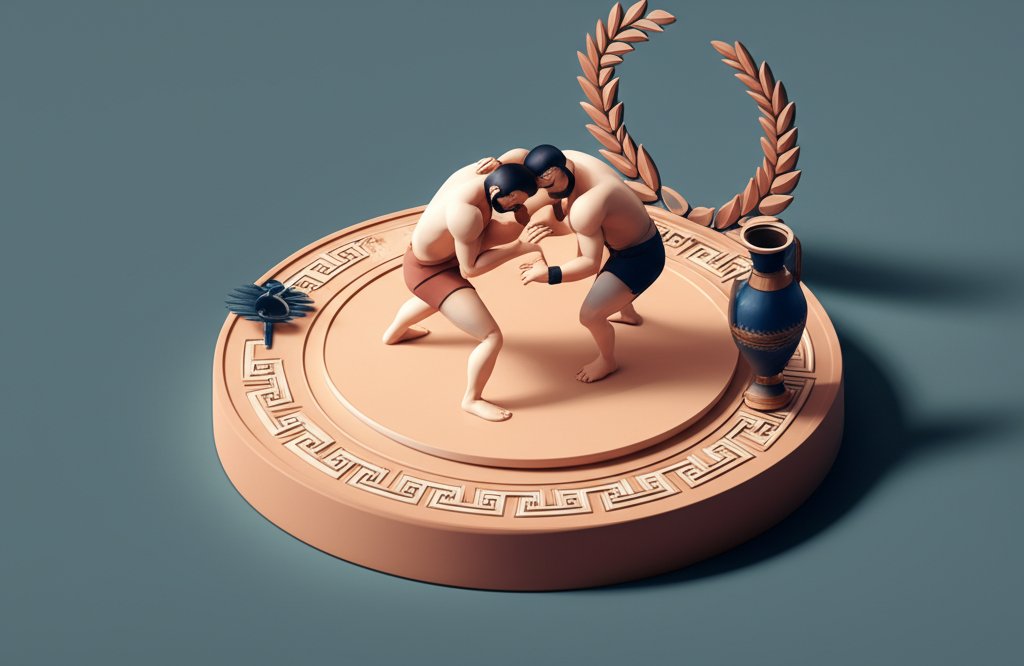
The echoes of ancient Greece’s athletic contests resonate through history, and none perhaps more clearly than Greek wrestling. Far from a mere pastime, it was deeply woven into the fabric of daily life, education, and the grandest religious festivals.
“Pale” and the Dawn of Organized Sport
At the heart of wrestling in ancient Greece was “Pale” (pronounced pah-leh), or orthe pale (upright wrestling). Its origins stretch back to the Bronze Age, making it one of the oldest attested sports. By 708 BC, it was formally introduced into the Ancient Olympic Games, solidifying its status as a premier athletic event. Its inclusion marked a pivotal moment, elevating wrestling from informal combat to a revered, organized competition with specific objectives and cultural significance. It wasn’t just about winning; it was about demonstrating aretê – excellence and virtue – in physical form.
Why Wrestling in Ancient Greece Mattered
For the ancient Greeks, physical perfection and mental acuity were inseparable. Ancient Greek wrestling embodied the ideal of kalokagathia, the harmonious development of mind, body, and spirit. It was a rigorous test of strength, agility, endurance, and strategic thinking. Victors were celebrated as heroes, immortalized in art and poetry, serving as role models for the entire society. The prestige associated with being an ancient Greek wrestler extended far beyond the athletic arena, granting supreme honor to their city-states.
Ancient Greek Wrestling Deconstructed: Rules, Objectives, and Styles
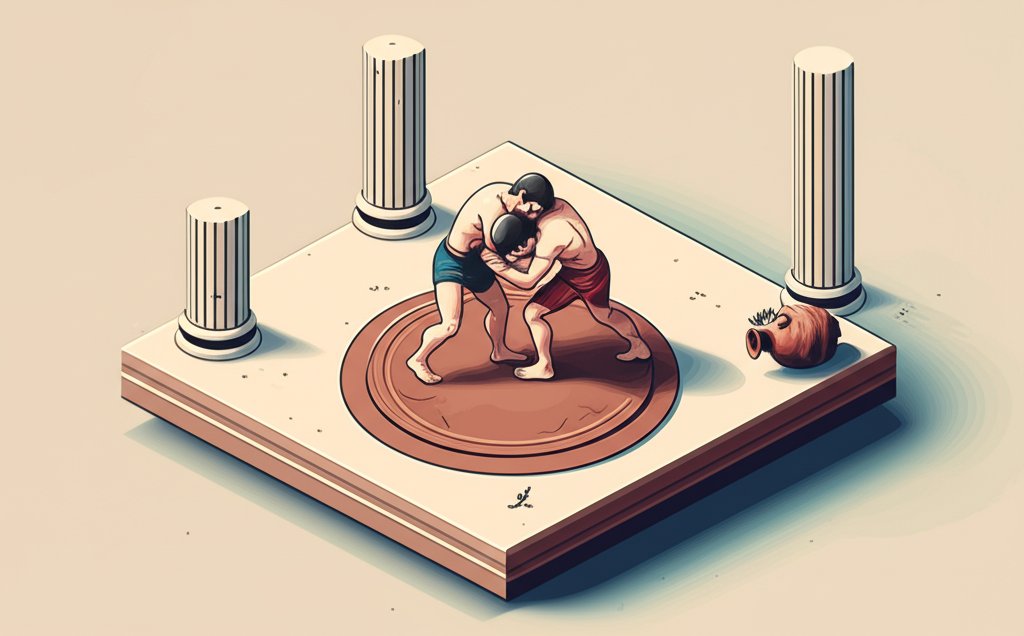
While often romanticized as a “no-rules” spectacle, ancient Greek wrestling actually operated within a defined, albeit minimalist, framework. Understanding these parameters is crucial to appreciating the skill and ferocity of the ancient Greek wrestlers.
The Objective of Ancient Greek Wrestlers
The primary goal in orthe pale was straightforward: to throw an opponent to the ground from a standing position. A match was won by scoring three “falls,” where an opponent’s back, hip, or shoulder touched the earth. Unlike modern wrestling, staying on the ground and grappling was not the objective in orthe pale; the focus was on dynamic throws and quick takedowns.
However, a second style, katō pale (ground wrestling), allowed grappling on the ground until one opponent submitted, traditionally by raising an index finger. Both forms showcased incredible strength and technical skill, demanding different strategic approaches from the ancient Greek wrestlers.
The Arena and Attire: Raw Competition
One of the most striking ancient greek wrestling facts is the common practice of competing nude. This wasn’t merely for shock value; it celebrated the human form, aligning with the Greek ideals of physical beauty and perfection. It also eliminated any possibility of grabbing clothing, focusing entirely on body-to-body contact.
Before a match, ancient Greek wrestlers would oil their bodies, then cover themselves in fine dust or sand. The oil enhanced the aesthetic and made gripping more challenging, adding another layer of skill to the contest. The dust provided some friction and made the oiled bodies easier for spectators to observe. Matches typically took place in a designated sand-filled area, often within a palaestra or a larger stadium.
The Spartan Approach: Pankration and Greek Wrestling
While Greek wrestling (orthe pale) had specific prohibitions, the ancient world also offered Pankration, a much more brutal combat sport that combined wrestling and boxing. In Pankration, striking with hands and feet was allowed, as were chokes and joint locks. The only prohibitions were biting and eye-gouging. This “all-power” contest showcased the ultimate in martial prowess.
In standard ancient Greek wrestling, however, key prohibitions included striking, biting, and eye-gouging. While some forms might have allowed finger manipulation (as seen with Leontiskos), the core principle was a test of strength and skill through throws and holds, not direct injury. Despite the perception of “no rules,” officials called Hellanodikai presided over matches, enforcing these crucial distinctions and ensuring fair play. Penalties were indeed issued for fouls, demonstrating a structured, albeit fiercely competitive, environment.
The Ancient Greek Wrestlers: Training, Status, and Legendary Figures
Becoming a champion ancient Greek wrestler was a demanding path, requiring years of arduous training and unwavering dedication. These athletes held a unique and revered position in society.
From Palaestra to Glory: The Training Regimen
Young Greek males, particularly those from aristocratic families, began their athletic training in the palaestra (wrestling school) and gymnasia. These institutions were not just for physical exercise but also served as centers for intellectual and social development. Training for ancient Greek wrestling was intense, focusing on developing immense bodily strength, explosive power, agility, and a deep understanding of leverage and balance.
Coaches, often former champions themselves, taught specific techniques, holds, and counter-holds. Diet and an austere lifestyle were also crucial components, reflecting a holistic approach to athletic excellence. The training regimen was as much about developing character and discipline as it was about physical conditioning.
More Than Athletes: Heroes and Role Models
Victorious ancient Greek wrestlers were more than just sports stars; they were living legends. They received olive wreaths (the highest honor), statues were erected in their likeness, and poets composed odes celebrating their achievements. Upon returning to their home cities, they were often granted lavish receptions, tax exemptions, and lifelong prestige. Their victories were seen as divine favor and brought immense glory to their city-states, underscoring the profound cultural significance of wrestling ancient Greece.
Titans of the Mat: Famous Ancient Greek Wrestlers
The annals of ancient greek wrestling facts are replete with tales of extraordinary athletes.
Milo of Croton: Arguably the most famous
ancient Greek wrestler, Milo was a six-time Olympic champion (one as a boy, five as a man) and won numerous other titles across various Panhellenic Games. His legendary strength was recounted in various anecdotes, such as carrying a full-grown bull on his shoulders, or bursting a band of cord wrapped around his brow by holding his breath. He became a symbol of raw, indomitable physical power.Leontiskos of Messene: This multi-Olympic champion gained renown for an unusual but effective technique: he would bend his opponents’ fingers until they submitted. While seemingly a foul by modern standards, it highlights the often brutal practicality within
Greek wrestlingof his era.Titormus: Though less detailed records exist for Titormus compared to Milo, he is remembered as another figure of immense strength, embodying the heroic athletic ideal.
These ancient Greek wrestlers were not just contenders; they were epitomes of a competitive spirit that captivated their world.
Beyond the Arena: Cultural Significance of Wrestling Ancient Greece
The impact of wrestling in ancient Greece extended far beyond the immediate thrill of competition, permeating art, literature, and even military strategy.
Ancient Greek Wrestling in Art and Literature
The beauty and power of the ancient Greek wrestler were a constant source of inspiration for artists. Sculptors immortalized their idealized physiques in marble and bronze, capturing dynamic poses that conveyed both grace and sheer force. Vase paintings depict detailed scenes of matches, training, and victory celebrations, providing invaluable visual ancient greek wrestling facts.
In literature, wrestling features prominently. Homer’s Iliad describes a wrestling match at Patroclus’s funeral games, showcasing its ancient roots. Poets like Pindar dedicated odes to Olympic victors, elevating their triumphs to mythical status. Philosophers discussed the virtues cultivated through wrestling, solidifying its place in the intellectual discourse of the time.
Wrestling Ancient Greece for Self-Defense and Military Prowess
Beyond its sporting and artistic dimensions, ancient Greek wrestling served a practical purpose. Its techniques formed an integral part of military training, particularly in city-states like Sparta, renowned for its formidable warriors. Soldiers learned to grapple, throw, and subdue opponents in close-quarters combat, honing skills vital for survival on the battlefield. The discipline and physical conditioning gained in the palaestra directly contributed to the combat readiness of Greek hoplites. It was a martial art long before the term existed.
Boys’ and Men’s Divisions: Inclusivity (within limits)
Ancient Greek wrestling competitions typically featured divisions for both boys and men. Boys usually competed in a younger age bracket (often 12-17 years old), allowing younger athletes to hone their skills and gain competitive experience before advancing to the men’s categories. This structure ensured a pipeline of talent and widespread participation, emphasizing its role in the education and development of young Greek males. Women, however, were generally excluded from competing in or even watching the major athletic festivals.
From Ancient Greece Wrestling to Modern Mat: Its Lasting Influence
The spirit and techniques of ancient Greece wrestling did not vanish with the decline of its civilization. Its legacy profoundly shaped the development of combat sports across millennia.
The Enduring Techniques and Principles
Many fundamental ancient greek wrestling facts regarding technique continue to underpin modern grappling styles. The emphasis on throws, takedowns, leverage, balance, and maintaining control over an opponent are direct descendants of ancient Greek practices. Greco-Roman wrestling, one of the primary Olympic styles today, explicitly traces its lineage back to the restricted-grip, throwing-centric style of orthe pale. Freestyle wrestling also incorporates elements of Greek wrestling, blending it with traditional folk styles. The technical skill and tactical acumen of ancient Greek wrestlers laid a foundation that remains relevant to this day, showcasing the timeless nature of grappling fundamentals.
Philosophical and Athletic Legacy
Beyond specific techniques, ancient Greece wrestling bequeathed a profound philosophical legacy. The concept of the agon (contest or struggle) – the relentless pursuit of excellence and challenging oneself against worthy opponents – continues to drive athletic endeavors globally. The ancient Greek ideal of a well-rounded individual, strong in body and mind, spurred the development of physical education systems that prioritize holistic development. The Olympic Games, revived in modern times, directly draw inspiration from the ancient Greek festivals, carrying forward the torch of competitive spirit forged in the palaestra and celebrated through Greek wrestling.
While ancient Greek wrestling focused on upright grappling and takedowns, modern wrestling matches have evolved to include a wider range of techniques, which you can further explore in our guide to the intricacies of a wrestling match.
Conclusion
The journey through ancient Greek wrestling reveals far more than just a historical sport; it uncovers a cornerstone of a civilization. From the raw, naked contests of orthe pale and the brutal intensity of Pankration to the rigorous training in the palaestra and the timeless glory bestowed upon ancient Greek wrestlers, this ancient art form profoundly shaped Greek culture, philosophy, and military prowess. The ancient greek wrestling facts unearthed here demonstrate a deep connection between physical excellence and societal values.
The legacy of wrestling in ancient Greece continues to inspire, reminding us of the enduring human spirit’s quest for physical mastery and competitive glory. Understand its past, and you gain a deeper appreciation for every modern grapple, throw, and submission. Embrace these epic facts and recognize the foundational role ancient Greece wrestling played in forging the very concept of athletic heroism.
FAQ Section
What was the most popular organized sport in Ancient Greece?
Greek wrestling, known as orthe pale, was arguably the most popular and culturally significant organized sport in Ancient Greece, deeply integrated into both education and major festivals like the Olympic Games.
What was the main objective of ancient Greek wrestlers?
In orthe pale (upright wrestling), the main objective was to throw an opponent to the ground from a standing position. A match was won by achieving three “falls,” where an opponent’s back, hip, or shoulder touched the ground. In katō pale (ground wrestling), the objective was to force a submission.
Were there rules in wrestling ancient Greece?
Yes, despite common misconceptions, wrestling ancient Greece had rules and referees (Hellanodikai). While minimalist compared to modern sports, striking, biting, and eye-gouging were generally prohibited in orthe pale. Pankration, a related but more brutal combat sport, allowed striking but still banned biting and eye-gouging.
Why did ancient Greek wrestlers compete naked?
Ancient Greek wrestlers often competed naked to celebrate the idealized human form, embodying Greek artistic and philosophical ideals of physical perfection (kalokagathia). It also served a practical purpose by eliminating the possibility of grabbing clothing, making the contest a pure test of body-to-body skill.
What was Pankration?
Pankration was an ancient Greek combat sport that combined elements of Greek wrestling and boxing. It was a full-contact, “all-power” sport where striking, kicking, locking, and choking were allowed, with the main prohibitions being biting and eye-gouging.
Who was one of the most famous ancient Greek wrestlers?
Milo of Croton is widely considered one of the most famous ancient Greek wrestlers. He was a multi-time Olympic champion, renowned for his immense strength and numerous legendary feats.
How did ancient Greek wrestling influence modern sports?
Ancient Greek wrestling laid the foundational principles for many modern grappling styles, particularly Greco-Roman wrestling, which directly evolved from its emphasis on throws and upper-body grappling. Its ideals of physical excellence, disciplined training, and competitive spirit continue to influence the Olympic movement and sports culture worldwide.










