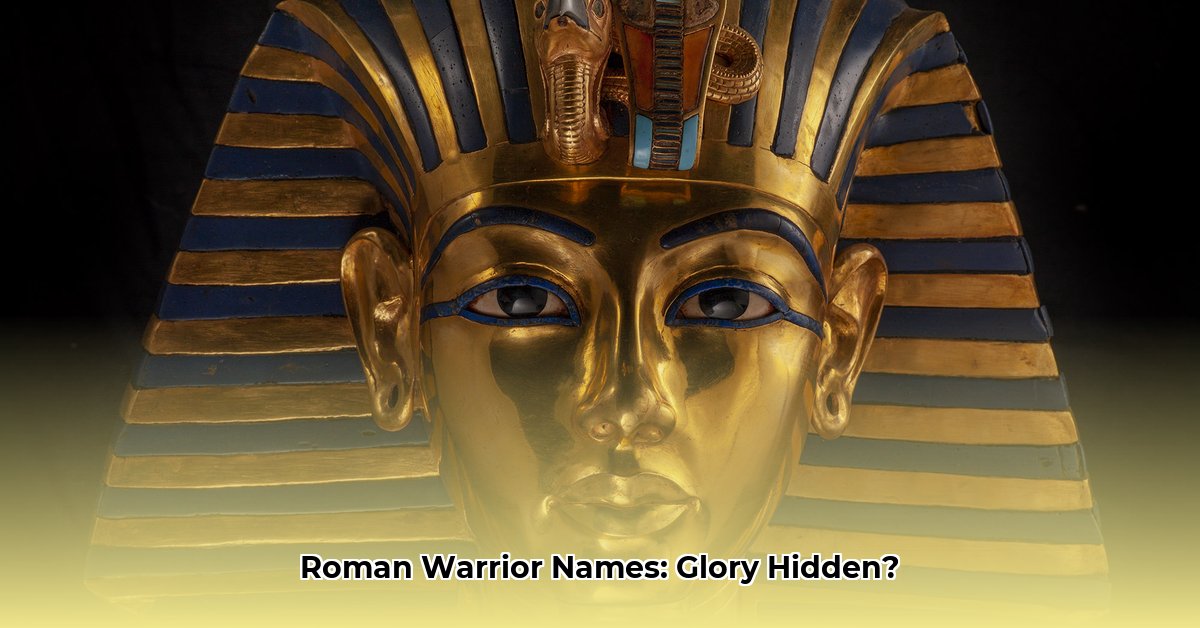
In ancient Rome, a name was more than an identifier; it was a potent symbol, etched with an individual’s heritage, status, and even their perceived destiny. For those dedicated to martial pursuits, ancient Roman warrior names offered a captivating lens into their culture, values, and the formidable historical tapestry that shaped them. Looking for inspiration? Explore more here. By understanding these linguistic artifacts, we unlock profound insights into Rome’s military might and the enduring spirit of its combatants.
The Roman Naming System: More Than Just a Tag
Roman society was highly structured, and its naming conventions reflected this order. Freeborn male citizens typically bore three names, known as the tria nomina:
- Praenomen: The personal given name, chosen from a limited pool of common names (e.g., Marcus, Lucius, Gaius).
- Nomen: The family name, identifying the gens or clan (e.g., Julius, Cornelius, Valerius). This was crucial for establishing social standing and lineage.
- Cognomen: A distinguishing nickname or family branch name, often derived from a physical trait, occupation, or an ancestor’s achievement (e.g., Caesar, Magnus, Crassus).
Beyond these, an agnomen (honorary title) might be added to commemorate a significant military victory or personal distinction, such as “Africanus” for Scipio’s victories in Africa. For warriors, these naming layers reinforced their place within society and the military hierarchy, imbuing their identity with profound cultural weight.
Names Forged in Roman Virtues and the Pantheon
Roman warrior names often embodied the core ideals of Roman virtues and drew heavily from their mythological pantheon, believed to bestow divine favor and strength upon their bearers.
Names Reflecting Roman Virtues
Names frequently encapsulated highly esteemed Roman virtues, serving as constant reminders of the ideals warriors were expected to embody:
- Virtus: (Latin for “courage, excellence, manliness”) While not a common personal name, the concept permeated naming choices.
- Constantia: (Latin for “steadfastness, perseverance”) A virtue highly prized in battle.
- Fidelis: (Latin for “faithful, loyal”) Essential for a soldier’s allegiance to Rome and their comrades.
- Fortis: (Latin for “strong, brave”) Directly denoting strength and courage.
- Honoria: (Latin for “honor, esteem”) Reflecting dignity and respectability.
- Justus: (Latin for “just, fair”) Indicating integrity and righteousness.
- Prudentia: (Latin for “prudence, foresight”) Valued for tactical thinking.
- Valens: (Latin for “strong, powerful, healthy”) Directly signifying strength and vitality.
- Veritas: (Latin for “truth”) Embodying honesty and authenticity.
- Victoria: (Latin for “victory”) Named after the goddess of triumph.
Divine and Heroic Influence
Naming a son after a god or legendary hero was common practice, believed to invoke the deity’s attributes or the hero’s prowess:
- Apollo: God of the sun, music, and prophecy, representing light and leadership.
- Aurora: Goddess of dawn, symbolizing new beginnings and hope.
- Bellona: Roman goddess of war, sister or wife of Mars, embodying martial ferocity.
- Diana: Goddess of the hunt, wilderness, and childbirth, representing independence and skill.
- Hercules: The mythical hero renowned for his immense strength and twelve labors.
- Janus: God of beginnings, gates, transitions, and time, symbolizing foresight.
- Jupiter: King of the gods, associated with power, authority, and divine protection.
- Juno: Queen of the gods, goddess of marriage and childbirth, symbolizing protection and vitality.
- Mars: The revered god of war, a direct invocation of military prowess.
- Minerva: Goddess of wisdom, warfare, and crafts, representing intellect and strategy.
- Neptune: God of the sea, often associated with powerful, untamed forces.
- Pluto: God of the underworld, symbolizing dominion and hidden power.
- Quirinus: An early Roman god associated with the deified Romulus, symbolizing the Roman state and its citizens.
- Romulus: Legendary founder of Rome, symbolizing courage and leadership.
- Silvanus: God of woods and uncultivated lands, hinting at a wild, untamed spirit.
- Venus: Goddess of love, beauty, and fertility, though less direct for warrior names, still influential.
- Vulcan: God of fire, the forge, and blacksmiths, representing transformative power and skill.
Profiles in Valor: A Compendium of Roman Warrior Names and Their Meanings
Examining specific examples reveals how Roman names and their meanings conveyed a warrior’s essence, whether through their personal name, family lineage, or a specific military title.
Praenomina and Cognomina of Renown
These names were common among senators, generals, and legionnaires, signifying leadership or personal attributes.
| Name | Meaning/Origin | Historical Context/Significance |
|---|---|---|
| Aemilianus | “The one eager for combat” | A strong name associated with the Aemilian gens, a prominent Roman family, often with military figures. |
| Antonius | “Priceless,” or “inestimable” | An influential nomen, famously borne by Marcus Antonius (Mark Antony), the statesman and general. |
| Attilius | Possibly “father,” or “belonging to Atta” | A respected nomen of a Roman plebeian gens, including Marcus Atilius Regulus, a consul and general. |
| Aurelius | “Golden,” “gilded” | A noble cognomen and later nomen, associated with emperors like Marcus Aurelius, symbolizing wealth and distinction. |
| Brutus | “Dull-witted,” “heavy” | Ironically, a cognomen famously borne by figures like Lucius Junius Brutus (founder of the Republic) and Marcus Junius Brutus (Caesar’s assassin), known for their resolute actions. |
| Cassius | “Empty,” or “vain” | A prominent nomen, notably Gaius Cassius Longinus, a leading conspirator against Julius Caesar. |
| Cato | “Wise,” “prudent” | A cognomen associated with highly respected Roman statesmen and military leaders known for their integrity. |
| Celsus | “Lofty,” “elevated” | Implying high aspirations and achievements, often fitting for noble warriors. |
| Commodus | “Suitable,” “convenient” | The cognomen of an emperor known for his obsession with gladiatorial combat, signifying a formidable presence. |
| Cornelius | Uncertain, possibly “horn” | A very powerful nomen of one of the most distinguished patrician gentes, producing many consuls and generals. |
| Crassus | “Thick,” “fat,” “rich” | A cognomen famously borne by Marcus Licinius Crassus, a member of the First Triumvirate, known for his immense wealth and military role. |
| Decimus | “Tenth” | Often given to a tenth-born son, but also a praenomen borne by numerous strong Roman figures. |
| Drusus | “Strong,” “firm” | A cognomen linked to a prominent Roman family that produced numerous distinguished military leaders. |
| Fabius | “Bean grower” | A nomen of an ancient patrician gens, associated with simplicity but also cunning military strategies (Fabian strategy). |
| Flavius | “Golden-haired,” “blonde” | A common nomen, often given to soldiers, and later a dynastic name signifying warmth and radiance. |
| Gaius | “To rejoice” | A ubiquitous Roman praenomen, associated with joy and often a mark of confidence and inner strength in leaders. |
| Germanicus | “German” | An agnomen or honorary title bestowed upon generals who achieved significant victories in Germania. |
| Horatius | Uncertain, possibly “timekeeper” | A nomen of a Roman patrician gens, famed for Horatius Cocles, who bravely defended a bridge. |
| Julius | “Youthful,” “downy-bearded” | A powerful nomen famously associated with Julius Caesar, symbolizing strength, leadership, and lineage. |
| Lucius | “Light,” “illumination” | A popular praenomen suggesting brightness, good fortune, and leadership, highly valued attributes for commanders. |
| Magnus | “Great,” “mighty” | An agnomen or cognomen signifying greatness, famously applied to Pompey the Great. |
| Marcus | “Dedicated to Mars” (god of war) | One of the most prevalent Roman praenomina, deeply associated with military prowess and strength. |
| Maximus | “Greatest,” “largest” | A cognomen signifying unparalleled power and prowess, often seen in top gladiators and military leaders. |
| Nero | “Strong,” “valiant” | A cognomen of the Claudian gens, historically known more for the emperor, but carrying inherent strength. |
| Nerva | “Strength,” “vigor” | A cognomen associated with powerful Roman families, including an emperor. |
| Octavius | “Eighth” | Often given to eighth-born sons or as a nomen, famously associated with Augustus (born Gaius Octavius). |
| Paullus | “Small,” “humble” | Paradoxically, a cognomen borne by eminent figures like Lucius Aemilius Paullus Macedonicus, a renowned general. |
| Publius | “Public,” “of the people” | A common praenomen, indicating a connection to the populace and civic duty. |
| Quintus | “Fifth” | Often given to a fifth-born son, but also a common praenomen that many Roman warriors held. |
| Remus | Uncertain, possibly “strong builder” | Twin brother of Romulus, symbol of early Roman strength and foundational legend. |
| Romulus | “Of Rome” | The legendary founder of Rome, signifying courage and the warrior’s path. |
| Rufus | “Red-haired” | A common cognomen, often associated with fierce warrior spirits. |
| Secundus | “Second” | Often given to a second-born son, but can imply a reliable and strong lineage. |
| Severus | “Stern,” “severe” | Reflecting strength and seriousness, often associated with formidable warriors and emperors. |
| Sulla | “Red” (from a skin condition) | A cognomen famously borne by Lucius Cornelius Sulla, a Roman dictator and formidable general. |
| Tiberius | “From the Tiber River” | An influential praenomen and cognomen, denoting strength and vitality, famously borne by the emperor. |
| Titus | “Honorable,” “esteemed” | A common Roman praenomen and cognomen, frequently borne by significant military and political figures. |
| Tullius | “Of the Tullian clan” | A nomen attributed to a prominent family of warriors, like King Servius Tullius. |
| Ulysses | Roman form of Odysseus, “wrathful” | The legendary Greek hero, known for his cunning and endurance in battle. |
| Valerius | “To be strong,” “to be worthy” | A very common and powerful nomen, emphasizing the crucial physical and moral qualities expected of warriors. |
| Varus | “Bent,” “bow-legged” | A cognomen famously borne by Publius Quinctilius Varus, a general whose defeat was a major Roman setback. |
| Vespasian | “Of the Vespasian family” | A nomen associated with an emperor known for strength and leadership in battle. |
| Vindex | “Defender,” “avenger” | A powerful cognomen that embodies a warrior’s protective and retaliatory nature. |
Names of Roman Rank and Role
While not names in the traditional sense, these titles were integral to a Roman warrior’s identity and status.
| Title | Meaning/Origin | Significance in Roman Military |
|---|---|---|
| Augur | “ |










