Envision a tattoo that transcends fleeting trends, resonating with the echoes of formidable power, unwavering courage, and the timeless wisdom of a civilization that shaped the Western world. Learn more about Roman tattoo ideas for inspiration. Welcome to the majestic realm of Roman-inspired body art, where designs capture the formidable spirit of emperors, the unyielding might of gladiators, and the potent symbolism of ancient gods. These aren’t merely images; they are profound testaments to one of history’s greatest empires, masterpieces of ink now experiencing a surging resurgence among modern enthusiasts. This definitive guide will navigate you through this rich symbolic landscape, ensuring your chosen design is not only breathtakingly visually stunning but also deeply meaningful, a true testament to personal values and enduring legacy. Are you prepared to etch a piece of history onto your skin, making an indelible statement about your own journey and aspirations? Let us explore the boundless possibilities.
Key Takeaways:
- Roman tattoos offer an unparalleled fusion of historical tribute and contemporary personal expression, embodying universal ideals.
- Popular motifs span from the stoic elegance of Roman numerals and the raw strength of gladiators to intricate architectural marvels and divine figures.
- Each design is laden with profound symbolism, reflecting values such as valor, wisdom, honor, resilience, and civic pride.
- Thorough research into historical context and cultural sensitivity is paramount to ensure respectful, authentic, and accurate representation.
- Modern artistic interpretations, including hyper-realism, minimalist line work, geometric abstraction, and vibrant watercolor styles, allow for truly unique and personalized designs that bridge millennia.
The Enduring Allure of Roman Ink: A Connection to Power and Purpose
The grandeur of ancient Rome, its legendary figures, and its indelible impact across law, engineering, and philosophy continue to enthrall imaginations across millennia. It is therefore no surprise that a profound connection to this ancient power ignites a deep desire for permanent tribute through body art. Roman-inspired tattoos transcend mere aesthetics; they embody a fundamental longing to align with ideals of unyielding strength, profound honor, and lasting purpose. These designs are not simply imagery; they are silent echoes of an empire that once commanded the known world, a testament to humanity’s capacity for ambition, artistry, and enduring legacy. Choosing a Roman tattoo is a powerful assertion of character, a visual declaration of the enduring values you hold most dear, a silent pact with history itself.
Iconic Roman Tattoo Motifs: Etching Your Personal Epic
To discover a design that truly resonates, one must delve into the very heart of Roman symbolism. Each motif offers a unique narrative, a distinct quality to embody on your skin, reflecting a particular facet of this formidable civilization that speaks directly to your spirit.
Emperors: Portraits of Leadership and Vision
For those seeking to embody leadership, ambition, and the enduring power of legacy, portraits of Rome’s most influential rulers offer commanding and historically rich tattoo designs.
- Julius Caesar: A symbol of military genius, strategic brilliance, and decisive action. A Caesar tattoo often features his distinctive bust, sometimes adorned with a laurel wreath, and can be accompanied by his famous declaration, “Veni, Vidi, Vici” (I came, I saw, I conquered). This design speaks to those who overcome challenges with unparalleled resolve.
- Augustus: The founder of the Roman Empire and orchestrator of the Pax Romana. An Augustus portrait symbolizes stability, peace, and the successful establishment of a new order. Designs often reflect his youthful, serene appearance from classical sculptures, emphasizing diplomatic wisdom and a golden age.
- Marcus Aurelius: The philosopher emperor, a beacon of Stoic wisdom, resilience, and contemplative leadership. A Marcus Aurelius tattoo often captures his bearded, thoughtful visage, frequently accompanied by quotes from his “Meditations” on virtue, acceptance, and self-reflection. This design appeals to those who value inner strength and philosophical depth.
These portraits, often rendered in realistic black and gray, transform historical figures into striking body art, connecting the wearer to an extraordinary lineage of power and intellect.
Gods and Goddesses: Wearable Immortality and Divine Archetypes
The Roman pantheon, a vibrant tapestry woven from myth, power, and human aspirations, provides an extraordinary wellspring of inspiration for deeply symbolic tattoos.
- Jupiter (King of Gods): Embodies supreme power, authority, and destiny. A Jupiter tattoo often depicts him with his thunderbolt and the sacred eagle, symbolizing ultimate dominion and divine protection.
- Minerva (Goddess of Wisdom and Strategic Warfare): Represents intellect, skill, and careful planning. Designs often feature her in armor, accompanied by her sacred owl, signifying astute judgment and strategic prowess.
- Neptune (God of the Seas): For those drawn to untamed forces and profound mystery. A Neptune tattoo commonly shows him wielding his trident amidst powerful waves, embodying both destructive might and majestic calm, reflecting an affinity with nature’s untamed power.
- Venus (Goddess of Love and Beauty): Symbolizes grace, passion, and the eternal flame of human connection. Tattoos of Venus often incorporate roses, doves, or flowing drapery, celebrating femininity, charm, and the allure of eternal love.
- Mars (God of War): A symbol of courage, protection, and assertive strength. Mars tattoos frequently include elements of warfare such as swords, shields, and helmets, often chosen by those who see themselves as protectors or possess a fierce fighting spirit.
- Apollo (God of Music, Poetry, and Healing): Represents light, harmony, and creative inspiration. An Apollo design might feature a lyre, sun motifs, or a bow, symbolizing artistic talent, healing, and enlightened thought.
Each deity carries a rich tradition, a potent archetype waiting to be brought to life. Selecting a god or goddess is more than choosing an image; it is an alignment with their inherent essence and the universal values they embody.
Gladiators: Unleash the Warrior Within and Conquer Your Arena
Feel the primal roar of the arena, the visceral clash of steel against steel. Gladiators stand as enduring testaments to raw courage, unwavering discipline, and the sheer indomitable will to survive against overwhelming odds. A gladiator tattoo can powerfully symbolize your personal battles, the challenges you have fiercely overcome, and the hard-won victories earned through raw grit and determination. These aren’t just historical figures; they are potent metaphors for human endurance and the relentless pursuit of freedom.
Consider the distinct types of gladiators and what they represent:
- Murmillo: Heavily armored with a towering helmet and massive shield, embodying unwavering strength, defense, and brute force.
- Retiarius: Armed only with a net and trident, symbolizing cunning, adaptability, and the ability to outwit a larger, more formidable foe.
- Thraex: Distinguished by a distinctive small, curved sword (sica) and a small, rectangular shield (parmula), representing agility and precise, deadly strikes.
- Secutor: Often paired against the Retiarius, known for their smooth, fish-like helmet and large shield, symbolizing relentless pursuit and heavy offense.
Each style recounts a different narrative of skill, resilience, and the relentless drive for survival. Do you wish to represent unyielding perseverance and the capability to conquer any obstacle? A gladiator, caught in a dynamic moment of defiance or triumph, could be your perfect choice, a dynamic and intensely personal addition to your skin, embodying your inner warrior.
Roman Numerals: Timeless Testaments to Personal History
Simple, yet profoundly elegant and deeply meaningful, Roman numerals continue to be a perennially popular choice for commemorating life’s pivotal moments. A birthdate, a significant anniversary, the triumphant birth of a child, a graduation date, or any defining event that has irrevocably shaped your journey can be immortalized onto your skin in this classic, stoic script. These aren’t just numbers; they are silent echoes of the grand theater of your personal history, a constant, refined reminder of life’s turning points.
Their intrinsic versatility allows for subtle, intimate placements—perhaps on the wrist as a constant, discreet reminder, behind the ear for a whispered secret, along the collarbone as a visible but understated statement, or integrated into a larger, more complex design. Each numeral, clean and precise, becomes a silent echo of your most cherished memories, a reminder of the moments that have truly defined you. Consider their use for more abstract concepts, too, such as a lucky number holding deep personal significance, or combine them with other Roman symbols for a richer, more layered narrative.
The Roman Eagle (Aquila): Soaring Power, Unyielding Glory
The Roman Eagle, or Aquila, stood as the quintessential, most potent symbol of the Roman Empire itself. It represented ultimate leadership, undeniable victory, divine protection, and unwavering courage. This majestic bird, often depicted with wings defiantly spread, serves as a constant, powerful reminder of your own inherent strength, soaring ambition, and resolute determination. It is nothing less than the visual embodiment of dominion, permanently etched onto your skin, a beacon of imperial might and the collective power of the legions.
Consider the specific pose and artistic style of the eagle. A soaring eagle could embody freedom, aspiration, and the pursuit of higher goals. An eagle clutching classical lightning bolts symbolizes raw power, divine authority, and unyielding force. An eagle perched on a legionary standard represents military honor, loyalty, and the unbreakable bonds of service. A more stylized or abstract interpretation allows for a contemporary, unique take on this powerful and deeply rooted classical symbol, ensuring it fits your modern aesthetic while retaining its ancient gravitas.
Architectural Marvels: Immortalizing Grandeur and Engineering Prowess
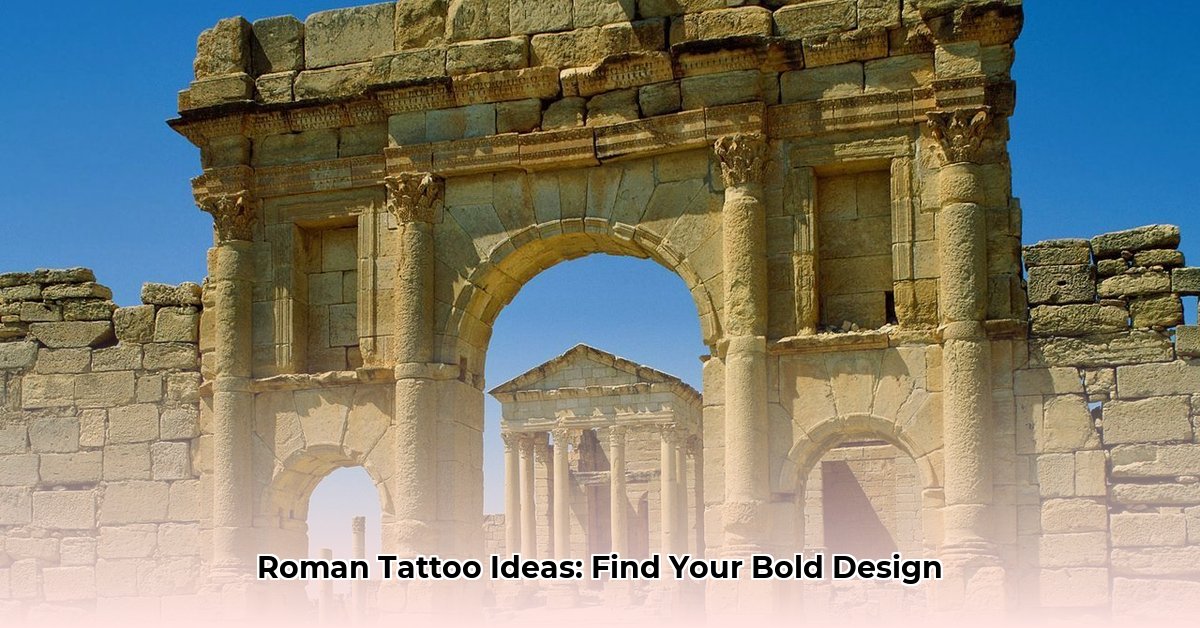
Why confine your inspiration to figures when you can draw from the breathtaking architectural achievements that defined Rome’s enduring legacy? These monumental structures translate beautifully into body art, capturing the essence of ancient Rome’s architectural mastery and human ambition.
- The Colosseum: A monumental testament to Roman engineering ingenuity and the unparalleled spectacle of gladiatorial combat, it makes for a truly breathtaking and awe-inspiring back or thigh piece. Imagine its imposing arches rendered in intricate detail, a permanent monument to human ambition and the duality of glory and brutality.
- The Pantheon: With its awe-inspiring oculus and perfect dome, symbolizing harmony, divine connection, and architectural perfection, it could elegantly adorn your shoulder or chest. This structure is a testament to timeless design and mathematical precision.
- Roman Columns: Represent strength, stability, and classical beauty. The three classical orders—Doric (simple), Ionic (volutes), and Corinthian (acanthus leaves)—each offer distinct visual appeal. They can be standalone elements or frame other designs, symbolizing foundational strength and enduring principles.
- Aqueducts and Arches: These engineering marvels symbolize connectivity, innovation, and sustained endeavor. Their graceful yet robust forms make for striking designs, particularly well-suited for wrapping around limbs or across the back, signifying the flow of progress and overcoming obstacles.
- Roman Mosaics: Pictures made from small, colorful tiles, representing intricate craftsmanship and storytelling. A mosaic-inspired tattoo can capture this unique art form with geometric shapes and vibrant colors, offering a distinctive and artistic homage to Roman aesthetics.
Focus on the intricate details of these structures. The fluted columns of a Roman temple, the imposing arches of an ancient aqueduct, or the distinctive brickwork of the Colosseum can add immense depth, texture, and visual interest to your tattoo. Employing a black and gray realism style with careful shading would particularly showcase the monumental grandeur and intricate textures of these ancient masterpieces, making them truly come alive on your skin. These designs often require a larger canvas to fully appreciate their detail and scale.
Latin Phrases: Etched Wisdom, Guiding Principles
“Veni, vidi, vici” (I came, I saw, I conquered). “Carpe Diem” (Seize the day). Latin phrases, the very language of empire, law, and philosophy, offer an intellectual touch, a timeless encapsulation of personal wisdom or universal truth. These aren’t just words; they can become powerful mantras, guiding principles, or profound reflections etched permanently onto your being, offering daily inspiration or a quiet reminder of your deepest beliefs.
Consider the profound impact of words like:
- “Fortuna Audaces Iuvat” / “Audentes Fortuna Iuvat” (Fortune favors the bold) – For risk-takers and those who bravely face challenges.
- “Ad Astra Per Aspera” (A rough road leads to the stars / Through hardship to the stars) – For those who overcome adversity to achieve greatness.
- “Senatus Populusque Romanus” (SPQR) (The Senate and People of Rome) – A powerful acronym symbolizing civic pride, collective power, and the foundational ideals of the Roman state. A bold statement of unity and heritage.
- “Memento Mori” (Remember that you will die) – A philosophical reminder of mortality, often encouraging a fuller life.
- “Memento Vivere” (Remember to live) – A counterpoint to Memento Mori, emphasizing active engagement with life.
- “Alea Iacta Est” (The die has been cast) – Julius Caesar’s declaration, meaning a decision has been made and cannot be undone, symbolizing commitment and irreversible action.
- “Amor Fati” (Love of fate) – A Stoic concept, embracing all life experiences, both positive and challenging, with acceptance and resilience.
- “Nihil sub sole novum” (Nothing new under the sun) – A timeless reflection on the cyclical nature of existence.
Their concise power and historical weight make them ideal for meaningful body art. Placement can enhance their impact: the forearm for a visible declaration, the collarbone for a personal affirmation, or the ribs for a more intimate reflection. Always, however, verify the translation with multiple reliable sources. A misquoted phrase, especially in a dead language, can unintentionally undermine the entire tattoo’s intended meaning, potentially turning profound wisdom into unintentional folly.
Mythological Creatures: Guardians of Legend
Ancient Roman mythology is rich with fantastical creatures that embody unique powers and symbolism, offering compelling and visually striking tattoo designs.
- Griffins: Combining the body of a lion with the head and wings of an eagle, griffins symbolize strength, guardianship, and divine protection. Often depicted in a regal stance, they represent a powerful, majestic presence.
- Centaurs: Half-human, half-horse, centaurs represent the duality of human wisdom and wild, untamed nature. They can symbolize the balance between intellect and primal instinct.
- Cerberus: The three-headed guard dog of the underworld, symbolizing protection, vigilance, and the boundary between realms. A powerful and often dark motif for those drawn to the mysterious aspects of mythology.
- The Capitoline Wolf (Lupa Capitolina): The she-wolf who nursed Romulus and Remus, the legendary founders of Rome. This maternal figure represents protection, nurturing strength, and the very foundation of Roman civilization and destiny.
These creatures offer a blend of intricate artistry and profound symbolic meaning, allowing for designs that are both visually captivating and deeply resonant.
Modern Interpretations: Weaving Ancient Art with Contemporary Edge
The true brilliance of ancient Roman tattoo ideas lies in their inherent adaptability and their remarkable potential for creative reinterpretation. This allows for a unique fusion of traditional grandeur with contemporary artistic styles, ensuring your design is truly one-of-a-kind.
Imagine a watercolor rendering of a distinct Roman helmet, blending vibrant, fluid colors with the strong, classical lines of its design. Or perhaps a bold geometric pattern seamlessly incorporating the iconic SPQR emblem, re-envisioned for the 21st century.
Consider exploring a variety of artistic styles:
- Realistic Black and Gray: Perfect for capturing the intricate details of architecture, the solemnity of emperor portraits, or the dynamic energy of gladiators, creating a timeless, sculptural effect.
- Fine Line and Minimalist: Ideal for Roman numerals, simple architectural outlines, or subtle mythological symbols, offering elegance and understated impact.
- Neo-Traditional: Infuses traditional Roman imagery with vibrant color palettes, bolder lines, and stylized forms, giving classic motifs a modern, dynamic twist.
- Geometric and Dot Work: Creates intricate patterns around or within Roman symbols, lending a contemporary, abstract feel that emphasizes structure and form.
- Trash Polka: A distinctive style that combines realistic elements with abstract splashes of black and red, typewritten fonts, and graphic elements, offering a raw, impactful, and rebellious take on classical themes.
- Watercolor: Blends fluidity and soft hues with traditional Roman forms, creating dreamlike, ethereal effects that contrast beautifully with the stoic nature of the subject matter.
Combining Roman symbols with elements from other cultural or aesthetic movements can also create a compelling and deeply personal narrative, showcasing a rich tapestry of influences that are uniquely yours. The possibilities for blending the ancient with the contemporary are virtually limitless, paving the way for truly innovative body art.
Responsible Inking: Navigating Symbolism and Cultural Sensitivity
Before committing to any design, remember that thorough research and thoughtful consideration are absolutely crucial. Choosing a tattoo, especially one imbued with deep historical and cultural weight, is a serious endeavor. It is a widely known fact from historical accounts that tattoos in ancient Rome were sometimes used to mark slaves, prisoners, or even soldiers (for allegiance), functions vastly different from today’s use for personal expression. This historical context underscores the importance of mindful design and intent.
Understanding Historical Context
Take the necessary time to fully investigate and assimilate the true, multifaceted historical meaning and cultural context behind your chosen symbol. Ensure you are entirely comfortable with its historical associations and that it accurately reflects your own contemporary values and beliefs. A superficial understanding can lead to unintentional misinterpretations or, worse, unintended offense. For instance, while the “Roman salute” might seem related to ancient Rome, its strong association with 20th-century fascists renders it highly problematic and offensive today.
Cultural Sensitivity Check
Be acutely mindful of the potential negative associations certain Roman imagery might evoke, particularly those related to imperialism, aggressive conquest, or rigid social hierarchies. Choose your design with a deep sense of responsibility and actively avoid appropriating symbols or imagery that could be offensive, disrespectful, or reinterpreted in an undesirable light by others. Consulting with historians, reputable academic sources, or cultural experts can offer invaluable insights, providing a deeper understanding and helping you make genuinely informed and respectful decisions regarding your tattoo design. This diligence ensures your tattoo is a source of pride, not unintended controversy.
Crafting Your Masterpiece: Choosing the Right Artist and Placement
The mastery of technique is absolutely essential when working with complex Roman imagery. The ultimate success and lasting impact of your tattoo depend overwhelmingly on the proven skill and artistic vision of the artist you ultimately select. Look for professionals who specialize in specific artistic styles that complement Roman themes.
Finding the Right Artist
Seek out artists who demonstrate exceptional proficiency in:
- Realistic Textures: The ability to accurately capture the subtle nuances of aged stone, gleaming metal, draped fabric, or the muscular anatomy of a warrior is paramount for creating a believable and visually stunning Roman tattoo, giving it an almost sculptural quality.
- Expert Shading and Depth: Highly skilled shading techniques are indispensable for creating profound depth, striking dimension, and a captivating three-dimensional effect, literally bringing your Roman tattoo to life on your skin, making it appear to emerge from beneath the surface realistically and compellingly.
- Historical Accuracy: While not strictly mandatory for all styles, an artist who appreciates historical details can elevate a Roman tattoo, ensuring elements like armor, architecture, or Latin script are rendered with authentic precision.
Experienced tattoo artists often state that “When inking Roman themes, it’s not merely about replicating an image. It’s about breathing historical authenticity and visceral life into the design, ensuring every line, every shadow, and every highlight genuinely tells a rich, compelling story.” Don’t hesitate to request a comprehensive portfolio from potential artists, specifically seeking examples of their previous work with historical or similarly detailed themes. Discuss their unique approach to Roman-inspired tattoos; a truly great artist will be knowledgeable about the subject and eager to collaborate, ensuring the final design is both exquisitely beautiful and deeply meaningful to you.
Strategic Placement Guide
Where you choose to place your tattoo matters immensely, as it dictates the scale, visibility, and overall impact of the design. A sprawling, intricate architectural design, for example, demands a broader canvas, such as your entire back, a significant portion of your thigh, or a full arm/leg sleeve, to truly showcase every meticulous detail and convey its monumental grandeur. Conversely, smaller, more symbolic motifs, like a single gladius (Roman short sword), a concise row of Roman numerals, or a personal Latin phrase, are perfectly suited for more intimate and smaller areas, such as the wrists, forearms, the back of the neck, or even behind the ear, offering a subtle yet powerful statement. Consider this general guide:
- Gladiator/Soldier/Emperor Portraits: These powerful figures work exceptionally well on the upper arm (bicep, tricep), across the back as a central piece, the chest, or down the calf/thigh, emphasizing their formidable physique, commanding presence, or epic struggle.
- Roman Numerals/Latin Phrases: Ideal for discreet yet meaningful placements like the wrist, forearm, inner arm, collarbone, ribcage, or ankle, allowing for personal reflection or subtle display.
- Roman Eagle: This majestic symbol commands attention and is best placed on the shoulder, prominently on the chest, a full back piece, or across the upper back, where its wings can spread in full glory, evoking power and freedom.
- Architectural Fragments (Colosseum, Pantheon, Columns): Due to their detailed nature and often grand scale, these designs flourish on larger areas such as the thigh, the entire back, a full sleeve, or wrapping around the side of the torso, allowing for intricate detail and a sense of three-dimensional depth.
- Laurel Wreath: A versatile symbol of victory and honor, elegant on the forearm, encircling the bicep, delicately placed around the ankle











1 thought on “Unveiling Ancient Roman Tattoo Ideas: Find Your Bold Design (2025)”
Comments are closed.