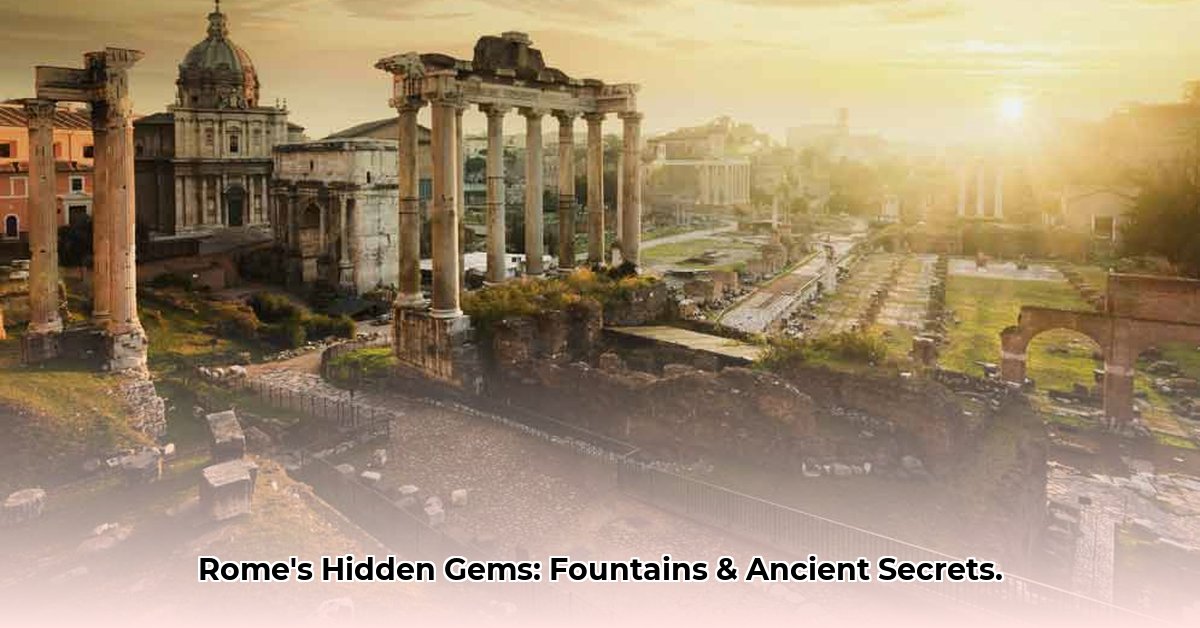
Rome, a city steeped in millennia of history, offers an unparalleled journey for visitors. While iconic landmarks draw global attention, the authentic spirit of this ancient metropolis truly emanates from its myriad fountains. These aren’t merely decorative water features; they are vibrant testaments to ingenious engineering, breathtaking artistry, and the profound cultural impact of the Roman Empire. Beyond the well-trodden paths, Rome’s lesser-known ancient Roman fountains invite a deeper exploration, revealing hidden narratives from a bygone era. This guide will navigate you through their historical significance, uncover their artistic grandeur, and provide practical insights for experiencing them like a seasoned traveler. Prepare to delve into Rome’s enduring liquid legacy, a city boasting over two thousand fountains—more than any other in the world.
The Aqueducts: Rome’s Engineering Marvels and the Birth of Public Fountains
The fascinating story of Rome’s ancient Roman fountains truly begins with its sophisticated aqueduct system, an unparalleled feat of Roman engineering that harnessed the power of gravity. Imagine: by 98 AD, according to Sextus Julius Frontinus, Rome’s designated ‘water guardian’ (curator aquarum), nine aqueducts crisscrossed the landscape, supplying an astounding 38 million gallons of fresh water daily to the city. This network fed 39 monumental fountains and 591 public basins, not counting private villas and Imperial baths. A testament to foresight, each major fountain was often connected to two different aqueducts, ensuring a continuous supply even if one was offline.
Water flowed from distant hills and mountains into vast cisterns, akin to modern water towers, which provided the necessary height and pressure. A mere foot of height generated approximately 0.43 pounds per square inch (PSI) of water pressure, allowing for impressive fountain displays without any mechanical pumps. Public fountains became essential gathering places, offering clean drinking water and a vibrant spot for socialization. They were more than just useful; they symbolized Roman power, innovation, and a commitment to public welfare.
From Utility to Art: The Golden Age of Roman Fountains
After the fall of the Western Roman Empire, many aqueducts fell into disrepair, and the fountains ceased to flow. The renaissance of Roman fountains began in the 15th century when Pope Nicholas V initiated the reconstruction of the Acqua Vergine aqueduct. He revived the Roman tradition of marking an aqueduct’s terminus with a mostra, a grand commemorative fountain. This marked the shift from purely functional water sources to elaborate artistic statements.
The 17th and 18th centuries ushered in the golden age of Roman fountains, deeply influenced by the new Baroque art style. Giants like Gian Lorenzo Bernini, Nicola Salvi, Carlo Maderno, and Giacomo della Porta left an indelible mark, transforming simple water sources into stunning spectacles. These fountains were crowded with allegorical figures, imbued with emotion and movement, where sculpture became the principal element, and water served to animate and decorate. They became “visual representations of confidence and power,” showcasing Rome’s enduring cultural heritage and global stature.
The height of a fountain’s jet depended entirely on the elevation difference between its water source and the fountain itself. For instance, the Triton Fountain, fed by the Aqua Felice aqueduct, benefited from a 130-foot elevation difference, allowing its water to jet sixteen feet high. Conversely, the Acqua Vergine, feeding the Piazza Navona fountains and the Trevi, had a smaller drop, meaning water could only fall or trickle. Architect Nicola Salvi ingeniously compensated for this at the Trevi Fountain by sinking the fountain into the ground and designing a cascade that churns and tumbles, adding dramatic movement.
Iconic Fountains and Their Enduring Tales
While the Trevi Fountain remains an undeniable icon of Rome tourism, this famous landmark represents only a fraction of the city’s stunning aquatic artistry.
- The Trevi Fountain: Completed in 1762, this colossal Baroque masterpiece was designed by Nicola Salvi, glorifying the popes who commissioned it. Its central figure, Oceanus, commands an oyster-shell chariot surrounded by Tritons and Sea Nymphs. The popular tradition of tossing a coin into its waters is believed to guarantee a return to Rome, a beloved element of Roman social life. Interestingly, while once considered Rome’s purest drinking water, its recycled waters have been declared non-potable since 1961.
- Piazza Navona’s Fountains: This grand “theater of water” hosts three magnificent fountains. Giacomo della Porta designed the northern Neptune Fountain (1572) and the southern Fontana del Moro. The central, highly theatrical Fontana dei Quattro Fiumi (Fountain of the Four Rivers) (1648–51) by Bernini features statues representing the Nile, Danube, Plate River, and Ganges, crowned by a 54-foot Egyptian obelisk. A popular legend claims Bernini’s Nile statue hides its face to avoid seeing Borromini’s church facade, and the Río de la Plata figure raises its arm in alarm, but this is a myth: the fountain was unveiled before the church was even begun.
- The Triton Fountain (Fontana del Tritone): Located in Piazza Barberini (1642) and sculpted by Gian Lorenzo Bernini, this Baroque masterpiece depicts Triton, half-man and half-fish, blowing his horn to calm the waters, drawing inspiration from Ovid’s Metamorphoses.
- The Fountains of St. Peter’s Square: Carlo Maderno (1614) and Gian Lorenzo Bernini (1677) created these fountains to complement St. Peter’s Basilica’s lavish Baroque facade, one built atop an earlier 1490 fountain, the other added a half-century later.
Beyond the Postcards: Unveiling Rome’s Hidden Fountain Gems
Are you ready to venture off the beaten path and uncover some truly lesser-known treasures? By exploring routes away from the main tourist hubs, you can discover remarkable spots that quietly narrate tales of Roman history and profound artistry. These hidden gems Rome offers a more personal experience, allowing you to connect with the city’s background on a deeper level. Many suggest that discovering these hidden treasures is far more rewarding than battling the crowds at the major tourist sites.
Here are a few to get you started on your quest for hidden beauty:
- Fontana delle Tartarughe (Turtle Fountain): Tucked away in Piazza Mattei, this charming fountain is famous for its four bronze turtles. Legend has it that Duke Muzio Mattei, facing financial ruin, built it overnight to impress his wealthy future father-in-law, successfully securing his daughter’s hand. He then bricked up the window overlooking the piazza to prevent anyone from seeing if he ever performed such a feat again.
- Fontana del Babuino (The Baboon Fountain): One of Rome’s “talking statues,” this reclining figure of Silenus has, for centuries, been a spot where Romans would post satirical poems and verses, a unique form of public commentary.
- Fontana delle Api (Fountain of the Bees): Another Bernini creation, this smaller fountain near the Triton Fountain was originally built in 1644. Its unique bivalve shell design features three bees, the heraldic symbol of Pope Urban VIII’s family. Dismantled in 1865, it was painstakingly rebuilt in the early 20th century, with only fragments of the original remaining.
- Fontana del Mascherone (Fountain of the Big Mask): Leaning against a wall on Via Giulia, this 17th-century fountain by Girolamo Rainaldi is known for its large mask and the Farnese lily. Legend has it that on special family occasions, this fountain would famously gush wine instead of water, as it did for three days in 1720.
- Piazza San Simeone Fountain: Built in 1589 by Pietro Gucci, this fountain has a nomadic history, having been moved several times across Rome before its final placement in Piazza S. Simeone ai Coronari. Its intricate design features a basin on a shaped column, adorned with masks and papal insignia.
- Fountains of Piazza Farnese: These two imposing fountains feature ancient gray granite basins sourced from the Baths of Caracalla in 1466. They were made functional in 1626 by Girolamo Rainaldi, adorned with large Farnese lilies, and celebrated for bringing new water to the piazza.
- Piazza S. Eustachio Basin: This large Roman imperial basin of Egyptian granite was discovered during excavations in 1985. Believed to be from the “Neronian Baths,” it was later transferred to Piazza S. Eustachio and donated by the Senate to the city in 1987, commemorating the 40th anniversary of the Republican Constitution.
- The Moses Fountain (Fontana dell’Acqua Felice): Commissioned by Pope Sixtus V and completed in 1587, this monumental fountain in Piazza San Bernardo features a statue of Moses. Despite its grandeur, the figure of Moses was widely criticized for its perceived lack of artistry, earning it the title of Rome’s “least-liked” fountain figure. Its sculptor, Prospero Bresciano, is rumored to have died of a broken heart due to the public’s jeers.
- Lacus Juturnae (“Pool of Juturna”): The oldest of the city’s fountains, this ancient spring in the Roman Forum was restored in 1952 to its Augustan-era appearance, offering a glimpse into Rome’s earliest water features.
Experience Rome’s Fountains Like a Savvy Local: Practical Tips
Want to truly immerse yourself in Rome’s vibrant fountain culture and gain a genuine local experience Rome has to offer? Here’s how to do it:
Step 1: Design Your Own Fountain Tour
Plan a walking route that intelligently connects both the famous landmarks, like the Trevi Fountain, with some of the lesser-known ones. Utilize online maps and local guidebooks to plot your course, noting opening times or best viewing periods for each. This balanced approach allows you to appreciate the grand sights while discovering unique hidden gems Rome provides along the way. Be sure to wear comfortable shoes, as significant walking will likely be involved! Consider a morning tour for the popular spots and an evening stroll to see the illuminated fountains.
Step 2: Rise and Shine and Beat the Crowds
Aim to arrive at the most popular fountains, such as the Trevi Fountain and those in Piazza Navona, very early in the morning, ideally just as the sun rises. Trust us, experiencing the Trevi Fountain without battling a dense sea of people is a completely different, far more serene experience. You might even capture that perfect photo without countless other tourists in the background. Weekdays, especially outside of peak tourist season, are generally less crowded.
Step 3: Dig Into the Legends and History
Take the time to research and uncover the fascinating stories and myths behind each fountain. From tossing a coin in the Trevi (a beloved tradition to guarantee your return to Rome) to seeking out the charming turtles at Fontana delle Tartarughe, or imagining wine flowing from the Fontana del Mascherone, engaging with these legends adds a rich layer of depth and enjoyment to your visit. Carry a small notebook or use a digital app to jot down facts as you encounter these historical treasures.
Step 4: Respect the Art and Environment
Admire the exquisite beauty of these historic fountains, but always remember to maintain a respectful distance. This means absolutely no climbing on the structures, no sitting on their delicate edges, and most importantly, no throwing trash or attempting to collect water from the basins. Remember, these are invaluable historical treasures, and treating them with the utmost respect is paramount for their historical preservation and the enjoyment of all future visitors.
Safeguarding History: The Future of Rome’s Fountains
Keeping Rome’s amazing fountain landmarks safe is a monumental, ongoing task. These ancient structures face challenges from constant exposure to the elements, environmental pollution (especially from traffic fumes and vibration, which historically impeded subway construction), and the sheer volume of Rome tourism. It takes continuous upkeep, sensitive restoration work, and a real commitment to responsible tourism and historical preservation to ensure their survival.
Modern Roman water systems now often use a mix of gravity and mechanical pumps, with water recycled for efficiency. However, the integrity of the original structures remains a delicate balance. As visitors, our role is crucial: by adhering to respectful practices, supporting conservation efforts, and appreciating the profound legacy these fountains represent, we contribute to their longevity. The enduring magic of Rome’s fountains – their ceaseless pouring forth, their blend of art and engineering, and the stories they tell – depends on our collective commitment to safeguarding them for generations to come. They are, as the Roman composer Ottorino Respighi found, an endless source of inspiration, part of the everyday yet part of the daily surprise.










