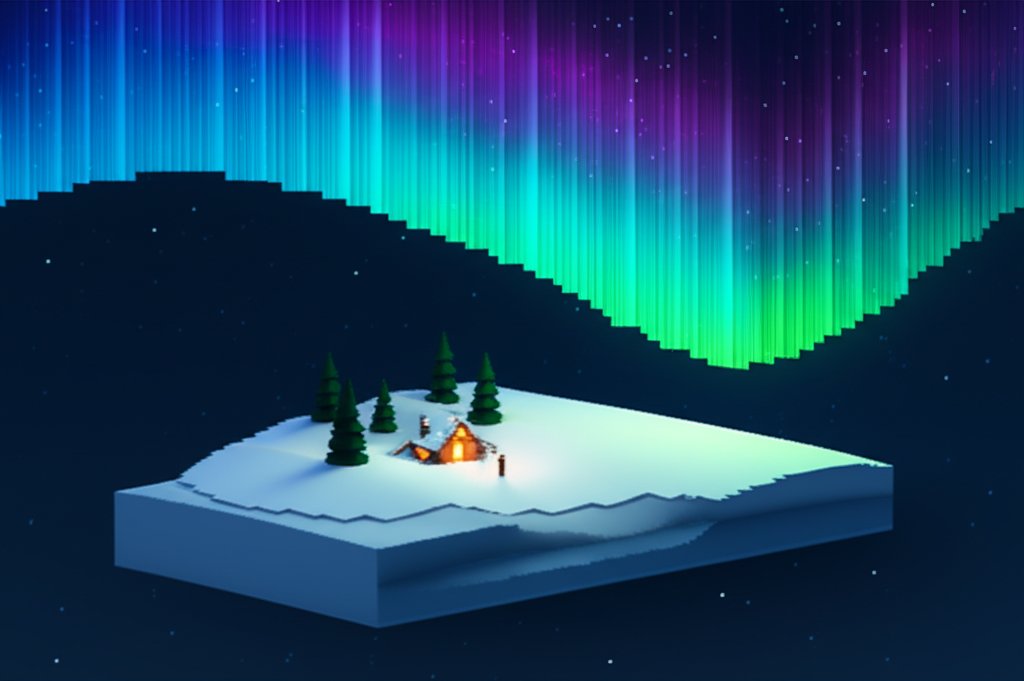
Have you ever dreamt of witnessing the sky ablaze with vibrant greens, electric blues, and deep purples? The Northern Lights, also known as the Aurora Borealis, are one of nature’s most spectacular displays, and 2025 is shaping up to be an unparalleled year for this celestial phenomenon. Far from being just a beautiful light show, the aurora is a stunning manifestation of intricate cosmic science, a dance between our Sun’s powerful energy and Earth’s protective magnetic field.
This comprehensive guide will not only unveil the profound science behind Northern Lights but also equip you with everything you need to know for aurora chasing in Northern Lights 2025. From predicting the best displays with cutting-edge forecasts to mastering the art of photographing Northern Lights, and even understanding their hidden impacts, prepare to embark on an illuminating journey to the heart of the aurora.
While understanding the science behind the aurora is crucial for prediction, it’s important to differentiate it from less scientific pursuits like astrology, as explored in this article about astronomy vs. astrology.
Northern Lights 2025: The Solar Maximum & Your Best Chance
If catching the Northern Lights is on your bucket list, 2025 marks a potentially once-in-a-lifetime opportunity. This year falls squarely within the predicted peak of the current solar cycle, known as the Solar Maximum, promising more frequent and intense auroral displays than we’ve seen in years.
The 11-Year Solar Cycle Explained
The Sun isn’t a static ball of fire; it’s a dynamic star with an approximately 11-year cycle of activity. This cycle is characterized by fluctuations in sunspot numbers, solar flares, and coronal mass ejections (CMEs). During a “solar minimum,” activity is low, leading to fewer auroral displays. Conversely, during a “solar maximum,” the Sun is at its most active, unleashing a barrage of charged particles into space – the very fuel for the aurora.
Why 2025 is Predicted to Be Exceptional
Scientists at NOAA and NASA predict that Solar Cycle 25 will reach its maximum around late 2024 to mid-2025. This means a significant increase in solar flares and CMEs directed towards Earth, translating directly into enhanced chances of witnessing spectacular Aurora Borealis shows. This increased activity isn’t just about frequency; it often means more vibrant colors, greater geographical spread (sometimes visible at lower latitudes), and displays that last longer. For aurora enthusiasts, Northern Lights 2025 is the year to plan your adventure.
Prime Viewing Locations for 2025
To maximize your chances of seeing the Northern Lights, you need to be within the auroral oval, a region around Earth’s magnetic poles where displays are most common. High-latitude destinations offer the best odds, especially during the solar maximum:
- Scandinavia: Norway (Tromsø, Lofoten, North Cape), Sweden (Abisko), Finland (Lapland). These regions offer clear, dark skies and excellent infrastructure.
- North America: Alaska (Fairbanks, Anchorage), Canada (Yukon, Northwest Territories, Alberta). Vast wilderness areas provide minimal light pollution.
- Iceland: Known for its accessibility and dramatic landscapes, Iceland is a prime spot.
- Other Regions: Greenland, Northern Russia, and parts of Scotland can also offer fantastic views.
Best Seasons and Times for Aurora Hunting
While the Northern Lights occur year-round, optimal viewing requires darkness. The polar winters, from late September to March, offer the longest hours of darkness and are generally considered the best time.
- Autumn (September – October): Crisp air, often less extreme cold than deep winter, and the equinoxes can sometimes trigger increased auroral activity due to alignment with Earth’s magnetic field.
- Winter (November – February): Longest nights, often accompanied by snow-covered landscapes, adding to the photographic beauty. This is the peak season for many aurora destinations.
- Time of Night: The aurora can appear anytime after dusk and before dawn, but activity often peaks between 10 PM and 2 AM local time. Patience is key!
Unveiling the Science Behind the Northern Lights (Aurora Borealis)
The Aurora Borealis is a mesmerizing celestial ballet, but its beauty is far from magical; it’s pure physics. Understanding the science behind Northern Lights reveals an incredible cosmic connection between our Sun and Earth.
The Sun’s Powerhouse: Solar Wind & Flares
The story begins 93 million miles away, at our Sun. Our star constantly emits a stream of charged particles (electrons and protons) known as the “solar wind.” This stream varies in intensity, but occasionally, the Sun has powerful eruptions:
- Solar Flares: Intense bursts of radiation that travel at the speed of light, reaching Earth in about eight minutes.
- Coronal Mass Ejections (CMEs): Massive expulsions of plasma and magnetic field from the Sun’s corona, travelling slower than flares (days to reach Earth) but carrying billions of tons of charged particles. These are the primary drivers of strong auroras.
- Coronal Holes: Regions on the Sun where the solar wind flows out at higher speeds, causing recurrent, milder geomagnetic activity.
Earth’s Magnetic Shield: The Magnetosphere
Fortunately, Earth isn’t unprotected from this solar onslaught. Our planet generates a powerful magnetic field, creating a protective bubble called the “magnetosphere.” This invisible shield deflects most of the solar wind, preventing it from stripping away our atmosphere or harming life on the surface.
However, during strong solar events, the magnetosphere can be compressed and distorted. Some charged particles manage to breach this defense, especially near the Earth’s magnetic poles, where the field lines converge. These particles are then funneled down towards the polar regions.
Atmospheric Fireworks: Collisions and Light Emission
As these high-energy charged particles, primarily electrons, dive into Earth’s upper atmosphere (typically 60-600 km above the surface), they collide with atmospheric gases – mainly oxygen and nitrogen atoms and molecules.
These collisions transfer energy to the atmospheric particles, exciting them to a higher energy state. But this state is unstable. To return to their normal, lower energy state, these excited particles release the absorbed energy in the form of light. This process is called “emission,” and it’s essentially a natural neon sign in the sky.
The Spectrum of Colors: Oxygen, Nitrogen, and Altitude
The dazzling array of colors in the Northern Lights depends on two main factors:
- Type of Gas:
- Green: The most common and easily seen color, produced by excited oxygen atoms at altitudes of about 100-250 km.
- Red: Produced by oxygen atoms at higher altitudes (above 250 km) or from less common, lower-energy transitions. It often appears on the upper fringes of intense displays.
- Blue/Purple: Produced by nitrogen molecules, often seen at lower altitudes (below 100 km). Blue is from ionized nitrogen, purple/pink from neutral nitrogen.
- Altitude: Collisions at different altitudes involve different atmospheric densities and energies, influencing which gases are excited and what colors they emit. Lower, denser altitudes favor green and blue, while higher, thinner altitudes can produce red.
Beyond Simple Collisions: Auroral Forms & Dynamics
The Aurora Borealis isn’t just a static glow. It manifests in various dynamic forms:
- Arcs: The most common type, appearing as a coherent, relatively stable band stretching across the sky.
- Bands/Curtains: When arcs become active and wavy, resembling shimmering curtains or folds, often with vertical rays. These are the most sought-after forms by photographers.
- Coronas: Occur directly overhead during intense displays, with rays appearing to radiate outwards from a central point, creating a crown-like effect.
- Pulsating Auroras: Patches of light that brighten and dim rhythmically.
The interaction of solar wind particles with Earth’s complex magnetosphere creates these intricate and ever-changing patterns, making each aurora display a unique masterpiece.
Mastering Aurora Forecasting & Real-Time Alerts
Chasing the Northern Lights without a reliable forecast is like sailing without a compass. Advanced space weather predictions significantly increase your chances of witnessing a spectacular show, especially during Northern Lights 2025.
Understanding the Kp Index and Geomagnetic Activity
The Kp index (Planetary K-index) is the most widely used metric for measuring geomagnetic activity. It’s a global average of geomagnetic activity, ranging from 0 (very quiet) to 9 (extreme storm).
- Kp 0-2: Very quiet to quiet conditions, usually only visible at very high latitudes.
- Kp 3-4: Unsettled to active conditions, good for aurora viewing in typical auroral zone locations (e.g., Tromsø, Fairbanks).
- Kp 5 (Geomagnetic Storm G1): Minor storm, visible lower latitudes than usual (e.g., Scotland, northern US states).
- Kp 6-7 (G2-G3): Moderate to strong storms, visible across much of Canada, northern Europe, and central US states.
- Kp 8-9 (G4-G5): Severe to extreme storms, can be seen very far south (e.g., central Europe, southern US states). These are rare but can happen during Solar Maximum.
For Northern Lights 2025, expect more frequent days with Kp values of 4 and higher.
Key Space Weather Metrics: Bz, Solar Wind Speed, and Density
While the Kp index is a good general indicator, real-time data from satellites like NOAA’s DSCOVR provide more immediate and granular insights:
- Bz Component (Interplanetary Magnetic Field): This is arguably the most crucial real-time indicator. If the Bz component turns significantly negative (Southward), it “connects” with Earth’s naturally Northward magnetic field, allowing solar wind particles to more easily enter the magnetosphere and fuel the aurora. A negative Bz is highly favorable for aurora activity.
- Solar Wind Speed: Faster solar wind speeds (above 400 km/s) increase the energy of particles hitting Earth, leading to brighter and more dynamic auroras.
- Solar Wind Density: Higher density of particles in the solar wind also contributes to stronger auroral displays.
Leveraging Forecast Tools & Apps
Numerous resources provide aurora forecasts. It’s wise to cross-reference multiple sources:
- NOAA Space Weather Prediction Center (SWPC): The authoritative source for space weather. Their “3-Day Aurora Forecast” and real-time “OVATION Aurora” maps are invaluable. (External Link:
https://swpc.noaa.gov/) - Aurora Forecast Apps: Many mobile apps (e.g., My Aurora Forecast, Aurora Alerts) aggregate data and provide personalized alerts based on your location and desired Kp index.
- Local Tour Operators/Guides: If you’re on an aurora trip, local guides are often experts in interpreting forecasts and knowing local conditions.
Interpreting Live Data for Optimal Viewing
For the best chances, monitor forecasts diligently, especially short-term predictions (30-90 minutes). Look for:
- High Kp Index: Aim for Kp 3+ for auroral zone travel, Kp 5+ for lower latitudes.
- Negative Bz: A strongly negative Bz component (e.g., -5nT or more) is a strong positive sign.
- Increased Solar Wind Speed/Density: Indicates more energetic potential for the aurora.
- Clear Skies: Absolutely critical. Even with a strong forecast, clouds will obscure the view. Use local weather forecasts and satellite imagery.
- Darkness: Avoid city lights and plan your viewing around the darkest part of the night.
Photographing the Northern Lights: Your Expert Guide
The Northern Lights are an ephemeral spectacle, and capturing their magic requires planning, the right gear, and specific techniques. Learning the art of photographing Northern Lights will allow you to relive the experience long after the display fades.
Essential Gear for Aurora Photography
Don’t leave home without these key items:
- DSLR or Mirrorless Camera: Capable of manual settings (shutter speed, aperture, ISO).
- Wide-Angle Lens: A fast lens (low f-number, e.g., f/2.8, f/4) with a focal length of 14-24mm is ideal to capture the broad expanse of the sky.
- Sturdy Tripod: Non-negotiable for long exposures.
- Extra Batteries: Cold weather drains batteries quickly. Keep spares warm in an inside pocket.
- Remote Shutter Release: Prevents camera shake. Alternatively, use a 2-second timer.
- Headlamp with Red Light Mode: Helps you see without ruining your night vision or others’ photos.
- Warm Clothing: You’ll be standing still in cold conditions. Layers are essential.
- Lens Cloth: For condensation or frost.
Camera Settings for Dazzling Aurora Shots
Mastering manual mode is crucial for photographing Northern Lights:
- Focus: Set to manual focus (MF). Focus at infinity. Some lenses have an infinity mark; otherwise, pre-focus on a distant bright star or light source during daylight and tape the focus ring, or use Live View to zoom in on a star and manually focus.
- Aperture (f-stop): As wide as your lens allows (e.g., f/2.8 or f/4). This lets in maximum light.
- ISO: Start with ISO 800-3200. Adjust based on aurora brightness. Brighter aurora allows lower ISO; fainter aurora requires higher ISO. Higher ISO introduces noise, so find a balance.
- Shutter Speed: This is the most variable setting.
- Faint/Slow Aurora: 15-30 seconds.
- Bright/Fast-Moving Aurora: 5-10 seconds to capture definition without blurring the curtains.
- Exposure Triangle: ISO, aperture, and shutter speed work together. Experiment and adapt in real-time.
- White Balance: Auto White Balance (AWB) often works, but “Daylight” or “K-temperature” (e.g., 3500-4500K) can give richer colors.
- Image Format: Shoot in RAW for maximum flexibility in post-processing.
Step-by-Step Aurora Photography Workflow
- Arrive Early & Scout: Get to your chosen dark location before the aurora appears. Identify interesting foreground elements (trees, mountains, water, cabins) to add depth.
- Set Up Your Gear: Mount your camera on the tripod, attach your wide-angle lens, and ensure batteries are warm and charged.
- Focus Manually: Set your lens to manual focus and focus to infinity. Double-check your focus.
- Initial Test Shot: Start with aperture wide open (e.g., f/2.8), ISO 1600, shutter speed 15 seconds. Review the image.
- Adjust Settings:
- If too dark, increase ISO or shutter speed.
- If too bright, decrease ISO or shutter speed.
- If the aurora is moving fast and blurring, decrease shutter speed.
- If the aurora is faint and slow, increase shutter speed (up to 30s) or ISO.
- Compose & Capture: Experiment with different compositions. Take multiple shots, as the aurora is constantly changing.
- Review & Adapt: Check your histogram to avoid clipping shadows or highlights. Adjust settings as the aurora’s intensity and movement change.
Composition Tips & Foreground Elements
Don’t just point your camera at the sky! Grounding your aurora photos with interesting foreground elements creates a more compelling image:
- Silhouettes: Trees, mountains, cabins, or even people can provide scale and context.
- Reflections: Water bodies (lakes, fjords) can create stunning mirrored aurora displays.
- Roads/Paths: Lead the viewer’s eye towards the aurora.
- Northern Star: Find Polaris (the North Star) to orient your shots, especially if you want to capture star trails.
Overcoming Challenges: Cold, Clouds, and Light Pollution
- Cold Weather: Dress in layers, use hand warmers for yourself and your batteries. Protect your camera with insulating covers if extreme. Condensation can be an issue when bringing gear indoors; let it warm up slowly in a sealed bag.
- Cloud Cover: The biggest enemy of aurora chasers. Monitor local weather forecasts meticulously. Sometimes, partial clearings can still offer excellent photo opportunities, especially if the clearing is towards the magnetic north. Be patient and willing to move if possible.
- Light Pollution: Seek out truly dark sky locations. Even distant city glow can wash out fainter auroras. Use light pollution maps during planning.
- Inaccurate Forecasts: Cross-reference multiple space weather sources. Remember, forecasts are predictions, not guarantees.
The Aurora’s Dual Nature: Myths, Legends & Modern Impacts
Beyond its scientific explanation, the Aurora Borealis has woven itself into the fabric of human culture for millennia. Yet, these beautiful lights also signal powerful forces that can impact our modern technological world.
Ancient Beliefs: Cultural Interpretations of the Aurora
Across high-latitude cultures, the Northern Lights inspired awe, fear, and profound spiritual interpretations:
- Norse Mythology: Often seen as the shining armor of the Valkyries, carrying fallen warriors to Valhalla, or as a bridge to the heavens (Bifrost).
- Indigenous North American Cultures: Many First Nations and Inuit tribes believed the aurora was the spirits of their ancestors dancing in the sky, or that it was the spirits of animals they had hunted. Some believed it was a guide for hunters or a harbinger of good fortune, while others treated it with reverence and caution, believing it could communicate with them.
- Finnish/Sámi Folklore: The Finnish word for aurora, “revontulet,” means “fox fires,” stemming from a legend that a magical fox swept its tail across the snow, sending sparks into the sky. The Sámi people also held the aurora in high regard, often associating it with the souls of the dead.
- East Asian Cultures: In some tales, seeing the aurora was a sign of good luck, fertility, or even that children conceived under its light would be particularly fortunate.
These myths highlight humanity’s innate desire to understand the unexplained, connecting celestial events to earthly lives and spiritual beliefs.
Geomagnetic Storms: Risks to Our Modern Infrastructure
While stunning, the same charged particles that create the Northern Lights can also cause geomagnetic storms. During strong solar events like CMEs, these storms can induce electrical currents within the Earth’s crust known as Geomagnetically Induced Currents (GICs).
These GICs don’t directly harm humans, but they pose a significant threat to technological infrastructure:
- Power Grids: GICs can flow into long conductors like power lines, causing unwanted currents in transformers. This can lead to overheating, damage, and even widespread power outages (blackouts). The 1989 Quebec blackout, which affected 6 million people, is a prime historical example.
- Satellites: Charged particles can damage satellite electronics, disrupting GPS, communication networks, and weather forecasting.
- Pipelines: GICs can accelerate corrosion in long pipelines.
- Radio Communication: Shortwave radio and high-frequency communication can be severely disrupted or blacked out.
- Aviation: Pilots flying at high latitudes are exposed to increased radiation during strong storms, and communication systems can be affected.
The Aurora Borealis is a visual indicator of these powerful forces at play, reminding us of the Sun’s profound influence on Earth.
Protecting Power Grids: Mitigation and Preparedness
Recognizing the risks, scientists and engineers worldwide are developing strategies to mitigate the impact of geomagnetic storms:
- Advanced Forecasting: Organizations like NOAA’s SWPC constantly monitor solar activity to provide early warnings (hours to days in advance), allowing power grid operators to prepare.
- Grid Hardening: This involves upgrading transformers to be more resilient to GICs, installing GIC-blocking devices (like neutral blocking capacitors), and improving grid monitoring and control systems.
- Operational Procedures: Power companies can adjust grid configurations, reduce voltage, or temporarily disconnect vulnerable transformers during a predicted storm.
- International Cooperation: Since solar storms affect the entire planet, global collaboration in data sharing, research, and standardized safety protocols is crucial.
Understanding both the wonder and the potential risks of the aurora underscores the importance of ongoing space weather research and preparedness for our increasingly interconnected world.
Conclusion
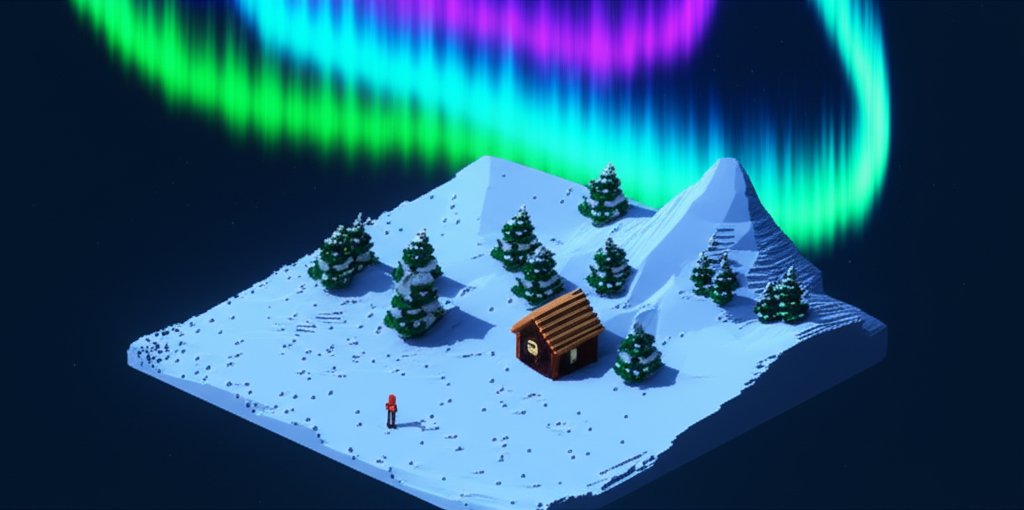
The Northern Lights are an enduring marvel, a celestial ballet danced between the Sun and Earth that has captivated humanity for millennia. As we look ahead to Northern Lights 2025, the predicted solar maximum offers an extraordinary window of opportunity to witness these shimmering curtains of light in their full glory.
From the intricate science behind Northern Lights – the solar wind, Earth’s magnetosphere, and atmospheric collisions – to the practicalities of mastering forecasts and the art of photographing Northern Lights, this guide provides a roadmap for an unforgettable experience. Beyond the breathtaking beauty, the Aurora Borealis also serves as a powerful reminder of our cosmic connection, inspiring ancient myths and highlighting modern vulnerabilities to space weather.
Prepare yourself for an adventure into the high latitudes, armed with knowledge and anticipation. The aurora awaits, ready to reveal its secrets in a display that promises to be nothing short of spectacular. This is your year to chase the light!
Frequently Asked Questions (FAQ)
Q1: What makes 2025 a special year for seeing the Northern Lights?
A1: 2025 is predicted to be the peak of Solar Cycle 25, known as the Solar Maximum. During this period, the Sun is at its most active, producing more frequent and intense solar flares and coronal mass ejections (CMEs), which significantly increase the chances of powerful and widespread aurora displays.
Q2: What is the Kp index, and what Kp value should I look for?
A2: The Kp index is a scale from 0 to 9 that measures the intensity of geomagnetic activity. For visible aurora in the typical auroral oval regions (e.g., Alaska, Northern Scandinavia), a Kp of 3 or 4 is generally good. For more spectacular shows or visibility at lower latitudes, look for Kp 5 or higher (indicating a geomagnetic storm).
Q3: What are the best locations to see the Northern Lights in 2025?
A3: Top locations within the auroral oval include Fairbanks (Alaska), the Yukon and Northwest Territories (Canada), Tromsø and Lofoten (Norway), Abisko (Sweden), Lapland (Finland), and Iceland. These areas offer both the geographical advantage and often good infrastructure for aurora tourism.
Q4: Besides a camera, what essential gear do I need for aurora photography?
A4: Besides a camera (DSLR or mirrorless) with manual settings, you’ll absolutely need a fast, wide-angle lens (f/2.8 or f/4), a sturdy tripod, extra batteries (which drain quickly in the cold), and a remote shutter release to prevent camera shake. Warm clothing, a headlamp with a red light mode, and insulating covers for your gear are also highly recommended.
Q5: Can the Northern Lights be seen during daylight hours?
A5: No, the Northern Lights are too faint to be seen in daylight. They are only visible during periods of darkness, which is why the polar winter months (late September to March) offer the best viewing opportunities due to longer nights.
Q6: How do solar flares and CMEs contribute to the Aurora Borealis?
A6: Solar flares are intense bursts of radiation that can energize Earth’s upper atmosphere, while Coronal Mass Ejections (CMEs) are massive clouds of charged particles and magnetic fields. When CMEs hit Earth’s magnetosphere, they cause geomagnetic storms, propelling vast amounts of charged particles towards our planet’s poles, where they interact with atmospheric gases to create the aurora.
Q7: What are Geomagnetically Induced Currents (GICs), and why are they a concern?
A7: GICs are electrical currents induced in the Earth’s crust during geomagnetic storms. They can flow into long conductors like power lines, causing anomalies in transformers that can lead to overheating, damage, and potentially widespread power outages. This is a significant concern for modern electrical grids.










