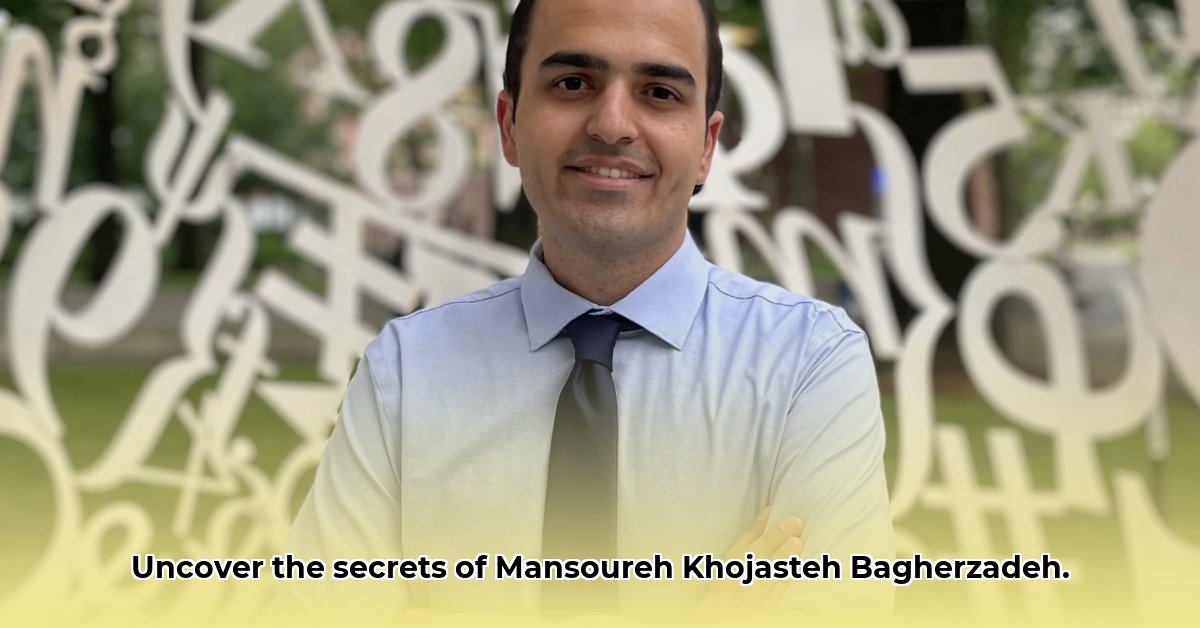
Mansoureh Khojasteh Bagherzadeh, the wife of Iran’s Supreme Leader Ali Khamenei, remains an enigmatic figure. Unlike many prominent political spouses, she maintains a remarkably low profile, making a comprehensive understanding of her life a complex undertaking. This biography seeks to assemble the known facts about her life, family, and role within Iranian society, while acknowledging the significant gaps in available information. We will explore the challenges of uncovering details about a person who deliberately avoids the public eye and analyze the verifiable information from speculation. For a more detailed biography, see this helpful resource: more information.
Mansoureh Khojasteh Bagherzadeh: A Biographical Overview
Piecing together the life of Mansoureh Khojasteh Bagherzadeh is akin to constructing a mosaic with numerous tiles missing. While key details are known, large parts of her personal narrative remain obscure. Understanding her life requires appreciating the intricacies of Iranian political dynamics.
Early Life and Background: Origins in Mashhad
Mansoureh Khojasteh Bagherzadeh was born in Mashhad, Iran. Sources suggest a birth year between 1945 and 1947, though the exact date remains unconfirmed. She was born into a religious family; her father, Mohammad Esmaeil Khojasteh Bagherzadeh, was a businessman. Her brother, Hassan Khojasteh Bagherzadeh, held the position of deputy director of IRIB (Islamic Republic of Iran Broadcasting). Information regarding her childhood, education, and early influences remains limited.
Marriage to Ali Khamenei: A Union of Influence
In 1964, Mansoureh Khojasteh Bagherzadeh married Ali Khamenei. The marriage took place in a private ceremony. Ayatollah Mohammad Hadi Milani officiated. The union marked a turning point in her life, as she became the wife of the future Supreme Leader of Iran. Together, they have four sons – Mostafa, Mojtaba, Masoud, and Meysam – and two daughters, Boshra and Hoda.
- Mostafa: Primarily engaged in seminary studies, he married the daughter of Azizollah Khoshvaght.
- Mojtaba: More prominent in Iranian media and politics, he is married to the daughter of Gholam Ali Haddad Adel.
- Masoud: Married the daughter of Seyyed Mohsen Kharazi, establishing a family connection with Kamal and Sadegh Kharazi.
- Meysam: Married the daughter of Mahmoud Lolachian, a religious bazaar merchant in Tehran, and collaborates with the office for preserving and publishing the works of the Supreme Leader.
- Boshra: Married the son of Mohammad Mohammadi Golpayegani.
- Hoda: Married the son of Mohammad-Bagher Bagheri.
Specifics about their family life remain private.
Public Presence and Role: Maintaining a Low Profile
Mansoureh Khojasteh Bagherzadeh stands apart from many spouses of political leaders by maintaining a minimal public presence. Seldom seen at public events, photographs of her are scarce. This deliberate choice raises questions about her motivations. Whether driven by a personal preference for privacy, security concerns, or a strategic decision to remain outside the political arena, her limited public appearances contribute to the mystery surrounding her. Instances of hospitalization in 2011 and 2024 briefly brought her to public attention, further fueling curiosity about her life.
Challenges in Biographical Research: Access and Accuracy
Researching Mansoureh Khojasteh Bagherzadeh’s life presents significant challenges. Reliable sources of information are limited, and existing accounts often lack corroboration. Many reports rely on speculation or secondhand accounts, making it difficult to distinguish fact from conjecture. Security concerns and the sensitive nature of her position likely contribute to this scarcity of accessible information. Conflicting details further complicate the research process.
Conflicting Information: Discrepancies and Uncertainties
Discrepancies in available information pose a significant obstacle to compiling an accurate biography. Even seemingly minor details, such as her height (reported variably as 5’2″ and 5’4″), illustrate this challenge. Similarly, details regarding her education and activities before her marriage remain unclear. The lack of reliable data makes it difficult to definitively answer fundamental questions about her early life.
Verifying Information: A Critical Approach
Given the limitations and potential inaccuracies in available sources, a critical approach to verifying information is essential. It is important to cross-reference information from multiple sources, evaluate the credibility of sources, and consider potential biases. Scrutinizing sources and carefully checking facts enhance the reliability of any biographical account.
Conclusion: An Ongoing Exploration
Mansoureh Khojasteh Bagherzadeh’s life remains a subject of ongoing exploration. While certain basic facts are established, many aspects of her life remain shrouded in mystery. The limited information highlights the difficulties of writing a comprehensive biography when the subject intentionally avoids public attention. Her story continues to intrigue, prompting ongoing research and speculation.
Strategies for Information Verification: A Guide
Gaining reliable insights into Mansoureh Khojasteh Bagherzadeh involves a meticulous approach, given the limited and often conflicting information available.
Key Considerations
- Information Limitations: Acknowledge the limited public information, which complicates verification.
- Source Reliability: Recognize that reliable sources are scarce, and existing information often lacks corroboration.
- Cultural and Political Context: Understand how Iranian cultural norms and political dynamics contribute to information scarcity.
- Indirect Evidence: Analyze indirect sources and contextual clues to infer possible realities.
- Ethical Research: Uphold ethical considerations throughout the research process.
The Elusive Nature of Early Life
Mansoureh Khojasteh Bagherzadeh’s early life is largely undocumented. While her Mashhad origins and family background are known, specifics like her exact birthdate, number of siblings, or education remain elusive. Verifying information requires acknowledging these gaps and cross-referencing data from various sources, even if those sources are of questionable reliability.
Marriage and Family: A Realm of Privacy
Her marriage to Ali Khamenei in 1964 and her role as a mother of six are known facts. Further details are scarce, common for spouses of high-ranking Iranian officials. This environment makes obtaining verifiable details difficult without access that is unlikely to be granted.
Public Life, Political Influence, and Financial Status
Mansoureh’s rare public appearances make assessing her political influence challenging. Theories exist, but verifying them is nearly impossible due to the controlled Iranian media and opaque political system. Her purported humanitarian work lacks verification. Estimating her net worth is difficult, requiring indirect inferences from her husband’s wealth, making independent validation problematic.
Navigating the Information Void
Investigating Mansoureh Khojasteh Bagherzadeh highlights the challenges of researching individuals within tightly controlled information environments. Reliance on indirect indicators and careful consideration of context are necessary. Ethical boundaries and potential risks must be considered. Transparency about limitations and speculation is crucial for maintaining integrity.
Reliable Verification Techniques
Effectively verifying information requires a multi-faceted approach:
- Cross-referencing: Compare information from multiple sources, seeking consistent details.
- Contextual Analysis: Understand the Iranian socio-political environment, including cultural norms and information control.
- Indirect Indicators: Look for indirect evidence of influence or activity through associations and related events.
- Ethical Considerations: Prioritize ethical practices and respect for privacy.











3 thoughts on “Unveiling the Enigma: Mansoureh Khojasteh Bagherzadeh’s Personal History: A Comprehensive Biography”
Comments are closed.