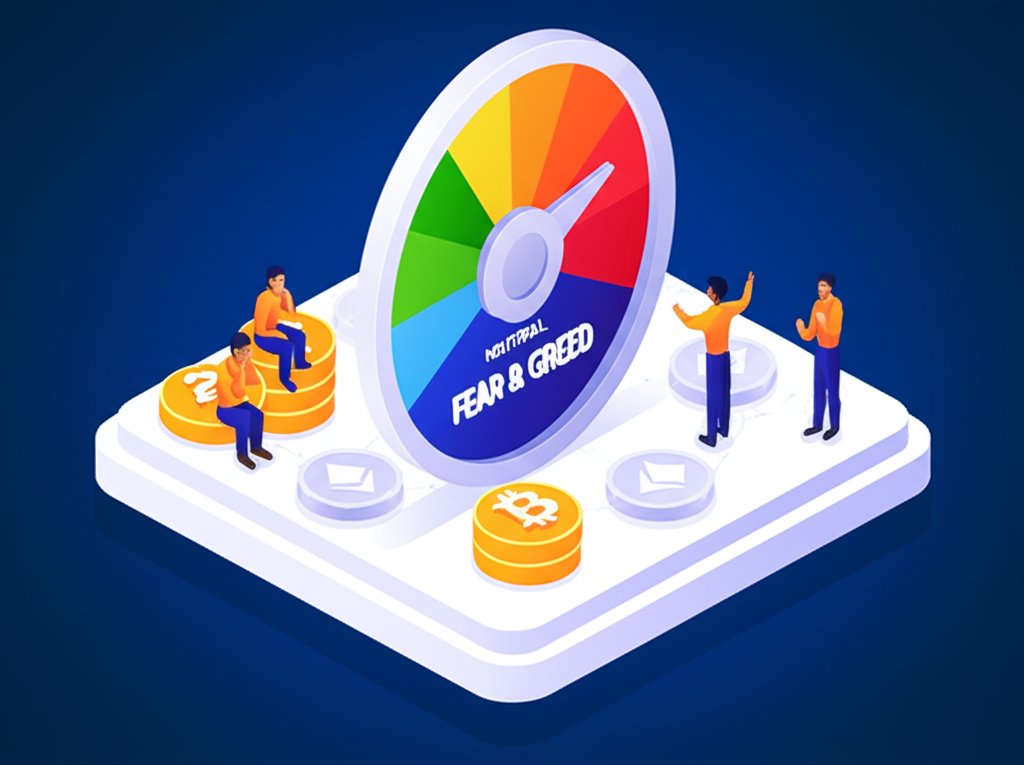
Cryptocurrency investing is famously volatile, a thrilling ride driven by rapid price swings and intense emotional shifts. For both seasoned traders and curious newcomers, navigating this landscape can feel like trying to predict the weather in a hurricane. This is where the Crypto Fear and Greed Index emerges as an indispensable tool—a dynamic barometer that measures the collective emotional temperature of the market, helping to illuminate dominant crypto market sentiment.
Imagine having a pulse on whether investors are gripped by panic or fueled by excessive optimism. That’s precisely what this index offers: a powerful lens through which to view the market’s psychological state. By understanding how this index works, what its different levels signify, and crucially, how to integrate it with other data, you can move beyond reactive trading and truly unlock smart crypto trades. This comprehensive guide will equip you with the knowledge to leverage the live Crypto Fear & Greed Index effectively, enhancing your crypto investing decisions and potentially boosting your returns in the ever-evolving digital asset space.
What is the Crypto Fear & Greed Index and Why Does it Matter?
The Crypto Fear and Greed Index is a widely recognized sentiment indicator designed to distill complex market data into a single, digestible number. Ranging from 0 (Extreme Fear) to 100 (Extreme Greed), it provides a snapshot of whether the broader cryptocurrency market is experiencing intense anxiety or irrational exuberance. For anyone engaged in crypto investing, understanding this index is paramount because human emotions—fear and greed—are often the primary drivers of market cycles and price movements.
Historically, legendary investor Warren Buffett famously advised, “Be fearful when others are greedy, and greedy when others are fearful.” This timeless wisdom forms the philosophical bedrock of the Crypto Fear and Greed Index. When the market is gripped by “Extreme Fear” (low index scores), it often signals capitulation, indicating that assets might be undervalued and presenting potential buying opportunities. Conversely, “Extreme Greed” (high index scores) can suggest that prices are overinflated, possibly hinting at an impending market correction or a bubble.
This index is not a crystal ball, but a powerful indicator of crypto market sentiment. It synthesizes various real-time data points, much of which is derived from live crypto quotes, to gauge the prevailing mood. By offering a clearer picture of investor psychology, the Crypto Fear & Greed Index helps traders and investors make more objective decisions, mitigating the risk of emotional overreactions that often lead to poor outcomes in crypto investing.
Just like understanding the nuances of interpreting crypto quotes, being aware of the Fear and Greed Index can provide valuable insight into market behavior.
The Core Principle: Battling Emotional Biases
The inherently volatile nature of cryptocurrencies means that prices can swing dramatically based on news, rumors, and prevailing mood. This environment often triggers FOMO (Fear Of Missing Out) during bull runs and panic selling during downturns. The Crypto Fear and Greed Index acts as a counter-signal to these emotional biases. It encourages investors to pause, assess the broader crypto market sentiment, and consider whether their actions are being driven by logic or emotion. For those aiming to unlock smart crypto trades, this objective perspective is invaluable.
Decoding the Crypto Fear & Greed Index Live: How It’s Calculated
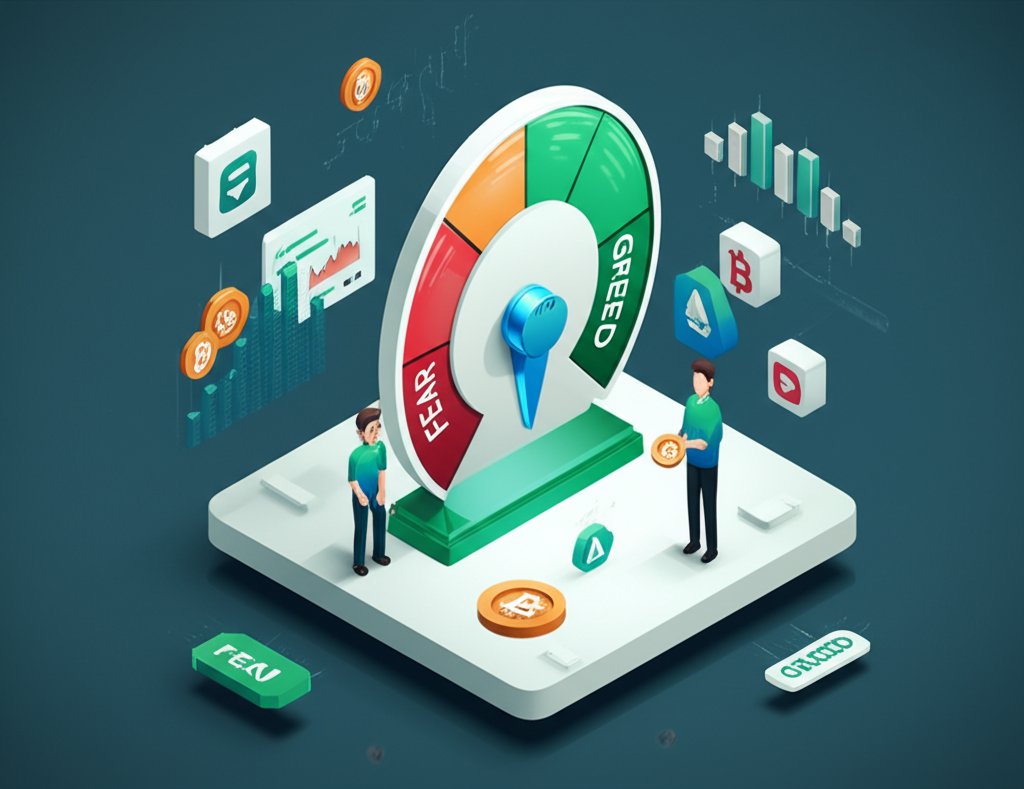
To fully leverage the Crypto Fear and Greed Index, it’s essential to understand the intricate methodology behind its calculation. While different providers might slightly vary their weighting, the core components aim to capture a comprehensive view of crypto market sentiment. The index aggregates data from multiple sources, many of which are fueled by live crypto quotes and other real-time market metrics, to produce its daily score.
Here’s a detailed breakdown of the common factors that contribute to the Crypto Fear and Greed Index:
Volatility (Weighting often around 25%):
- What it tells us: This metric assesses Bitcoin’s current volatility and maximum drawdowns, comparing these figures against average values from the past 30 and 90 days. An unusual surge in volatility, particularly during price drops, often indicates a market driven by fear and uncertainty, as investors react nervously to rapid price changes.
- Contribution to Index: Higher volatility, especially on the downside, typically pushes the index towards “Fear.”
Market Momentum & Trading Volume (Weighting often around 25%):
- What it tells us: This component evaluates current trading volumes and market momentum against 30/90-day averages. It scrutinizes the volume of transactions alongside the direction of price movement. High daily buying volumes in a strongly positive market suggest
crypto market sentimentis excessively greedy or overly bullish, with many eager to enter. - Contribution to Index: High trading volume accompanying strong upward price movements signals “Greed,” while low volume or high volume on downtrends leans towards “Fear.”
- What it tells us: This component evaluates current trading volumes and market momentum against 30/90-day averages. It scrutinizes the volume of transactions alongside the direction of price movement. High daily buying volumes in a strongly positive market suggest
Social Media Sentiment (Weighting often around 15%):
- What it tells us: What are people saying about crypto on platforms like Twitter, Reddit, and Telegram? This factor analyzes the frequency and sentiment of keywords related to cryptocurrencies. A high volume of positive, excitable mentions often correlates with greed, while negative or highly anxious discussions indicate fear. Sophisticated algorithms often filter out spam to capture genuine emotional signals.
- Contribution to Index: Overwhelmingly positive sentiment pushes towards “Greed,” negative sentiment towards “Fear.”
Bitcoin Market Dominance (Weighting often around 10%):
- What it tells us: Bitcoin’s market dominance measures its capitalization relative to the total cryptocurrency market cap. An increase in Bitcoin’s dominance often indicates that investors are moving away from altcoins and into the perceived “safer haven” of Bitcoin during times of uncertainty, suggesting fear. Conversely, a decrease in dominance signifies a shift towards riskier altcoins, typical of a greedy market.
- Contribution to Index: Rising BTC dominance often correlates with “Fear,” falling dominance with “Greed.”
Google Trends (Weighting often around 10%):
- What it tells us: This component analyzes search query data related to Bitcoin and other cryptocurrencies on Google. Spikes in search terms like “Bitcoin price manipulation” or “crypto crash” reveal heightened fear and panic. Conversely, searches for “how to buy Bitcoin” or “best crypto to invest in” during a bull run often suggest increasing public interest driven by greed and FOMO.
- Contribution to Index: Fear-related search terms increase “Fear,” greed-related terms increase “Greed.”
Derivatives Markets (Weighting varies, often around 10%):
- What it tells us: Data from options and futures markets provides forward-looking insights. Specifically, analyzing put/call ratios (put options bet on price decrease, call options on increase) can reveal institutional and sophisticated trader sentiment. High put volumes relative to calls suggest bearish sentiment, while the opposite indicates bullishness. Funding rates on perpetual futures also offer clues: positive funding suggests traders are paying to be long (greed), negative implies they are paying to be short (fear).
- Contribution to Index: High put-to-call ratios or negative funding rates indicate “Fear”; low ratios or positive funding rates suggest “Greed.”
Stablecoin Flows (Newer, variable weighting):
- What it tells us: Monitoring the inflow and outflow of stablecoins (like USDT, USDC) to and from exchanges. A large influx of stablecoins to exchanges can signal an intent to buy, suggesting bullish
crypto market sentiment. Conversely, stablecoins moving off exchanges might indicate profit-taking or a move to cold storage during uncertainty, hinting at fear. - Contribution to Index: High stablecoin inflows to exchanges contributes to “Greed”; outflows contribute to “Fear.”
- What it tells us: Monitoring the inflow and outflow of stablecoins (like USDT, USDC) to and from exchanges. A large influx of stablecoins to exchanges can signal an intent to buy, suggesting bullish
Investor Surveys (Less common, but some indices incorporate):
- What it tells us: Direct input from various investor groups about their feelings towards the market. While harder to scale, well-conducted surveys can offer qualitative insights into sentiment.
- Contribution to Index: Depends on the collective sentiment expressed.
By combining these diverse data points, the Crypto Fear and Greed Index generates a unified score, providing a holistic and weighted view of crypto market sentiment derived from constant analysis of live crypto quotes and related data. Understanding these components allows for a more nuanced interpretation of the index’s daily reading, empowering more informed crypto investing decisions.
Interpreting the Crypto Fear & Greed Index Live: Actionable Insights
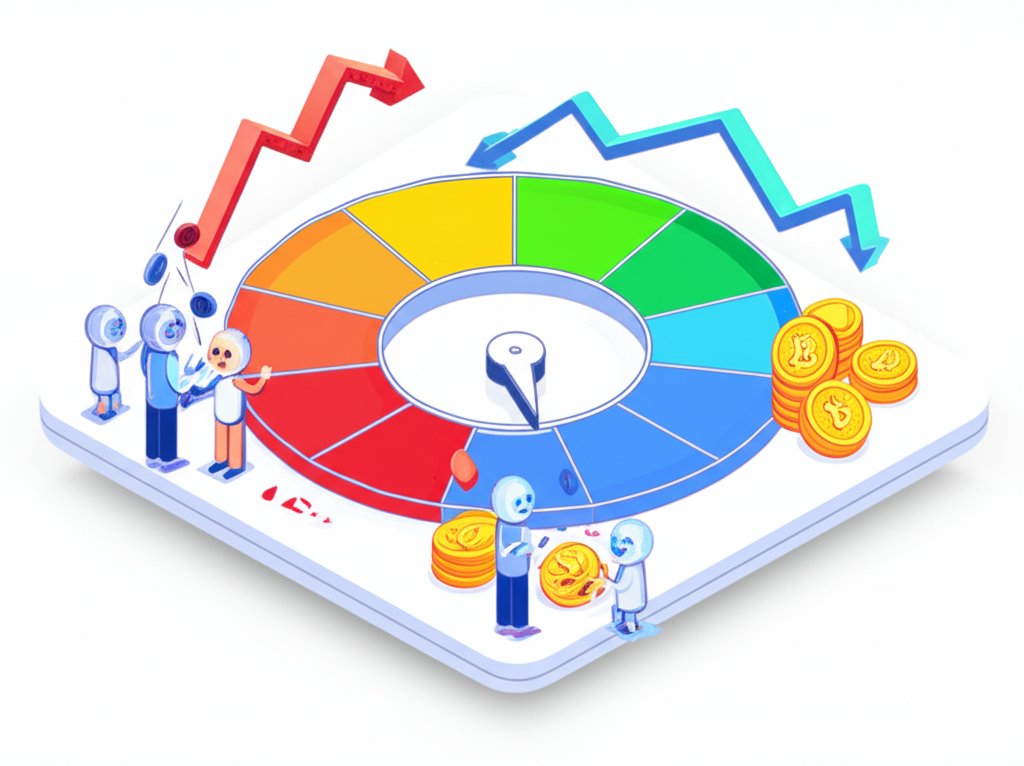
The Crypto Fear and Greed Index is divided into clear zones, each offering distinct implications for crypto investing and helping you unlock smart crypto trades. While not a standalone trading signal, understanding these zones in conjunction with live crypto quotes allows for strategic decision-making.
Here’s a breakdown of what each range typically signifies:
0-24: Extreme Fear
- Market Sentiment: Investors are deeply worried, panicking, and capitulating. There’s a high level of uncertainty, and many are selling their assets, often at a loss, simply to exit the market.
- Actionable Insight: As Warren Buffett suggested, “Be greedy when others are fearful.” Historically, periods of extreme fear have often preceded market bottoms and presented strong long-term buying opportunities for quality assets. This is not a guarantee, but it suggests the market might be oversold and due for a rebound. Smart crypto investing often involves accumulating during these periods.
- Strategy: Consider dollar-cost averaging (DCA) into your preferred assets if your long-term conviction remains strong. Avoid panic selling and evaluate if current prices offer good value relative to future potential.
25-49: Fear
- Market Sentiment: A general sense of apprehension, caution, and pessimism. While not outright panic, investors are hesitant, and buying pressure is weak. Many are waiting on the sidelines or slightly reducing exposure.
- Actionable Insight: Still a period to exercise caution, but potential opportunities might arise. It’s a time for diligent research, identifying fundamentally strong projects that may be trading at a discount.
- Strategy: Maintain vigilance. Look for signs of reversal (e.g., decreasing volatility, increasing volume on green candles, positive news). This is a good time to review your portfolio and consider rebalancing if sentiment shifts.
50-74: Greed
- Market Sentiment: Investors are becoming increasingly optimistic and eager to buy. FOMO starts to kick in, and prices are generally trending upwards. The mood is positive, and many anticipate further gains.
- Actionable Insight: “Be fearful when others are greedy.” While the market is rising, this zone indicates increasing risk. Prices might be nearing their peak, and a correction could be on the horizon. It’s a good time to evaluate profit-taking or trimming positions, especially speculative ones.
- Strategy: Be selective with new entries. Consider setting stop-loss orders on existing positions to protect profits. Review your initial investment thesis; if an asset has significantly surpassed your price targets, it might be time to take some gains.
75-100: Extreme Greed
- Market Sentiment: Euphoria reigns. Investors are excessively optimistic, often ignoring fundamental valuations and chasing parabolic price movements. FOMO is at its peak, and speculative behavior is rampant. This often signifies a “bubble” environment.
- Actionable Insight: This is historically the most dangerous zone for new investments. A market correction is highly probable. Smart crypto investing dictates extreme caution and a focus on securing profits.
- Strategy: Aggressively consider taking profits, especially on assets that have seen massive gains. Avoid making new, speculative purchases. Prioritize risk management and ensure you have a clear exit strategy for parts of your portfolio.
Remember, the live Crypto Fear & Greed Index is just one piece of the puzzle. It should always be combined with other analytical tools – such as technical analysis (chart patterns, indicators), fundamental analysis (project utility, team, roadmap), and on-chain metrics (whale movements, exchange flows) – for a truly robust crypto investing strategy. Don’t solely rely on it, but use it as a powerful confirmation or contrarian signal to unlock smart crypto trades.
Leveraging the Crypto Fear & Greed Index for Smart Crypto Trades
Integrating the Crypto Fear and Greed Index into your crypto investing strategy can significantly enhance your decision-making and help you unlock smart crypto trades. Instead of reacting emotionally to market swings reflected in live crypto quotes, you can adopt a more tactical and disciplined approach.
Here’s how to put the index to work:
1. Adopt a Contrarian Investment Stance
The core utility of the Crypto Fear & Greed Index lies in its contrarian nature.
crypto market sentiment.2. Combine with Technical Analysis (TA)
The index provides sentiment, but TA provides price context.
3. Integrate with Fundamental Analysis (FA)
Always assess the underlying value.
4. Utilize Dollar-Cost Averaging (DCA)
DCA is particularly effective when combined with the index.
5. Manage Risk with Stop-Loss Orders and Diversification
The index isn’t foolproof; robust risk management is crucial for crypto investing.
crypto market sentiment.6. Stay Informed and Adapt
The crypto landscape changes rapidly.
live crypto quotes, news, and sentiment, is key for unlocking smart crypto trades.By consciously applying these strategies, you transform the Crypto Fear and Greed Index from a mere curiosity into a powerful component of your sophisticated crypto investing toolkit, helping you to navigate market volatility with greater confidence and make more objective decisions.
Limitations and Nuances of Crypto Market Sentiment Indicators
While the Crypto Fear and Greed Index is an invaluable tool for understanding crypto market sentiment and informing crypto investing decisions, it’s crucial to acknowledge its limitations and inherent nuances. No single indicator, however sophisticated, provides a complete picture, and relying on one exclusively can lead to misguided smart crypto trades.
Here are key aspects to consider:
1. Lagging Indicator vs. Predictive Power
- Rear-view Mirror: Often, the Crypto Fear and Greed Index acts as a lagging indicator. It reflects current or recent past sentiment rather than perfectly predicting future price movements. By the time the index hits “Extreme Greed,” prices may have already experienced significant gains, and by “Extreme Fear,” much of the initial price drop may have occurred. True predictive power is limited.
- Unpredictable Future: The crypto market is susceptible to “black swan” events – unforeseen regulatory announcements, major hacks, or macroeconomic shocks – that can instantly shift
crypto market sentimentin ways the index cannot anticipate.
2. Methodology Differences and Inconsistencies
- No Universal Standard: There is no single, universally accepted formula for building a Crypto Fear and Greed Index. Different providers (e.g., Alternative.me, CoinMarketCap) use varying data sources, weighting schemes, and calculation methodologies. This means an index from one source might show “Fear” while another shows “Neutral” for the same market conditions.
- Transparency Matters: Understanding how to compare different Crypto Fear and Greed Index methodologies is critical. Investors should research the specific components and weightings used by any index they follow to gauge its reliability and relevance.
3. Influence of Trading Bots and Algorithms
- Amplified Movements: A significant portion of crypto trading volume is generated by sophisticated trading bots and algorithmic strategies. These automated systems can amplify market movements based on pre-programmed rules, potentially creating artificial sentiment that the index might pick up.
- Distorted Signals: Algorithmic trading can sometimes front-run or exacerbate human emotional reactions, potentially skewing sentiment readings and making it harder to discern genuine grassroots
crypto market sentiment.
4. Focus on Bitcoin (Often)
- BTC-Centricity: Many Crypto Fear and Greed Index calculations are heavily (or exclusively) weighted towards Bitcoin data. While Bitcoin’s dominance means its sentiment often impacts the broader market, it might not accurately reflect the sentiment for altcoins or specific niches within the crypto ecosystem. An altcoin could be booming amidst broader Bitcoin fear, or vice-versa.
5. Oversimplification of Complex Dynamics
- Nuance is Lost: Reducing complex market dynamics, driven by millions of individual decisions, into a single number can be an oversimplification. The index may not capture nuanced factors such as institutional accumulation, specific sector rotations, or long-term hodler behavior versus short-term trader sentiment.
- Individual Investor Behavior: The unpredictable and often irrational behavior of individual investors, driven by a myriad of personal circumstances and emotional states, makes precise predictions exceptionally difficult, even with advanced sentiment indicators.
6. Manipulation Potential
- Whale Influence: Large market participants (“whales”) can, at times, influence markets through large trades or strategic announcements. While harder to prove with the index, any sentiment indicator based on observable market data can theoretically be influenced, even if temporarily.
Despite these limitations, the Crypto Fear and Greed Index remains a powerful supplementary tool. By being aware of its shortcomings and combining its insights with diverse analytical approaches, investors can use it more effectively to gain a holistic view of the market and unlock smart crypto trades with greater confidence.
Comparing Different Crypto Fear & Greed Index Methodologies
As highlighted, not all Crypto Fear and Greed Index tools are created equal. Different providers, like Alternative.me or Mudrex, offer their own versions, each with unique calculation methodologies and weighting schemes. Understanding how to compare different Crypto Fear and Greed Index methodologies is vital for an informed crypto investing approach, ensuring you’re interpreting crypto market sentiment accurately.
The goal across all these indices is the same: to gauge the prevailing mood using live crypto quotes and other data. However, their specific “recipe” can yield different results. Think of it like comparing different economic indicators; while all aim to measure the economy’s health, one might heavily weigh employment figures while another focuses on manufacturing output, leading to slightly different conclusions.
Here’s what to look for when comparing different Crypto Fear & Greed Index providers:
1. Transparency of Components and Weighting
- The Gold Standard: The best indices clearly state which factors they consider (volatility, volume, social media, etc.) and the percentage weight assigned to each. Transparency allows you to understand the underlying assumptions and biases.
- Questions to Ask: Does it primarily focus on Bitcoin, or does it incorporate a broader basket of large-cap cryptocurrencies? How often is the data updated? Does it explain how each component is measured (e.g., is volatility based on 30-day or 90-day averages, or implied volatility from options markets)?
2. Range of Data Points Included
- Comprehensive vs. Simplified: Some indices are more comprehensive, incorporating a wider array of data points like derivatives market data (put/call ratios, funding rates), stablecoin flows to/from exchanges, and even localized search trends. Others might rely on a simpler set of traditional metrics.
- Impact on Nuance: A more comprehensive methodology might capture a richer, more nuanced view of
crypto market sentiment, potentially offering a more reliable signal for smart crypto trades.
3. Recency and Update Frequency
- Live vs. Delayed: For
crypto investing, especially short-term smart crypto trades, the timeliness of the index is crucial. Does the index update in “real-time” or at fixed intervals (e.g., once a day)? The term “live Crypto Fear & Greed Index” implies continuous updates, ideally reflecting real-time shifts inlive crypto quotes. - Historical Data Availability: Does the provider offer historical data for the index? Analyzing past performance of the index against Bitcoin’s price movements over different market cycles can provide valuable context and help you understand how reliable a particular index might be.
4. Reputation and Track Record of the Provider
- Trust and Authority: Consider the reputation of the entity providing the index. Are they a well-established and respected data provider in the crypto space? Do they have a track record of reliable market analysis? While I cannot link directly, established platforms often provide more robust and well-vetted methodologies.
5. Visualizations and User Experience
- Clarity and Usability: A good index isn’t just about the number; it’s about how it’s presented. Clear charts showing historical movement, easy-to-understand explanations of the different sentiment zones, and intuitive interfaces make the index more actionable for
crypto investing.
By diligently comparing these aspects, you can choose the Crypto Fear and Greed Index that best aligns with your analytical needs and crypto investing style. While discrepancies will always exist, a critical approach to understanding methodologies will empower you to interpret crypto market sentiment more effectively and make more informed decisions when pursuing smart crypto trades.
The Future of Crypto Market Sentiment Analysis
The landscape of crypto market sentiment analysis is continuously evolving, driven by advancements in data science, artificial intelligence, and a deeper understanding of market psychology. The Crypto Fear and Greed Index represents a foundational step, but the future promises even more sophisticated tools to help investors unlock smart crypto trades.
1. AI and Machine Learning for Deeper Insights
- Predictive Models: Advanced AI and machine learning algorithms are being developed to move beyond simply reflecting current sentiment. These models will analyze vast datasets, including qualitative data from social media and news, to identify subtle patterns and potentially offer more accurate short-term and medium-term predictions of
crypto market sentimentshifts. - Sentiment Specificity: Future tools may offer more granular sentiment analysis, breaking down sentiment by specific cryptocurrencies, sectors (e.g., DeFi, NFTs), or even identifying sentiment of different investor cohorts (e.g., retail vs. institutional).
2. Integration of On-Chain Data
- Behavioral Signals: While some current indices touch upon stablecoin flows, future sentiment analysis will more deeply integrate a wider array of on-chain metrics. This includes tracking whale movements, exchange net flows, miner selling pressure, transaction counts, and active addresses. These metrics provide direct insights into actual investor behavior, offering a powerful complement to price-derived sentiment.
- Supply Dynamics: Understanding the flow of funds on the blockchain can reveal whether investors are liquidating (fear) or accumulating (greed) in a more direct and less manipulable way than purely market-based indicators.
3. Personalized Sentiment Dashboards
- Customizable Views: Investors may be able to create personalized sentiment dashboards, selecting specific metrics and weighting them according to their individual crypto investing strategies. This would allow for a highly tailored view of
crypto market sentimentrelevant to their portfolio. - Alert Systems: Automated alerts based on specific sentiment thresholds, combined with
live crypto quotesand other indicators, could notify traders of potential buying or selling opportunities in real-time.
4. Ethical Considerations and Bias Mitigation
- Addressing Manipulation: As sentiment analysis becomes more powerful, there will be an increased focus on developing robust models that can identify and neutralize potential manipulation from bots or coordinated efforts, ensuring the integrity of the sentiment data.
- Transparency and Explainability: Future sentiment tools will need to be transparent about their methodologies, allowing users to understand how a particular sentiment score is derived and what factors contribute most to it.
The live Crypto Fear & Greed Index will likely remain a cornerstone, but its evolution will involve deeper integration with AI, on-chain analytics, and personalized tools. These advancements will empower crypto investing with even more nuanced and actionable insights, making it easier to navigate the emotional tides of the market and consistently unlock smart crypto trades.
Conclusion: Mastering Emotions for Smarter Crypto Trades
The world of crypto investing is a dynamic arena where fortunes can be made and lost in the blink of an eye. At its heart, this volatility is often a direct reflection of human emotions: fear and greed. The Crypto Fear and Greed Index stands as a powerful and accessible tool designed to cut through this emotional noise, offering a clear, objective measure of crypto market sentiment.
By providing a snapshot of the market’s psychological state, from “Extreme Fear” to “Extreme Greed,” the live Crypto Fear & Greed Index empowers investors to adopt a more strategic, contrarian stance. It encourages us to “buy when others are fearful” and “be cautious when others are greedy,” aligning our actions with historical market wisdom.
While not a crystal ball, and despite its inherent limitations and varying methodologies, the index, when judiciously combined with technical and fundamental analysis, on-chain data, and sound risk management, can significantly enhance your ability to unlock smart crypto trades. It serves as a vital reminder to separate emotion from decision-making, ensuring your crypto investing strategy is built on logic and data, not impulse.
Embrace the Crypto Fear & Greed Index as a key component of your analytical toolkit. Continuously educate yourself, stay informed about live crypto quotes and market developments, and always prioritize a diversified portfolio. By doing so, you’ll be well-equipped to navigate the thrilling, yet often tumultuous, waters of the cryptocurrency market with greater confidence and intelligence.
Frequently Asked Questions (FAQ)
What does the Crypto Fear and Greed Index tell you?
The Crypto Fear and Greed Index provides insights into the prevailing emotional state and crypto market sentiment of cryptocurrency investors. It aggregates various factors into a single number (0-100) to indicate whether the market is dominated by “Extreme Fear” (potential buying opportunity) or “Extreme Greed” (potential for a correction), helping you gauge the collective mood influencing live crypto quotes.
How is the Crypto Fear and Greed Index calculated?
The Crypto Fear and Greed Index is typically calculated by combining several metrics, each with a specific weighting.










