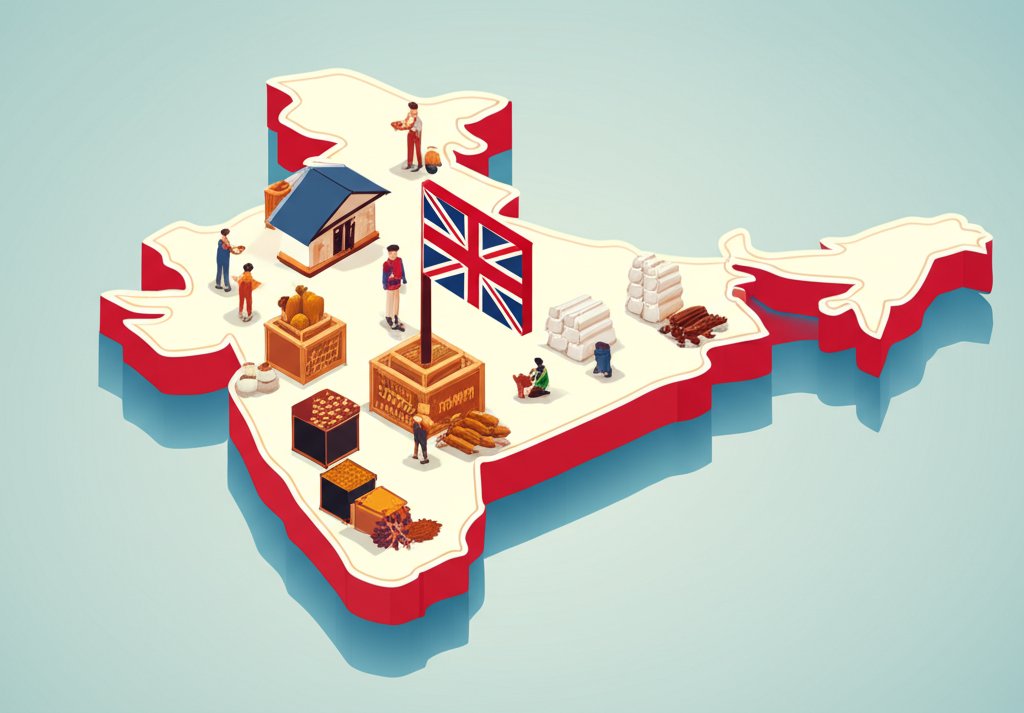
The story of the British in India is a monumental narrative spanning over three centuries, marked by trade, conquest, imperial rule, and ultimately, the triumph of self-determination. Understanding this complex period requires tracing the journey from a small trading company’s arrival to the birth of two independent nations. This comprehensive ultimate timeline of the British colonization of India (1600-1947) will guide you through the pivotal moments, key figures, and transformative events that shaped the destiny of an entire subcontinent, providing an unparalleled overview designed to dominate search results for anyone seeking a detailed timeline of Indian history from 1600 to 1947.
From the initial establishment of trade relations to the brutal realities of the British Raj and the persistent struggle for freedom, this article offers a deep dive into the important events in Indian history from 1600 to 1947. We’ll explore the calculated strategies of the East India Company, the direct rule of the British Crown, and the burgeoning nationalist movements that culminated in India’s independence and the painful partition of 1947.
The Genesis of Power: East India Company’s Arrival and Early Influence (1600-1757)

The journey of British colonization began not with grand imperial designs, but with the pursuit of lucrative trade. The 17th century saw the cautious entry of European powers into the rich markets of the East, a period that set the stage for profound geopolitical shifts. This section details the initial phase of the timeline of British rule in India from 1600 to 1857, focusing on the East India Company’s transformation from a mercantile entity to a formidable political force.
The British East India Company’s Inception and Early Footholds (1600-1612)
- 1600: Royal Charter Granted to the East India Company: A group of London merchants received a royal charter from Queen Elizabeth I, establishing “The Governor and Company of Merchants of London Trading into the East Indies.” Their primary goal was to bypass Portuguese and Dutch monopolies on the spice trade and access India’s coveted textiles (cotton, silk), indigo, and saltpeter. This seemingly minor commercial venture was the seed of future British hegemony.
- 1605: Death of Mughal Emperor Akbar and Succession of Jahangir: The demise of the powerful and relatively tolerant Emperor Akbar and the ascent of his son Jahangir marked a period of transition within the vast Mughal Empire. While still strong, this shift would eventually create an environment of internal rivalries and administrative weaknesses that the British were poised to exploit.
- 1608: Establishment of the First English Trading Post in Surat: Captain William Hawkins arrived at Jahangir’s court, seeking permission to establish a factory (trading post). Though initially met with resistance due to Portuguese influence, the English eventually gained a foothold in Surat, a bustling port city in Gujarat, marking their physical presence on the Indian subcontinent.
- 1612: Naval Victory at the Battle of Swally: A small English naval squadron decisively defeated a larger Portuguese fleet near Surat. This victory demonstrated superior English maritime power and convinced the Mughal authorities of their military capabilities, significantly strengthening their position against rival European traders.
Consolidating Trade and Gaining Concessions (1613-1700)
As the East India Company grew, the need for organized administration mirrored the development of structured government bodies like the early U.S. presidential cabinets, reflecting a broader trend in the history of cabinet departments.
- 1615-1619: Sir Thomas Roe’s Embassy to the Mughal Court: As the English ambassador to Emperor Jahangir, Sir Thomas Roe successfully negotiated a treaty that granted the East India Company widespread rights to establish factories and trade throughout the Mughal Empire. This agreement was crucial, legitimizing the Company’s presence and laying the groundwork for its commercial expansion.
- Mid-17th Century: Expansion of Trading Posts (Madras, Bombay, Calcutta): The Company rapidly expanded its network of trading centers. Madras (Chennai) was acquired in 1639, Bombay (Mumbai) came under direct English control in 1668 (leased from the Crown), and Calcutta (Kolkata) was founded in 1690 around the village of Sutanuti. These fortified settlements became vital economic and strategic hubs.
- Late 17th Century: Increasing Mughal Decline and Company Ambition: The death of Emperor Aurangzeb in 1707 marked the beginning of a rapid decline for the Mughal Empire, as various regional powers (Nawabs, Marathas, Sikhs) asserted autonomy. This vacuum of central authority presented new opportunities for the East India Company, which began to transition its focus from purely trade to engaging in local politics and military matters, protecting its interests with its own forces.
The Road to Political Dominance and Conquest (1700-1757)
- 1717: Emperor Farrukhsiyar’s Farman (Royal Decree): In arguably a pivotal moment, Mughal Emperor Farrukhsiyar granted the East India Company significant trading privileges in Bengal, including duty-free trade and the right to mint coins. This “Magna Carta of the Company” greatly enhanced its economic power and contributed to the impoverishment of local Indian merchants who still had to pay duties.
- 1740s-1763: The Carnatic Wars: A series of three proxy wars between the British and French East India Companies, fought on Indian soil. These conflicts for regional supremacy (especially over the Carnatic region in Southern India) honed the military strategies of both European powers and demonstrated the effectiveness of their trained Indian sepoys. The British eventually emerged victorious, largely marginalizing French influence.
- 1757: The Battle of Plassey: Led by Robert Clive, the East India Company’s forces decisively defeated Siraj-ud-Daulah, the Nawab of Bengal, largely due to treachery within the Nawab’s own camp (Mir Jafar). This single battle fundamentally altered the balance of power, granting the Company effective control over Bengal, India’s richest province. It marked a critical turning point and the de facto beginning of formal British colonization of India, transforming the Company from a trading entity into a territorial ruler.
From Traders to Rulers: Expanding Dominance and Growing Resistance (1757-1857)
Following Plassey, the East India Company’s trajectory shifted irrevocably from commerce to conquest. This century saw aggressive territorial expansion, the implementation of exploitative economic policies, and the gradual erosion of Indian sovereignty. This period is crucial for understanding the timeline of British rule in India from 1600 to 1857, leading directly to the momentous events of 1857.
Company Rule and Territorial Expansion (1757-1799)
- 1764: The Battle of Buxar: A combined force of Mir Qasim (deposed Nawab of Bengal), Shuja-ud-Daulah (Nawab of Awadh), and Mughal Emperor Shah Alam II was decisively defeated by the East India Company. This victory cemented British military supremacy in Northern India, granting the Company even greater political and territorial control than Plassey, as it now faced down the Mughal Emperor himself.
- 1765: Treaty of Allahabad and Diwani Rights: In the aftermath of Buxar, the Treaty of Allahabad granted the East India Company the Diwani (right to collect revenue and administer civil justice) of Bengal, Bihar, and Odisha. This formal recognition by the Mughal Emperor made the Company the real power in Bengal, even if the Nawab remained a nominal figurehead. Revenue from these rich provinces fueled further expansion.
- 1760s-1770s: Economic Exploitation of Bengal and the Great Famine: The Company’s ruthless revenue collection policies, coupled with natural disasters, led to the devastating Bengal Famine of 1770, which killed an estimated 10 million people. This period highlighted the brutal economic consequences of Company rule, prioritizing profit over human welfare.
- 1773: Regulating Act: The British Parliament, concerned by the Company’s growing political power, corruption, and the famine, passed this Act to assert greater control. It established a Governor-General of Bengal (Warren Hastings) and a Supreme Court in Calcutta, marking the first step towards parliamentary oversight of Company affairs in India.
- 1784: Pitt’s India Act: Further solidifying parliamentary control, this act established the Board of Control in Britain, directly supervising the Company’s political and military policies in India. This dual system of control would last until 1858.
- 1767-1799: Anglo-Mysore Wars: A series of four wars fought between the British and the Kingdom of Mysore, ruled by Hyder Ali and later his son Tipu Sultan. These were fierce contests over crucial territories in Southern India. Tipu Sultan, a formidable opponent, was eventually defeated and killed in the Fourth Anglo-Mysore War (1799), leading to the annexation of much of Mysore’s territory and further consolidating British control in the south.
- 1798: Introduction of the Subsidiary Alliance System (Lord Wellesley): Governor-General Richard Wellesley implemented this system, forcing Indian princely states to disband their own armies and accept British troops (paid for by the Indian rulers) and British residents at their courts. Effectively, it deprived Indian states of their sovereignty while maintaining the illusion of independence, dramatically expanding British influence without direct annexation.
Administrative Reforms and Economic Drain (1800-1848)
- Early 19th Century: Anglo-Maratha Wars: A series of conflicts (primarily the Second and Third Anglo-Maratha Wars) between the British and the powerful Maratha Confederacy. By 1818, the Marathas were decisively defeated, and most of their territories were either annexed or brought under subsidiary alliance, making the British the paramount power in India.
- 1828-1835: Reforms under Lord William Bentinck: Governor-General Bentinck
- Abolition of Sati (1829): Outlawed the practice of widow immolation.
- Suppression of Thuggee: A campaign against criminal gangs.
- Introduction of English Education (1835): Based on Macaulay’s Minute, English was promoted as the language of administration and higher education, aiming to create a class of Indians loyal to British rule.
- 1833: Charter Act of 1833: Renewed the Company’s charter but ended its commercial activities, making it solely an administrative and political body. It also declared that no Indian would be debarred from holding any office under the Company on grounds of religion, place of birth, descent, or color (though this was rarely fully implemented).
- 1848-1856: Annexations under Lord Dalhousie and the Doctrine of Lapse: Governor-General Dalhousie pursued an aggressive policy of annexation.
- Second Anglo-Sikh War (1848-49): The Sikh Empire of Punjab was annexed, bringing the entire region under British control.
- Doctrine of Lapse: This policy annexed princely states whose rulers died without a natural heir, denying adopted sons the right to succession. States like Satara, Jhansi, and Nagpur were annexed, causing widespread resentment among Indian rulers and elites.
- Annexation of Awadh (1856): Awadh, a rich state, was annexed on grounds of misgovernance, deeply alienating its ruling family and the numerous sepoys from Awadh in the Company’s army.
The Great Rebellion of 1857: A Turning Point
- 1857: The Sepoy Mutiny (First War of Indian Independence): A widespread and brutal uprising against Company rule, sparked by a combination of religious grievances (greased cartridges for the new Enfield rifle, rumored to be coated with animal fat offensive to both Hindu and Muslim sepoys), economic exploitation, political annexations, and social reforms perceived as interference.
- Key Events: Began in Meerut, spread to Delhi, Lucknow, Kanpur, Jhansi, and Gwalior. Key figures included Bahadur Shah Zafar (Mughal Emperor), Rani Lakshmibai of Jhansi, Nana Sahib, and Tantia Tope.
- Characteristics: While initially a military mutiny, it rapidly evolved into a civilian rebellion in many areas, reflecting deep-seated resentment against British rule.
- Suppression: The British, with loyal Indian troops and reinforcements, brutally suppressed the rebellion over the next two years.
- Significance: Though ultimately unsuccessful, the Mutiny exposed the deep flaws and vulnerabilities of Company administration. It forced the British Crown to take direct control of India, ending the East India Company’s rule and ushering in a new era. This was one of the single most important events in Indian history from 1600 to 1947.
The British Raj: Direct Imperial Rule and the Seeds of Nationalism (1858-1919)
The aftermath of the 1857 Rebellion brought about a monumental shift: the British Crown replaced the East India Company as the direct ruler of India. This period, known as the British Raj timeline, was characterized by consolidated imperial administration, significant infrastructure development, but also intensified exploitation and the burgeoning of Indian nationalism.
Establishment of the British Raj and Imperial Consolidation (1858-1876)
- 1858: Government of India Act 1858: Passed by the British Parliament, this act officially dissolved the East India Company and transferred its powers to the British Crown. A Secretary of State for India was created in the British cabinet, overseeing the administration. The Governor-General was retitled Viceroy, directly representing the monarch. This marked the formal beginning of the British Raj.
- 1861: Indian Councils Act and Indian Civil Service Act: These acts introduced some limited Indian representation into legislative councils and formalized the structure of the elite Indian Civil Service (ICS), largely excluding Indians at higher levels.
- 1869: Birth of Mahatma Gandhi: Mohandas Karamchand Gandhi, who would later lead India to independence, was born in Porbandar, Gujarat.
- 1876: Queen Victoria Proclaimed Empress of India: At the opulent Delhi Durbar, Queen Victoria formally assumed the title of Empress of India, symbolizing the apex of British imperial power and cementing India’s status as the “Jewel in the Crown.”
Early Nationalist Awakening and Organized Resistance (1885-1905)
- 1885: Formation of the Indian National Congress (INC): Founded by retired British civil servant A.O. Hume and prominent Indian intellectuals, the INC initially aimed to provide a platform for educated Indians to voice concerns and demand greater participation in governance. Primarily composed of moderate leaders like Dadabhai Naoroji, Surendranath Banerjee, and Gopal Krishna Gokhale, it sought reforms within the British framework. This was a crucial step in the timeline of Indian history from 1600 to 1947, marking the birth of an organized political voice for Indians.
- Late 19th Century: “Drain of Wealth” Theory: Dadabhai Naoroji, through his book Poverty and Un-British Rule in India, articulated the “drain theory,” arguing that British rule was systematically impoverishing India by draining its wealth through salaries, pensions, and trade imbalances, without adequate economic return. This critique became a cornerstone of early nationalist thought.
- 1892: Indian Councils Act: Increased the number of non-official (nominated) members in Central and Provincial Legislative Councils, allowing for limited discussion of budget and public matters, but British control remained absolute.
- 1905: Partition of Bengal (Lord Curzon): Viceroy Lord Curzon unilaterally partitioned the large province of Bengal into East and West Bengal, ostensibly for administrative efficiency. However, it was widely seen as a “divide and rule” tactic to weaken Bengali nationalism. This sparked widespread outrage and the vigorous Swadeshi (boycott of foreign goods and promotion of indigenous industries) and Boycott movements, uniting people across religious lines against British policy.
Growing Extremism and Early Acts of Repression (1906-1919)
- 1906: Formation of the All-India Muslim League: Concerned about Hindu dominance in the INC and seeking to protect Muslim political rights, a group of Muslim leaders, with British encouragement, formed the Muslim League in Dhaka. This organization would play a significant role in the eventual partition of India.
- 1907: Surat Split: The Indian National Congress split into “Moderates” and “Extremists” (led by Bal Gangadhar Tilak, Lala Lajpat Rai, and Bipin Chandra Pal) at its Surat session, due to ideological differences over tactics and goals.
- 1909: Minto-Morley Reforms (Indian Councils Act 1909): These reforms introduced separate electorates for Muslims, a controversial measure that institutionalized communal divisions in Indian politics, a key feature of the British Raj timeline. While increasing Indian representation in legislative councils, it simultaneously fostered communal identity politics.
- 1914-1918: World War I: India contributed significantly to the British war effort in terms of troops, resources, and funds, with the expectation of political concessions (self-rule) in return. This expectation, however, was largely unfulfilled.
- 1916: Lucknow Pact: A historic agreement between the Indian National Congress and the Muslim League, where both organizations put forward joint demands for constitutional reforms, temporarily bridging communal divides.
- 1919: Montagu-Chelmsford Reforms (Government of India Act 1919): Introduced “dyarchy” (dual government) in the provinces, dividing administrative powers between elected Indian ministers and British-appointed executive councillors. While increasing elective principle, real power remained with the British.
- 1919: Rowlatt Act: Passed by the Imperial Legislative Council, this draconian act allowed the British government to imprison suspected terrorists without trial, leading to widespread protests and anger across India.
- 1919: Jallianwala Bagh Massacre: On April 13, General Reginald Dyer ordered his troops to fire on a peaceful gathering of unarmed civilians (including women and children) in Jallianwala Bagh, Amritsar, protesting the Rowlatt Act. Hundreds were killed and wounded. This horrific event profoundly shocked the nation, galvanized the independence movement, and became a symbol of British tyranny, marking another of the most important events in Indian history from 1600 to 1947.
The Freedom Struggle Intensifies: Non-Cooperation to Quit India (1920-1947)
The period following the Jallianwala Bagh Massacre saw the emergence of Mahatma Gandhi as the undisputed leader of the Indian independence movement. His philosophy of non-violent civil disobedience transformed the nationalist struggle into a mass movement, relentlessly challenging the foundations of the British Raj. This phase is critical to understanding the eventual culmination of the timeline of Indian history from 1600 to 1947.
Gandhi’s Emergence and Non-Cooperation Movements (1920-1930)
- 1920-1922: Non-Cooperation Movement: Mahatma Gandhi launched his first large-scale non-violent civil disobedience movement. It called for boycotts of British goods, institutions, schools, courts, and elections. Millions of Indians participated, uniting Hindus and Muslims (supported by the Khilafat Movement) in a powerful display of national unity.
- 1922: Chauri Chaura Incident: An angry mob set fire to a police station, killing several policemen. Disturbed by the violence, Gandhi immediately called off the Non-Cooperation Movement, emphasizing his unwavering commitment to non-violence.
- 1927: Simon Commission: The British government appointed an all-white commission to review India’s constitutional progress. The exclusion of any Indian members led to widespread boycotts and protests throughout the country, further fueling nationalist sentiment.
- 1928: Nehru Report: An all-party committee led by Motilal Nehru drafted a constitution for India, demanding Dominion Status. This was a significant step towards self-governance.
- 1929: Lahore Session of Indian National Congress: Under the presidency of Jawaharlal Nehru, the INC passed the historic “Purna Swaraj” (Complete Independence) resolution, declaring that India’s goal was full independence from British rule. January 26, 1930, was declared “Purna Swaraj Day.”
- 1930: Dandi March (Salt Satyagraha): Gandhi initiated the iconic Dandi March, walking to the coastal village of Dandi to illegally produce salt from seawater, protesting the British salt tax. This act of civil disobedience sparked a nationwide Civil Disobedience Movement, involving millions and drawing global attention to India’s struggle for freedom.
Constitutional Reforms and Mounting Pressure (1931-1941)
- 1930-1932: Round Table Conferences: Three conferences were held in London to discuss constitutional reforms for India. While attended by various Indian leaders, the initial conferences failed to achieve a consensus, particularly due to Gandhi’s absence from the first and the unresolved communal question.
- 1935: Government of India Act 1935: This landmark act was a major step towards provincial autonomy. It proposed an All-India Federation and granted significant self-governance to the provinces (though key powers remained with the British Governor). It also abolished dyarchy at the provincial level and introduced it at the center. While falling short of complete independence, it provided valuable experience in parliamentary democracy to Indian leaders.
- 1937: Provincial Elections: Elections held under the 1935 Act saw the Indian National Congress win clear majorities in several provinces, forming ministries and demonstrating their popular support.
- 1939: Outbreak of World War II and Congress Resignation: Viceroy Lord Linlithgow declared India a belligerent in World War II without consulting Indian leaders. In protest, Congress ministries resigned from power in the provinces.
- 1940: Lahore Resolution (Pakistan Resolution): The Muslim League, under Muhammad Ali Jinnah, passed a resolution demanding separate homelands for Muslims in the northwest and eastern zones of India, laying the groundwork for the demand for Pakistan.
- 1942: Cripps Mission: Sent by the British government to secure Indian cooperation in the war effort, the mission offered Dominion Status after the war, with an option for provinces to opt out of the Indian Union. It was rejected by both Congress (demanding immediate independence) and the Muslim League.










