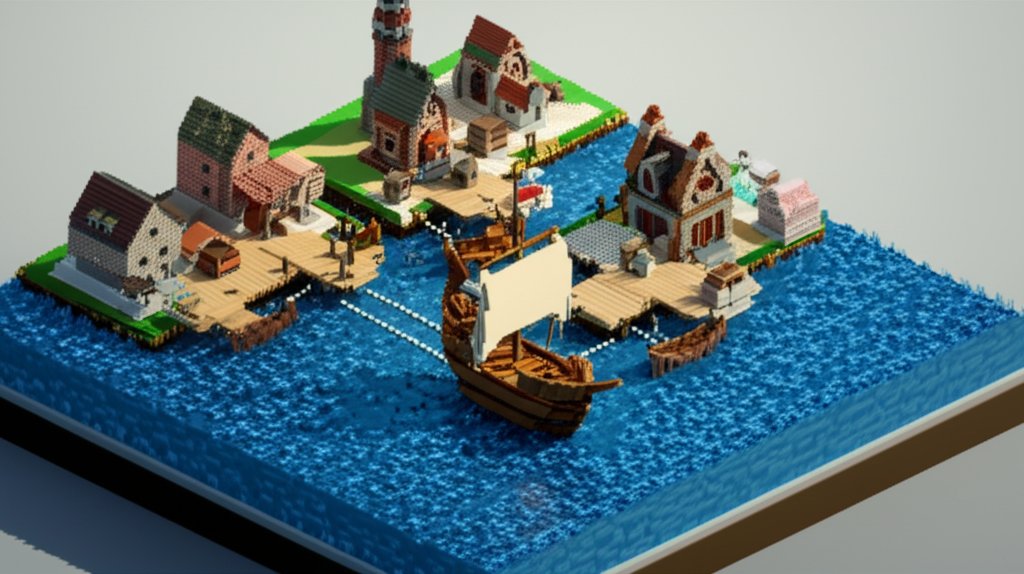
Often viewed as distinct historical entities, the Hanseatic League, a formidable medieval trade network in Northern Europe, and the legendary Silk Road, spanning vast swathes of Asia, might seem unconnected. Yet, to dismiss their relationship as nonexistent is to overlook a subtle, profound interplay that shaped global commerce for centuries. While Hanseatic merchants never directly traversed the treacherous passes of Central Asia or sailed the monsoon-driven routes of the Maritime Silk Road, their economic prowess and innovative practices created a powerful ripple effect. This article delves into the unseen ways the Hanseatic League significantly, albeit indirectly, influenced the Silk Road’s trajectory, fueling demand for Eastern Goods and even catalyzing the Age of Exploration.
The Hanseatic League’s Economic Engine in Northern Europe
To understand the League’s distant reach, one must first appreciate its immense power closer to home. From the 13th to the 17th centuries, the Hanseatic League forged an unparalleled trade network across the Baltic and North Seas, dominating commerce from London to Novgorod. This confederation of merchant guilds and market towns, primarily in modern-day Germany, exerted significant political and economic influence, transforming the landscape of Northern Europe.
Dominance of Baltic and North Sea Trade
The League’s primary operations centered on essential goods: timber, grain, fish (especially herring), salt, furs, wax, and metal ores. By establishing trading posts (kontors) in key cities like Bergen, Bruges, London, and Novgorod, they created a tightly controlled and highly efficient system for the exchange of these bulk commodities. This dominance secured vital resources for developing European economies and generated substantial wealth for Hanseatic cities such as Lübeck, Hamburg, and Bremen. The sheer volume and consistency of this trade laid the foundation for an unprecedented accumulation of capital in Northern Europe.
Standardization and Security: Foundations of Prosperity
One of the League’s enduring legacies was its commitment to standardizing trade practices. They implemented common laws, weights, measures, and currencies, fostering trust and predictability in transactions across their vast trade network. Critically, the League also maintained its own naval protection, effectively policing the seas against piracy and ensuring safe passage for its merchant convoys. This reduction of risk and friction in trade was revolutionary, enabling merchants to operate with greater confidence and efficiency, further expanding their commercial ventures.
Urban Development and a Thriving Mercantile Class
The economic prosperity generated by the Hanseatic League directly fueled the growth of its member cities. These urban centers became hubs of innovation, craftsmanship, and cultural exchange. A burgeoning mercantile class emerged, characterized by its entrepreneurial spirit and accumulated wealth. This wealth, in turn, created a new demographic of consumers in Northern Europe with discretionary income and a growing appetite for luxury items, setting the stage for the League’s indirect impact on the Silk Road.
Fueling the Farthest Frontiers: Demand for Eastern Goods
While the Hanseatic League did not directly import spices or silks from Asia, its success created a vibrant market that pulled these exotic commodities westward, acting as a powerful magnet for Eastern Goods.
From Local Wealth to Global Desires
As Hanseatic cities prospered and their merchants grew wealthy, the demand for goods beyond practical necessities naturally escalated. The newly affluent populations of Northern Europe desired status symbols and exotic luxuries that only distant lands could provide. This burgeoning consumer base became a critical, albeit distant, engine driving the demand for goods imported via the Silk Road. silks from China, spices from India and the Indonesian archipelago, precious stones, porcelain, and aromatics became highly coveted items, moving from the Mediterranean hubs further north.
The Indirect Conduit for Eastern Goods
The Silk Road goods did not magically appear in Hanseatic warehouses. Instead, they traveled through multiple intermediaries. Italian city-states like Venice and Genoa were the primary European gateways for Asian luxuries, receiving shipments via the overland Silk Road or the burgeoning maritime routes across the Indian Ocean and Red Sea. From these Italian ports, spices, silks, and other Eastern Goods flowed northward through established overland and riverine routes, eventually reaching the Hanseatic trade network. The wealth concentrated in Northern Europe ensured that these goods, despite high markups from multiple handlers, found a ready and eager market. The Hanseatic demand effectively extended the commercial reach of the Silk Road deep into the continent.
Luxury Consumption and Social Status
For the burgeoning urban elite of Northern Europe, owning Eastern Goods was not just about utility or pleasure; it was a potent symbol of wealth, power, and social standing. Exotic spices transformed bland diets and served as medicinal compounds, while fine silks and brocades adorned the wealthy, differentiating them from the common populace. This social imperative intensified the demand, creating a strong economic incentive for merchants in the Mediterranean to acquire and transport these precious items, thereby invigorating the entire Silk Road supply chain.
Strengthening Western Links: The Silk Road’s European Terminus

The sophisticated trade network of the Hanseatic League didn’t just generate demand; it also enhanced the efficiency of the westernmost extensions of the Silk Road, improving the final leg of the journey for precious Eastern Goods reaching Northern Europe.
Hanseatic Hubs and the Extended Trade Network
Hanseatic cities and their trading partners, particularly those in Flanders (like Bruges), served as crucial nodes in wider European commerce. Bruges, for instance, connected the Hanseatic trade network with the more southerly European routes, including those leading to the Italian city-states. This interconnection meant that goods arriving in Venice or Genoa from the Silk Road could be efficiently distributed throughout Europe, including the Hanseatic sphere of influence. The League’s reputation for safe and structured trade made these western routes more reliable and attractive for the onward movement of valuable commodities.
Facilitating the Flow of Asian Treasures
The organizational prowess of the Hanseatic League indirectly contributed to a smoother flow of goods from East to West. Their emphasis on secure transport, legal frameworks, and commercial arbitration, though primarily applied within their own network, set a precedent and influenced broader European trade practices. Merchants moving Eastern Goods across Europe benefited from improved infrastructure, more standardized commercial laws emerging across the continent, and safer routes – influences partly driven by the League’s operational standards and the need to connect to its lucrative markets.
Innovations in Maritime and Overland Connections
The League’s own innovations in shipbuilding (e.g., the cog, a sturdy cargo vessel) and navigation, coupled with their extensive network of ports, streamlined maritime transport in Northern Europe. While not directly sailing to Asia, these advancements in transport logistics rippled through the European system, making the final leg of the Silk Road journey more efficient. The overland routes connecting the Mediterranean to Northern Europe also saw improvements, as the continuous flow of goods demanded better roads, bridges, and waystations, all indirectly maintained by the overarching European demand sustained by the Hanseatic wealth.
The Age of Exploration and the Shifting Silk Road Paradigm
Perhaps the most dramatic, yet indirect, consequence of the Hanseatic League’s success was its unwitting role as a catalyst for the Age of Exploration, which fundamentally altered the fate of the overland Silk Road.
Hanseatic Prosperity as a Catalyst
The visible wealth and economic power accumulated by the Hanseatic League in Northern Europe did not go unnoticed by emerging nation-states like Portugal, Spain, England, and France. Witnessing the immense profits generated by controlling trade routes and access to goods, these nations were spurred to seek their own direct routes to the lucrative markets of the East. The Hanseatic model demonstrated the immense power of a well-organized trade network, inspiring others to replicate and surpass its achievements on a global scale.
Bypassing Intermediaries: The Quest for Direct Access to Eastern Goods
The indirect nature of the Silk Road trade meant that Eastern Goods passed through many hands – Arab, Persian, Central Asian, and Italian merchants – each adding a significant markup. This layered system was profitable for those involved but made the goods incredibly expensive by the time they reached Northern Europe. European powers dreamed of bypassing these intermediaries to establish direct maritime routes to Asia, cutting costs and monopolizing the spice and silk trade. The desire for direct access to Eastern Goods, fueled by the observable prosperity of existing trade, became a primary driver for voyages like those of Vasco da Gama and Christopher Columbus.
The Overland Silk Road’s Evolving Role
The success of these new maritime routes, particularly the Portuguese circumnavigation of Africa and the eventual Spanish control of trans-Pacific trade, gradually diminished the dominance of the traditional overland Silk Road. While it never fully disappeared and saw periodic resurgences, the bulk of high-value Eastern Goods began to travel by sea. The Hanseatic League’s indirect pressure of demand and its demonstration of successful trade networks played a critical, if unintended, role in this momentous shift, redirecting global trade flows and ushering in a new era of maritime empires.
Financial Acumen and the Global Trade Network

Beyond the physical movement of goods, the Hanseatic League also pioneered financial innovations that would become hallmarks of later global commerce, indirectly influencing practices associated with the wider trade network of the Silk Road.
Bills of Exchange and Credit Systems
The League’s extensive long-distance trade necessitated sophisticated financial instruments. They were early adopters and innovators of bills of exchange, allowing merchants to trade without carrying large amounts of specie, thereby reducing the risk of theft and facilitating larger transactions across their trade network. They also developed early forms of credit and insurance, further stabilizing trade. These systems were primarily for their internal use but demonstrated effectiveness that inspired similar developments elsewhere in Europe.
Influence on Pan-European Commerce
As the Hanseatic model proved successful, its financial innovations diffused across Europe. The efficiency and security offered by bills of exchange, for example, spread to other major European trading centers, including those that served as transit points for Silk Road goods. While not directly applied to transactions on the Silk Road itself, these advanced financial tools in Europe made the ultimate destination of Eastern Goods a more financially viable and sophisticated market. This laid groundwork for the complex financial structures that would support the later, truly global trade networks.
A Precedent for Future Global Finance
The Hanseatic League’s contribution to standardized business practices, commercial law, and financial instruments created a blueprint for future pan-European and ultimately global trade. Their influence helped to cultivate an environment where trust and predictability in complex, cross-cultural transactions could flourish. This institutional legacy indirectly supported the eventual expansion of European powers into Asian markets, and the financing of these new routes and trade relationships benefited from the precedents set by formidable medieval trade networks like the Hanseatic League.
The Hanseatic League’s success in accumulating capital and fostering trade innovation, in turn, likely influenced the financial mechanisms utilized further east, as detailed in this exploration of how credit was commercially practiced, informing trade practices even along the Silk Roads.
Conclusion
The Hanseatic League and the Silk Road represent two monumental forces in medieval global commerce. While their geographical centers and primary goods differed, their narratives are far from separate. The League’s robust trade network in Northern Europe created an unprecedented demand for Eastern Goods, subtly tugging the flow of silks, spices, and porcelain further west. Its economic success and innovative practices, in turn, served as a powerful inspiration for European powers to seek direct access to Asian markets, ultimately altering the very routes of the Silk Road and ushering in a new age of exploration. The Hanseatic League stands as an unsung, indirect architect of the Silk Road’s evolution, demonstrating that even geographically distant forces can weave together to shape the grand tapestry of human history and trade.
Frequently Asked Questions (FAQ)
Q1: What was the primary focus of the Hanseatic League’s trade?
The Hanseatic League primarily focused on staple goods crucial for Northern Europe, such as timber, grain, fish (especially salted herring), salt, furs, wax, and metal ores. Their trade network dominated the Baltic and North Seas, connecting coastal cities and inland regions.
Q2: How did goods from the Silk Road reach Hanseatic cities?
Eastern Goods from the Silk Road reached Hanseatic cities through a chain of intermediaries. These goods typically arrived in Italian city-states like Venice and Genoa from the Levant and Byzantium. From there, they were transported overland through Central Europe or via maritime routes through the Strait of Gibraltar and up the Atlantic coast, eventually joining the wider European trade network that connected to Hanseatic hubs.
Q3: Did the Hanseatic League directly compete with Silk Road merchants?
No, the Hanseatic League did not directly compete with Silk Road merchants. They operated in distinct geographical spheres and traded primarily in different types of goods. The League focused on bulk commodities in Northern Europe, while Silk Road merchants dealt in high-value luxury Eastern Goods across Eurasia. Their relationship was more one of indirect demand and supply.
Q4: What was the Hanseatic League’s most significant indirect impact on the Silk Road?
The Hanseatic League’s most significant indirect impact was two-fold:
Q5: When did the Hanseatic League operate, and how did its decline relate to global trade?
The Hanseatic League was most influential from the 13th to the 15th centuries, gradually declining in the 16th and 17th centuries. Its decline coincided with the rise of powerful nation-states that established their own direct overseas trade routes and the shifting geopolitical landscape. The new maritime routes to Asia, spurred in part by the demand for Eastern Goods exemplified by markets like those in Northern Europe, redirected global trade away from the League’s traditional sphere and the traditional overland Silk Road, favoring oceanic empires.










