Ever wondered what it takes to bring vibrant characters, breathtaking worlds, and captivating stories to life? Welcome to the thrilling realm of animation careers, where imagination isn’t just encouraged—it’s the very foundation! For anyone curious about the magic behind the screen, exploring the world of an animator career is an exhilarating journey. This isn’t just about drawing cute cartoons; it’s a dynamic, technologically advanced industry offering a kaleidoscope of pathways.
Prepare to have your mind blown as we unveil a treasure trove of animation fun facts and dive deep into the diverse careers in animation. From the earliest pioneers sketching frame by frame to the cutting-edge studios pushing digital boundaries, we’ll explore the intricate artistry, the collaborative spirit, and the sheer dedication that shapes every animated masterpiece. If you’ve ever dreamt of contributing to the next big blockbusters, games, or immersive experiences, then buckle up – your adventure into animation starts now!
The Dynamic World of Animation Careers: More Than Just Cartoons
When most people think about animation careers, they often picture traditional hand-drawn cartoons for children. While this is certainly a cherished part of the industry, it represents only a tiny fraction of the incredible opportunities available. The animation landscape is vastly diverse, continually evolving, and deeply integrated into countless aspects of modern media.
Fact 1: Animation’s Global Reach and Versatility
Animation isn’t confined to a single genre or demographic. It’s a universal language used across film, television, video games, advertising, education, architectural visualization, medical simulations, virtual reality (VR), augmented reality (AR), and even forensic science. An animation career today might mean crafting epic battle sequences for a AAA video game, designing engaging educational content, or creating lifelike digital doubles for live-action films. This versatility also means that animators are in demand across the globe, from Hollywood to Hyderabad, Tokyo to Toronto.
Fact 2: Beyond Entertainment – Unexpected Animation Industries
Think animation is just for fun? Think again! Many careers in animation exist in sectors you might not immediately consider:
- Medical Visualization: Animators create detailed 3D models of organs, cells, and procedures, helping surgeons train, educating patients, and advancing scientific research.
- Forensic Animation: Recreating crime scenes or accidents with precise 3D animation to aid legal proceedings.
- Architectural Walkthroughs: Architects and real estate developers use animation to give clients virtual tours of buildings and spaces before they’re built.
- Product Prototyping: Industrial designers animate prototypes to test functionality and visualize aesthetics without physical manufacturing.
- Virtual Reality (VR) / Augmented Reality (AR): Animators are at the forefront of designing immersive experiences for training, tourism, gaming, and social platforms.
These examples highlight how an animator career demands not just artistic skill but also problem-solving abilities and a keen understanding of diverse subject matters.
Unveiling the Animator’s Journey: Craft, Creativity, and Collaboration
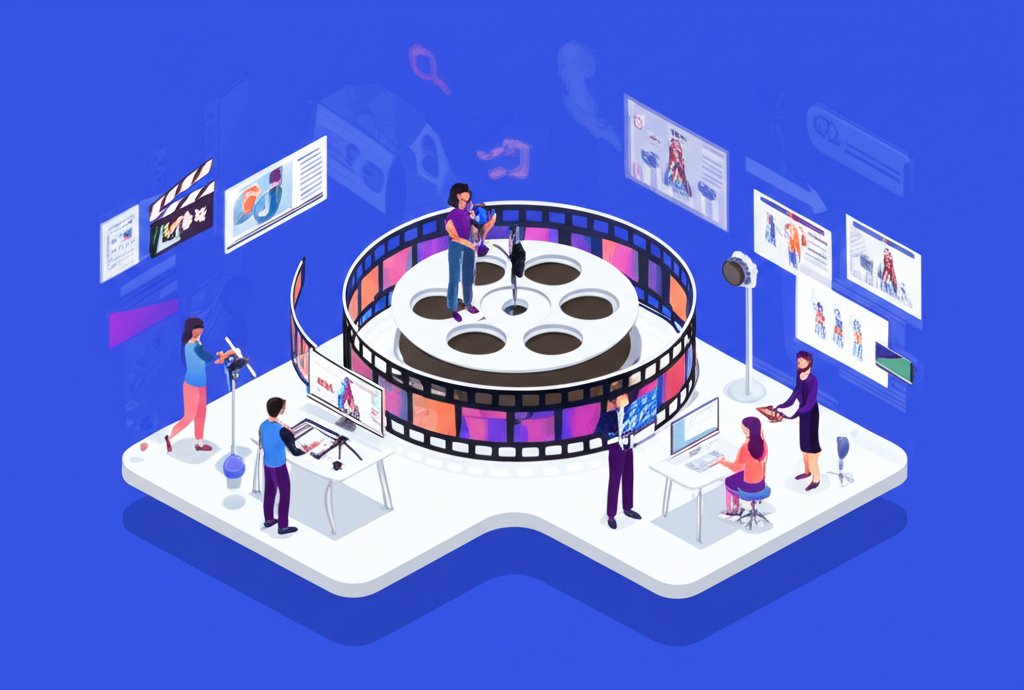
The path to an animator career is often depicted as a solitary artist toiling away. While individual skill is paramount, the reality of most contemporary animation careers is deeply collaborative. It’s a symphony of creative minds working in harmony.
Fact 3: The Myth of the “Overnight Success” Animator
One of the most valuable animation fun facts for aspiring professionals is that mastery takes time. A single second of 2D animation typically requires 12 or 24 individual drawings (frames per second), while 3D animation involves countless keyframes and intricate software manipulation. The iconic “walk cycle” that seems simple on screen can take hours, even days, to perfect. This meticulous process underscores the patience, attention to detail, and sheer dedication required for an animation career. There are no shortcuts to becoming a master of motion; it’s a journey fueled by continuous learning and practice.
Fact 4: From Pencil to Pixels: The Evolution of Animator Tools
The tools of the trade have seen a mind-blowing transformation. Early animators like Winsor McCay (creator of Gertie the Dinosaur) drew thousands of frames by hand. Today, while hand-drawn techniques endure, software like Autodesk Maya, Blender, Toon Boom Harmony, Adobe After Effects, and ZBrush are standard. However, the core principles of animation – timing, spacing, weight, anticipation – remain unchanged. A good animator can adapt to new technology because they understand why things move the way they do, not just how to make the software move them. This fusion of traditional artistry with modern tech is a hallmark of the modern animator career.
Fact 5: The “Invisible” Team Behind Every Frame
Beyond the lead animators, an animated production involves a vast network of specialists, each critical to the final product. Imagine a live-action film set, but instead of actors and physical props, every element is digitally crafted. This includes:
- Concept Artists: Visualizing the world and characters.
- Storyboard Artists: Translating the script into visual narratives.
- Layout Artists: Composing shots and defining camera movement.
- Modelers: Sculpting characters and environments in 3D.
- Riggers: Creating the “skeleton” and controls that allow characters to be animated.
- Texturing Artists: Painting realistic or stylized surfaces.
- Lighting Artists: Illuminating scenes to evoke mood and depth.
- FX Animators: Creating explosions, water, fire, and other natural phenomena.
- Compositors: Blending all the rendered layers into a final image.
- Editors & Sound Engineers: Bringing it all together.
Each of these roles represents a specialized animation career path, highlighting the incredible collaboration required to produce a seamless animated experience.
Mind-Blowing Milestones: History & Innovation in Animation
Understanding the history of animation reveals incredible ingenuity and provides context for how animation careers have evolved. Some of the animation fun facts from history truly underscore the pioneering spirit of animators.
Fun Fact 6: The Actual First Animated Feature Film (Correcting a Common Misconception)
While Disney’s Snow White and the Seven Dwarfs (1937) is often mistakenly cited as the first animated feature, the true pioneer was Lotte Reiniger’s The Adventures of Prince Achmed from 1926. This German silhouette animation masterpiece, created using cut paper and shot frame-by-frame, predates Snow White by over a decade. It’s a testament to early animators’ boundless creativity and determination with limited resources, showcasing that groundbreaking careers in animation existed long before mainstream recognition.
Fun Fact 7: Rotoscoping’s Surprising Origins and Modern Comeback
Rotoscoping, a technique where animators trace over live-action footage frame by frame, was invented by Max Fleischer in 1915. He famously used it for his Out of the Inkwell series to animate characters like Koko the Clown with incredibly fluid movement. While some early attempts at feature-length animation did use forms of rotoscoping, it was often rudimentary. Today, rotoscoping has found a new life in digital tools, used not just for character animation but also extensively in visual effects to extract elements from live-action footage (e.g., for creating masks or matte lines) – a crucial skill in many modern animation careers.
Fun Fact 8: The Birth of CGI: A Star Wars Legacy
Computer-Generated Imagery (CGI) is synonymous with modern animation, but its origins are rooted in a galaxy far, far away. The first fully computer-generated sequence in a feature film appeared in Star Wars: Episode IV – A New Hope (1977): the wireframe animation of the Death Star plans. This landmark moment, created by the company that would later become Pixar, marked the beginning of a paradigm shift for animation careers, opening doors to entirely new forms of visual storytelling and technical artistry.
Diverse Careers in Animation: Your Path to Bringing Worlds to Life
The range of animation careers is vast, each demanding a unique blend of technical skill, artistic vision, and problem-solving ability. Let’s explore some of the most prominent roles that define an animator career today.
As you explore these varied roles, remember that finding the perfect animation job often starts with a powerful search using AI-driven tools like our job board, which can help you pinpoint opportunities that align with your specific skills and interests.
Storyboard Artists: The Architects of Narrative
What they do: These artists are the first visualizers of a story. They translate script pages into a series of comic-book-like panels, outlining camera angles, character expressions, actions, and pacing.
Why it’s mind-blowing: A great storyboard can convey emotion and action more effectively than pages of text, serving as the visual blueprint for the entire production. They essentially direct the film on paper.
Skills needed: Strong drawing skills, understanding of cinematography, visual storytelling, quick ideation.
Character Designers: Giving Life to Imagination
What they do: Character designers create the appearance of all animated characters, from main protagonists to background extras. They ensure the design communicates personality, background, and function within the story.
Why it’s mind-blowing: They don’t just draw; they psychoanalyze. Every line, shape, and color choice contributes to a character’s appeal and relatability, even before they move.
Skills needed: Exceptional drawing and sculpting skills, understanding of anatomy (human and animal), color theory, strong sense of design and appeal.
3D Modelers & Riggers: Sculpting Digital Realities
What they do: Modelers build the 3D characters, props, and environments from scratch using software. Riggers then create the “digital skeleton” and control system (the “rig”) that allows animators to manipulate the models.
Why it’s mind-blowing: Riggers are often called “technical sculptors.” They build complex systems of joints, controls, and deformation tools that make a digital puppet expressive and easy for animators to use. Without a good rig, even the best model can’t move convincingly.
Skills needed (Modeler): Sculpting (digital and traditional), understanding of form and topology, software proficiency (Maya, Blender, ZBrush).
Skills needed (Rigger): Strong understanding of anatomy, programming/scripting skills, problem-solving, attention to detail.
Animators (2D/3D/Stop-Motion): The Masters of Motion
What they do: These are the artists who bring characters and objects to life, frame by frame. They imbue motion with personality, emotion, and physical believability.
Why it’s mind-blowing: A great animator can make an audience feel sympathy for a bouncing ball or terror from a shadow. They are virtual actors, often performing the scenes themselves to understand character motivation and physical mechanics.
Skills needed: Deep understanding of the 12 principles of animation, keen observation of movement (human and animal), timing, acting skills, software proficiency (Toon Boom, Maya, Blender, After Effects).
Visual Effects (VFX) Artists: The Illusion We Crave
What they do: VFX artists create elements that are integrated into live-action footage or purely animated scenes to enhance realism or create fantastical imagery. This can include anything from explosions and magical spells to realistic fur and water simulations.
Why it’s mind-blowing: They often work on the edge of what’s technologically possible, blurring the lines between reality and imagination. Many an “impossible” shot in live-action films is entirely due to the skill of a VFX artist.
Skills needed: Strong grasp of physics, understanding of particle systems, fluid dynamics, lighting, compositing, software proficiency (Houdini, Nuke, Maya).
Motion Graphics Designers: Animation in Action
What they do: Motion graphics designers create animated text, logos, and graphic elements for commercials, title sequences, infographics, and digital interfaces.
Why it’s mind-blowing: They tell stories in concise, visually arresting ways, often transforming abstract data or brand messages into dynamic, engaging visuals. Look at any modern news broadcast or app interface, and you’ll see their work.
Skills needed: Graphic design principles, typography, color theory, animation principles, software proficiency (After Effects, Cinema 4D, Photoshop, Illustrator).
Technical Directors & Pipeline TDs: The Unsung Heroes
What they do: Technical Directors (TDs) and Pipeline TDs are the bridge between artistic vision and technical execution. They develop tools, scripts, and workflows to optimize the animation production process, troubleshoot issues, and ensure seamless data flow between departments.
Why it’s mind-blowing: These roles are vital for large productions, essentially building the digital highways that allow all the other artists to do their work efficiently. They integrate coding expertise with an understanding of animation.
Skills needed: Programming skills (Python, C++), understanding of production pipelines, problem-solving, communication, an interest in both art and technology.
Essential Skills and the Future of an Animator Career
Embarking on an animator career requires more than just raw talent. It demands a specific skill set and a continuous commitment to learning. Understanding these needs is key to establishing and advancing in the dynamic world of animation careers.
Beyond Drawing: Core Skills for Animation Careers
While drawing is a foundational skill, it’s just one piece of the puzzle. Other critical skills for an animation career include:
- Observation: The ability to keenly observe real-world movement, anatomy, and human behavior is paramount to creating believable animation.
- Storytelling: Understanding narrative structure, character arcs, and how to convey emotion through visuals.
- Technological Proficiency: Mastery of industry-standard software and a willingness to adapt to new tools and techniques.
- Collaboration & Communication: Animation is a team sport. Being able to give and receive constructive feedback is crucial.
- Patience & Perseverance: The animation process is iterative and often demanding. Deadlines are tight, and revisions are common.
- Problem-Solving: Animators constantly face technical and creative challenges that require innovative solutions.
- Time Management: Organizing tasks and meeting deadlines efficiently.
- Adaptability: The industry evolves rapidly, requiring animators to continuously learn new software, techniques, and trends.
Developing a strong portfolio showcasing these diverse skills is perhaps the most important step for anyone pursuing animation careers.
The Future is Bright: Emerging Trends in Animation
The future of an animator career is incredibly exciting, with new technologies constantly expanding possibilities:
- Real-Time Animation: Tools like Unreal Engine and Unity allow for animation to be rendered and viewed instantly, revolutionizing production workflows for games, virtual production, and even film.
- Artificial Intelligence (AI) and Machine Learning (ML): AI is beginning to assist with tasks like automatic rigging, motion capture clean-up, and even generating preliminary animations, freeing up animators for more creative tasks.
- Virtual Production: Combining live-action performances with virtual sets and real-time animation, often seen in shows like The Mandalorian.
- Immersive Experiences (VR/AR/XR): As these technologies mature, the demand for animators who can create interactive, spatial animated content will skyrocket.
- Generative Art: While still nascent, the ability to generate animated elements through code opens new creative avenues.
These trends mean that future animation careers will likely require a blend of traditional artistic skills with a strong understanding of technology and computational thinking. The learning never stops, and that’s one of the most exciting animation fun facts about this dynamic profession!
Conclusion: Crafting Your Legacy in the World of Animation
The world of animation is a vast, exhilarating, and constantly evolving frontier. Far from being a niche pursuit, it offers a wealth of animation careers that blend artistic talent with cutting-edge technology. From the foundational animation fun facts of its rich history to the mind-blowing innovations shaping its future, the journey of an animator career is one of continuous creation, collaboration, and learning.
Whether you dream of sculpting fantastical creatures, directing epic narratives, or designing the next generation of interactive experiences, the skills and dedication you cultivate will enable you to bring your unique vision to life. The demand for skilled animators is stronger than ever, and the opportunities for those passionate about visual storytelling are truly limitless. So, if you’re ready to embrace the challenge and unleash your creativity, the world of animation eagerly awaits your unique contribution.
FAQ

Q: What are the most common entry-level animation careers?
A: Entry-level animation careers often include roles like Junior Animator, Rigger, Modeler, Texture Artist, or Production Assistant. Building a strong portfolio is crucial for securing these positions.
Q: How important is a formal education for an animator career?
A: While a formal degree from an animation school can provide structured learning, networking, and portfolio development, it’s not strictly mandatory. Many successful animators are self-taught or learn through online courses. A strong portfolio showcasing your skills and understanding of animation principles is ultimately what employers prioritize.
Q: What is the average salary for animation careers?
A: Salaries for careers in animation vary widely based on experience, location, studio size, and specific role. Entry-level positions might start from $40,000-$50,000 annually, while experienced lead animators or supervisors can earn $100,000+ per year. These figures are general and subject to change.
Q: Is the animation industry stable, or are jobs project-based?
A: The animation career landscape offers a mix. Large studios often have permanent positions, but many projects (especially in film and VFX) rely on contract-based employment. This means animators might move between studios for different productions. Building a strong network and keeping your skills updated is key for career stability.
Q: What’s one “mind-blowing” fact about the process of animation?
A: Here’s a true animation fun fact: To achieve realistic movement and capture subtle expressions, animators often act out their scenes in front of a mirror or record themselves. They essentially become the actors for their animated characters, translating their physical performance into the digital realm, frame by painstaking frame.










