
The year 1688 marks an epochal moment in English history, a period of profound political and constitutional transformation often celebrated as the Glorious Revolution of 1688. It was a dramatic, largely bloodless transfer of power within England that irrevocably shifted the balance from an absolute monarchy towards a parliamentary system. This pivotal event, which saw the dethronement of King James II and the ascension of William of Orange and Mary II, unequivocally demonstrated that the Glorious Revolution of 1688 demonstrated that Parliament had asserted its ultimate supremacy. Far more than a mere change of monarchs, the 1688 revolution England sparked a constitutional revolution that redefined governance, cemented fundamental liberties, and set enduring precedents for modern democracy. This comprehensive article delves into the intricate causes, unfolding events, profound consequences, and the lasting global legacy of the 1688 revolution in England, illustrating how Parliament’s audacious power play secured its position as the ultimate authority.
Roots of Conflict: The Road to the 1688 Revolution England
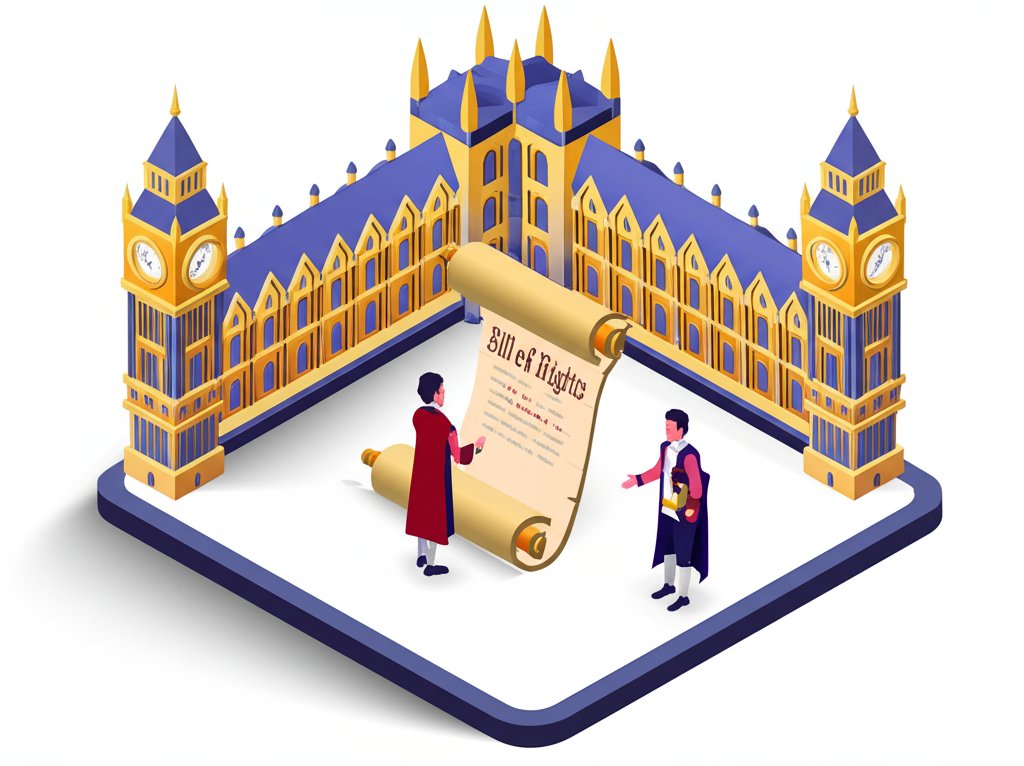
The revolution of 1688 was not an isolated incident but the culmination of decades of simmering religious and political tensions. The 17th century had witnessed a prolonged struggle between the Crown and Parliament, primarily over questions of power, religion, and the very nature of governance.
The Stuart Legacy: A Century of Strife
For much of the 17th century, England was locked in a constitutional battle. The Stuart monarchs, beginning with James I, espoused the doctrine of the Divine Right of Kings, asserting absolute authority bestowed by God. This ideological stance frequently brought them into direct conflict with Parliament, which sought to defend its ancient rights, particularly concerning taxation and law-making.
The clash between the Stuart monarchs and Parliament also highlighted the evolving legal landscape, eventually leading to increased calls for the comprehensive codification of rules in England to better define the limits of royal prerogative and parliamentary power.
This power struggle famously erupted into the English Civil War (1642-1651), resulting in the execution of Charles I and a brief experiment with a republican Commonwealth under Oliver Cromwell. While the monarchy was restored with Charles II in 1660, the fundamental issues remained unresolved. Parliament, having tasted sovereignty, was unwilling to revert to a subordinate role. Charles II, though a Catholic sympathizer, navigated this complex landscape with pragmatism, often clashing with Parliament over his pro-French foreign policy and tolerance for Catholicism, notably during the Exclusion Crisis of 1678-1681 which sought to prevent his Catholic brother, James, from inheriting the throne. This historical backdrop, infused with memories of civil war and constitutional deadlock, is crucial for understanding why the 1688 revolution England ultimately unfolded with Parliament ready to act decisively.
James II’s Policies: From Suspicion to Alarm
The true catalyst for the 1688 Revolution arrived with the accession of James II in 1685. James, an avowed Catholic, inherited a deeply Protestant nation still scarred by memories of Marian persecution and the Catholic-led Gunpowder Plot. Initially, there was a grudging acceptance under the assumption that his reign would be short and followed by his Protestant daughter, Mary. However, James’s actions quickly eroded this fragile trust:
- Open Catholicism and Promotion of Catholics: James openly practiced his faith and systematically attempted to promote Catholics to positions of power in the army, government, and universities. This bypassed the Test Acts (1673, 1678), parliamentary statutes that barred non-Anglicans from public office, explicitly to prevent Catholics from holding power. His use of the “dispensing power”—the royal prerogative to exempt individuals from laws—to allow Catholic officers into the army was particularly alarming, suggesting he intended to rule above parliamentary statute.
- A Growing Standing Army: James substantially increased the size of the standing army, stationing it at Hounslow Heath near London. In a nation deeply suspicious of standing armies (a lesson learned from Cromwell’s military rule), this was seen by many Protestants as a tool to enforce royal absolutism and potentially Catholicism, mirroring the tactics of his cousin, Louis XIV of France.
- Declarations of Indulgence: In 1687 and 1688, James issued Declarations of Indulgence, suspending penal laws against both Catholics and Protestant Dissenters. While framed as a move towards religious tolerance, the method was deeply problematic. By suspending laws passed by Parliament using royal prerogative, James signaled his willingness to override the legislative authority of Parliament, a direct affront to its perceived constitutional rights.
- Dissolving Parliament: Frustrated by parliamentary opposition to his policies, James dissolved Parliament in 1687 and made attempts to “pack” a new one with his supporters, efforts that largely failed and only deepened mistrust. His actions mirrored those of his father, Charles I, before the Civil War, igniting fears of a return to absolute rule without parliamentary consent.
These policies fueled widespread fears among the Protestant majority that James was determined to re-Catholicize England and establish a French-style absolute monarchy, fundamentally undoing the hard-won constitutional gains of the century.
The Dynastic Trigger: A Catholic Heir
The final, explosive spark that ignited widespread opposition and transformed simmering discontent into a full-blown crisis was the birth of James Francis Edward Stuart on June 10, 1688. Until this point, James II had two Protestant daughters, Mary and Anne, from his first marriage. Mary was married to William of Orange, the Protestant Stadtholder of the Dutch Republic. The succession of a Protestant heir seemed assured, providing a future “correction” to James’s policies.
The arrival of a healthy male Catholic heir instantly shattered this expectation. It meant the potential for a permanent Catholic dynasty in England, reversing the Reformation and solidifying absolute rule. The fear was that this son would be raised Catholic and continue his father’s policies indefinitely, effectively extinguishing Protestantism and parliamentary liberties. This event compelled leading figures across the political spectrum—Whigs and Tories alike—to consider drastic measures to protect the Protestant succession and parliamentary constitutionalism.
The Crisis Unfolds: James II’s Ambitions and the Call to William
With the birth of a Catholic heir, English grandees realized that their avenues for containing James II’s perceived absolutist and pro-Catholic agenda through legal or political means were exhausted. Their only recourse seemed to be foreign intervention, strategically channeled through William of Orange.
Geo-Political Chessboard: William of Orange’s Motivations
William of Orange was not a disinterested observer. As Stadtholder of the Dutch Republic, he was deeply preoccupied with the growing hegemony of Catholic France under Louis XIV, whose expansionist ambitions posed an existential threat to Dutch independence. James II’s increasingly pro-French foreign policy, his attempts to build a powerful standing army and navy, and the potential for an Anglo-French alliance were viewed with profound alarm by William. Such an alliance could easily overwhelm the Dutch Republic.
William saw the turmoil in England as a strategic, indeed essential, opportunity. By intervening, he could achieve several crucial objectives that aligned perfectly with English Protestant and parliamentary concerns:
- Secure England as a Protestant Ally: A Protestant England would be a natural ally against Catholic France, shifting the European balance of power.
- Neutralize the Anglo-French Threat: By preempting James II, William could prevent England from joining forces with France against the Dutch.
- Protect the Protestant Succession: This aligned with his wife Mary’s claim to the throne and ensured a Protestant line in England.
- Access English Resources: English military and naval power could be leveraged in the wider European conflict against France.
This was a calculated, high-stakes gamble driven by both the internal English constitutional crisis and the broader geopolitical landscape of late 17th-century Europe. The glorious revolution of 1688 thus had significant international dimensions, framed within the context of the impending Nine Years’ War.
The Invitation of the Immortal Seven: A Legitimizing Plea
On June 30, 1688, a secret letter, later known as the “Invitation to William,” was dispatched to William of Orange. This document was signed by seven prominent Englishmen—four Whig peers, two Tory peers, and the Bishop of London—who became known as the “Immortal Seven.” Their plea urged William to intervene militarily to protect English Protestantism and liberties, assuring him of substantial support upon his arrival.
The invitation was carefully worded. It was not a call for conquest or to depose a legitimate king unilaterally. Instead, it was an appeal for intervention to rectify a perceived constitutional crisis, arguing that James II had, by his actions, dissolved the bonds between monarch and people. This invitation served as a critical legitimizing factor for William’s subsequent invasion, framing it not as an act of aggression but as a response to a genuine request from the English political establishment. It underscored a fundamental principle: that the monarch’s authority was conditional and could be challenged if abused, further laying the groundwork for how the Glorious Revolution of 1688 demonstrated that Parliament had the right to alter the succession.
Preparations and Propaganda: Building the Invasion Force
Upon receiving the invitation, William meticulously began preparations for what would be one of the largest seaborne invasions in history before D-Day. He gathered a formidable Dutch expeditionary force, comprising around 15,000 soldiers (including Dutch, German, and French Huguenot mercenaries), and a massive fleet of nearly 500 ships.
Crucially, William engaged in an extensive propaganda campaign. He issued declarations justifying his intervention, emphasizing that he was coming not to conquer but to secure a free Parliament and protect Protestant liberties, responding to the pleas of the English nation. These declarations were widely circulated in England, undermining James’s authority and preparing the ground for William’s arrival. His careful orchestration of public opinion and military might ensured that when he landed, he would be perceived as a liberator rather than an inv invader, further weakening James II’s already fragile support base.
William’s Arrival and Parliament’s Assertion: The Glorious Revolution of 1688 in Action

Armed with the invitation and motivated by both English constitutional concerns and strategic necessity, William of Orange’s invasion began. What followed was a swift, almost surreal unfolding of events that saw a sitting monarch effectively deposed without a major battle on English soil, a characteristic that lent the glorious revolution of 1688 its “bloodless” moniker within England.
The Bloodless March: James II’s Authority Crumbles
On November 5, 1688, William of Orange landed his forces at Brixham in Torbay, Devon. His march inland was met with remarkably little resistance and growing support. Critically, key figures within the English establishment quickly abandoned James II. Nobles, bishops, and military officers, including James’s own nephew and son-in-law, Prince George of Denmark, and his most trusted general, John Churchill (later Duke of Marlborough), defected to William’s banner. Even James’s younger Protestant daughter, Anne, fled to join William’s supporters.
James II, already deeply unpopular and isolated by his own policies, found his army’s loyalty crumbling. He attempted to rally his forces, but with widespread desertion and betrayal, his resolve fractured. Faced with overwhelming opposition and personal despair, James made two attempts to flee the country. The first, in early December, was unsuccessful, but the second, on December 23, 1688, saw him successfully escape to France, where he was granted asylum by his cousin, Louis XIV. James’s flight was a critical turning point. It allowed the English Parliament to declare that he had “abdicated” the throne by deserting his kingdom, rather than being explicitly deposed. This avoided the thorny legal and moral questions surrounding regicide, which had haunted England since the execution of Charles I.
The Convention Parliament: Defining a Vacant Throne
With James II gone, England found itself in an unprecedented constitutional limbo. Parliament, unable to be summoned by a monarch, convened as a “Convention Parliament” in January 1689. Its immediate and most challenging task was to resolve the succession.
After considerable debate between those who favored a regency, those who wanted to recall James, and those who sought to depose him, the Convention Parliament formally declared on January 28, 1689, that James II, by attempting to subvert the constitution, breaking the original contract between king and people, and by fleeing the realm, had effectively “abdicated” the throne. This declaration asserted that the throne was thereby “vacant,” a revolutionary concept that challenged the hereditary principle of divine right. It implicitly asserted Parliament’s right to determine the succession, rather than merely acknowledge it. This moment unequivocally demonstrated that the Glorious Revolution of 1688 demonstrated that Parliament had moved from simply advising the monarch to actively dictating the terms of legitimate rule.
Presenting the Crown: The Declaration of Rights
Having declared the throne vacant, the Convention Parliament then offered the Crown jointly to William and Mary. However, this offer came with a crucial and non-negotiable condition: they had to accept a document known as the Declaration of Rights. This declaration meticulously enumerated James II’s abuses of power and established clear limitations on royal authority, essentially setting the terms for the new monarchy.
On February 13, 1689, William and Mary accepted the Crown, signifying their agreement to rule under the conditions laid out in the Declaration of Rights. This act was transformative. It cemented the idea of a contractual monarchy, where the monarch ruled not by divine right but by the consent of Parliament and according to laws defined by Parliament. This unprecedented assertion of parliamentary will fundamentally altered the relationship between the Crown and its subjects, making the monarch accountable to the legislative body.
A New Era of Governance: How The Glorious Revolution of 1688 Demonstrated That Parliament Had Become Supreme
The crowning of William III and Mary II in April 1689, following their acceptance of the Declaration of Rights, marked a seismic shift in English constitutional history. This document, subsequently enacted into law as the English Bill of Rights, cemented Parliament’s newfound supremacy and laid the essential groundwork for modern constitutional governance.
The English Bill of Rights (1689): The Constitutional Cornerstone
The English Bill of Rights, passed in December 1689, is arguably the most significant lasting outcome of the 1688 revolution England. It codified the principles of parliamentary sovereignty and individual liberties, directly addressing the grievances against James II. Its key provisions include:
- No Suspension or Dispensing of Laws: The monarch could no longer suspend or dispense with laws passed by Parliament without parliamentary consent. This directly curtailed a major tool of royal prerogative that James II had exploited, ensuring laws could only be undone by legislative action.
- No Taxation Without Consent: Levying money for the Crown without the grant of Parliament was declared illegal, reinforcing Parliament’s absolute control over national finances. This power of the purse gave Parliament immense leverage over the monarch.
- Freedom of Speech in Parliament: Members of Parliament were granted freedom of speech and debate, ensuring their ability to challenge the Crown without fear of reprisal or legal action outside Parliament.
- No Standing Army in Peacetime Without Consent: Maintaining a standing army in peacetime without Parliament’s consent was deemed illegal, addressing deep-seated fears of a monarch using military force to suppress dissent and establish absolutism. The Mutiny Act, passed annually by Parliament, further reinforced this control by regulating the army.
- Frequent Parliaments: Parliament was to be held frequently, ensuring regular accountability of the monarch and the government. The Triennial Act (1694) later mandated parliamentary elections every three years.
- Right to Petition the King: Subjects were granted the right to petition the King, affirming a fundamental liberty.
- Protestant Succession: The Bill of Rights explicitly stated that no Catholic could ever ascend to the English throne, ensuring the Protestant character of the monarchy. This was a direct response to James II’s Catholicism and the birth of his Catholic son.
These provisions fundamentally altered the balance of power, making the monarch subject to the law and accountable to Parliament. The revolution of 1688 was thus a constitutional revolution, not merely a change of rulers, establishing a contractual basis for the monarchy.
The shift in power dynamics during the Glorious Revolution also influenced the development of governmental structures, impacting how key roles like the heads of departments within what would become the modern cabinet departments were perceived and managed.
Redefining Royal Prerogative: A Monarch Bound by Law
Before the 1688 Revolution, the monarch held significant “royal prerogative”—inherent powers not limited by statute. James II believed these powers were absolute and divinely ordained. The Bill of Rights drastically curtailed these prerogatives, establishing that the monarch ruled by the grace of Parliament, not by divine right.
This was an unprecedented assertion of parliamentary control:
- Monarch as a Statutory Creation: The Crown’s authority was now clearly defined and limited by statute. The monarch’s powers were no longer inherent but granted and circumscribed by parliamentary law.
- Shared Power and Accountability: While the monarch still held executive power, this power was to be exercised in conjunction with and under the oversight of Parliament. The Crown’s actions became subject to parliamentary scrutiny and approval.
- Financial Dependence: By granting Parliament control over taxation and state expenditure, the Crown became financially dependent on parliamentary grants, giving Parliament immense leverage in all matters of governance.
This new framework meant that the Glorious Revolution of 1688 demonstrated that Parliament had effectively chained the monarch, transforming England from a potentially absolute monarchy into a constitutional one. This system laid the groundwork for the modern parliamentary democracy that characterises the United Kingdom today.
The Act of Settlement (1701): Securing the Protestant Line
Building on the Bill of Rights, the Act of Settlement (1701) further solidified the Protestant succession. With William and Mary having no surviving children, and Princess Anne’s children dying young, Parliament passed this Act to designate Sophia of Hanover (a granddaughter of James I) and her Protestant descendants as the next in line to the throne. This Act explicitly excluded Catholics or those who marry Catholics from ever inheriting the Crown.
The Act of Settlement was another powerful assertion of parliamentary sovereignty, confirming Parliament’s right to determine the succession, overriding traditional hereditary claims where necessary to protect constitutional principles and the Protestant faith. It demonstrated that Parliament, not birthright, held the ultimate say in who ruled England.
The Birth of Party Politics and Ministerial Responsibility
The post-1688 era also saw the embryonic development of modern party politics. The Whigs and Tories, who had cautiously collaborated to bring William to power, began to solidify into distinct political factions. The need for the monarch to cooperate with Parliament for funding and legislation meant that governments increasingly needed to command a majority in the House of Commons.
This led to the gradual emergence of the concept of ministerial responsibility, where ministers were expected to defend their policies in Parliament and hold the confidence of the legislative body. While it took further decades to evolve into a fully fledged cabinet system, the seeds of parliamentary government, where executive power is closely tied to legislative support, were firmly sown by the 1688 revolution in England.
Beyond England’s Shores: The Wider Repercussions of the 1688 Revolution in England
While often lauded as the “Glorious” Revolution due to the relatively bloodless transition of power within England, this label masks the severe and often brutal conflicts that erupted in other parts of the British Isles and across Europe. For many, particularly in Ireland and parts of Scotland, the revolution of 1688 was anything but glorious.
The “Glorious” Misnomer: Conflict in Ireland
Ireland became the primary battleground for the deposed James II to reclaim his throne. With the crucial support of Catholic Irish Jacobites (supporters of James, known as Papists by their enemies), he landed in Kinsale, Ireland, in March 1689, hoping to rally forces against William. This sparked the brutal Williamite War (1689-1691), a conflict deeply steeped in religious, ethnic, and land animosity.
Key events of this bloody aftermath included:
- Siege of Derry (1689): The Protestant stronghold of Derry (now Londonderry) famously withstood a prolonged siege by James’s forces, becoming a potent symbol of Protestant resistance and defiance.
- Battle of the Boyne (1690): This decisive battle, fought near Drogheda, saw William III personally lead his multinational Protestant forces to a crucial victory over James II’s army, effectively ending James’s hopes of retaking the English throne through Ireland. This battle remains a highly significant and often divisive event in Irish history.
- Treaty of Limerick (1691): While the treaty offered some terms for Catholic landholders and soldiers, its spirit was quickly undermined. It ultimately paved the way for the notorious Penal Laws, a harsh series of statutes designed to suppress Catholicism in Ireland. These laws systematically disenfranchised Catholics, restricted their land ownership, education, and public office, and solidified the Protestant Ascendancy for generations.
For Ireland, the revolution of 1688 in England resulted in significant bloodshed, widespread destruction, and a century of severe religious and political discrimination that left a bitter and enduring legacy. It reinforced a colonial relationship and deepened sectarian divisions.
Jacobite Resistance in Scotland
In Scotland, the response to James II’s dethronement was also mixed and often violent. While the Scottish Parliament quickly recognized William and Mary, a significant number of Highlanders and some Lowland Episcopalians remained fiercely loyal to James, viewing him as the legitimate, divinely appointed monarch.
- The First Jacobite Rising (1689): Led by John Graham of Claverhouse, Viscount Dundee (“Bonnie Dundee”), this rising saw a Jacobite victory at the Battle of Killiecrankie (July 1689), but Dundee’s death in the battle crippled the rebellion. Subsequent efforts were largely unsuccessful.
- Glencoe Massacre (1692): While not a direct battle, this infamous event occurred when government troops massacred members of the MacDonald clan of Glencoe for being late to pledge allegiance to William III, highlighting the brutality and instability of the post-revolution period in Scotland.
- Later Jacobite Rebellions: Throughout the 18th century, particularly in 1715 and 1745, Jacobite risings continued to challenge the new Hanoverian succession (established after the Act of Settlement). These rebellions, seeking to restore the Stuart dynasty, demonstrated that the 1688 revolution in England had far-reaching and often violent repercussions for decades across the British Isles, proving that the constitutional settlement was not universally accepted.
European Impact: The Grand Alliance and the Nine Years’ War
Beyond the British Isles, the glorious revolution of 1688 had profound international consequences. William III’s primary motivation for intervening was to secure England as an ally against France, and he succeeded. England’s entry into the European coalition against Louis XIV transformed the conflict.
The revolution effectively drew England into the Grand Alliance, a coalition of European powers (including the Dutch Republic, the Holy Roman Empire, and Spain) formed to resist French expansionism. This led directly to the Nine Years’ War (1688-1697), a major European conflict that marked a turning point in the struggle for continental hegemony. England, now under William III, became a central player in European affairs, a role it would maintain for centuries. The constitutional and political stability achieved by the glorious revolution of 1688 allowed England to project its power more effectively abroad.
Enduring Legacy: Global Impact and the Birth of Modern Constitutionalism
The 1688 revolution in England transformed England’s political landscape, setting it on a distinct path of constitutional development that would profoundly influence nations worldwide. Its legacy extends far beyond the shores of Britain, shaping ideas of governance, rights, and the very nature of revolution.
From Absolute to Constitutional Monarchy
The most immediate and profound impact of the 1688 Revolution was the definitive shift from an absolute monarchy—where the monarch claimed unrestricted authority, often by divine right—to a constitutional monarchy. In this new system, the monarch’s powers are explicitly limited by a constitution (albeit an uncodified one in Britain’s case) and by the laws enacted by Parliament. The Crown became an integral part of “King-in-Parliament,” signifying that the monarch could only act with the consent and through the laws of Parliament. This foundational change established the principle of parliamentary sovereignty as the cornerstone of British governance. The monarch now reigns, but Parliament rules.
The Financial Revolution: Powering a Global Empire
Beyond constitutional changes, the revolution of 1688 also catalyzed what historians call the “Financial Revolution.” With Parliament now overseeing national finances, England gained a level of










