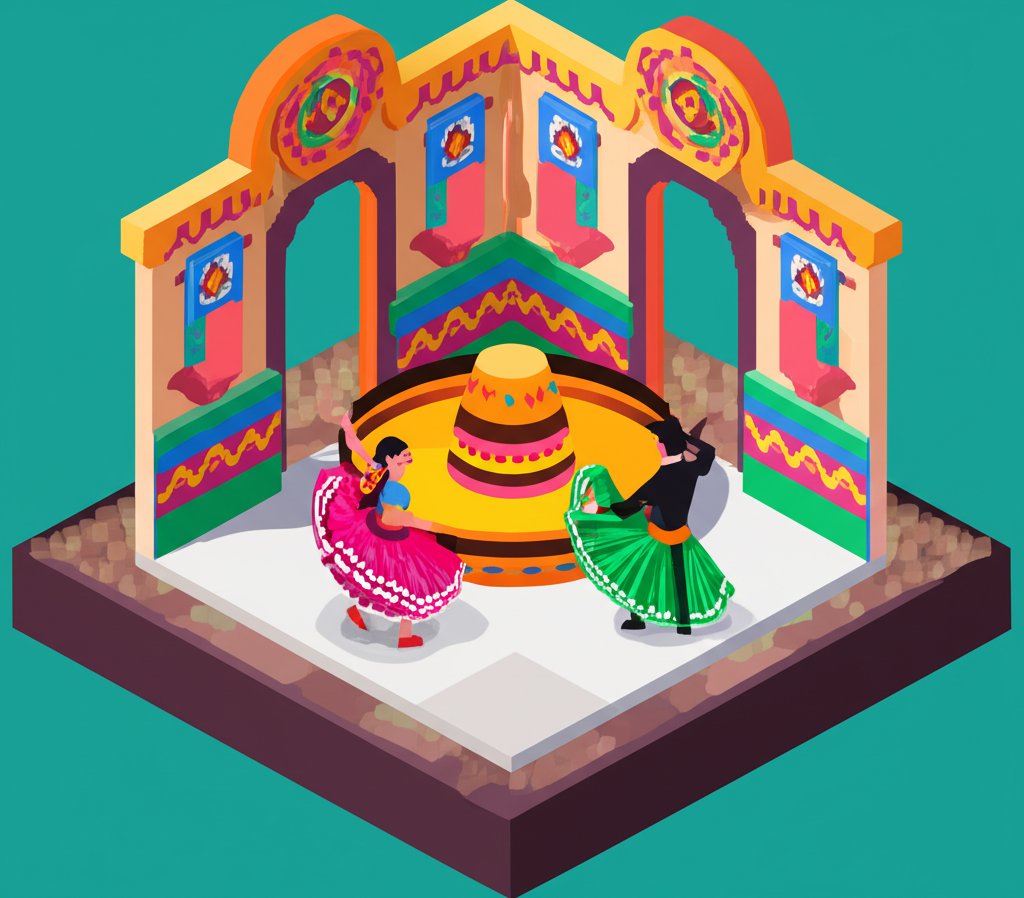
Imagine a whirlwind of vibrant colors, passionate rhythms, and a story told not with words, but with exhilarating footwork. This is the essence of Jarabe Tapatío, Mexico’s iconic national dance, widely recognized across the globe as the Mexican Hat Dance. More than just a performance, it’s a living tapestry woven with threads of history, romance, and an unyielding spirit of national identity.
From its humble beginnings as a defiant courtship ritual in 19th-century Guadalajara to its elevated status as a symbol of Mexican pride, understanding the Jarabe Tapatío meaning and its profound jarabe tapatio history offers a captivating glimpse into the heart of a nation. This article will take you on a deep dive into what is Jarabe Tapatío, explore where did the Mexican Hat Dance originate?, unravel its cultural significance, and reveal why this dance continues to captivate audiences worldwide.
Understanding the nuances of Jarabe Tapatío offers a fascinating peek into Mexican culture, and exploring other cultural traits can further enrich your appreciation for the country’s heritage.
What is Jarabe Tapatío? Unpacking Mexico’s National Dance
At its core, Jarabe Tapatío is a traditional Mexican folk dance characterized by its lively music, intricate footwork, and a playful courtship narrative between a male charro (traditional horseman) and a female china poblana (a woman in a stunning, embroidered dress). It’s a joyful, energetic celebration that instantly recognizable melodies and rhythms make it a staple at Mexican fiestas, cultural events, and international showcases.
Its most popular moniker, the Mexican Hat Dance, comes from the prominent role a sombrero plays in the dance’s climactic sequence, symbolizing a declaration of love and acceptance.
The Etymology of ‘Jarabe’ and ‘Tapatío’
To truly appreciate what is Jarabe Tapatío, let’s briefly break down its name:
- Jarabe: In Spanish, “jarabe” literally means “syrup.” However, in the context of music and dance, it refers to a mixture or medley of various popular melodies and rhythms. This speaks to the dance’s diverse cultural influences and its capacity to blend different musical motifs into a cohesive, enchanting whole.
- Tapatío: This adjective refers to anything or anyone from Guadalajara, the capital city of Jalisco, Mexico. Guadalajara is widely credited as the birthplace of this beloved dance.
Thus, Jarabe Tapatío translates roughly to “Medley from Guadalajara,” perfectly encapsulating its origin and its blend of musical styles. The jarabe tapatio meaning extends beyond its literal translation to embody a spirit of playful romance and national resilience.
A Dance of Love and National Identity
While often seen as a simple celebration, the Jarabe Tapatío meaning is layered. Initially, it was a social dance focused on flirtation and courtship. Over time, particularly during tumultuous periods in Mexican history, it evolved into a powerful symbol of national identity, unity, and defiance. It became a way for the Mexican people to express their unique heritage and cultural pride.
The Illustrious History of the Mexican Hat Dance: Origins and Evolution
The mexican hat dance history is as vibrant and complex as Mexico itself, rooted in a fascinating blend of indigenous traditions and Spanish colonial influences. To understand what is Jarabe Tapatío today, we must journey back to its formative years.
Where Did the Mexican Hat Dance Originate?: Guadalajara’s Golden Age
The consensus among historians points to Guadalajara, Jalisco, in the early 19th century as where the Mexican Hat Dance originated. It emerged not on grand stages, but in the bustling plazas and lively pulquerías (traditional taverns) where ordinary people gathered to socialize and celebrate. The region of Jalisco, known for its strong mestizo (mixed indigenous and Spanish) culture, provided fertile ground for the dance’s development.
Blending Cultures: Spanish Fandango and Indigenous Rhythms
The jarabe tapatio history is a testament to cultural fusion. Its rhythmic structure, zapateado (stomping footwork), and even some of its melodic patterns trace back to Spanish dances like the fandango and zambra gitana, brought over during the colonial era. These European influences, however, were not merely copied; they were reinterpreted and infused with native Mexican sensibilities, movements, and musical scales. Indigenous traditions of storytelling through movement and communal celebration undoubtedly played a role in shaping its ultimate form.
The Birth of a New Tradition in 19th-Century Guadalajara
As Mexico moved towards independence from Spain, a strong desire for a distinct national culture began to emerge. Dances like the jarabe (a broader category of mixed-rhythm dances) became popular precisely because they represented this unique blend. The Jarabe Tapatío distinguished itself by its specific “Tapatío” style, incorporating local flair and a more defined courtship narrative. It was a dance of the people, for the people, reflecting their everyday lives and romantic ideals.
From Regional Flair to National Symbol: Post-Revolution Mexico
A pivotal moment in jarabe tapatio history arrived in the 1920s. Following the Mexican Revolution (1910-1920), Mexico was eager to forge a unified national identity and promote its rich cultural heritage on the world stage. The government recognized the inherent power and appeal of Jarabe Tapatío and officially declared it Mexico’s national dance in 1924. This elevation solidified its status, making it an emblem of national pride, resilience, and the vibrant mestizo culture that defines modern Mexico. This decision ensured its preservation and propelled it into international recognition.
The Narrative Unveiled: Steps, Symbols, and the Courtship Story of Jarabe Tapatío
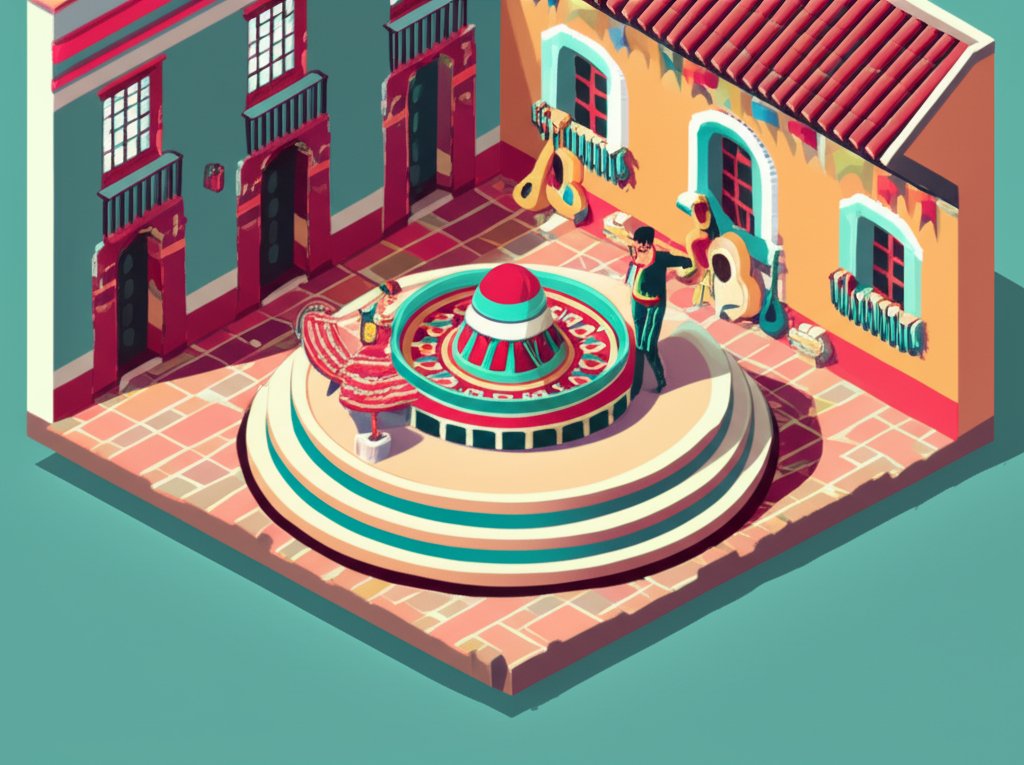
The Mexican Hat Dance history is inextricably linked to the story it tells. More than just a sequence of steps, Jarabe Tapatío is a mini-drama, a charming, universal tale of courtship and playful romance.
The Charro and the China Poblana: Iconic Characters
At the heart of the dance are two iconic figures:
- The Charro: The male dancer embodies the traditional Mexican horseman, a symbol of masculinity, skill, and gallantry. His costume (detailed below) reflects his proud heritage.
- The China Poblana: The female dancer, dressed in her elaborate attire, represents beauty, grace, and a spirited, sometimes coy, independence.
Together, they bring the Jarabe Tapatío meaning to life through their dynamic interaction.
A Dance of Pursuit and Playful Resistance
The dance unfolds as a captivating flirtation:
- Initial Pursuit: The charro, smitten, attempts to win the china poblana’s attention with his impressive zapateado (footwork). He approaches her with energetic steps and gestures.
- Coy Resistance: The china poblana, initially plays hard to get, turning away, keeping her distance, and perhaps even teasing him with a glance. Her movements are graceful but firm, indicating she won’t be easily won over.
- Growing Connection: As the music progresses, her resistance softens. Their steps begin to mirror each other, their proximity increases, and a sense of mutual attraction builds.
The Sombrero: A Symbol of Devotion and Acceptance
The climax of the dance revolves around the sombrero, making its role central to the Mexican Hat Dance history:
- The Offering: The charro dramatically throws his sombrero to the ground at the china poblana’s feet. This is a grand gesture, symbolizing his devotion, respect, and perhaps even “surrender” to her charms.
- The Dance Around the Hat: The couple then dances around the hat, their steps becoming more intertwined and passionate. The china poblana often elegantly dances around or over the hat, further emphasizing its symbolic weight.
- Acceptance and Union: Finally, with a graceful movement, the china poblana picks up the sombrero. This action signifies her acceptance of his affections. In a celebratory flourish, the charro might kick his leg over her head as they come together, their faces briefly hidden behind the hat, concluding the dance in a moment of playful embrace or victorious union.
Key Footwork and Rhythms
The Jarabe Tapatío is renowned for its lively zapateado, a style of footwork where dancers use their heels and soles to create rhythmic percussive sounds. The music features a changing meter, from 3/4 to 6/8 and back, which gives the dance its dynamic, “syrupy” quality as rhythms blend and shift. Fast turns, arm movements, and graceful skirt work by the china poblana further enrich the visual spectacle.
More Than Movement: Costumes, Music, and the Enduring Cultural Significance
Beyond its steps and story, what is Jarabe Tapatío is deeply embedded in Mexico’s broader cultural tapestry, amplified by its iconic visual and auditory elements.
The Vibrant Attire: Symbolism of the China Poblana and Charro Suit
The costumes themselves tell stories and are integral to the Mexican Hat Dance meaning:
- China Poblana Dress: The female costume is a stunning spectacle of color and craftsmanship. It typically features a white blouse embroidered with patriotic symbols, a richly decorated red and green skirt (zagalejo) adorned with sequins depicting national motifs (like eagles, cacti, and the Mexican flag), and often rebozo (shawl). The legend of the “China Poblana” stems from an enslaved Indian princess, Mirra, who arrived in Puebla, Mexico, in the 17th century, converting to Catholicism and adopting a distinctive style of dress that influenced local fashion. The dress has become a powerful symbol of Mexican femininity and folklore.
- Charro Suit: The male attire is equally striking, featuring an elaborately embroidered suit jacket and trousers, a large sombrero, a wide bow tie, and often spurs on boots. The charro suit originated from the traditional dress of Mexican horsemen and landowners, embodying dignity, skill, and a proud connection to the land.
These costumes are not merely outfits; they are wearable art, embodying centuries of history and national identity, and contributing immensely to the visual appeal and Jarabe Tapatío meaning.
The Mariachi Soundtrack: The Heartbeat of the Mexican Hat Dance
It’s almost impossible to imagine Jarabe Tapatío without the accompaniment of a mariachi band. The vibrant, soulful sounds of mariachi music—featuring trumpets, violins, guitars, a vihuela (a small, high-pitched guitar), and a guitarrón (a large, bass guitar)—are intrinsically linked to the dance. The music sets the festive tone, drives the rhythm, and provides the emotional backdrop for the courtship story, making the Mexican Hat Dance a complete sensory experience.
A Symbol of Mexican Resilience and Identity
The jarabe tapatio meaning goes far beyond entertainment. It serves as a powerful symbol of:
- National Unity: It represents the fusion of diverse cultural elements that make up Mexico’s identity.
- Cultural Preservation: It keeps alive traditional music, dance forms, and storytelling for new generations.
- Resilience: Its survival despite attempts to ban it (detailed below) underscores the indomitable spirit of the Mexican people.
Global Recognition and Cultural Diplomacy
Through its official status and captivating performances, Jarabe Tapatío has traveled the world, becoming Mexico’s unofficial cultural ambassador. It’s often performed at international events, showcasing the richness and warmth of Mexican culture to a global audience, fostering understanding and appreciation.
Banned, Embraced, and Elevated: The Jarabe Tapatío’s Journey Through Controversy
One of the most intriguing chapters in jarabe tapatio history involves a period of prohibition that, ironically, only strengthened its appeal and solidified its place in the national consciousness.
The “Suggestive” Ban: A Flawed Attempt at Control
In the late 1700s, during the colonial era, the conservative Spanish authorities and the Catholic Church viewed many popular jarabe dances with suspicion. Their close partnering, flirtatious movements, and energetic hip movements were considered “suggestive” and morally corrupting. Consequently, Jarabe Tapatío (and other similar dances) faced an official ban.
The authorities aimed to suppress expressions deemed too provocative or rebellious, hoping to maintain social order and control over the populace. However, their efforts had the opposite effect.
The Backfire Effect: Fueling Popularity and National Spirit
Rather than extinguishing its flame, the ban on Jarabe Tapatío inadvertently fueled its popularity. Driven underground, the dance became an act of cultural defiance. Mexicans continued to perform it in secret gatherings, in private homes, and at hidden celebrations. This act of rebellion transformed the dance into a powerful symbol of resistance against foreign control and a clandestine affirmation of Mexican identity.
The ban cemented the jarabe tapatio meaning as one of enduring spirit and cultural pride, proving that artistic expression, especially when linked to a people’s identity, cannot be easily suppressed. When independence was finally achieved, the dance emerged from the shadows with even greater cultural resonance.
Jarabe Tapatío vs. Folklórico: Understanding Mexico’s Dance Landscape
A common question arises when discussing what is Jarabe Tapatío: Is it the same as folklórico? While closely related, there’s a distinction worth exploring.
Folklórico: A Broad Spectrum of Mexican Dances
Folklórico (Ballet Folklórico) is a broad term encompassing a vast repertoire of traditional folk dances from the many diverse regions of Mexico. Each region boasts its own unique style, music, costumes, and stories, reflecting local customs, historical events, and indigenous influences. Folklórico performances often feature a medley of these regional dances, showcasing Mexico’s rich and varied cultural landscape.
Jarabe Tapatío’s Unique Place
While Jarabe Tapatío is undoubtedly a folk dance, its official designation as Mexico’s national dance gives it a singular status within the folklórico tradition. It is one specific dance, with a clear origin (Guadalajara), a distinct narrative, and characteristic music and costumes.
Think of it this way: all Jarabe Tapatío is folklórico (as it’s a traditional folk dance), but not all folklórico is Jarabe Tapatío. It’s the most famous and universally recognized folklórico dance, a crown jewel in the larger treasury of Mexican traditional dances.
Evolution and Preservation: Modern Interpretations
Like all living cultural traditions, Jarabe Tapatío continues to evolve. While its core elements remain sacred, contemporary folklórico troupes and even popular culture find new ways to interpret and perform it. This adaptability ensures its relevance for new generations and its continued vibrancy in festivals, celebrations, and even modern media, safeguarding its unique mexican hat dance history for the future.
Conclusion
The Jarabe Tapatío, or Mexican Hat Dance, is far more than just a series of lively steps and colorful costumes. It is a profound expression of Mexico’s soul – a love story, a tale of defiance, and an enduring symbol of national pride. From its roots in 19th-century Guadalajara, through periods of controversy, to its global recognition today, the jarabe tapatio history mirrors the very journey of the Mexican nation.
Understanding what is Jarabe Tapatío means appreciating the rich tapestry of cultures that shaped it, the compelling narrative it portrays, and the indomitable spirit it represents. Its infectious rhythms and captivating movements continue to resonate, inviting all who witness it to experience the joy, passion, and resilience that define Mexico. So, the next time you hear its iconic melody, remember the depth of the jarabe tapatio meaning and the spirited mexican hat dance history it carries.
Frequently Asked Questions (FAQ)
What does “Jarabe Tapatío” literally translate to?
“Jarabe Tapatío” literally translates to “Syrup from Guadalajara,” where “jarabe” refers to a mixture or medley of rhythms, and “Tapatío” signifies hailing from Guadalajara, Jalisco, Mexico.
Why is it called the “Mexican Hat Dance”?
It’s commonly called the “Mexican Hat Dance” because the traditional large sombrero plays a central, symbolic role in the dance’s courtship narrative. The male dancer throws his hat to the ground as an offering of devotion, and the couple dances around it before the female dancer picks it up, symbolizing her acceptance.
What story does the Jarabe Tapatío tell?
The Jarabe Tapatío tells a charming courtship story between a male charro (horseman) and a female china poblana. It depicts the man’s playful pursuit, the woman’s initial coy resistance, and their eventual joyful union through dance, culminating in the symbolic use of the sombrero.
When did Jarabe Tapatío become Mexico’s national dance?
Jarabe Tapatío was officially declared Mexico’s national dance in the 1920s, specifically in 1924, following the Mexican Revolution. This designation was part of a broader effort to unify the nation and promote a distinct Mexican cultural identity on a global scale.
Was the Mexican Hat Dance ever banned?
Yes, in the late 1700s, during the colonial period, the Mexican Hat Dance (and other jarabe dances) was banned by Spanish authorities and the Catholic Church. They considered its close partnering and lively, flirtatious movements to be too “suggestive” and morally inappropriate. However, this ban only served to increase its popularity and transform it into a symbol of cultural defiance.










