
From the whimsical worlds of classic cartoons to the breathtaking realism of modern CGI blockbusters, animation has captivated audiences for over a century, bringing imagination to life frame by painstaking frame. But what exactly is animation, and what are the fascinating facts that define this dynamic art form and the rewarding career paths it offers?
This comprehensive guide will demystify animation, uncovering its fundamental principles, rich history, diverse techniques, and the exciting realities of building a profession within this ever-evolving industry. Whether you’re a curious enthusiast, an aspiring artist, or someone simply looking for surprising animation facts, prepare to dive deep into the mechanics, magic, and potential of animated storytelling.
What Exactly Is Animation? The Core Definition
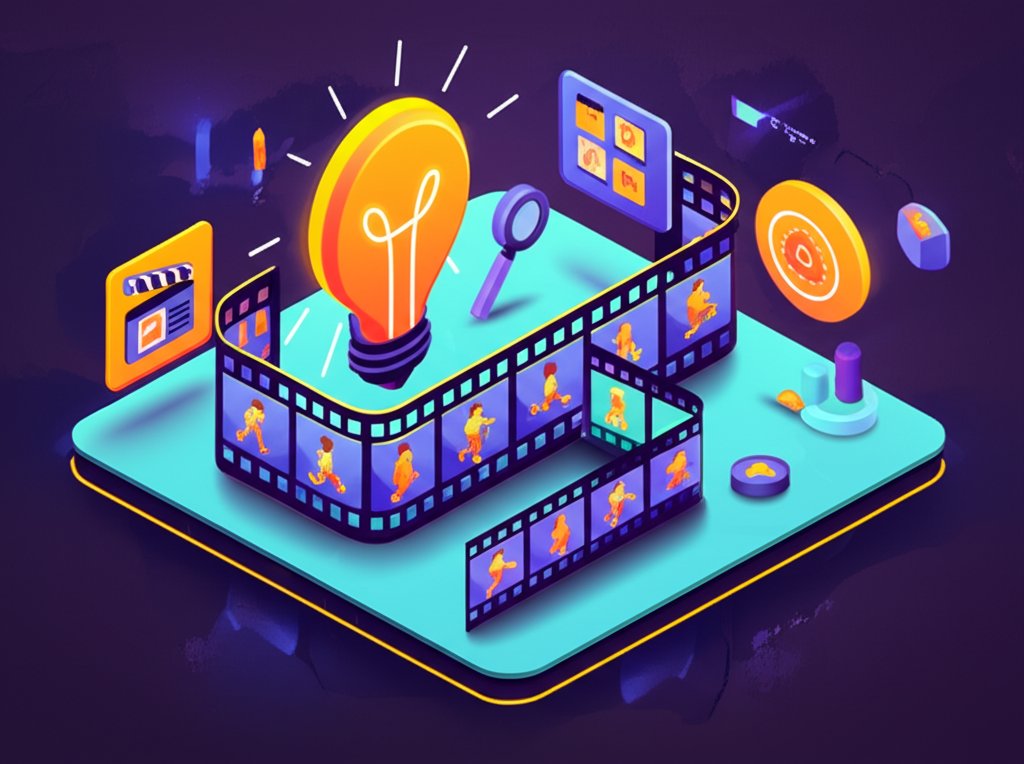
At its heart, animation is the art of creating the illusion of movement through a sequence of static images. It’s not just about drawing pictures; it’s about making those pictures move in a way that tells a story, conveys an emotion, or explains a concept. This fundamental principle underpins every form of animation, from flipbooks to sophisticated 3D models.
Decoding the Illusion: How Animation Works
The illusion of movement in animation relies on a crucial phenomenon known as persistence of vision. Our eyes and brain retain an image for a split second after it has disappeared. When a series of slightly different images are shown in rapid succession (typically 12 to 24 frames per second, or fps), our brain “fills in the gaps,” perceiving continuous motion rather than individual still frames. This biological trick is the bedrock upon which all animation is built.
The Fundamental Principle: Persistence of Vision
While persistence of vision is key, modern animators also leverage principles of psychology and artistic expression to create believable and engaging movement, not just simple motion. They anticipate actions, exaggerate movements, and establish rhythms that make characters and objects feel alive, even if they are just drawings or digital constructs.
More Than Just Moving Pictures
Animation transcends mere technicality; it is a powerful medium for storytelling, education, entertainment, and communication. It allows creators to defy the laws of physics, explore abstract concepts, and bring fantastical characters to audiences of all ages, making the impossible, possible. This makes understanding what is animation far more profound than just its technical definition.
Fascinating Facts: A Deep Dive into Animation History & Evolution
The history of animation is a treasure trove of innovation, artistic breakthroughs, and surprising discoveries. Tracing its origins reveals a continuous human desire to make static images dance.
The True “Father of Animation” – Georges Méliès and Beyond
While many associate animation with early Disney works, the true genesis of the art form traces back much further. Georges Méliès is widely credited as the “Father of Special Effects” and, by extension, a key pioneer in animation. In the late 19th and early 20th centuries, this French filmmaker and illusionist masterfully employed stop-motion, double exposure, and other optical illusions in films like “A Trip to the Moon” (1902) to make objects appear, disappear, and transform. His groundbreaking techniques laid the conceptual groundwork for manipulating images to create motion.
However, the concept predates even Méliès. Early devices like the Phenakistoscope (1832), Zoopraxiscope (1879), and Praxinoscope (1877) demonstrated rudimentary animation by rapidly spinning images, proving the principle of persistence of vision long before film cameras existed. Émile Cohl’s “Fantasmagorie” (1908) is often cited as the first animated film featuring drawn characters that move through a complete narrative.
From Phenakistoscopes to CGI: Key Milestones
- Pre-Cinema Era (1800s): Optical toys like the Thaumatrope, Phenakistoscope, Zoopraxiscope, and Praxinoscope demonstrate the illusion of movement.
- Early 1900s: The Dawn of Drawn Animation: Émile Cohl’s “Fantasmagorie” (1908) uses simple stick figures. Winsor McCay’s “Gertie the Dinosaur” (1914) showcases complex character animation and personality.
- The Golden Age (1920s-1950s): Walt Disney’s “Steamboat Willie” (1928) introduces synchronized sound, revolutionizing the medium. Disney and Warner Bros. studios establish iconic characters and storytelling conventions.
- Stop-Motion Breakthroughs (Early 20th Century Onward): Willis O’Brien’s work on “King Kong” (1933) and Ray Harryhausen’s creature effects in films like “Jason and the Argonauts” (1963) push the boundaries of stop-motion.
- Rise of Television Animation (1960s-1980s): Limited animation techniques become prevalent for TV production (e.g., Hanna-Barbera). Anime gains international traction.
- Digital Revolution (1990s-Present): Pixar’s “Toy Story” (1995) marks the first feature-length computer-generated imagery (CGI) animated film, ushering in the 3D era. Live-action films increasingly integrate digital animation and visual effects.
The First Feature Film: ‘The Adventures of Prince Achmed’ – A Landmark Fact
A common misconception is that a Disney film was the first animated feature. In reality, the distinction belongs to ‘The Adventures of Prince Achmed,’ released in 1926. This groundbreaking film was created by the German animator Lotte Reiniger using the intricate technique of silhouette animation. It was a painstaking process involving cut-out figures manipulated frame by frame, showcasing immense artistic vision and technical mastery years before the synchronized sound of “Steamboat Willie” and a decade before “Snow White and the Seven Dwarfs.”
Surprising Historical Tidbits
- Early “Rotoscoping”: Max Fleischer (creator of Betty Boop and Popeye) patented the rotoscope in 1917, a device that allowed animators to trace over live-action footage, providing a realistic basis for character movement.
- The Multiplane Camera: Invented by Walt Disney Studios, this camera allowed for separate layers of artwork to be filmed simultaneously, creating unparalleled depth and perspective in traditional hand-drawn animation, first showcased significantly in “The Old Mill” (1937).
- Animation’s Wartime Role: During World War II, animation played a crucial role in propaganda, training, and public information films, with studios like Disney and Warner Bros. contributing significantly to the war effort.
The Magic Behind the Motion: Essential Animation Principles & Techniques
Understanding what is animation also means grasping the principles and methods animators use to breathe life into their creations. These aren’t just technical rules; they are the artistic guidelines that create compelling and believable motion.
The 12 Principles of Animation: A Creative Animator’s Secret Sauce
Developed by Disney animators Frank Thomas and Ollie Johnston, these 12 principles are the bedrock of character animation. They are fundamental for creating realistic, appealing, and expressive movement:
- Squash and Stretch: Giving objects elasticity and volume.
- Anticipation: Preparing the audience for an action.
- Staging: Presenting an idea clearly and effectively.
- Straight Ahead Action and Pose to Pose: Two methods for drawing frames.
- Follow Through and Overlapping Action: Continuing movement after an action and having different parts of a body move at different rates.
- Slow In and Slow Out: Accelerating and decelerating movements.
- Arcs: Most natural motion follows a curved path.
- Secondary Action: Smaller movements that support the main action.
- Timing: The number of drawings for an action, dictating speed.
- Exaggeration: Distorting reality for dramatic or comedic effect.
- Solid Drawing: Creating convincing 3D forms.
- Appeal: Creating characters that are engaging and charismatic.
Mastery of these principles is a key animation fact for anyone serious about the craft.
Core Animation Techniques Explained
Animation isn’t a single technique; it’s a vast umbrella covering numerous artistic and technical approaches:
- Traditional (Cel/Hand-Drawn) Animation: Each frame is drawn by hand, usually on transparent celluloid sheets (cels), then painted and photographed against a background. Famous examples include Disney classics like “Snow White” and Studio Ghibli films.
- 2D Digital Animation: Uses software (e.g., Adobe Animate, Toon Boom Harmony) to create and manipulate drawings digitally. This can involve frame-by-frame drawing or cutout animation (rigging characters with joints).
- 3D (CGI) Animation: Characters and environments are built as digital models in 3D software (e.g., Maya, Blender, Zbrush). Animators then manipulate these models, keyframing their movements over time. This technique yields hyper-realistic results and is prevalent in modern films, games, and visual effects.
- Stop-Motion Animation: Physical objects (puppets, clay figures, household items) are moved incrementally between individually photographed frames. Iconic examples include “Wallace & Gromit” and “Coraline.”
- Motion Graphics: Often seen in commercials, explainer videos, and opening titles, this technique involves animating abstract shapes, text, and imagery to convey information or create visual flair.
- Rotoscoping: Live-action footage is traced over frame-by-frame to create animated movement with a realistic flow, famously used in films like “A Scanner Darkly” and early Disney works.
The Animation Pipeline: From Concept to Screen
Creating animated content, especially for large productions, involves a complex pipeline:
- Pre-Production: Story concept, scriptwriting, character design, environment design, storyboarding, animatics (animated storyboard).
- Production: Layout, modeling (3D), rigging, texturing, animation (keyframe, motion capture), lighting, visual effects (VFX).
- Post-Production: Rendering, compositing, editing, sound design, voice acting, music, color correction.
Each stage is crucial, representing a distinct set of skills and roles within a studio environment.
Beyond Cartoons: Diverse Types and Applications of Animation
While cartoons are the most visible face of animation, its applications are vast and ever-expanding, touching nearly every aspect of modern media and communication. This is a crucial animation fact that often goes unnoticed.
Where Do We See Animation?
- Film & Television: Feature films, animated series, TV commercials, title sequences, visual effects in live-action productions.
- Video Games: Character animations, cutscenes, environmental effects, user interface (UI) animations.
- Education: Explainer videos, interactive learning modules, scientific visualizations, medical procedure simulations.
- Advertising & Marketing: Engaging product demonstrations, brand storytelling, social media content.
- Architecture & Design: Pre-visualization of buildings and spaces, virtual walkthroughs.
- Medical & Scientific Fields: Illustrating complex biological processes, surgical training.
- Virtual & Augmented Reality (VR/AR): Creating immersive digital characters and environments.
- Web & UI/UX Design: Micro-interactions, loading animations, user interface elements that enhance user experience.
The Impact of Animation on Culture and Communication
Animation has shaped global culture, creating beloved characters that transcend generations and borders. It’s a universal language, capable of conveying complex ideas, preserving cultural narratives, and inspiring empathy. Its ability to simplify, exaggerate, and visualize the abstract makes it an invaluable tool for explaining anything from quantum physics to children’s stories, truly embodying the power of visual communication.
So You Want to Be an Animator? Career Facts & Industry Insights
For many, the magic of animation translates into a dream career. But what does it really take? Understanding the facts about an animation career is essential for aspiring professionals.
Diverse Roles in the Animation Industry
The animation pipeline supports an incredibly diverse range of specialized roles:
For those looking to turn their passion into a profession, exploring resources like a dedicated animation job board can be a crucial first step in landing your dream role.
- Animator (2D/3D): The core role, bringing characters and objects to life.
- Character Designer: Creates the visual appearance of characters.
- Storyboard Artist: Visualizes the script in sequential panels.
- Concept Artist: Develops visual ideas for characters, environments, and props.
- Background Artist: Paints or designs the static environments.
- Modeler (3D): Builds 3D characters and objects.
- Rigger: Creates the digital “skeleton” or controls for 3D models to allow animators to manipulate them.
- Texture Artist: Paints the surface details and materials of 3D models.
- Lighter: Sets up and adjusts virtual lights to illuminate scenes.
- VFX Artist: Creates explosions, water, smoke, and other visual effects.
- Compositor: Blends all the separate elements (backgrounds, characters, effects) into a final image.
- Editor: Assembles the animated sequences into a cohesive narrative.
- Production Coordinator/Manager: Oversees project timelines, budgets, and team communication.
- Director: Guides the overall creative vision of the animation.
The Realities of the Craft: Creativity, Deadlines, and Long Hours
While intensely creative, an animation career is also demanding. These are vital facts about an animation career:
- Creativity and Deadlines: Animators must constantly balance artistic vision with strict project deadlines. The collaborative nature means adhering to a unified style and vision, even while infusing personal flair. This requires discipline and efficient workflow.
- Long Hours and Overtime: Especially during crunch times as production deadlines approach, animators often work extended hours. Projects are complex and iterative, requiring dedication to achieve desired quality. It’s not a typical 9-to-5 job; flexibility and commitment are key.
- Iterative Process: Animation is rarely perfect on the first pass. It involves constant feedback, revisions, and fine-tuning, which can be both rewarding and challenging.
Essential Skills and Education Paths
To thrive in this field, a blend of artistic talent and technical proficiency is crucial:
- Core Artistic Skills: Strong drawing abilities (even for 3D), understanding of anatomy, perspective, color theory, and composition.
- Software Proficiency: Mastery of industry-standard tools like Maya, Blender, Zbrush, Adobe Animate, Photoshop, After Effects, Toon Boom Harmony, Houdini, etc.
- Understanding of Movement & Physics: A keen eye for how things move in the real world, including weight, balance, and timing.
- Storytelling: The ability to convey narrative and emotion through visual sequences.
- Patience & Attention to Detail: Animation is meticulous work.
- Collaboration & Communication: Working effectively in a team environment.
- Problem-Solving: Overcoming technical and creative challenges.
Many animators pursue degrees in animation, fine arts, or computer graphics. However, a strong portfolio showcasing skills and passion often trumps formal education. Online courses, workshops, and self-study are also viable paths.
Finding Artistic Freedom Within Constraints
Despite working within project briefs and client expectations, animators still find ample opportunities for artistic expression. They inject their unique personality and style into character performances, movement nuances, and visual interpretations. The challenge lies in harmonizing individual creativity with the overarching vision of the production.
The Demand for Lifelike Movement: The Role of Research
To create truly convincing animation, especially for realistic characters or creatures, extensive research is often required. Animators study anatomy, watch documentaries on animal movement, analyze human walk cycles, and even record themselves performing actions. This meticulous observation and understanding of real-world mechanics are what add authenticity and depth to animated performances.
Job Outlook and Growth Potential
The animation industry continues to grow, driven by demand across film, television, video games, advertising, and emerging technologies like VR/AR. While competitive, a strong portfolio, continuous learning, and networking can lead to a fulfilling career. The global nature of the industry also presents opportunities to work with diverse teams and projects worldwide.
The Future of Animation: Trends and Innovations
The world of animation is in a constant state of evolution, pushing boundaries with technological advancements and new creative approaches.
AI in Animation
Artificial intelligence is increasingly impacting animation, from automating mundane tasks like in-betweening and motion capture cleanup to assisting with character rigging and generating realistic textures. AI tools are becoming powerful assistants, allowing animators to focus more on creative decision-making.
Real-time Rendering and Virtual Production
Game engine technology (like Unreal Engine and Unity) is revolutionizing film and TV animation by enabling real-time rendering. This allows filmmakers to see animated scenes or visual effects finalized on set, dramatically speeding up the production pipeline and offering unprecedented creative control. Virtual production, combining live actors with digital environments in real-time, is rapidly gaining traction.
Immersive Experiences (VR/AR)
Animation is central to creating compelling virtual and augmented reality experiences. From interactive narratives to educational simulations, animators are shaping how we engage with immersive digital worlds.
Independent Animation’s Rise
Easier access to powerful software and online distribution platforms has empowered independent animators and small studios. This fosters greater diversity in storytelling and artistic styles, moving beyond the traditional studio system.
Conclusion
What is animation? It is an art form born from a blend of science, creativity, and relentless dedication – an illusion of movement that has evolved from simple optical toys into a multi-billion dollar industry. From the foundational animation facts of persistence of vision and the pioneering work of Georges Méliès to the intricate 12 principles that guide every animator, this field is rich with history and innovation.
For those considering a career in animation, it’s a path that demands passion, technical skill, and resilience. While challenges like tight deadlines and long hours exist, the rewards of bringing characters and stories to life, and seeing your creations impact audiences globally, are immeasurable. As technology continues to advance, the future of animation promises even more breathtaking possibilities, inviting a new generation of storytellers to join its ever-expanding universe.
FAQ
Question 1: What is animation in simple terms?
Answer 1: Animation is the art of creating the illusion of movement by displaying a sequence of still images, each slightly different from the last, in rapid succession. Our brains perceive these quickly changing images as continuous motion.
Question 2: What are the main types of animation?
Answer 2: The main types include Traditional (hand-drawn/cel) animation, 2D Digital animation, 3D (CGI) animation, Stop-Motion animation, and Motion Graphics. Each uses different techniques to achieve movement.
Question 3: Who is considered the “father of animation”?
Answer 3: Georges Méliès is widely recognized as a key pioneer and the “father of special effects” for his early use of stop-motion and other cinematic illusions that laid the groundwork for animation. Emile Cohl is often cited for creating the first animated film with drawn characters.
Question 4: What’s a common misconception about animation?
Answer 4: A common misconception is that animation is only for children. In reality, animation is a versatile storytelling medium used for all ages and purposes, including adult dramas, educational content, scientific visualizations, and complex video games.
Question 5: Is an animation career challenging?
Answer 5: Yes, an animation career can be challenging, often requiring long hours, tight deadlines, and continuous learning of new software and techniques. However, it is also incredibly rewarding for those passionate about creative storytelling and visual arts.
Question 6: What skills are essential for animators?
Answer 6: Essential skills include strong artistic fundamentals (drawing, anatomy, perspective), proficiency in animation software (e.g., Maya, Blender, Adobe products), an understanding of movement principles, storytelling ability, attention to detail, and good collaborative skills.
Question 7: What was the first animated feature film?
Answer 7: The first animated feature film was “The Adventures of Prince Achmed,” created by Lotte Reiniger in 1926 using silhouette animation, predating Disney’s “Snow White and the Seven Dwarfs” by over a decade.










