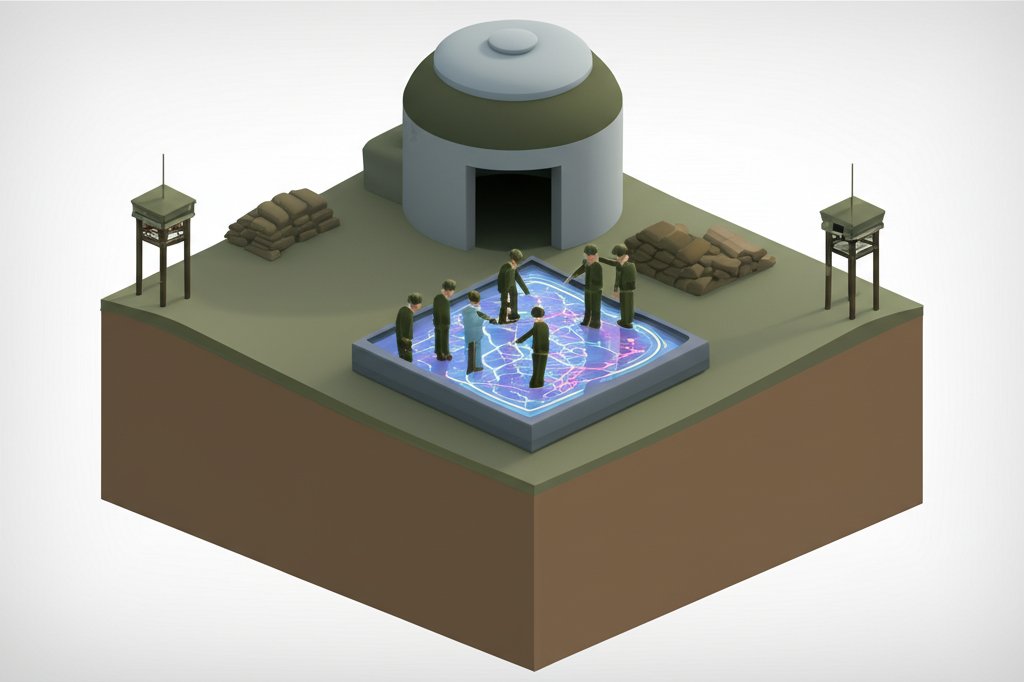
In the grand tapestry of military history, the spotlight often shines brightest on audacious campaigns and sweeping conquests. Yet, lurking in the shadows of these triumphant narratives are the true maestros of resilience: the military commanders who mastered defensive warfare. These ingenious strategists, far from merely resisting, expertly manipulated terrain, psychology, and limited resources to deny vastly superior forces victory, often turning the tide of conflicts against overwhelming odds.
This article delves into the profound secrets of defensive warfare, exploring the core principles, cunning tactics, and unparalleled military leadership qualities that define these defensive geniuses. We will uncover how understanding the nuanced art of defense is not just about holding ground, but about achieving strategic advantage and ultimately, ensuring survival and eventual triumph.
The Unsung Heroes: Why Defensive Warfare Matters
While offensive operations capture headlines, defensive warfare is the bedrock of enduring military strategy. It’s the art of preserving strength, buying time, and wearing down an aggressor, allowing for recovery, counter-strokes, or strategic withdrawal. A well-executed defense can break an enemy’s will, deplete their resources, and expose their vulnerabilities, setting the stage for future offensive success.
Effective defensive strategies often require the same decisive leadership and meticulous planning seen in daring raids, elements thoroughly examined when considering the qualities of great military commanders behind special operations.
History is replete with examples where seemingly weaker forces, through brilliant defensive planning and heroic resolve, blunted the spears of mighty empires. From ancient sieges to modern trench lines, the ability to effectively defend has consistently proven to be a critical determinant of military outcomes. It requires a unique blend of foresight, adaptability, and an unshakeable will to persevere.
Defining Defensive Warfare: More Than Just Holding Ground

Defensive warfare encompasses a broad spectrum of military operations designed to repel an enemy, protect vital assets, or gain time. It’s fundamentally about establishing an advantage through positioning, preparation, and psychological fortitude, rather than relying solely on superior numbers or firepower.
The Strategic Imperatives of Defense
- Preservation of Force: The primary goal is to minimize friendly casualties and maintain combat power, allowing the force to fight another day or transition to offense.
- Denial of Objectives: Preventing the enemy from seizing key terrain, resources, or achieving their strategic aims.
- Attrition of Enemy Forces: Forcing the aggressor to expend more resources, suffer greater losses, and endure longer delays than anticipated.
- Time Gain: Delaying enemy advances to allow for reinforcement, logistical buildup, or the development of new strategies.
- Shaping the Battlefield: Manipulating the environment to channel the enemy into pre-determined killing zones or disadvantageous positions.
Passive vs. Active Defensive Operations
Defensive operations are not monolithic. They range from static, passive defenses to highly dynamic, active engagements:
- Passive Defense: Focused on hardening positions, creating obstacles (natural and artificial), camouflage, and deception. The goal is to make an attack prohibitively costly or difficult. Think fixed fortifications, minefields, and extensive trench networks.
- Active Defense: Involves direct engagement with the enemy, often through well-planned counterattacks, ambushes, and mobile reserves. The aim is not just to hold, but to inflict maximum damage and disrupt enemy plans.
- Mobile Defense: A highly flexible approach where forces yield ground but use rapid movement and dispersion to outmaneuver the enemy, strike vulnerable flanks, and maintain the initiative without committing to a fixed battle line.
The Pillars of Defensive Military Strategy: Principles and Planning
Effective defensive military strategy is built upon a foundation of core principles and meticulous planning. It requires a commander to think several steps ahead, anticipate enemy actions, and leverage every available asset.
Key Principles of Defensive Strategy
- Preparation: The most crucial element. This involves meticulous reconnaissance, engineering defenses, logistical planning, and troop training.
- Security: Protecting forces from surprise attack and deception through robust intelligence gathering and alert postures.
- Economy of Force: Using the minimum necessary force in less critical areas to free up strength for decisive points.
- Disruption: Breaking the enemy’s attack rhythm, disorienting their command and control, and preventing them from concentrating their power.
- Flexibility: The ability to adapt plans quickly to changing battlefield conditions and enemy maneuvers.
- Depth and Lateral Diffusion: Creating multiple defensive layers and extending defenses across a wide front to absorb pressure and prevent breakthroughs.
- Concentration: Bringing overwhelming force to bear at the decisive point of the defense, often during a counterattack.
- Offensive Action (within defense): Counterattacks, raids, and ambushes are vital elements of a dynamic defense to deny the enemy initiative and punish their advances.
Planning Defensive Operations: A Step-by-Step Approach
- Mission Analysis: Clearly understanding the objectives of the defense, the terrain, the enemy’s capabilities and likely course of action, and available friendly forces.
- Terrain Analysis (OAKOC): Thoroughly evaluating Observation & Fields of Fire, Avenues of Approach, Key Terrain, Obstacles, and Cover & Concealment.
- Scheme of Maneuver: Designing how forces will be positioned, how they will respond to enemy attacks, where reserves will be held, and how counterattacks will be launched.
- Fire Support Plan: Integrating artillery, air support, and direct fire to maximize lethality and break up enemy formations.
- Logistics and Sustainment: Ensuring adequate supplies, medical support, and maintenance to endure prolonged engagements.
- Deception Plan: Employing false positions, dummy equipment, and misleading communications to confuse the enemy.
- Contingency Planning: Developing alternative plans for various enemy actions, including breakthroughs or flanking maneuvers.
Qualities of Elite Defensive Military Commanders
The success of any defensive operations hinges on the caliber of its military leadership. Elite defensive commanders possess a distinct set of psychological, intellectual, and interpersonal traits that enable them to excel under immense pressure.
Intellectual Acuity and Strategic Vision
- Forensic Situational Awareness: A profound understanding of the battlefield (terrain, weather, enemy disposition, friendly capabilities) that allows them to anticipate threats and opportunities.
- Strategic Patience and Long-Term Thinking: The ability to see beyond immediate tactical engagements and understand how defensive actions contribute to larger strategic goals. They can bide their time, waiting for the opportune moment to strike.
- Analytical Prowess: Rapidly assess complex situations, identify critical vulnerabilities (both enemy and friendly), and formulate logical counter-actions.
- Innovation and Flexibility: Not bound by dogma, they can devise unconventional solutions and adapt their plans on the fly when the unexpected occurs. Think outside-the-box tactical responses to unforeseen enemy initiatives.
Psychological Fortitude and Resilience
- Unwavering Resolve: Maintaining morale and determination even when faced with overwhelming odds or heavy losses. Their strength inspires confidence in their troops.
- Decisive Leadership Under Pressure: Making tough, clear decisions rapidly in chaotic environments, even when information is incomplete or contradictory.
- Calmness in Crisis: The ability to remain composed and rational when the battlefield erupts, preventing panic from spreading through their ranks.
- Moral Courage: The strength to stick to a difficult defensive plan, even when it means making unpopular decisions or sacrificing ground temporarily.
Interpersonal Skills and Military Leadership
- Exceptional Communication: Articulating complex plans clearly and concisely, ensuring all subordinates understand their roles and the overall objective.
- Trust and Delegation: Empowering subordinates to make decisions within their areas of responsibility, fostering initiative and adaptability.
- Inspiration and Motivation: Rallying troops, instilling confidence, and fostering a sense of shared purpose and resilience. They lead by example, often sharing the hardships with their soldiers.
- Empathy and Welfare: Caring for their soldiers’ well-being, understanding that a well-rested, supplied, and motivated force is a resilient one.
Mastering Defensive Operations: Tactics and Techniques
Beyond the broad strokes of strategy, top military commanders employ specific tactics and techniques to execute successful defensive operations. These methods are often interwoven, creating a multi-layered and dynamic defense.
Leveraging Terrain and Fortifications
- Natural Obstacles: Exploiting rivers, mountains, swamps, and dense forests to canalize enemy movement, create choke points, and limit avenues of approach.
- Man-Made Fortifications: Constructing trenches, bunkers, wire obstacles, minefields, and anti-tank ditches to impede progress, provide cover, and enhance firepower.
- Defensive Belts and Positions in Depth: Creating multiple, mutually supporting lines of defense. The enemy must conquer each layer, incurring losses and expending time and resources.
- Reconnaissance in Force: Sending out patrols to gather intelligence, test enemy strength, and identify weak points, even while in a defensive posture.
Firepower and Attrition
- Interlocking Fields of Fire: Positioning weapons (machine guns, artillery, anti-tank systems) to create overlapping zones of fire, ensuring no part of the battlefield is safe for the enemy.
- Pre-Registered Targets: Designating specific areas for artillery or mortar fire in advance, allowing for rapid and accurate engagement when the enemy enters them.
- Ambush Sites: Carefully selected positions to surprise and destroy enemy columns, especially in constricted terrain or along likely avenues of approach.
- Counter-Battery Fire: Locating and neutralizing enemy artillery to reduce the threat to friendly forces.
Deception and Psychological Warfare
- Camouflage and Concealment: Hiding troop movements, equipment, and defensive positions to achieve tactical surprise.
- Dummy Positions and Decoys: Constructing fake fortifications or placing inflatable tanks to draw enemy fire and mask true dispositions.
- False Withdrawals: Feigning retreat to lure the enemy into a prepared killing zone or an ambush.
- Exploiting Enemy Morale: Using propaganda, psychological operations, and sustained resistance to break the enemy’s will to fight.
Reserves and Counterattack
- Strategic Reserves: Maintaining uncommitted forces, often highly mobile, to plug gaps, reinforce threatened sectors, or launch decisive counterattacks.
- Timed Counterattacks: Launching powerful, well-coordinated counterattacks at the moment of enemy exhaustion, after they have committed their reserves and are vulnerable.
- Flank Attacks: Striking the enemy’s exposed sides or rear during their advance, disrupting their formations and cutting off supply lines.
- Breakthrough Containment: Quickly deploying reserves to isolate and destroy enemy units that manage to penetrate the main defensive line.
Historical Legacies: Iconic Defensive Military Commanders and Battles
Throughout history, numerous military commanders have cemented their place as masters of defensive warfare. Their stories offer invaluable insights into the enduring power of a well-conceived and executed defense.
Leonidas and the 300 at Thermopylae (480 BCE)
Facing the colossal Persian army, King Leonidas of Sparta, with a small force of Greek warriors, chose the narrow pass of Thermopylae. This terrain, a natural choke point, nullified the Persian numerical advantage. For three days, Leonidas’s military leadership and the disciplined Spartan phalanx held the pass, inflicting massive casualties. Though ultimately outflanked due to treachery, their heroic stand bought crucial time for other Greek city-states to organize and prepare, becoming a timeless symbol of determined defensive operations.
Belisarius at the Battle of Dara (530 CE)
The Byzantine general Belisarius, with a numerically inferior force, faced a much larger Sasanian Persian army. Recognizing his disadvantage in open battle, he meticulously prepared a defensive position near Dara. He dug trenches to protect his flanks, leaving a gap in the center to feign weakness, and ingeniously positioned hidden cavalry units as reserves. His military strategy involved drawing the Persians into the prepared ground, then launching devastating counterattacks with his concealed cavalry. Belisarius’s brilliant use of terrain, deception, and coordinated counter-maneuvers led to a decisive Byzantine victory, showcasing the power of intelligent defensive warfare against overwhelming odds.
George Washington at Valley Forge and the American Revolution (1777-1778)
While not a single battle, Washington’s leadership throughout the American Revolutionary War epitomizes sustained defensive warfare. At Valley Forge, facing brutal conditions, he maintained his army’s integrity and morale, preventing its dissolution. His strategic retreats, such as after the Battle of Long Island, preserved his forces to fight another day. Washington understood that the American objective was not necessarily to destroy the British army, but to survive, wear them down, and prolong the conflict until political objectives could be achieved. His military strategy was a masterclass in patient, resilient defense, buying time until the opportune moment for decisive action with French aid.
Carl Gustaf Mannerheim and the Winter War (1939-1940)
Field Marshal Mannerheim led tiny Finland against the invading Soviet Union. Severely outnumbered and outgunned, the Finns employed a brilliant defensive strategy that leveraged their harsh winter environment, knowledge of the terrain, and superior tactics. They built the “Mannerheim Line” of fortifications, but their true strength lay in mobile “motti” tactics – trapping and isolating Soviet units in small pockets (motti) in the vast forests, then annihilating them. Mannerheim’s military leadership galvanized the nation, and their tenacity inflicted such disproportionate casualties on the Soviets that it exposed severe weaknesses in the Red Army, despite Finland ultimately ceding territory. It stands as a testament to how an agile, well-led defense can punch far above its weight.
Otto Carius and Tank Defense on the Eastern Front (WWII)
While not a strategic commander, German tank ace Otto Carius masterfully executed tactical defensive operations with a handful of tanks on the Eastern Front. His ability to utilize terrain for ambush, conceal his positions, and expertly coordinate limited fire to halt much larger Soviet armored formations exemplified reactive, mobile defense at the unit level. His insights into using hull-down positions, baiting enemy attacks, and understanding enemy psychology were crucial for localized defensive warfare success, often denying breakthroughs against overwhelming numbers.
Conclusion: The Enduring Legacy of Defensive Mastery
The secrets of defensive warfare unveil a profound truth: true military commanders are not just those who conquer, but those who can stand firm, adapt, and ultimately prevail against the storm. From the narrow pass of Thermopylae to the frozen forests of Finland, history repeatedly demonstrates that the art of defense is not merely passive resistance, but a dynamic, often brutal, form of engagement that demands the highest levels of strategic foresight, tactical ingenuity, and unwavering military leadership.
Understanding these principles offers more than just historical insight; it provides a framework for comprehending resilience, resourcefulness, and the power of strategic thinking in any high-stakes environment. The legacy of these defensive geniuses continues to inspire, reminding us that even when facing overwhelming odds, meticulous preparation, brilliant strategy, and exceptional leadership can indeed turn the tide.
FAQ

Q1: What is the primary objective of defensive warfare?
A1: The primary objective of defensive warfare is to retain ground, protect key assets, preserve combat power, and ultimately to deny the enemy their objectives. It aims to wear down the aggressor, inflict disproportionate casualties, gain time, and create conditions favorable for future offensive operations or a strategic resolution.
Q2: How does a top military commander decide when to go on the defensive?
A2: A top military commander decides to go on the defensive when their forces are outnumbered, outflanked, or when a strategic retreat is necessary to preserve forces. It’s also chosen when the terrain favors defense, or when the objective is to buy time for reinforcements, logistical buildup, or to provoke the enemy into an unfavorable attack. It’s a calculated decision often driven by a realistic assessment of the strategic situation.
Q3: What are the key elements of effective defensive military strategy?
A3: Key elements of effective defensive military strategy include thorough preparation (fortifications, logistics, training), strong security, economy of force, disruption of enemy plans, flexibility, defense in depth, and the intelligent use of reserves for counterattacks. Leveraging terrain and deception are also critical.
Q4: Can defensive operations ever lead to victory?
A4: Yes, defensive operations can absolutely lead to victory, especially in the long term. While they may not directly achieve a decisive battlefield conquest, a successful defense can exhaust the enemy’s resources, break their morale, create favorable political conditions, and set the stage for a strategic counter-offensive that achieves overall victory. The Battle of Britain and the Eastern Front during WWII (Stalingrad, Kursk) are prime examples where initial defensive successes were pivotal for eventual victory.
Q5: What role does military leadership play in defensive success?
A5: Military leadership is paramount in defensive success. Commanders must inspire confidence and maintain morale under fire, make swift and decisive decisions, possess exceptional situational awareness, and be adaptable. Their ability to communicate clearly, innovate under pressure, and strategically position their forces and reserves is crucial for holding ground and orchestrating effective counter-responses.
Q6: How do defensive operations differ from offensive operations in terms of risk?
A6: While seemingly less risky, defensive operations carry their own unique risks. A poorly executed defense can lead to encirclement, annihilation, or a complete collapse of morale. The risk often shifts from the uncertainty of an advance to the endurance required to withstand prolonged enemy pressure and the decision-making required to avoid being overwhelmed. Offensive operations inherently involve greater exposure and momentum-based risks, whereas defensive operations carry risks related to static targets, attrition, and breakthrough.
Q7: What are ‘defense in depth’ and ‘mobile defense’?
A7: Defense in depth is a military strategy that involves creating multiple layers of defensive positions, rather than a single linear front. Each layer is designed to slow down, deplete, and disorganize the attacking enemy, forcing them to commit more resources before reaching vital objectives. Mobile defense is a more dynamic form of defensive warfare where forces yield ground but use rapid movement, dispersion, and maneuver to avoid direct confrontations with an overwhelming enemy, instead striking their flanks, rear, and supply lines at vulnerable points to disrupt and destroy them.










