
Step into the grand theatre of the past, where the roar of cannons and the clash of swords forged empires and shattered civilizations. Throughout human existence, a select few have risen above the cacophony of conflict, guiding armies with unparalleled vision and inspiring loyalty that defied death itself. These aren’t just figures in dusty tomes; they are the legendary military commanders whose strategic brilliance and unwavering resolve shaped the very fabric of our world. From the scorching sands of ancient Egypt to the frost-bitten plains of Europe, their epic battles stand as monuments to human ingenuity and ferocity, profoundly influencing military history for millennia.
This article will embark on a captivating journey, dissecting the genius of these titans of warfare. We will explore what truly defines a commander as legendary, delve into the pivotal historical battles that cemented their fame, and uncover the enduring legacies they left behind. Prepare to witness the masterstrokes of the most famous military leaders and understand how their decisions continue to resonate in contemporary strategic thought.
Understanding the traits that define these figures, like strategic acumen and adaptability, offers valuable insight into the qualities that helped shape military history, and as explored in this detailed analysis of iconic military leaders, these attributes often defined their most impactful battles.
What Defines a Legendary Military Commander?
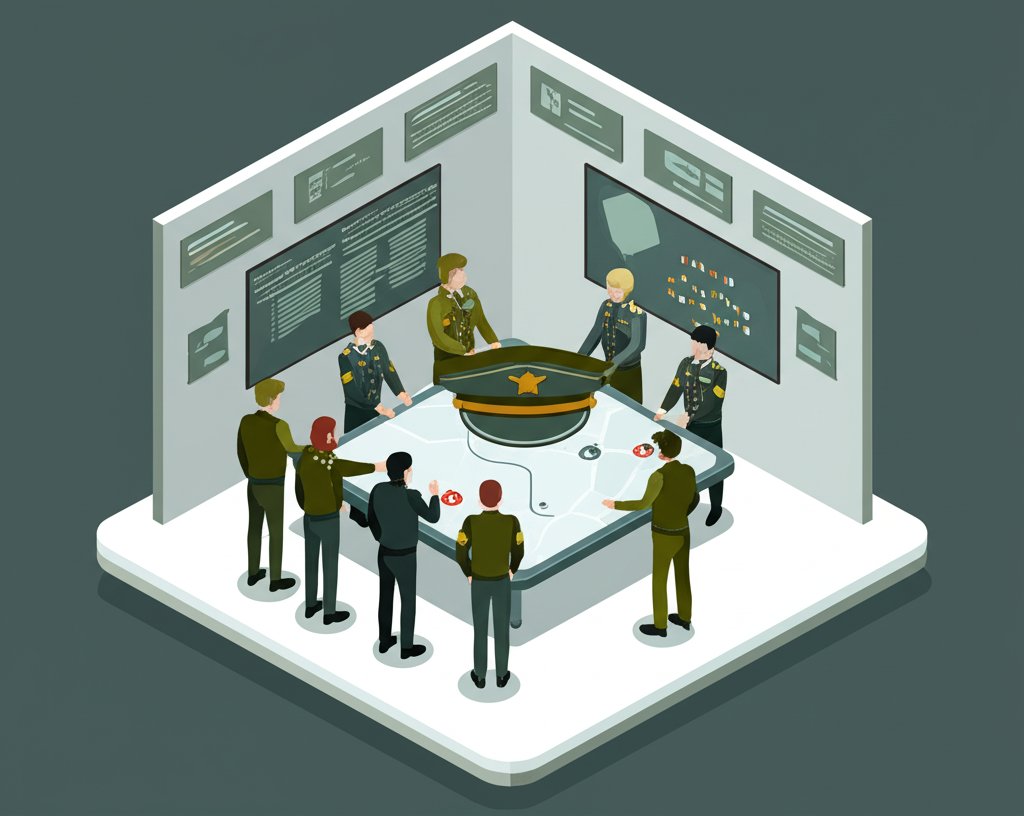
The title of “legendary” isn’t bestowed lightly. It requires more than mere victories; it demands a unique combination of qualities that transcend the battlefield and leave an indelible mark on military history. These aren’t just good generals; they are individuals whose genius fundamentally changed the art of war.
Strategic Acumen and Adaptability
At the core of every legendary commander lies an extraordinary strategic mind. They possess the ability to view the entire theatre of war, understanding geopolitical landscapes, supply lines, and the psychological state of both their own troops and the enemy. Crucially, they are masters of adaptability. Rigid plans often shatter under the pressures of war; these commanders could pivot, innovate, and exploit unforeseen opportunities, turning apparent defeat into decisive victory. This meant not just winning a battle, but winning the campaign and ultimately, the war.
Leadership, Morale, and Innovation
A brilliant strategy is useless without the means to execute it. Famous military leaders possessed an uncanny ability to inspire and lead. They understood the psychology of their soldiers, fostering an unshakeable esprit de corps. Whether through personal bravery on the front lines, promises of glory, or a reputation for consistent success, they commanded loyalty that sustained armies through the harshest conditions. Furthermore, many introduced innovative tactics, weaponry, or organizational structures that revolutionized warfare, forcing their adversaries to adapt or perish.
Lasting Impact on Military History
Perhaps the most significant differentiator for legendary military commanders is their lasting legacy. Their campaigns didn’t just win a day; they redrew maps, established new empires, or inspired future generations of strategists. Their doctrines, their battle formations, and even their personal philosophies continue to be studied in military academies worldwide, proving that their wisdom transcends time. They didn’t just participate in military history; they wrote it.
Architects of Empire: Iconic Figures and Their Historical Battles
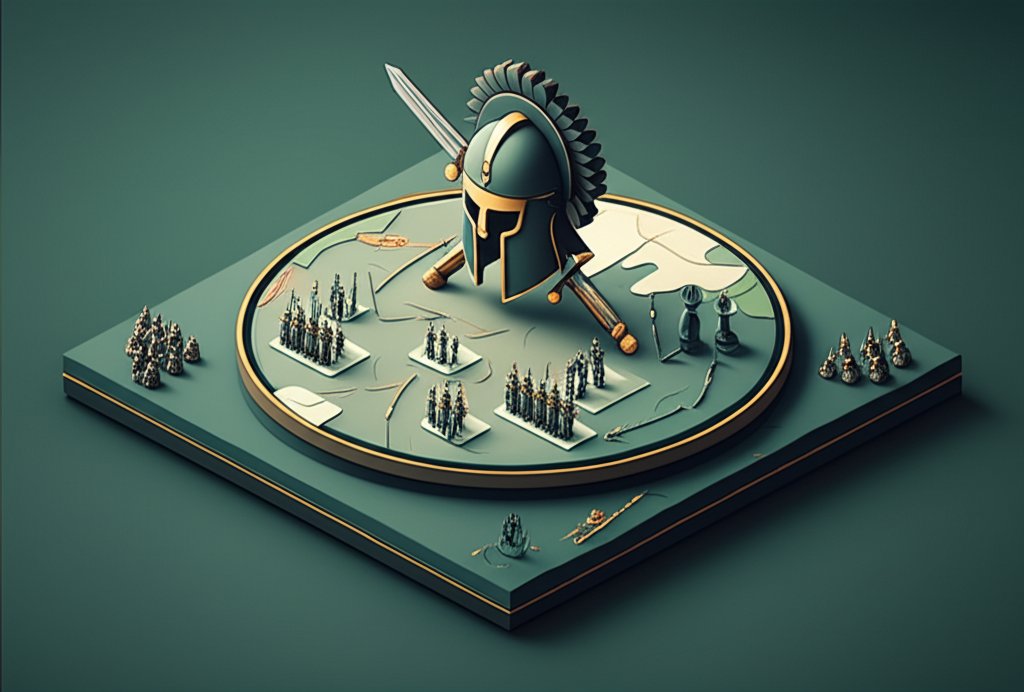
From ancient conquerors who forged vast empires to cunning tacticians who outmaneuvered vastly superior forces, these military commanders are etched into the annals of history. Their historical battles are case studies in strategic genius.
Alexander the Great: The Unstoppable Macedonian
Born to rule and destined to conquer, Alexander III of Macedon, known as “the Great,” crafted an empire stretching from Greece to India by the age of 30. His campaigns are a testament to audacious speed, tactical flexibility, and unwavering personal courage.
- Battle of Gaugamela (331 BC): Facing the numerically superior Persian army of Darius III on a prepared battlefield, Alexander employed his famous “hammer and anvil” tactic. While his left wing held firm against the Persian chariots and infantry, Alexander led his elite Companion Cavalry in a daring diagonal charge, creating a gap in the Persian centre and striking directly at Darius. The Persian king fled, and his army disintegrated, effectively ending the Achaemenid Empire. This battle showcases Alexander’s ability to read the battlefield, commit decisive force, and maintain discipline under extreme pressure.
- Legacy: Alexander’s conquests spread Hellenistic culture across the East, laying foundations for future empires and influencing countless military commanders with his aggressive, decisive approach to warfare.
Julius Caesar: Rome’s Master Strategist
Gaius Julius Caesar, a Roman general and statesman, was a multifaceted genius who not only conquered Gaul but also played a pivotal role in the transformation of the Roman Republic into an empire. His campaigns are celebrated for their engineering marvels, rapid maneuvers, and unparalleled leadership.
- Battle of Alesia (52 BC): This siege, a masterpiece of Roman military engineering, saw Caesar’s legions construct two circumvallation lines – one facing inwards to starve out the Gallic chieftain Vercingetorix’s forces, and another facing outwards to defend against a massive Gallic relief army. Trapped between two Roman fortifications, both Gallic armies were ultimately defeated, securing Roman dominance over Gaul. Caesar’s ability to manage complex logistical challenges and execute a brilliant defensive-offensive strategy simultaneously cemented his reputation.
- Battle of Pharsalus (48 BC): In this decisive clash of the Roman Civil War, Caesar, despite being outnumbered, expertly outmaneuvered Pompey the Great’s forces. His innovative use of a hidden fourth line of infantry, designed to counter Pompey’s cavalry charge, shattered his opponent’s elite troops and led to a crushing victory, paving the way for Caesar’s ultimate rise to power.
- Legacy: Caesar’s commentaries (De Bello Gallico) remain essential texts in military history, offering insights into Roman warfare, leadership, and political strategy. His short-sword, swift-striking legions became the gold standard for disciplined infantry.
Genghis Khan: The Mongol Whirlwind
Temüjin, later known as Genghis Khan, unified the nomadic tribes of Mongolia and unleashed a military force that carved out the largest contiguous land empire in military history. His methods revolutionized cavalry warfare, emphasizing speed, discipline, and psychological terror.
- Campaign Against the Khwarezmian Empire (1219-1221): This campaign demonstrated the Mongols’ mastery of strategic deception and overwhelming force. Genghis Khan divided his vast army, sending one column through the supposedly impassable Kyzyl Kum desert to surprise a major Khwarezmian city, while other forces engaged frontally. The sheer audacity and logistical planning behind this multi-pronged invasion shattered the Khwarezmian Empire and opened the Silk Road to Mongol control.
- Legacy: Genghis Khan’s decimal system of military organization, his intelligence gathering networks, and his emphasis on combined arms tactics (heavy and light cavalry, horse archers) profoundly influenced later Eurasian warfare. The sheer scale and speed of his conquests remain unparalleled.
Hannibal Barca: The Tactician’s Paragon
The Carthaginian general Hannibal Barca stands as one of the most brilliant tactical military commanders in military history, renowned for his daring strategies and his ability to inflict devastating defeats on the Roman Republic.
- Battle of Cannae (216 BC): This battle is a classic study in tactical envelopment. Facing a significantly larger Roman army, Hannibal deliberately allowed his center to fall back, forming a crescent shape. As the Romans pressed forward, his veteran African infantry on the flanks swung inwards, completely encircling and annihilating the Roman legions. It remains one of the greatest tactical victories in history, demonstrating his mastery of maneuver and understanding of enemy psychology.
- Legacy: Hannibal’s innovative use of feigned retreats, flanking maneuvers, and combined arms techniques influenced strategists for centuries, most notably influencing Napoleon. His audacious crossing of the Alps with elephants remains an iconic feat of logistical determination.
Napoleon Bonaparte: The Emperor of Maneuver
Napoleon, a French general who rose to become Emperor, dominated Europe in the early 19th century through a series of lightning campaigns and decisive victories. He was a master of combined arms, artillery deployment, and rapid troop movement.
- Battle of Austerlitz (1805): Often regarded as Napoleon’s greatest triumph, this “Battle of the Three Emperors” saw him defeat a larger Austro-Russian army through cunning deception and brilliant timing. Feigning weakness on his right flank to draw Allied forces, Napoleon then launched a crushing assault on the heavily fortified Pratzen Heights, splitting the enemy army and leading to a rout. His ability to anticipate enemy movements and exploit terrain was unparalleled.
- Legacy: Napoleon’s creation of the corps system, his emphasis on artillery concentration (“le feu tue”), and his concept of the decisive battle (“manoeuvre sur les derrières”) fundamentally reshaped modern warfare. He remains a central figure for students of military history and strategy.
Beyond the Battlefield: The Enduring Legacy of Famous Military Leaders
The impact of these legendary military commanders extends far beyond the immediate outcomes of their historical battles. Their actions and philosophies continue to shape our understanding of leadership, strategy, and the very nature of conflict.
Shaping Geopolitics and Civilizations
Alexander’s conquests spread Hellenistic culture, creating a common intellectual ground that facilitated later Roman and Byzantine empires. Genghis Khan’s Pax Mongolica, despite its brutality, facilitated trade and cultural exchange across Eurasia. Caesar’s campaigns forged the foundations of the Roman Empire, a cornerstone of Western civilization. These famous military leaders didn’t just win wars; they reshaped the world’s political and cultural landscape for centuries.
Foundations of Modern Military Doctrine
The principles demonstrated by these ancient and classical military commanders — the importance of intelligence, logistics, rapid movement, deception, flanking maneuvers, and the concentration of force — are still taught in military academies today. Hannibal’s Cannae is a textbook example of tactical envelopment. Alexander’s “hammer and anvil” is a foundational concept. Napoleon’s operational art, linking tactical victories to strategic goals, remains a benchmark. Their genius established the timeless truths of strategy.
Psychological Warfare and Propaganda
Many legendary military commanders were also masters of the human mind. Alexander cultivated a divine aura. Caesar was a genius at propaganda, using his writings and public image to sway opinion. Genghis Khan used terror as a weapon to break enemy will before battle. These aspects of leadership, focused on morale, perception, and demoralizing the enemy, are as relevant in modern conflicts as they were in ancient historical battles.
Unsung Brilliance: Lesser-Known Commanders Who Shaped Military History
While much attention is given to the universally recognized names, military history is also rich with military commanders whose brilliance, though perhaps less globally celebrated, had a profound regional or doctrinal impact.
Shaka Zulu: The Innovator of Southern Africa
Shaka Zulu (c. 1787–1828) was not just a warrior but a revolutionary military reformer. He transformed the Zulu army from a traditional tribal force into a formidable fighting machine, largely through innovative tactics and weapons.
- Tactics: Shaka refined the “buffalo horns” formation, a devastating maneuver where a central “chest” engaged the enemy, while flanking “horns” rapidly encircled them, trapping and annihilating the foe.
- Weaponry: He replaced the long throwing spear with the iklwa, a short, stabbing spear designed for close-quarters combat, emphasizing aggressive, disciplined engagement.
- Legacy: Shaka’s reforms and leadership led to the rapid expansion of the Zulu Kingdom, causing a period of immense social upheaval and migration known as the Mfecane across southern Africa. His innovations are studied as an example of rapid, effective military modernization.
Khalid ibn al-Walid: The Sword of Allah
Khalid ibn al-Walid (c. 585–642 AD) was a companion of the Islamic prophet Muhammad and one of the most successful military commanders in military history. He is renowned for his expertise in cavalry tactics and his unbroken string of victories.
- Battles: From the Battle of Yarmouk (636 AD) against the Byzantine Empire to the Battle of Walaja (633 AD) against the Sassanid Persians, Khalid frequently defeated numerically superior forces through daring maneuvers, such as the double envelopment and rapid desert marches to achieve strategic surprise.
- Legacy: His military genius was instrumental in the early Islamic conquests, expanding the nascent Caliphate rapidly across the Levant and Mesopotamia. He is a prime example of a commander who excelled in exploiting terrain and morale.
The Modern Echoes: Lessons from Ancient Genius for Today’s Military Commanders
The strategies and leadership qualities of these legendary military commanders are not confined to the dustbin of history. Their principles offer timeless lessons for contemporary military commanders and even leaders in other fields.
Adaptability in an Evolving Landscape
Modern warfare, characterized by asymmetric threats, rapid technological change, and complex geopolitical dynamics, demands adaptability more than ever. The ability of Alexander to adjust his formations on the fly, or Caesar to construct engineering marvels under duress, speaks to a cognitive agility that remains crucial. Today’s famous military leaders must navigate cyber warfare, information operations, and conventional combat simultaneously, echoing the multi-faceted challenges faced by their ancient predecessors.
The Primacy of Leadership and Logistics
Technology can enhance firepower, but it cannot replace the fundamental human elements of warfare. The ability of Genghis Khan to motivate vast, disparate forces across immense distances, or Napoleon to manage the unprecedented logistics of his Grande Armée, underscores the enduring importance of leadership and supply chains. Modern military commanders still rely on these core tenets to maintain morale, ensure readiness, and sustain operations, proving that the human factor and meticulous planning are as vital as any technological advantage. The historical battles they fought remind us that the human will to fight and the logistical capacity to sustain it are paramount.
Conclusion
The tapestry of military history is woven with the threads of courage, sacrifice, and, most profoundly, genius. The legendary military commanders discussed here – figures like Alexander the Great, Julius Caesar, Genghis Khan, Hannibal Barca, and Napoleon Bonaparte – represent the pinnacle of strategic and tactical brilliance. Their epic battles were not merely clashes of armies but pivotal moments that diverted the course of human civilization, leaving an indelible mark on our world.
By delving into their methods, their innovations, and their enduring impact, we gain not only a deeper appreciation for the past but also valuable insights into the timeless principles of leadership, adaptability, and the art of war. These famous military leaders continue to inspire and instruct, reminding us that while the tools of conflict may evolve, the essence of strategic genius remains eternal. Study their stories, for in their triumphs and their rare defeats, lie lessons that resonate across the ages.










