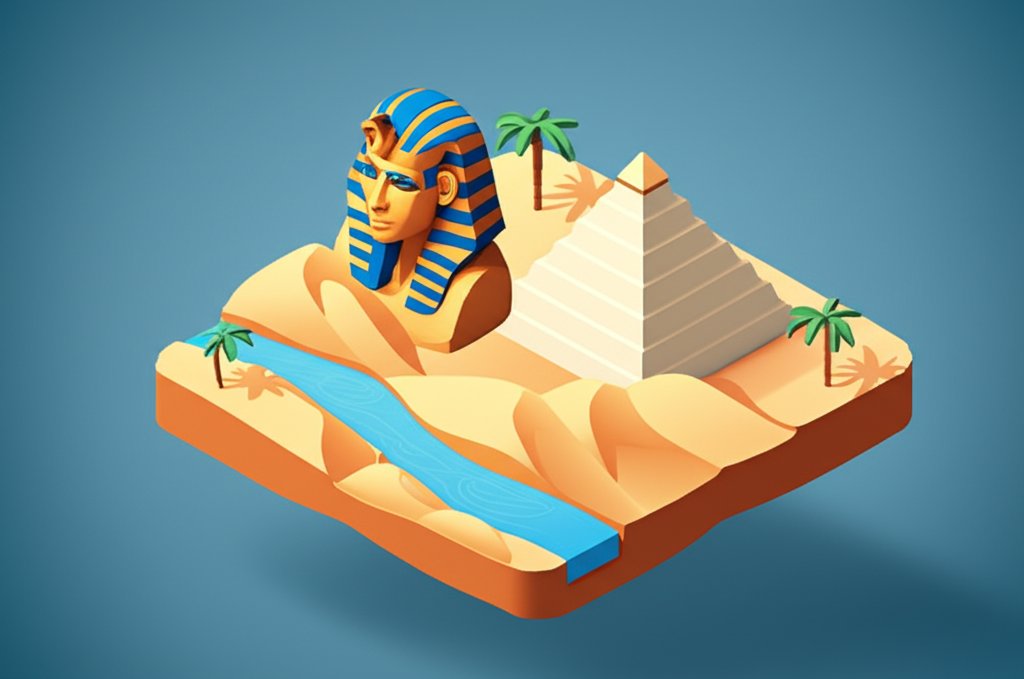
Embark on an extraordinary journey through time to Ancient Egypt, a civilization that continues to captivate the human imagination millennia after its golden age. From the enigmatic Pharaohs who ruled as living gods to the colossal Pyramids that defy engineering logic, and the rich tapestry of its boundless History, Ancient Egypt stands as a testament to ingenuity, artistry, and spiritual depth. This article will meticulously explore the profound History of Ancient Egypt, detailing its rise, zenith, and eventual decline, and cement its place among the most influential Ancient Civilizations. Prepare to uncover the secrets of a society that laid the foundations for countless advancements, leaving an indelible mark on the world.
The Unfolding Tapestry: A Deep Dive into Egyptian History
The History of Ancient Egypt is a saga spanning over three millennia, a testament to the enduring power of a culture forged along the fertile banks of the Nile River. Understanding this immense timeline is crucial to appreciating the full scope of Egyptian History.
Pre-Dynastic Roots and Unification: Laying the Foundations
Before the unification, various settlements thrived along the Nile, developing distinct cultures like the Badarian and Naqada. These early communities, primarily agricultural, gradually formed larger political entities. Around 3100 BCE, under the legendary King Menes (often identified with Narmer), Upper and Lower Egypt were unified. This pivotal event marked the dawn of the Early Dynastic Period and the beginning of the pharaonic era, setting the stage for the powerful Pharaohs who would govern this unified land.
The Early Dynastic Period: Birth of a Nation (c. 3100 – 2686 BCE)
The unification ushered in the Early Dynastic Period (Dynasties I-II), where the foundations of traditional Ancient Egypt were laid. Memphis was established as the capital, and the concept of divine kingship, central to the role of Pharaohs, began to solidify. Elaborate mastaba tombs, rectangular structures with sloping sides, were built for the royal elite at Abydos and Saqqara, hinting at the monumental architecture to come.
The Old Kingdom: Pyramids and Power (c. 2686 – 2181 BCE)
Often heralded as the “Age of Pyramids,” the Old Kingdom (Dynasties III-VI) represents the pinnacle of early Egyptian power and architectural ambition. This era saw the development of highly centralized administration and profound religious beliefs centered around the afterlife.
- Djoser and the Step Pyramid: The first true pyramid, the Step Pyramid at Saqqara, was built for Pharaoh Djoser by his visionary vizier Imhotep. It revolutionized architecture, moving from mud-brick mastabas to stone structures and setting a precedent for future monumental construction.
- The Great Pyramids of Giza: Under Pharaohs Khufu, Khafre, and Menkaure (Dynasty IV), the iconic Great Pyramids of Giza were constructed. These massive stone structures, along with the Great Sphinx, are enduring symbols of Ancient Egypt’s architectural and organizational prowess. They served as eternal resting places for the pharaohs, ensuring their divine transition to the afterlife.
First Intermediate Period: Disunity and Rebirth (c. 2181 – 2055 BCE)
Following the Old Kingdom, central authority weakened, leading to the First Intermediate Period. Regional nomarchs (provincial governors) gained power, resulting in a period of political fragmentation and civil strife. Despite the chaos, art and literature flourished locally, reflecting a more diverse cultural landscape.
The Middle Kingdom: Era of Literature and Expansion (c. 2055 – 1650 BCE)
The Middle Kingdom (Dynasties XI-XIII) began with the reunification of Egypt under Mentuhotep II, bringing stability and a renewed sense of national identity. This period witnessed a golden age of literature, producing masterpieces like the “Story of Sinuhe” and the “Instruction of Amenemhat.” The Pharaohs of the Middle Kingdom, such as Senusret III, expanded Egypt’s influence into Nubia, securing valuable resources and defining the country’s southern borders.
Second Intermediate Period: Hyksos Rule (c. 1650 – 1550 BCE)
Political instability once again led to fragmentation, allowing the Hyksos, a foreign people from the Near East, to gain control of much of Lower Egypt. They introduced new military technologies, including the horse and chariot, which the Egyptians later adopted. This period of foreign rule was eventually overthrown by native Egyptian rulers from Thebes.
The New Kingdom: Imperial Grandeur and Iconic Pharaohs (c. 1550 – 1069 BCE)
The New Kingdom (Dynasties XVIII-XX) is arguably the most famous period in Egyptian History, characterized by unprecedented imperial expansion and the reign of powerful and iconic Pharaohs.
- Hatshepsut: One of the most successful female Pharaohs, Hatshepsut ruled as a king, commissioning grand building projects and re-establishing trade networks.
- Akhenaten: This revolutionary Pharaoh initiated a radical religious reform, promoting the worship of a single god, the Aten, and moving the capital to Amarna. His religious and artistic innovations were largely reversed after his death.
- Tutankhamun: Though his reign was short and relatively insignificant, Pharaoh Tutankhamun became world-famous after the discovery of his nearly intact tomb in 1922, offering unparalleled insights into royal burial practices.
- Ramses II (The Great): Often considered the greatest Pharaoh of the New Kingdom, Ramses II ruled for 66 years, commissioning massive temples (like Abu Simbel) and monuments, and leading military campaigns that solidified Egypt’s empire. His reign marks a peak in the power and prestige of Ancient Egypt.
Late Period and Foreign Domination (c. 1069 – 332 BCE)
Following the New Kingdom, Ancient Egypt entered its Late Period, marked by political fragmentation and successive periods of foreign rule by Libyans, Nubians, Assyrians, and Persians. Despite these challenges, native Egyptian culture persisted, and periods of resurgence occurred.
Ptolemaic Dynasty: The Last Pharaohs (332 – 30 BCE)
Alexander the Great conquered Egypt in 332 BCE, ushering in the Hellenistic period. After his death, his general Ptolemy I Soter founded the Ptolemaic Dynasty. This Greek-speaking dynasty ruled for nearly three centuries, intermingling Egyptian and Greek cultures. The most famous of these rulers was Cleopatra VII, the last reigning Pharaoh of Ancient Egypt, who famously allied with Roman leaders Julius Caesar and Mark Antony.
Roman Annexation: The End of an Era (30 BCE)
The defeat of Antony and Cleopatra by Octavian (later Emperor Augustus) at the Battle of Actium in 31 BCE led to the Roman conquest of Egypt. In 30 BCE, Egypt became a Roman province, marking the definitive end of the pharaonic era and the independent History of Ancient Egypt.
Architectural Marvels: The Undying Legacy of Egyptian Pyramids and Temples
The awe-inspiring structures built by Ancient Egypt remain some of the most remarkable achievements of Ancient Civilizations. From the earliest mastabas to the iconic Pyramids and vast temple complexes, these constructions served profound religious, political, and social purposes.
Evolution of Pyramid Construction
The pyramids were not just grand tombs; they were complex statements of the pharaoh’s divine power and the civilization’s ability to organize massive resources.
- Mastabas to Step Pyramids: The architectural journey began with simple mud-brick mastabas, evolving into Djoser’s Step Pyramid, a series of stacked mastabas.
- Bent and Red Pyramids: Pharaoh Sneferu, Khufu’s father, experimented with pyramid construction, resulting in the Bent Pyramid and the true-sided Red Pyramid at Dahshur, refining the techniques for the Great Pyramid.
- The Great Pyramids of Giza: These symbolize the zenith of pyramid building. Their precise alignment, massive scale, and intricate internal passages reflect a sophisticated understanding of mathematics, astronomy, and engineering. They required immense coordination of labor, resources, and skilled craftsmanship.
Beyond Pyramids: Temples and Tombs
While pyramids ceased to be the preferred burial method for Pharaohs after the Old Kingdom, monumental construction continued with magnificent temples and hidden tombs.
- Valley of the Kings: In the New Kingdom, Pharaohs were buried in rock-cut tombs in the Valley of the Kings, adorned with elaborate paintings and inscriptions detailing their journey to the afterlife and protecting their treasures.
- Temple Complexes: Vast temple complexes like Karnak and Luxor, dedicated to the gods, showcased monumental pylons, hypostyle halls, obelisks, and colossal statues. They were centers of religious worship, economic activity, and political power, vital to Ancient Egypt’s functioning.
- Mortuary Temples: Pharaohs like Hatshepsut (Deir el-Bahari) and Ramses II (Ramesseum) built grand mortuary temples adjacent to their burial sites, for their cults to be maintained in perpetuity.
The Realm of Pharaohs: Rulers, Gods, and Absolute Power
The Pharaohs were more than just kings; they were considered living manifestations of the gods, acting as intermediaries between the divine and the mortal realms. Their role was central to every aspect of Ancient Egypt.
The Divine Role of the Pharaoh
The concept of divine kingship was fundamental to Ancient Egypt. The pharaoh was believed to embody the god Horus while alive and Osiris in death, ensuring cosmic order (Ma’at) through their reign.
- Religious Authority: The pharaoh was the chief priest of every cult, responsible for building and maintaining temples, and performing rituals crucial for the prosperity of Egypt.
- Political and Military Leadership: As supreme ruler, the pharaoh commanded the army, administered justice, and oversaw all state affairs. Grand military campaigns and diplomatic negotiations were conducted in their name.
- Economic Control: All land and resources were ultimately owned by the pharaoh, who controlled the economy through a vast bureaucracy.
Notable Pharaohs Who Shaped History
The long History of Ancient Egypt is punctuated by the reigns of extraordinary Pharaohs whose impact resonated through the ages.
- Narmer/Menes: The unifier of Egypt, establishing the first dynasty and ushering in the pharaonic era.
- Djoser: His Step Pyramid marked a revolution in architecture and the power of the early state.
- Khufu: The pharaoh for whom the Great Pyramid of Giza was built, a monument to his absolute power and the engineering capabilities of his age.
- Hatshepsut: A powerful female pharaoh who ruled with authority and presided over a prosperous and peaceful reign focused on trade and monumental building.
- Akhenaten: A controversial figure whose religious reforms challenged millennia-old traditions, leaving a fascinating, if short-lived, legacy.
- Tutankhamun: Though minor in life, his rediscovered wealth and the mystique surrounding his premature death made him a global icon.
- Ramses II: “Ramses the Great,” whose long and successful reign saw vast building projects, military victories, and the signing of the world’s first recorded peace treaty.
- Cleopatra VII: The last active pharaoh, renowned for her intelligence, charisma, and dramatic efforts to preserve Egyptian independence against Roman expansion.
Symbols and Regalia of Authority
The visual representation of Pharaohs was laden with symbolism, communicating their divine status and power.
- Crowns: The Red Crown (Lower Egypt), White Crown (Upper Egypt), and the Double Crown (unified Egypt) signified territorial rule. The Blue Crown (Khepresh) was often worn in battle.
- Uraeus: The rearing cobra, worn on the forehead, symbolized royal authority and divine protection.
- False Beard and Crook & Flail: The ceremonial false beard signified masculinity and divine status, while the crook (symbolizing kingship) and flail (symbolizing the fertility of the land) were insignia of royal power.
Life Along the Nile: Society, Culture, and Daily Existence in Ancient Egypt
Beyond the grand monuments and powerful Pharaohs, Ancient Egypt was a vibrant society with a rich daily life, complex religious beliefs, sophisticated writing, and innovative contributions to art and science. This deeper look into Egyptian History reveals the people behind the pyramids.
Social Hierarchy and Daily Life
Ancient Egypt was a highly stratified society, with the pharaoh at the apex, followed by a clear hierarchy.
- The Elite: High priests, nobles, and scribes formed the upper echelons, enjoying privileged lives, grand tombs, and influence. Scribes, in particular, held immense power due to their literacy.
- The Middle Class: Artisans, craftsmen, merchants, and lower-level officials made up a growing middle class, contributing to the economy and culture.
- Farmers and Laborers: The vast majority of the population were farmers, tied to the agricultural cycle of the Nile. They worked the land, paid taxes in produce, and were often conscripted for monumental building projects like the pyramids.
- Family Life: Family was central to Egyptian society, with defined roles for men and women, though women in Ancient Egypt enjoyed considerably more rights and autonomy than in many other Ancient Civilizations, including owning property, managing businesses, and pursuing professions.
Religion, Mythology, and the Afterlife
Religion permeated every aspect of Ancient Egypt, from daily rituals to grand state ceremonies. The pantheon of gods and goddesses, like Ra, Osiris, Isis, and Horus, governed natural phenomena and human destiny.
- Belief in the Afterlife: A profound belief in the afterlife was a cornerstone of Egyptian religion. Elaborate burial practices, including mummification, offerings, and tomb decorations, were designed to ensure the deceased’s successful journey to the Field of Reeds.
- Judgment of the Dead: The “Weighing of the Heart” ceremony, as depicted in the Book of the Dead, determined an individual’s fate in the afterlife.
- Cults and Temples: Each god had a cult and dedicated temples, staffed by priests who performed daily rituals and festivals.
Hieroglyphs and Ancient Egyptian Writing
One of the most remarkable intellectual achievements of Ancient Egypt was the development of hieroglyphic writing.
- The Sacred Script: Hieroglyphs (“sacred carvings”) consisted of pictures representing words, sounds, or concepts. They were primarily used for monumental inscriptions on temples and tombs.
- Hieratic and Demotic: For everyday use, quicker, cursive scripts like hieratic and later demotic evolved.
- Papyrus: The Egyptians invented papyrus, a revolutionary writing material made from the papyrus plant, enabling the creation of documents, literary works, and administrative records.
- Rosetta Stone: The discovery of the Rosetta Stone in 1799 provided the key to deciphering hieroglyphs, unlocking millennia of Egyptian History for modern scholars.
Art, Science, and Innovation
Ancient Egypt was a cradle of innovation, making significant contributions that influenced subsequent Ancient Civilizations.
- Art and Sculpture: Egyptian art followed strict conventions, characterized by its symbolic nature, use of vibrant colors, and distinctive frontalism in depicting figures. Sculptures, from colossal statues of Pharaohs to intricate tomb reliefs, aimed for eternal preservation.
- Mathematics and Astronomy: Practical needs led to advancements in mathematics, essential for surveying land after the Nile floods and for pyramid construction. Their astronomical observations were crucial for developing a sophisticated calendar system that formed the basis of our modern 365-day calendar.
- Medicine: Egyptian physicians were highly regarded in the ancient world, performing surgeries, setting bones, and developing remedies based on extensive knowledge of anatomy (gained through mummification) and herbal medicine.
Ancient Egypt Among Ancient Civilizations: A Global Impact
Ancient Egypt stands as one of the most enduring and influential Ancient Civilizations, its impact reverberating across millennia and shaping the course of human development. Its unique contributions set it apart and established precedents for many cultures that followed.
Unique Contributions and Enduring Influence
The legacy of Ancient Egypt is vast and profound, touching upon various aspects of human endeavor.
- State Formation and Governance: One of the earliest examples of a unified nation-state, providing a model for centralized authority under divine leadership.
- Monumental Architecture: The pyramids, temples, and obelisks showcase unparalleled engineering and artistic skill, inspiring architects and awe for thousands of years.
- Writing Systems: Hieroglyphs and papyrus revolutionized communication and record-keeping, laying groundwork for future alphabets and literary traditions.
- Religious and Philosophical Concepts: Concepts of the afterlife, divine kingship, and cosmic order profoundly influenced Near Eastern and Mediterranean thought.
- Scientific and Medical Knowledge: Practical advancements in medicine, mathematics, and astronomy were highly sought after and shared with neighboring cultures.
- Artistic Style: The distinctive style of Egyptian art, with its symbolism and enduring forms, influenced Greek, Roman, and later European art.
Comparing Egypt to Other Great Ancient Civilizations
While distinct, Ancient Egypt shared and exchanged ideas with many other Ancient Civilizations, including Mesopotamia, the Indus Valley, the Minoans, and later, the Greeks and Romans.
- Mesopotamia: Both Egypt and Mesopotamia developed complex societies around fertile river valleys, but Egypt’s geographical isolation provided more stability and a unified culture for longer periods. Mesopotamia saw more fragmented city-states and cyclical empires.
- Indus Valley Civilization: Like Egypt, the Indus Valley developed urban planning and sophisticated infrastructure, but its writing system remains undeciphered, offering fewer direct insights into its specific history of Ancient Egypt’s political and religious life.
- Greece and Rome: Later, Egypt became a source of immense fascination and influence for the Greeks and Romans. Greek philosophers and historians studied Egyptian knowledge, and Roman emperors admired (and often adopted) Egyptian monumental styles. The Roman conquest brought an end to an independent pharaonic state but integrated its rich cultural heritage into the wider Roman world.
The study of Ancient Egypt provides not just fascinating insights into a bygone era, but also a crucial understanding of the roots of many aspects of our modern world, confirming its status as one of Earth’s foundational Ancient Civilizations.
To gain a broader perspective on how Ancient Egypt fits into the grand scheme of antiquity, exploring a comprehensive Ancient History Timeline can offer valuable context.
Conclusion
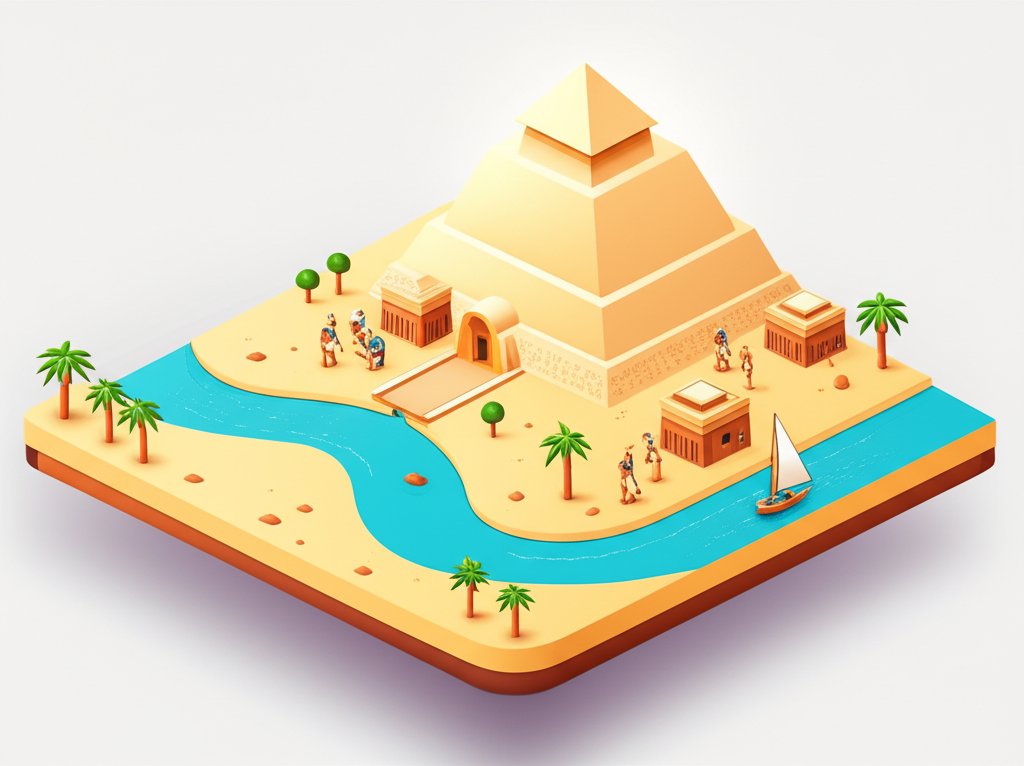
The History of Ancient Egypt is an epic narrative of human accomplishment, artistic brilliance, and unwavering faith. From the pioneering Pharaohs who forged a unified nation to the construction of the colossal Pyramids that still dominate the desert landscape, this civilization’s journey offers profound lessons in innovation, resilience, and the power of belief. Ancient Egypt’s legacy, encompassing its advanced writing, intricate religious systems, and sophisticated societal structures, cemented its place as a cornerstone among Ancient Civilizations. By continuing to uncover the mysteries of this remarkable past, we gain a deeper appreciation for the enduring human spirit and the timeless allure of Egyptian History.
FAQ Section
Q1: What are the main periods in the History of Ancient Egypt?
A1: The History of Ancient Egypt is traditionally divided into the Early Dynastic Period, Old Kingdom, First Intermediate Period, Middle Kingdom, Second Intermediate Period, New Kingdom, Late Period, Ptolemaic Period, and finally, Roman Egypt. Each period is characterized by distinct political structures, cultural developments, and key Pharaohs.
Q2: Who were the Pharaohs and what was their role in Ancient Egypt?
A2: The Pharaohs were the absolute rulers of Ancient Egypt, considered divine beings – living gods (Horus on earth) who acted as intermediaries between humans and the divine pantheon. Their role encompassed religious leadership (chief priest), political and military command, and economic control, ensuring “Ma’at” or cosmic order.
Q3: What is the significance of the Pyramids in Ancient Egypt?
A3: The Pyramids in Ancient Egypt primarily served as monumental tombs for Pharaohs and high-ranking officials, particularly during the Old Kingdom. Their significance lies in demonstrating the pharaoh’s immense power, the advanced engineering and organizational skills of the Egyptians, and their profound belief in the afterlife, designed to secure the pharaoh’s eternal journey to the gods.
Q4: How did Hieroglyphs contribute to Egyptian History?
A4: Hieroglyphs were the formal writing system of Ancient Egypt and played a crucial role in preserving its history. They allowed for detailed records of religious texts, royal decrees, historical events, and administrative documents to be carved into stone or written on papyrus, offering invaluable insights into their culture, beliefs, and governance for modern scholars.
Q5: What made Ancient Egypt one of the most prominent Ancient Civilizations?
A5: Ancient Egypt distinguished itself among Ancient Civilizations through its unique combination of geographical stability, long-lasting political unity under the Pharaohs, monumental architecture (like the Pyramids), sophisticated writing systems (hieroglyphs), advanced religious philosophies (especially concerning the afterlife), and significant contributions to science, medicine, and art, all of which had a lasting impact on subsequent cultures.
Q6: What was daily life like for ordinary people in Ancient Egypt?
A6: Most ordinary people in Ancient Egypt were farmers who lived in mud-brick homes along the Nile, their lives revolving around the river’s annual flood cycle. Daily life involved working in fields, fishing, and contributing labor to state projects. Family was central, and women enjoyed more rights than in many contemporary societies, including the ability to own property and engage in trade.










