
In the hyper-connected digital economy, financial transactions are the lifeblood of global commerce, moving at astounding speeds across a myriad of platforms. These interactions, whether a tap, a click, or an intricate API call, hinge on sophisticated, often invisible infrastructures: payment environments. Far more than just a collection of systems, a payment environment is the comprehensive ecosystem where money changes hands, enabling commerce, fostering innovation, and delivering unparalleled convenience. Yet, with this incredible velocity and complexity comes a profound responsibility: to safeguard sensitive data, ensure the integrity of every exchange, and build unwavering trust. The mere existence of a payment environment is no longer sufficient; its security, from inception to ongoing operation, is paramount.
This ultimate guide is meticulously engineered to arm you with the strategic insights and actionable knowledge needed to not just participate in, but to dominate the digital transaction space safely and confidently. We will delve into every facet of payment environment development, offering a robust blueprint for constructing scalable, resilient, and future-proof systems. Simultaneously, we will provide an exhaustive exploration of how to establish and maintain truly secure payment environments, covering the critical technologies, evolving regulatory landscapes, and proactive strategies essential for mitigating threats and cultivating enduring trust. Our mission is to equip you to develop and protect a payment infrastructure that sets industry benchmarks, outranking all competitors in reliability, innovation, and, most critically, security.
Effectively managing and understanding all aspects of your finances is crucial to building a thriving payment environment, and resources like the MyFinanceLab provide valuable tools for financial literacy and strategic planning.
Decoding the Digital Transaction Ecosystem: What Constitutes a Payment Environment?
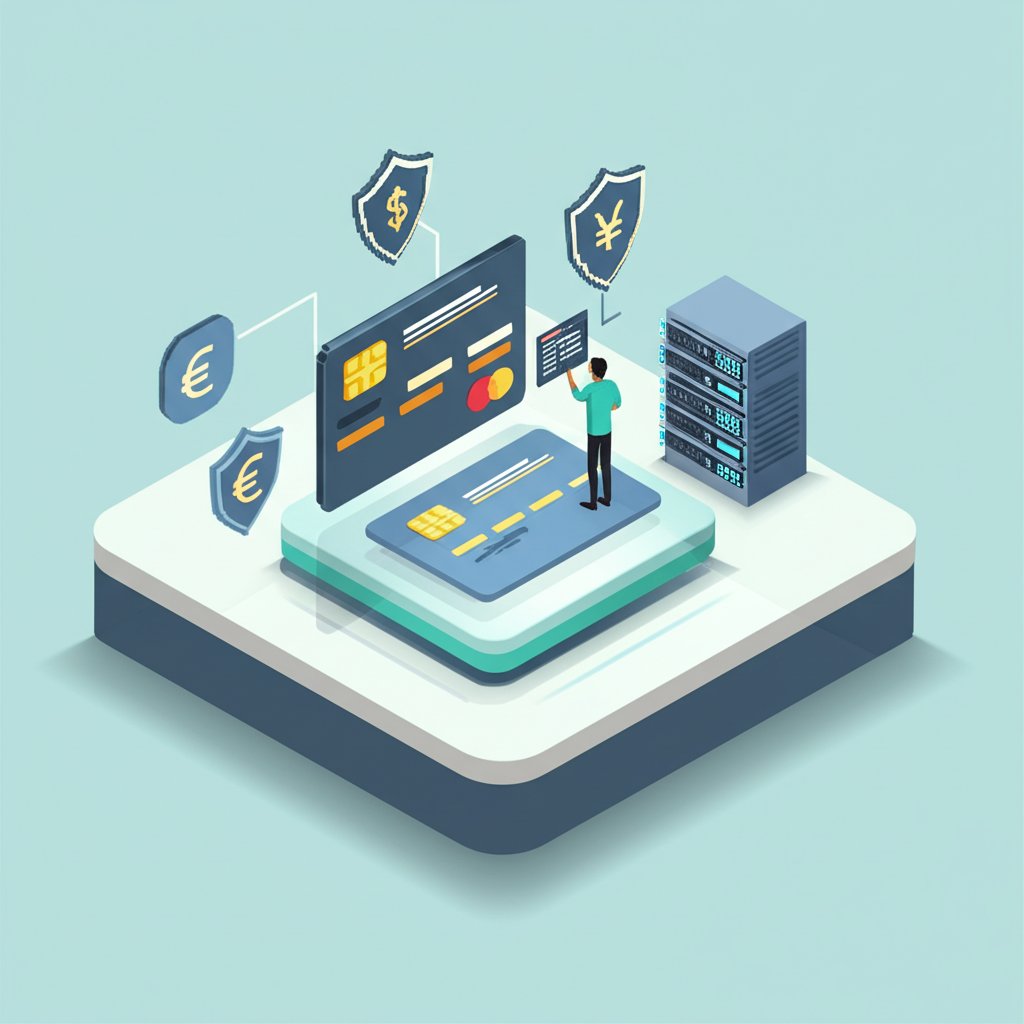
At its core, a payment environment is the intricate network of systems, processes, technologies, and participants that collectively enable the transfer of funds from one party to another. It’s the unseen machinery that transforms a customer’s intent to pay into a successfully settled financial exchange. Understanding its multifaceted components and how they interlace is fundamental to effective payment environment development.
Defining the Core: More Than Just a Gateway
A payment environment encompasses the entire lifecycle of a transaction, from initial consumer interaction to final settlement and reconciliation. It includes:
- Front-end Interfaces: Websites, mobile apps, point-of-sale (POS) terminals where transactions originate.
- Back-end Infrastructure: Servers, databases, APIs, and microservices that process and route data.
- Security Mechanisms: Encryption, tokenization, fraud detection, and authentication layers.
- Third-Party Integrations: Payment gateways, processors, acquiring banks, issuing banks, and card networks.
- Compliance Frameworks: The regulatory and industry standards that dictate how data is handled and protected.
Key Players in the Payment Environment
A clear understanding of the key stakeholders and technologies is crucial for anyone involved in payment environment development:
- Consumer/Payer: The individual or entity initiating the payment using various instruments (e.g., credit card, debit card, digital wallet, bank transfer). Their trust is paramount.
- Merchant/Payee: The business or individual accepting the payment for goods or services, whether online, in-store, or via mobile. They are the frontline for customer interaction.
- Payment Gateway: A service that authorizes credit card or direct payments for e-businesses and brick-and-mortar stores. Acting as a secure conduit, it encrypts sensitive data and transmits it from the merchant to the payment processor. It’s a critical early component in payment environment development, offering essential services like fraud filters, tokenization, and recurring billing.
- Payment Processor: A company that handles credit and debit card transactions on behalf of the merchant. They send transaction details to the card networks and acquiring banks, playing a central role in validating and settling transactions. Processors often manage the technical connection to various financial institutions.
- Card Networks (e.g., Visa, Mastercard, American Express): Global financial networks that connect issuing banks and acquiring banks. They facilitate the flow of transaction data and funds across vast geographies, ensuring interoperability and setting interchange fees.
- Issuing Bank: The bank or financial institution that issued the consumer’s credit or debit card. They verify the consumer’s funds/credit and authorize the transaction based on cardholder limits and internal fraud checks.
- Acquiring Bank (Merchant Bank): This institution maintains the merchant’s bank account and receives funds from the issuing bank (via the card network) after a transaction is authorized and settled. They essentially “acquire” the funds on behalf of the merchant and bear the primary financial risk.
- Alternative Payment Methods (APMs): These include digital wallets (Apple Pay, Google Pay, PayPal), bank transfers (ACH, SEPA, Faster Payments), buy now, pay later (BNPL) services (Klarna, Affirm), cryptocurrencies, and regional payment schemes (e.g., Brazil’s Pix). APMs significantly expand the scope and complexity of a modern payment environment, demanding flexible integration.
The End-to-End Transaction Flow: From Click to Complete Settlement
Visualizing the typical journey of an online payment helps demystify the complexity inherent in a payment environment:
- Initiation: A consumer selects items, proceeds to checkout, and inputs payment details (e.g., card number, expiry date, CVV, or selects a digital wallet) on a merchant’s website or app.
- Encryption & Transmission (Gateway Role): The payment gateway immediately encrypts this sensitive data, often tokenizing it to replace the actual card number with a unique, meaningless identifier. This encrypted data is then securely transmitted to the payment processor. This step is a foundational element in creating secure payment environments.
- Authorization Request: The payment processor forwards the encrypted data (or token) to the relevant card network (e.g., Visa). The card network then routes an authorization request to the consumer’s issuing bank.
- Issuing Bank Verification: The issuing bank performs multiple, near-instantaneous checks: verifying sufficient funds/credit, checking card status, and running its own sophisticated fraud detection algorithms. An approval or denial is then sent back through the card network to the payment processor.
- Merchant Notification: The payment processor relays the authorization status (approved/declined) to the payment gateway, which then notifies the merchant’s website or point-of-sale system. An “approved” status allows the transaction to proceed, often triggering order fulfillment.
- Clearing and Settlement: For approved transactions, the funds are held. Later, typically overnight, the actual transfer of funds occurs. The acquiring bank “clears” the transaction with the issuing bank, and the funds are “settled” into the merchant’s account, minus any processing fees. This multi-step process is the backbone of any functional payment environment, requiring robust reconciliation.
Evolution of Payment Environments: A Historical & Future Perspective
The trajectory of payment environment development is a microcosm of technological and societal progression, constantly adapting to new demands and innovations:
- Traditional Methods: Cash and checks dominated for centuries, relying on physical exchange, trust, and manual reconciliation. Security was physical, limited to locked safes and verified signatures.
- Card-Based Payments: The advent of credit and debit cards in the mid-20th century introduced electronic processing. This required physical terminals but paved the way for digital authorization, a significant step in payment environment development towards automation.
- E-commerce & Online Payments: The internet revolutionized commerce in the 1990s, allowing remote purchases. This necessitated the creation of online payment gateways and processors, fundamentally transforming the payment environment into a digital-first domain.
- Mobile Payments & Digital Wallets: Smartphones transformed payments, enabling transactions via apps (Apple Pay, Google Pay), QR codes, and NFC (Near Field Communication), offering unprecedented convenience and introducing new security paradigms like device-based tokenization and biometrics.
- Peer-to-Peer (P2P) Transfers: Services like PayPal, Venmo, Zelle, and national instant payment schemes (e.g., UPI in India) made direct person-to-person transfers instant and ubiquitous, expanding the definition of a payment environment beyond traditional merchant-consumer models.
- Emerging Technologies: Biometrics (fingerprint, facial recognition), wearables (smartwatches), the Internet of Things (IoT) for automated payments, blockchain, and cryptocurrencies are pushing the boundaries, promising even greater convenience while posing novel challenges and opportunities for secure payment environments. Central Bank Digital Currencies (CBDCs) are also on the horizon, potentially reshaping the entire financial landscape.
The Unyielding Imperative: Why Secure Payment Environments Are Non-Negotiable
The sheer volume, speed, and interconnectedness of modern payment environments create unparalleled opportunities for commerce but also present vast and attractive targets for malicious actors. Without robust security measures, these environments become vulnerable to an array of threats, leading to devastating financial losses, irreparable reputational damage, and a complete erosion of consumer trust. This makes the transition from a mere payment environment to a secure payment environment an absolute, strategic imperative for any business.
Safeguarding Sensitive Data: The Foundation of Trust
Every single transaction flowing through a payment environment involves a myriad of highly sensitive information, the compromise of which can have catastrophic consequences:
- Payment Card Details: Full card numbers (Primary Account Numbers – PANs), expiration dates, Card Verification Value (CVV/CVC).
- Personal Identifiable Information (PII): Names, addresses (billing and shipping), email addresses, phone numbers, and sometimes even national identification numbers.
- Bank Account Information: Account numbers, routing numbers, and other direct debit details.
A breach of this data can fuel identity theft, widespread financial fraud, and severe legal repercussions. A truly secure payment environment prioritizes the protection of this data, ensuring it remains confidential, integral, and available only to authorized parties throughout its entire lifecycle—from collection to storage and transmission.
Mitigating Financial Loss: Fraud, Chargebacks, and Reputation
Fraud is a persistent and evolving threat in the digital realm, directly impacting profitability and operational stability. The financial risks are immense:
- Fraud: Encompasses various schemes like stolen card information, identity theft, account takeovers, sophisticated phishing, synthetic identity fraud, and friendly fraud. These result in unauthorized transactions, leading to direct financial losses for consumers and businesses, along with operational costs associated with investigation and recovery.
- Chargebacks: Occur when a customer disputes a transaction with their issuing bank. The merchant is often forced to refund the money and may incur additional fees (chargeback fees) from their acquiring bank. High chargeback rates can lead to sanctions from card networks, increased processing fees, or even the termination of merchant accounts, directly impacting the merchant’s ability to operate a payment environment.
Robust secure payment environments integrate sophisticated tools and proactive strategies to predict, detect, and prevent fraudulent activities, thereby minimizing financial losses for all parties involved in the transaction chain.
Upholding Reputation & Cultivating Customer Loyalty
In an era of heightened consumer awareness and rapid information dissemination, a data breach or security incident can instantly dismantle years of brand building. News of compromised customer data spreads like wildfire through social media and news outlets, leading to a profound loss of trust that is exceedingly difficult and costly to regain. Consumers are increasingly discerning, actively choosing to transact with businesses that demonstrably commit to prioritizing their security. Therefore, fostering a secure payment environment is not merely a technical requirement; it’s a fundamental aspect of maintaining brand integrity, ensuring business continuity, and cultivating enduring customer loyalty. A single major breach can wipe out customer trust for years, if not permanently.
Navigating the Regulatory Labyrinth: Compliance and Legal Ramifications
Beyond reputational considerations, adhering to a complex and ever-expanding web of legal and regulatory frameworks is mandatory for any entity operating within a payment environment. Non-compliance carries severe consequences, including hefty fines, protracted legal action, operational restrictions, and even loss of the ability to process payments. Key regulations influencing secure payment environments include:
- Payment Card Industry Data Security Standard (PCI DSS): A globally recognized set of security standards designed to ensure that all companies that process, store, or transmit credit card information maintain a secure environment. It is mandated by the major card brands (Visa, Mastercard, Amex, Discover, JCB).
- General Data Protection Regulation (GDPR): A landmark EU law governing data protection and privacy, it significantly impacts how businesses handle the personal data of EU citizens, including all forms of payment data (e.g., names, addresses linked to transactions).
- California Consumer Privacy Act (CCPA) / California Privacy Rights Act (CPRA): Similar to GDPR, these provide California residents with comprehensive rights regarding their personal information and how businesses collect, use, and store it.
- Strong Customer Authentication (SCA) under PSD2: A European regulation requiring multi-factor authentication for most online payments, significantly enhancing security for transactions originating in the European Economic Area (EEA).
- Anti-Money Laundering (AML) & Know Your Customer (KYC): Regulations that require financial institutions and payment service providers to verify customer identities and report suspicious transactions to combat financial crime and terrorism financing.
A truly secure payment environment is not just one that mitigates threats, but one that actively and demonstrably complies with all applicable national and international laws and industry standards.
Mastering Payment Environment Development: A Strategic Blueprint

Effective payment environment development is a strategic, multi-stage process that goes beyond simply integrating a payment gateway. It requires careful planning, robust architectural design, the selection of appropriate technologies, and a relentless focus on scalability, security, and user experience. Building a superior payment environment means anticipating future needs while addressing current demands.
Strategic Planning & Architectural Design
The initial phase of payment environment development is often the most critical. This is where the strategic vision meets practical implementation:
- Define Comprehensive Requirements: Clearly articulate business needs (e.g., supported payment methods, currencies, transaction volumes, geographic markets, desired user experience, compliance requirements), stakeholder expectations, and detailed user stories. Consider both current needs and future growth.
- Develop a Scalable, Resilient Architecture: Decide on architectural patterns (e.g., monolithic, microservices, serverless, hybrid), infrastructure choices (cloud-native vs. on-premise), and how different components (frontend, backend, database, third-party integrations) will interact. Design for high availability, fault tolerance, and disaster recovery.
- Data Flow Mapping & Threat Modeling: Create detailed diagrams of how sensitive payment data will enter, traverse, be stored, and exit your system. This is crucial for identifying security weak points, potential attack vectors, and compliance boundaries early in the payment environment development process. Conduct regular threat modeling exercises.
- Scalability & Resilience Planning: Design for anticipated peaks and troughs in transaction volume. Implement strategies like load balancing, auto-scaling, redundancy across multiple availability zones, and failover mechanisms to ensure the environment can handle failures gracefully without service interruption.
- Compliance-by-Design and Privacy-by-Design: Integrate regulatory requirements (PCI DSS, GDPR, CCPA, etc.) and privacy principles into the very fabric of the design, rather than attempting to retrofit them later. This proactive approach is a cornerstone of secure payment environments and prevents costly rework.
Choosing the Right Technologies & Ecosystem Partners
The choices made here will fundamentally shape the capabilities, performance, and security posture of your payment environment:
- Payment Gateways & Processors: Select providers based on their PCI DSS compliance level, supported payment methods, geographical reach, advanced fraud prevention tools, API quality, pricing structure, and customer support. Key considerations for payment environment development include direct integration vs. hosted solutions, tokenization capabilities, and recurring billing features.
- API-First Approach: Leverage robust, well-documented, and secure APIs (Application Programming Interfaces) for seamless integration with banking systems, fraud detection services, and other third-party tools. An API-first strategy enhances flexibility, enables rapid innovation, and simplifies future extensibility.
- Infrastructure & Cloud Providers: Decide on infrastructure (e.g., AWS, Azure, Google Cloud, private cloud). Cloud providers offer immense scalability, elasticity, and often a shared responsibility model for security. Organizations must thoroughly understand their own security obligations within these models to maintain secure payment environments.
- Specialized Security Tools & Vendors: Integrate specialized security solutions from reputable vendors for encryption, tokenization, fraud management, identity and access management (IAM), vulnerability scanning, and security information and event management (SIEM).
- Data Storage Solutions: Choose databases and storage mechanisms that meet stringent security requirements for sensitive data (e.g., encrypted databases, dedicated vaults for tokenized data, data residency requirements). Understand data retention policies and secure deletion.
Integration, Implementation & Robust Testing
This stage is about bringing the design to life, meticulously connecting all the various components and rigorously validating them:
- Secure API Integration: Develop custom code to integrate with chosen payment gateways, processors, and other third-party services. Adherence to secure coding practices (e.g., input validation, proper error handling, secure API key management, prevention of common OWASP Top 10 vulnerabilities) is paramount here.
- Comprehensive Testing Protocol: Implement rigorous testing across the entire system. This includes unit tests, integration tests, performance tests to ensure responsiveness under load, scalability tests, and user acceptance testing (UAT). For secure payment environments, this also includes extensive security testing (see below).
- Staging & Production Environments: Maintain separate development, staging/testing, and production environments to ensure changes are thoroughly tested and validated before deployment to live systems, minimizing risks.
- Version Control & Deployment Automation: Utilize robust version control systems (e.g., Git) and CI/CD (Continuous Integration/Continuous Deployment) pipelines for automated, consistent, and secure code deployment. This reduces human error, speeds up release cycles, and ensures auditability in payment environment development.
Ensuring Scalability, Flexibility & Future-Proofing
A well-developed payment environment should be able to grow and adapt without requiring a complete overhaul:
- Microservices Architecture: Decomposing the payment environment into smaller, independent, loosely coupled services allows for easier scaling of individual components, greater flexibility in technology choices for each service, and improved resilience (failure in one service doesn’t bring down the whole system).
- Cloud-Native Development: Embracing cloud-native principles (containerization with Docker/Kubernetes, serverless functions, managed platform services) can significantly enhance scalability, resilience, operational efficiency, and cost-effectiveness.
- Open APIs & Extensibility: Design APIs that are well-documented, secure, and easy for future integrations. This modular approach enables your payment environment to connect with new payment services, adapt to market demands (e.g., new APMs), and integrate with future technologies. This proactive approach is key in long-term payment environment development.
The Critical Role of User Experience (UX) in Secure Payments
Security and convenience must go hand-in-hand. A secure payment environment that is frustrating or difficult to use will drive customers away, regardless of its underlying robustness:
- Frictionless Design: Streamline the checkout process, minimize unnecessary clicks, and reduce data entry requirements. Leverage features like autofill, saved payment methods (tokenized), and one-click purchase options, always with appropriate security controls.
- Clear Communication & Trust Indicators: Provide clear, concise feedback to users during transactions (e.g., “processing,” “approved,” “declined”) and ensure error messages are helpful, not cryptic. Visually reassure users of security through use of HTTPS, security badges (e.g., PCI DSS compliant), and clear privacy policies.
- Mobile Responsiveness: Optimize the payment experience for all devices, especially mobile, given the prevalence of mobile commerce. Ensure forms are easy to navigate and input on smaller screens, and that touch/face ID options are available where appropriate.
- Accessibility: Design for users with disabilities, ensuring the payment flow is accessible and compliant with relevant web accessibility standards (e.g., WCAG).
Fortifying Your Digital Defenses: Advanced Strategies for Secure Payment Environments
Developing a robust payment environment is only half the battle; the other, equally critical half is ensuring it remains impenetrable. Establishing secure payment environments requires a multi-layered, proactive defense strategy that combines cutting-edge technology with rigorous operational processes and continuous vigilance. No single solution offers complete protection; rather, it’s a synergy of various safeguards that creates an impenetrable defense.
Multi-Layered Data Protection: Encryption, Tokenization, and Hashing
Encryption is the non-negotiable bedrock of digital security, transforming sensitive data into an unreadable, coded format, rendering it incomprehensible to unauthorized parties:










