
Every home, office, and even public space today utilizes them, often without a second thought. They hold our clothes, organize our kitchens, store our valuable documents, and display our cherished possessions. We’re talking about cabinets, those indispensable pieces of furniture that have silently shaped our living environments for millennia. But have you ever paused to consider the rich tapestry of their past, tracing back through the intricate threads of cabinet history?
Embark on a captivating journey through time as we delve into the profound evolution of cabinets, from their rudimentary origins as simple storage chests to the sophisticated, high-tech modular systems of today. This article will meticulously explore the progression of cabinet design, the revolutionary impact of master cabinet makers across epochs, and their undeniable influence on the broader narrative of furniture history. Prepare to discover the cultural significance, technological leaps, and enduring beauty that define this essential piece of furniture, ultimately revealing why understanding cabinet history is key to appreciating the spaces we inhabit and the objects that fill them.
The evolution of these storage solutions eventually led to more compartmentalized designs, foreshadowing the development of what we now recognize as distinct cabinet departments, a concept explored further in our overview of cabinet organization.
The Ancient Roots of Storage: From Chests to Early Enclosures
Long before the intricately carved cabinets we recognize today, humans sought practical solutions for organizing their belongings. The fundamental need for secure, accessible, and protected storage has been a constant throughout human civilization, evolving in tandem with societal advancements, domestic needs, and material culture. This foundational period sets the stage for the millennia-long journey of cabinet history.
Necessity is the Mother of Invention: Early Human Storage Needs
From the dawn of civilization, humans accumulated possessions: tools, food, clothing, and valuables. Keeping these items safe from the elements, pests, and theft was paramount. Early solutions were simple and often organic: woven baskets, clay pots, and hollowed-out logs. As woodworking techniques advanced, particularly with the advent of metal tools, timber became a preferred material for more robust storage. The concept of an enclosed, movable container was a revolutionary step in early furniture history.
Ancient Egypt and Rome: Practicality and Prestige in Early Storage
The earliest clear ancestors of modern cabinets emerged in ancient civilizations. Ancient Egyptians, masters of woodworking, utilized elaborate wooden chests to store linens, food, and funerary items. These chests, often crafted from acacia or cedar, were sometimes decorated with hieroglyphics or intricate inlays of ivory and precious metals, signifying the owner’s status. Pharaoh Tutankhamun’s tomb, for instance, yielded numerous chests, each a testament to sophisticated ancient cabinet makers and their skills.
The Romans further refined storage solutions. While they used chests (arcae), they also developed built-in wall niches and rudimentary cupboards (armaria) with shelves, often featuring double doors. These were typically used for scrolls, documents, and household goods. The concept of vertical, enclosed storage was taking shape, laying critical groundwork for future cabinet design principles. The Roman armarium could be seen as a direct precursor to the wardrobe or freestanding cupboard, highlighting the functional drive in early furniture history.
Medieval Europe: The Humble Coffer’s Evolution into Cabinets
During the Middle Ages in Europe, the primary form of storage was the chest or coffer. These solid, often iron-bound boxes were truly multi-functional: serving as storage units, seating, tables, and even rudimentary travel trunks. Their design was robust, reflecting the often mobile and less permanent nature of medieval living.
As wealth increased, and homes became more settled and substantial, these coffers began to evolve. A significant development was the addition of legs, lifting them off damp, cold floors – a crucial step for both preservation and hygiene. Subsequently, one or more doors were added to the front, allowing access to contents without needing to open the entire lid. This innovation gave rise to early cupboards and armoires. These pieces, though still lacking the internal divisions and drawers of later cabinets, marked a significant advancement in furniture history, moving towards enclosed, vertical storage that foreshadowed the modern cabinet. The functionality expanded beyond mere containment to include a display element, especially for reliquaries and valuable church artifacts, hinting at the future decorative role of cabinets.
The Renaissance Revolution: Birth of the Decorative Cabinet
The late Renaissance period in Italy, spanning the 15th and 16th centuries, is widely recognized as the crucible for the modern, multi-functional cabinet. This era of artistic, scientific, and intellectual resurgence brought about a demand for opulent and visually stunning furniture that reflected the newfound wealth, refined taste, and intellectual curiosity of the elite. This period truly ignited specialized cabinet design and elevated the craft.
Italy’s Studiolo and Cabinets of Curiosities: Where Cabinet History Truly Begins
Initially, the term “cabinet” didn’t refer to a piece of furniture, but to a small, private room – a “studiolo” or “cabinetto” – found in the homes of scholars, nobles, and wealthy merchants. These were personal retreats where individuals would study, contemplate, and, most importantly, display their curated collections of rare books, scientific instruments, exotic artifacts, and natural wonders.
These rooms housed bespoke furniture pieces specifically designed to store and showcase these treasures. Over time, the term “cabinet” transferred from the room itself to the elaborate furniture pieces contained within them. These “cabinets of curiosities” or “Wunderkammern” became central to demonstrating knowledge, status, and a worldly perspective. They were not merely storage units but sophisticated architectural statements in miniature, profoundly influencing subsequent cabinet design and establishing a rich chapter in cabinet history. The meticulous organization of diverse objects within a single piece became a hallmark of early modern cabinets.
Renaissance Cabinet Design: Masterpieces of Art and Ingenuity
The early Italian cabinets were, without exaggeration, masterpieces of craftsmanship. They were typically crafted from fine, often imported woods like walnut, ebony, or rosewood, showcasing the skills of the era’s leading cabinet makers. These pieces frequently featured intricate marquetry (inlaid wood veneers creating complex patterns), ornate carvings, intarsia (wood inlay, often geometric or pictorial), and gilding.
Their primary function was a sophisticated blend of storage and display. They often incorporated multiple small drawers, secret compartments, and a central architectural facade, sometimes resembling a miniature temple or palace. The exterior typically boasted elaborate decoration, telling stories or displaying classical motifs, while the interior offered segmented storage for specific items. This period marked a crucial shift in furniture history, where functionality was seamlessly integrated with high art, elevating the cabinet from a utilitarian object to a symbol of culture and power.
Early Cabinet Makers and Their Techniques: Marquetry and Intarsia
The artisans responsible for these magnificent pieces were highly skilled. Cabinet makers of the Renaissance were often trained across various disciplines, including carpentry, sculpture, and even painting, reflecting the multidisciplinary nature of their craft. They mastered complex joinery techniques, ensuring structural integrity for generations.
Marquetry, the art of creating pictorial designs by inlaying pieces of veneer (often different colored woods, ivory, or mother-of-pearl) into a wooden surface, reached new heights during this period. Intarsia, a related technique using carefully cut pieces of wood to form patterns or images, was also widely employed, particularly in central Italy. These techniques transformed the flat surfaces of cabinets into canvases for artistic expression, demanding immense precision and patience. The legacy of these early cabinet makers set an incredibly high bar for future generations, cementing their role as true artists in furniture history.
European Grandeur: Cabinets as Symbols of Power and Style (17th-18th Centuries)
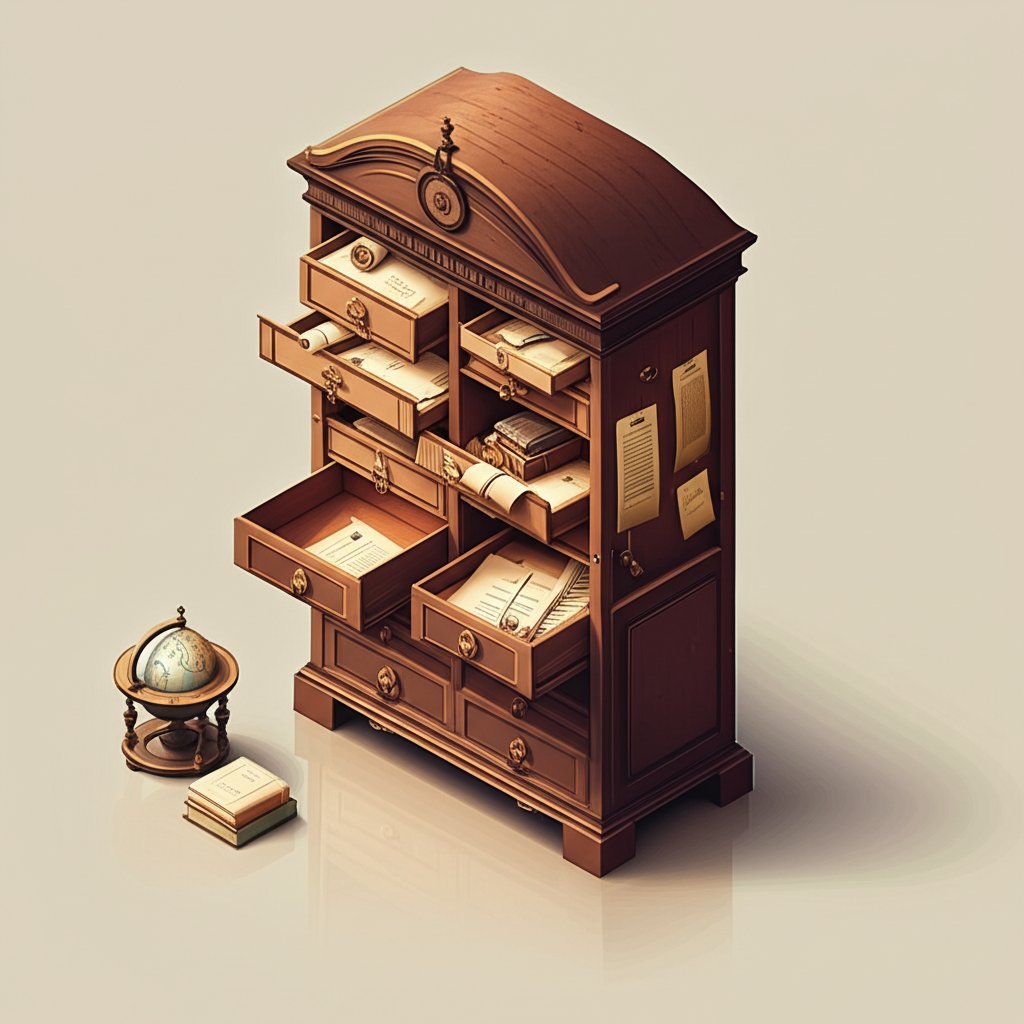
As Renaissance ideals spread across Europe, so did the concept of the sophisticated cabinet. Different nations developed their own distinct styles, often heavily influenced by royal patronage, available materials, and national aesthetics. This period, roughly from the 17th to the 18th century, witnessed cabinets reach their zenith as highly decorative, supremely skilled artisanal creations, firmly establishing their place in the grand narrative of furniture history.
France’s Baroque and Rococo Opulence: André-Charles Boulle and Royal Patronage
In France, the Baroque era, particularly under the extravagant patronage of Louis XIV, saw cabinets transform into expressions of unparalleled grandeur, luxury, and power. French cabinet makers, known as ébénistes (after the ebony wood they frequently used), became renowned for their exquisite craftsmanship.
André-Charles Boulle (1642–1732) became legendary for his intricate marquetry, known as “Boulle work.” This distinctive technique involved combining exotic woods with brass, tortoiseshell, pewter, and other materials, cut simultaneously to create dazzling, mirror-image patterns. His cabinets were not just furniture; they were sculptural objects, often featuring gilded bronze mounts (ormolu), classical figures, and monumental proportions, reflecting the pomp and circumstance of the French court.
French cabinets of this era evolved beyond upright display cases to include commodes (chests of drawers, often with serpentine fronts) and bureaux (desks with integrated storage), blending utility with extreme artistry. The emphasis remained on elaborate decoration, often featuring pictorial inlays, and sculptural forms, influencing cabinet design across Europe and becoming synonymous with royal luxury.
England’s Golden Age of Cabinet Makers: Chippendale, Hepplewhite, and Sheraton
The 18th century in England is often considered the “Golden Age” for English furniture and, by extension, cabinets. This era was dominated by a triumvirate of hugely influential cabinet makers whose pattern books disseminated their designs far and wide, shaping tastes and production for generations and leaving an indelible mark on cabinet history.
- Thomas Chippendale (c. 1718–1779): Arguably the most famous English cabinet maker, Chippendale published “The Gentleman and Cabinet-Maker’s Director” (1754), a comprehensive catalog of his designs. His cabinets often featured intricate carving, distinctively shaped feet (claw-and-ball or bracket feet), and a strong emphasis on mahogany as the primary wood. His cabinet design encompassed a range of styles, from rococo and Gothic to Chinese motifs, demonstrating a versatility that moved beyond mere functionality to embody the artistic aspirations of his wealthy patrons. His designs defined an era of English elegance.
- George Hepplewhite (d. 1786): Following Chippendale, Hepplewhite’s “The Cabinet-Maker and Upholsterer’s Guide” (published posthumously in 1788) advocated for highly elegant and lighter Neoclassical designs. His cabinets featured delicate forms, often employing satinwood or painted finishes, and incorporated subtle inlays with motifs like urns, swags, and classical figures. Hepplewhite’s cabinet design emphasized refinement and a more restrained beauty, moving away from the heavier Rococo forms.
- Thomas Sheraton (1751–1806): Sheraton’s “The Cabinet-Maker and Upholsterer’s Drawing-Book” (1791–1794) popularized slender, refined Neoclassical designs. His cabinets and sideboards were characterized by straight lines, contrasting veneers, and delicate reeding or fluting. Sheraton championed a sophisticated elegance that continued the Neoclassical trend, proving that
cabinet designcould be both functional and exquisitely graceful.
These master cabinet makers not only created beautiful pieces but also played a crucial role in documenting and standardizing furniture styles, profoundly impacting furniture history and the global perception of English craftsmanship. Their influence extended beyond Britain, shaping cabinet design throughout the Western world.
Dutch and German Contributions: Regional Cabinet Design Diversity
Beyond France and England, various European regions developed their own unique interpretations of cabinets, enriching the broader narrative of cabinet history.
- Dutch Cabinetry: Dutch cabinet makers excelled in intricate floral marquetry, often using exotic imported woods to create highly detailed pictorial scenes, sometimes mimicking still-life paintings. Their cabinets were typically heavy and substantial, reflecting the mercantile wealth of the Netherlands, and often featured bombé (swelling) fronts or serpentine shapes, exhibiting a robust opulence.
- German and Austrian Styles: German and Austrian cabinet design often featured strong architectural elements and dramatic scale in the Baroque period. Later, during the Biedermeier period (early 19th century), there was a shift towards simpler, more robust forms with an emphasis on local, light woods (like cherry and birch) and functional elegance. This reflected a rising middle-class aesthetic, prioritizing comfort, practicality, and understated beauty over aristocratic extravagance.
Each region contributed distinct materials, techniques, and artistic sensibilities to the evolving narrative of cabinet history, illustrating the diverse approaches to creating these essential storage pieces.
Industrialization and the Democratization of Cabinets (19th Century)
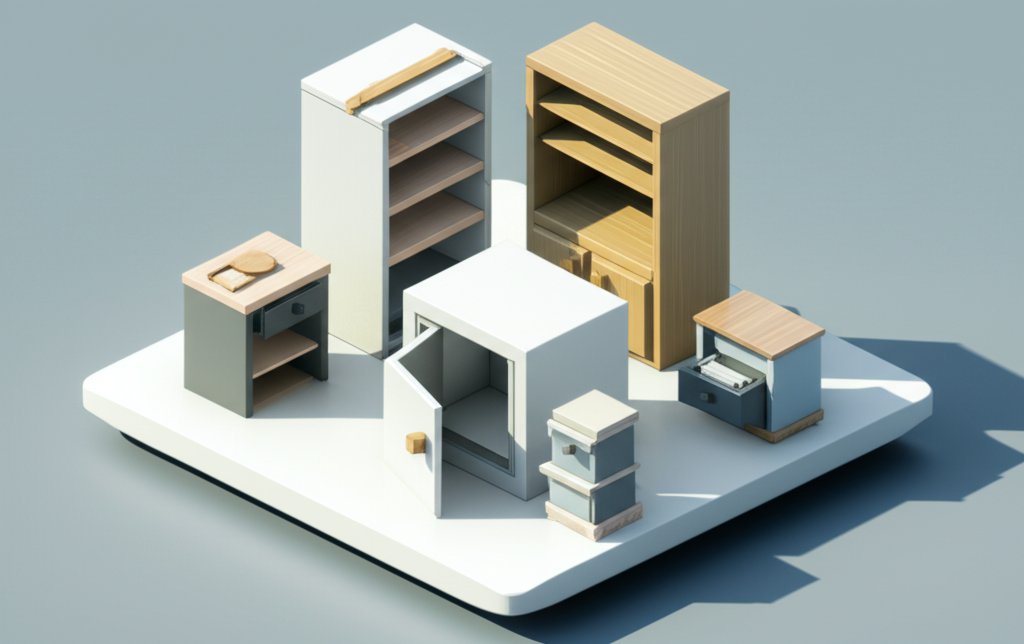
The mid-19th century ushered in a radical shift across all industries, and furniture history was no exception. The Industrial Revolution fundamentally transformed how cabinets were conceived, produced, and consumed, slowly moving them from exclusive artisan creations to accessible household necessities. This era marked a profound change in scale and accessibility for cabinets.
The Industrial Revolution: Mass Production Reshapes Furniture History
Before industrialization, every cabinet was essentially a bespoke piece, meticulously crafted by skilled cabinet makers in their individual workshops. This was a time-consuming and expensive process, limiting ownership of fine cabinets to the very wealthy. However, the advent of steam-powered machinery – circular saws, planers, lathes, and specialized carving machines – revolutionized production. Processes that once took days of skilled hand labor could now be completed in minutes or hours, with greater uniformity.
The ability to mass-produce standardized parts meant that cabinets could be assembled more quickly and efficiently. This led to a dramatic reduction in cost, making high-quality cabinets accessible to the burgeoning middle class. While early mass-produced cabinets sometimes sacrificed intricate detail for speed and consistency, the overall impact was a profound democratization of furniture, fundamentally changing the landscape of furniture history. Consumers could now choose from a wider variety of styles and configurations, ushering in an era of greater affordability and widespread availability, even if it meant a loss of the unique touch of the artisan cabinet maker.
Victorian Era Cabinets: Eclecticism, Functionality, and Factory Production
The Victorian era (roughly 1837-1901) was characterized by rapid industrial growth, increasing urbanization, and a strong emphasis on domesticity. Victorian cabinets reflect this complexity, typically being robust, heavily ornamented, and often eclectic in style, borrowing elements from Gothic, Rococo, and Neoclassical periods, sometimes all on one piece.
Factory production allowed for the proliferation of these styles, often employing veneers, machine carving, and turned elements to create elaborate appearances at a lower cost. Dark, rich woods like mahogany, walnut, and oak were favored. Functionality remained key, with cabinets providing ample storage for the ever-growing array of household items, from books and collectibles to clothing and china. Sideboards, display cabinets (often with glass fronts to show off prized possessions), and large wardrobes became ubiquitous, each showcasing the era’s taste for grandeur and often, a certain degree of clutter. This period of cabinet history saw a massive increase in the sheer volume and variety of cabinets available to the average home.
The Rise of Specialized Cabinets: Transforming Kitchen and Home Design
A particularly significant development during this period, and one that utterly transformed cabinet history, was the emergence of highly specialized cabinets, none more impactful than those for the kitchen. For centuries, kitchens were functional spaces with open shelving, freestanding cupboards, and perhaps a large pantry. However, as domestic science gained traction in the late 19th and early 20th centuries, there was a growing emphasis on efficiency, hygiene, and organized workflows within the home.
This societal shift directly led to the development of integrated kitchen cabinets. Early examples included the “Hoosier cabinet,” a freestanding, all-in-one unit that combined a work surface, flour sifter, spice racks, and various storage compartments. Introduced in the early 20th century, it became a symbol of modern kitchen efficiency. By the 1920s and 30s, built-in, modular kitchen cabinets became standard, especially after concepts like the “Frankfurt Kitchen” (1926) introduced standardized modular units designed for maximum ergonomic efficiency. These offered seamless countertops and a more cohesive aesthetic, laying the groundwork for the modern fitted kitchen we know today. Beyond the kitchen, specialized cabinets for bathrooms (vanities), offices (filing cabinets), and even garages began to proliferate, demonstrating the adaptability and universal appeal of this furniture form to every aspect of domestic and professional life. This marked a shift from freestanding items to built-in solutions, forever changing cabinet design.
Modernism and Beyond: Cabinet Design in the 20th and 21st Centuries
The 20th century witnessed a rapid succession of design movements, each leaving an indelible mark on cabinet design. From the minimalist ethos of Modernism to the innovative solutions of today, cabinets have continuously adapted to new lifestyles, materials, and technological possibilities, showcasing the dynamic nature of furniture history.
Arts and Crafts & Art Nouveau: A Return to Craftsmanship
As a reaction to the perceived excesses and dehumanizing effects of industrial mass production, the Arts and Crafts movement (late 19th/early 20th century) championed a return to handcraftsmanship, simple forms, and traditional materials. Cabinet makers during this period emphasized solid wood construction, visible joinery, and honest materials. Designs were often substantial and rectilinear, celebrating the natural beauty of wood, particularly oak. William Morris in England and Gustav Stickley in America were key figures who influenced cabinet design with their philosophy of “truth to materials” and functional beauty.
Art Nouveau, emerging roughly at the same time, offered a contrasting aesthetic. While also valuing craftsmanship, it embraced organic, flowing lines inspired by nature, asymmetrical forms, and new materials like wrought iron or stained glass integrated into cabinets. Though less about mass production, both movements highlighted the enduring importance of the individual cabinet maker and a conscious approach to cabinet design.
The Modernist Imperative: “Form Follows Function” and Bauhaus Cabinets
The early 20th century brought a radical departure from historical ornamentation and the eclecticism of the Victorian era. Architects and designers associated with movements like the Bauhaus school (Germany, 1919-1933) championed the principle of “form follows function.” This meant that the design of cabinets should be dictated by their practical purpose, emphasizing clean lines, geometric shapes, and a stark rejection of superfluous decoration.
New materials like plywood, steel tubing, and laminates were embraced for their strength, versatility, and ease of mass production. Modernist cabinets often featured flat surfaces, handle-less doors (or minimal, recessed handles), and integrated designs that aimed for a sleek, uncluttered aesthetic. The goal was to create functional, affordable furniture for the modern age. This shift marked a profound change in cabinet history, moving towards efficiency and industrial aesthetics rather than individual, ornate craftsmanship, and setting the stage for future minimalist cabinet design. Iconic designer Marcel Breuer’s steel tube furniture, for example, demonstrated a new approach to structural support and minimalist forms relevant to various furniture types.
Mid-Century Modern Cabinets: Scandinavian Simplicity and Modular Design
Following World War II, a booming economy, suburban expansion, and a demand for flexible, affordable housing fueled further innovation in cabinet design. The Mid-Century Modern movement (roughly 1945-1975) popularized modular cabinets, open shelving, and built-in units that could be easily adapted to various spaces and needs.
Scandinavian designers, in particular, emphasized natural materials, ergonomic design, and a harmonious blend of functionality with warmth and beauty. Cabinets from this era often featured tapered legs, clean joinery, and a focus on woods like teak, walnut, and rosewood. Designers like Hans Wegner, Arne Jacobsen, and Finn Juhl created iconic sideboards and storage units that showcased elegant proportions, simple forms, and meticulous craftsmanship. The emphasis was on creating bright, airy, and adaptable living spaces, where cabinets played a crucial role in defining structure and organization without overwhelming the room, a significant chapter in recent cabinet history. This era’s cabinet makers fused mass production capabilities with high-quality artistic sensibilities.
Contemporary Cabinetry: Smart Features, Sustainability, and Customization
Today, cabinets continue their rapid evolution, driven by environmental consciousness, technological advancements, and a desire for personalized living spaces. Contemporary cabinet design embraces a vast array of styles, from hyper-minimalist European flat-panel aesthetics to rustic farmhouse and industrial looks.
Sustainable materials are gaining paramount importance. Recycled wood, bamboo, rapidly renewable materials, recycled plastics, and low-VOC (volatile organic compound) finishes are becoming increasingly popular, reflecting a global shift towards eco-friendly furniture history.
Technologically, modern cabinets often integrate “smart” features: touch-to-open or push-to-open doors, illuminated interiors with motion sensors, integrated charging stations for devices, and even app-controlled storage systems for pantry management or security. Customization is also paramount, with homeowners seeking unique designs, bespoke dimensions, and a vast array of finishes, hardware, and internal organization systems to perfectly match their individual needs and aesthetic preferences. From sleek, handle-less kitchen cabinets with integrated appliances to sophisticated home office storage and luxurious bathroom vanities, modern cabinets offer unparalleled versatility, blending cutting-edge technology with timeless design principles to meet the diverse demands of 21st-century living, further cementing their dynamic role in furniture history.
The Enduring Craft: The Legacy of Cabinet Makers Today
Throughout this extensive journey through cabinet history, one constant remains: the paramount skill and artistry of cabinet makers. From the nameless artisans of ancient times to the celebrated masters of the Renaissance, the influential designers of Georgian England, and the innovative creators of today, these craftspeople have been the driving force behind the continuous evolution of cabinets and their impact on furniture history.
Preserving Tradition: Handcraftsmanship in a Digital Age
Historically, cabinet makers were highly respected artisans, often working closely with architects, interior designers, and wealthy patrons to create integrated furniture solutions for grand estates and public buildings. Their expertise encompassed not just woodworking but also an understanding of proportion, aesthetics, structural integrity, and the specific properties of various timbers. The tradition of meticulous handcraftsmanship, passed down through rigorous apprenticeships, ensured the continuity of complex techniques like marquetry, carving, veneering, and intricate joinery. These traditional skills are essential to understanding the very foundation of cabinet design.
Even in an age of mass production, the demand for custom and bespoke cabinets not only endures but thrives. Many contemporary cabinet makers dedicate themselves to preserving these ancient techniques, finding a niche in creating heirloom-quality pieces that speak to a timeless appreciation for artisanal skill. These craftspeople are the living embodiment of cabinet history, keeping its traditions alive.
The Modern Cabinet Maker: Blending Artistry with Technology
Today’s cabinet makers inhabit a fascinating space, combining traditional woodworking skills with cutting-edge modern technology. They often utilize sophisticated CAD (Computer-Aided Design) software for precise planning and visualization, allowing them to create intricate cabinet design concepts that can be easily modified and shared with clients. CNC (Computer Numerical Control) machinery is employed for precision cutting, routing, and drilling, drastically improving efficiency and accuracy, especially for complex or repetitive components.
However, the human touch remains irreplaceable. The modern cabinet maker still values the hand-finishing, meticulous sanding, expert assembly, and attention to detail that define truly bespoke furniture. They understand the nuances of wood grain, the art of selecting the perfect veneer, and the subtle ways in which different finishes can transform a piece. Their role is a blend of engineering, artistry, and dedication to craft, creating pieces that are both practical and artistic, both technologically advanced and warmly human.
The Value of Bespoke Cabinets: Crafting Future Furniture History
The work of contemporary cabinet makers ensures that the rich legacy of cabinetry remains vibrant and relevant. They continue to push the boundaries of cabinet design, exploring new materials, innovative construction methods, and advanced functionalities while never forgetting the foundational principles of beauty and utility. From highly customized kitchen installations that perfectly fit unique architectural spaces to exquisite freestanding display cabinets for art collectors, these artisans create legacy pieces that are both practical and beautiful investments.
The title of “cabinet maker” continues to symbolize a blend of engineering acumen, artistic vision, and unwavering dedication to craft. These individuals are not just building storage; they are shaping environments, enhancing daily life, and continuing to write the next chapters of furniture history through their enduring artistry in woodwork.
Conclusion
From the simple, utilitarian wooden chests of antiquity to the ornate masterpieces of the Renaissance, the influential and diverse designs of Georgian England, the mass-produced solutions of the Industrial Revolution, and the smart, sustainable systems of today – the history of cabinets is a profound testament to human ingenuity, evolving domesticity, and changing aesthetic tastes. These seemingly humble objects have mirrored societal changes, technological advancements, and shifts in artistic movements, making them a fascinating and invaluable lens through which to view the broader narrative of furniture history.
The journey of cabinets is far from over. As our living spaces continue to adapt to new needs, driven by evolving lifestyles, environmental concerns, and technological innovations, cabinet makers and designers will undoubtedly introduce further groundbreaking innovations, blending form, function, and timeless beauty. The next time you open a drawer or pull a door on any of your cabinets, take a moment to appreciate the centuries of artistry, engineering, and cultural evolution encapsulated within that single, indispensable piece of furniture. It is a silent witness to history, a canvas for design, and an indispensable part of our everyday lives.
FAQ
Q1: When did cabinets first appear in history as distinct furniture pieces?
A1: Cabinets as distinct, multi-functional pieces of furniture, designed for both display and intricate storage, first emerged during the late Renaissance period in Italy, specifically around the 15th and 16th centuries. Before this, storage was primarily in the form of chests or simple cupboards.
Q2: What was the primary purpose of early Renaissance cabinets?
A2: Initially, early Renaissance cabinets served primarily for showcasing and securely storing valuable collections, exotic artifacts, scientific instruments, and rare books. They were often referred to as “cabinets of curiosities” (Wunderkammern) or were found in private study rooms called “studiolos.” Their purpose was as much about displaying wealth and knowledge as it was about storage.
Q3: Who are some of the most famous historical cabinet makers?
A3: The 18th century in England was particularly notable for master cabinet makers such as Thomas Chippendale, George Hepplewhite, and Thomas Sheraton. Their influential design books and distinctive styles shaped furniture for generations. In France, André-Charles Boulle was renowned for his elaborate marquetry work under Louis XIV.
Q4: How did the Industrial Revolution change cabinet production and accessibility?
A4: The Industrial Revolution, beginning in the mid-19th century, revolutionized cabinet production through mechanization and standardized parts. This significantly reduced manufacturing costs and time, making cabinets more affordable and accessible to a much wider segment of the population, leading to widespread mass production and changing the course of furniture history.
Q5: What is a “cabinet of curiosities”?
A5: A “cabinet of curiosities” (or Wunderkammer in German) was a room or a large, multi-compartmented cabinet filled with diverse collections of natural history specimens (fossils, shells), scientific instruments, art objects, and ethnographic pieces. Popular from the 16th to 18th centuries, they served as precursors to modern museums and were central to the concept of early cabinet history and display.
Q6: How has the design aesthetic of cabinets evolved from historical periods to the present day?
A6: Cabinet design has evolved dramatically:










