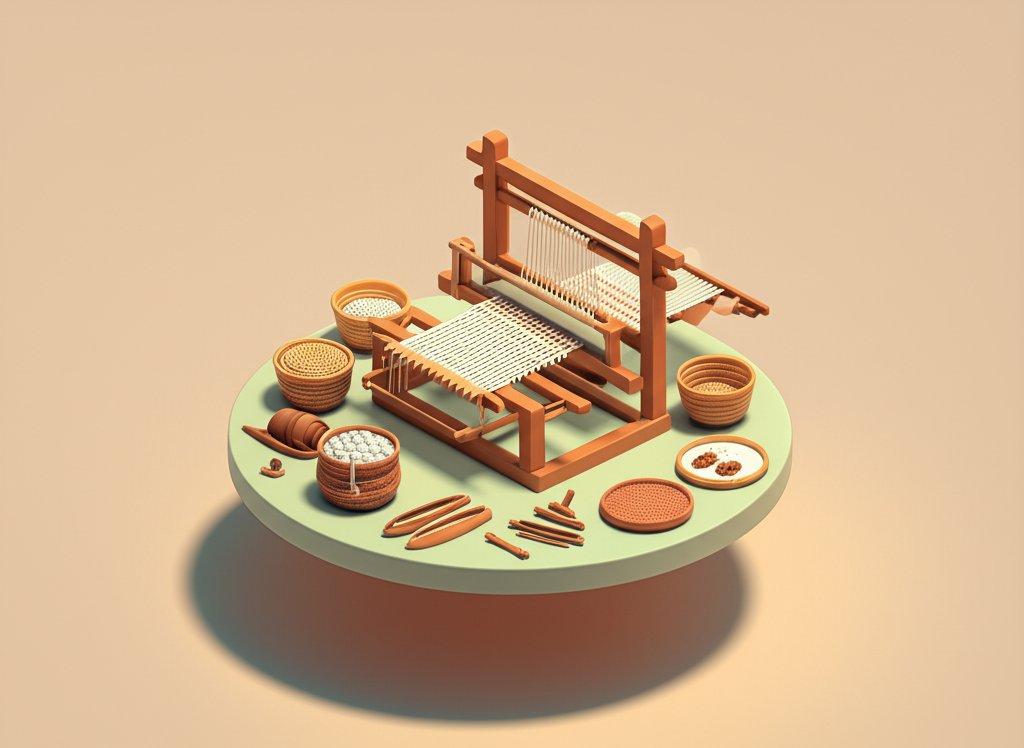
Embark on an extraordinary journey back in time to explore the fundamental question: where did weaving originate? This ancient craft, the ingenious act of interlacing threads to create fabric, is far more than just a technique; it’s a profound narrative of human innovation, adaptation, and artistic expression that spans tens of thousands of years. From the delicate imprints on clay to sophisticated modern machinery, the origins of weaving are deeply embedded in the very fabric of human civilization, shaping our clothing, shelter, culture, and identity across every continent.
In this comprehensive article, we will delve into the earliest archaeological evidence, trace the evolution of techniques and tools, and uncover the fascinating weaving history across diverse cultures. Prepare to unravel the facts about weaving that reveal its surprising antiquity and enduring legacy, illustrating why this timeless craft remains an integral part of human experience today.
As we explore the fascinating origins of weaving and its impact on clothing, it’s interesting to consider its connection to broader developments in garment creation, as seen in the history of dressmaking and how it evolved alongside this foundational textile art.
The Dawn of Threads: Pinpointing Where Weaving Originated
The quest to pinpoint precisely where did weaving originate leads us not to a single time or place, but to a mosaic of early human ingenuity. While the Neolithic era is often cited for the widespread adoption of textiles, compelling evidence now pushes the origins of weaving much further back into prehistory.
Pre-Neolithic Roots: Challenging the 12,000-Year Datum
For a long time, the Neolithic period, roughly 12,000 years ago, was considered the genesis of weaving, coinciding with the rise of agriculture and settled communities. However, groundbreaking archaeological projects, such as the “Origins of Weaving Project” at the University of Cambridge, have illuminated a much earlier timeline. Evidence suggests that the knowledge of manipulating plant fibers into textiles dates back to the Upper Paleolithic period, an astonishing 28,000 to 20,000 years ago.
This pre-Neolithic evidence includes:
- Imprints on Clay: Fragments of clay with clear impressions of woven materials found in various Eurasian Paleolithic sites. These aren’t preserved textiles themselves, but rather the ghostly outlines left upon pliable clay that later hardened, offering irrefutable proof of woven structures.
- Carvings on Figurines: Intricate woven designs adorning “Venus figurines” from the Upper Paleolithic period, suggesting that early humans not only knew how to weave but also understood its decorative potential and cultural significance. These patterns often depict elaborate clothing or adornments, indicating a sophisticated aesthetic sense.
- Fiber Processing Tools: While direct loom fragments from this era are rare due to decomposition, the presence of specific tools designed for processing plant fibers, such as awls or bone needles, hints at the preparatory stages necessary for weaving.
This earlier timeline suggests that the development of weaving wasn’t solely driven by agricultural needs, but possibly by the harsh cold climates of the Eurasian Paleolithic, where the need for warmth and protection spurred creativity in utilizing plant resources beyond food.
Neolithic Revolution: The Proliferation of Early Textiles
While the Upper Paleolithic provides glimpses of initial experimentation, it was undoubtedly during the Neolithic era that weaving became a more widespread and established practice. Around 12,000 to 8,000 years ago, as human societies transitioned from nomadic hunter-gatherer lifestyles to settled agricultural communities, the demand for textiles skyrocketed.
Key factors contributing to the explosion of weaving in the Neolithic include:
- Availability of Fibers: The domestication of plants like flax and cotton, and animals like sheep (for wool), provided a consistent and abundant supply of raw materials suitable for spinning and weaving.
- Sedentary Lifestyle: Settled communities allowed for the development and use of more stable and larger weaving apparatus, as well as the time needed to master and refine the craft.
- Increased Need: Textiles were crucial for clothing as protection from the elements, as containers for storing harvested crops, and as dwelling components like mats or simple coverings.
The Neolithic period saw weaving evolve from an emergent skill into a fundamental pillar of human survival and cultural expression, spreading rapidly across the globe.
Early Evidence and Archaeological Tapestries: Uncovering Weaving History
Archaeology plays a pivotal role in revealing the weaving history of our ancestors. Despite the perishable nature of textiles, various forms of evidence allow us to piece together the intricate story of this ancient craft.
Tools of the Trade: Spindle Whorls and Loom Fragments
The most common and durable archaeological finds related to weaving are not the fabrics themselves, but the tools used to create them.
- Spindle Whorls: These small, weighted discs, often made of clay, stone, or bone, are central to the spinning process – twisting fibers into usable thread. Their widespread discovery across Neolithic sites globally, including ancient China and Southeast Asia, indicates a vibrant and ubiquitous spinning and subsequent weaving tradition. The size and weight of whorls can even hint at the type of fiber being spun, offering facts about weaving materials.
- Inferred Looms: While complete looms rarely survive, indirect evidence points to their early forms. Depictions on ancient pottery or rock art, combined with the characteristics of surviving textile fragments, suggest the use of simple devices like:
- Band Looms: Probably the oldest type, used for narrow strips of fabric, often inferred from the existence of such bands. These were likely portable and very basic.
- Back-Strap Looms: As seen in depictions and still used by indigenous cultures today, one end of the warp is tied to a fixed object, and the other to the weaver’s waist, with tension created by leaning back. Such loom types were highly adaptable.
- Two-Beam Ground Looms: Found in the Late Neolithic of Mesopotamia and Syria, these involved pegging sticks into the ground, with warp threads stretched between two beams. This allowed for wider fabrics than back-strap looms.
Preserved Textiles: Rare Glimpses into Ancient Craft
Direct textile preservation is rare, typically occurring only under specific conditions like extreme dryness (deserts), waterlogging (bogs), or freezing. When found, these fragments offer invaluable direct insights into ancient weaving techniques, fiber types, and dye usage.
- Çatalhöyük (Turkey): Some of the earliest preserved textile fragments, dating back around 9,000 years, consisting of linen (flax) and possibly wool, have been found at this famous Neolithic settlement.
- The Andean Region: Due to the dry climate, exceptionally well-preserved textiles, some thousands of years old, have been unearthed, showcasing incredibly sophisticated weaving skills from ancient South American cultures.
- Salt Mines (Austria): Early Iron Age salt mines have preserved textile pieces (about 3,000 years old) due to the unique environment.
These discoveries provide tangible facts about weaving that reconstruct ancient lifeways and technological prowess.
Pictorial Proof: Weavers in Art and Depictions
Artistic representations offer another window into the origins of weaving and its cultural role.
- Venus Figurines: As mentioned, elaborate woven patterns on Paleolithic figurines hint at early textile use.
- Ancient Egypt: Tomb paintings frequently depict women (and sometimes men) engaged in spinning and weaving, illustrating various types of looms from horizontal ground looms to vertical warp-weighted looms, and detailing the stages of linen production.
- Classical Greece and Rome: Vase paintings and historical accounts describe women’s central role in textile production, with Penelope’s loom in the Odyssey being a famous literary example.
- Indigenous Cultures: Rock art and pottery in various regions illustrate traditional weaving techniques and the tools used, reflecting ongoing cultural practices.
These artistic records are crucial to understanding the societal context and gendered division of labor associated with weaving throughout history.
Global Threads: How Weaving History Unfolded Across Continents
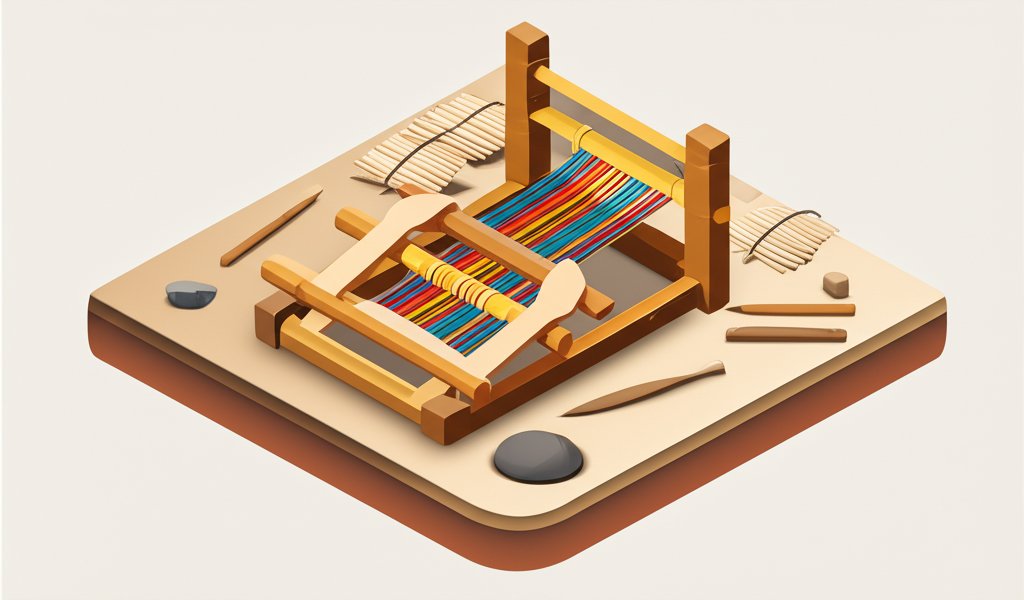
The origins of weaving may be multifaceted, but its development truly blossomed as diverse cultures adapted the craft to their unique environments, available materials, and aesthetic sensibilities, leading to a rich and varied weaving history around the world.
Mesopotamia and the Fertile Crescent: Birthplace of Early Looms
The cradle of civilization, Mesopotamia, and the broader Fertile Crescent region, played a crucial role in the development of textile technology. Evidence from the Late Neolithic suggests the widespread use of two-beam ground looms, which offered greater efficiency for producing wider fabrics than earlier methods. As agricultural societies grew, so did the demand for woven goods, making Mesopotamia a significant hub for textile innovation thousands of years ago.
Ancient Egypt: Linen’s Legacy and Advanced Techniques
In ancient Egypt, linen was king. Derived from flax plants, linen was prized for its breathability, strength, and ability to be finely woven, making it ideal for the hot Egyptian climate. The history of weaving in Egypt dates back over 7,000 years, with evidence of sophisticated techniques.
- Materials: Flax was cultivated extensively, and its processing—retting, scutching, and hackling—was a labor-intensive but highly refined skill.
- Looms: Egyptians utilized both horizontal ground looms (allowing multiple weavers to work simultaneously) and vertical warp-weighted looms, enabling the creation of larger and more complex textiles.
- Artistry: Egyptian weavers created incredibly fine linen with intricate patterns and motifs, used for clothing, shrouds (like those for mummies), and household items, showcasing remarkable skill and artistry.
East Asia’s Silk Road: The Mastery of Sericulture
China boasts one of the longest and most revered weaving histories, spanning over 5,000 years, largely centered around the cultivation of silk.
- Sericulture: The meticulous process of raising silkworms and harvesting their cocoons originated in China and was a closely guarded secret for millennia.
- Silk Weaving: Chinese artisans transformed delicate silk threads into shimmering fabrics of unparalleled luxury, often adorned with intricate designs, vibrant colors, and symbolic patterns. This became a cornerstone of Chinese economy and culture, leading to the establishment of the legendary Silk Road trade routes.
- Other Fibers: Beyond silk, China also wove hemp, ramie, and later cotton, adapting techniques to suit various fibers and purposes.
- Japan: While silk came from China, Japan developed its own unique weaving traditions, including the creation of delicate textiles from washi paper (mulberry bark), used for garments, screens, and decorative arts.
The Americas: Indigenous Innovation and Cultural Symbolism
Indigenous weaving traditions in the Americas are incredibly rich and diverse, reflecting deep cultural narratives and connections to the land.
- Inca Empire (South America): Women were the primary weavers, creating astounding textiles of cotton and alpaca/llama wool. They mastered various loom types, from simple back-strap looms to more complex devices, producing fabrics so fine they were considered among the best in the ancient world. Inca textiles were not just clothing but also records, symbols of status, and offerings to gods.
- Navajo (North America): The Navajo tribe, known for their iconic rugs and blankets, developed sophisticated techniques using wool. Each rug tells a story, incorporating traditional patterns, colors, and designs that reflect their cosmos and culture, making their weaving a profound form of artistic and spiritual expression.
- Mesoamerica: Ancient Mayan and Aztec cultures also had highly developed weaving traditions, using cotton, agave, and other plant fibers to create intricate textiles for clothing, ritual, and tribute.
European Traditions: From Tapestries to Tartans
Europe’s weaving history also developed distinct regional characteristics.
- Medieval Europe: Tapestry weaving flourished, especially from the 12th century onwards. Large, intricate woven hangings depicting historical events, religious narratives, and mythological scenes adorned castles and cathedrals, adding warmth, color, and storytelling to medieval architecture. Notable centers included Flanders and France.
- Scotland: Tartans, with their distinctive plaid patterns, emerged as a powerful symbol of clan identity and heritage, connecting communities through shared ancestry and traditional designs.
- Scandinavian Countries: Warp-weighted looms were common, producing resilient woolens for clothing and blankets, reflecting adaptations to colder climates.
West Africa: Kente Cloth and Symbolism
In West Africa, particularly among the Ashanti and Ewe peoples of Ghana, Kente cloth stands as a vibrant example of weaving’s cultural significance.
- Symbolism: Each color and pattern in Kente cloth carries specific meanings, representing proverbs, historical events, philosophical concepts, and social status. It is traditionally woven from silk and cotton strips, often reserved for royalty and important ceremonies.
- Looms: Narrow strip looms, operated by men, are characteristic of Kente production, with individual strips carefully sewn together to create larger cloths.
Facts About Weaving: Key Principles and Enduring Impact
Understanding where did weaving originate and its global trajectory reveals a fascinating set of universal principles and enduring impacts. Let’s delve into some fundamental facts about weaving.
The Basic Mechanics: Warp and Weft
At its core, weaving is a simple yet infinitely complex process of interlacing two distinct sets of threads:
- Warp: The longitudinal threads, held under tension on a loom, running parallel to each other.
- Weft (or Filling): The transverse threads, woven over and under the warp threads, crossing from side to side.
This basic over-and-under motion creates a stable and coherent fabric structure. Variations in this interlacing (e.g., plain weave, twill weave, satin weave) lead to different textures, strengths, and appearances, showcasing the ingenuity developed throughout weaving history.
Materials Through Time: From Plant Fibers to Luxury Yarns
The choice of material has always been dictated by local availability, climate, and desired properties.
- Early Fibers (Paleolithic/Neolithic): Wild plant fibers like nettle, flax (linen), reed, grass, bark, and even animal sinew were likely the first to be exploited.
- Domesticated Plant Fibers: Cotton became dominant in warmer climates (Indus Valley, Americas), while flax excelled in temperate regions (Egypt, Europe).
- Animal Fibers: Wool (sheep, alpaca, llama, goat) was crucial in cooler regions and high-altitude areas like the Andes. Silk (from silkworms) emerged as a luxury fiber in East Asia.
- Exotic Fibers: Other unique materials include raffia (Africa), paper (Japan), and even metals interwoven into religious or royal garments.
The adaptability of weaving to diverse materials is a key fact about weaving’s enduring success.
The Loom’s Evolution: From Simple Frames to Complex Machines
The loom, the weaver’s essential tool, has undergone remarkable evolution:
- Prehistoric/Ancient Looms: From the simplest band and back-strap looms to horizontal ground looms and vertical warp-weighted looms, maximizing human strength and reach.
- Medieval Looms: Treadle looms allowed weavers to operate warp threads with their feet, freeing hands for shuttle manipulation, increasing efficiency.
- Industrial Revolution: The invention of the power loom in the late 18th century mechanized weaving, dramatically increasing production and forever changing manufacturing.
- Modern Looms: Today, advanced computer-controlled looms can create incredibly complex patterns at high speeds, yet the fundamental principle of interlacing warp and weft remains unchanged since the origins of weaving.
Societal Role: Utility, Status, and Art
Throughout weaving history, textiles have served multiple, intertwined functions:
- Utility: Providing essential clothing for protection, blankets for warmth, mats for shelter, and containers for storage.
- Economic Backbone: Textiles were often a primary form of wealth, trade, and tribute, shaping economies and trade routes (e.g., the Silk Road).
- Social Status and Identity: Fine textiles, intricate patterns, and rare materials often denoted high social rank, power, or tribal affiliation. Royal garments, ceremonial cloths, and military uniforms all leveraged weaving to communicate status.
- Artistic Expression: Beyond mere utility, weaving became a powerful medium for artistic expression, storytelling, and the preservation of cultural narratives, from ancient tapestries to contemporary art installations.
The Lasting Legacy: Why the Origins of Weaving Matter Today
Understanding where did weaving originate is not merely an academic exercise; it offers profound insights into human creativity, resourcefulness, and the interconnectedness of cultures. The origins of weaving highlight our innate drive to transform raw materials into functional and beautiful objects, a trait that continues to define human innovation.
Today, the legacy of weaving is visible everywhere: from the clothes we wear, to the carpets in our homes, and the technical textiles used in aerospace and medicine. While industrial looms dominate mass production, traditional weaving techniques are experiencing a resurgence, celebrated for their artistry, sustainability, and connection to cultural heritage. Artisans worldwide keep ancient methods alive, not only preserving invaluable weaving history but also demonstrating the timeless appeal and versatility of this foundational craft.
The story of weaving is a testament to the enduring human spirit – a continuous thread connecting our deepest past to our present, and weaving a path into the future.
FAQ Section
Q1: How did weaving originate and evolve over time?
A1: Weaving originated much earlier than previously thought, with evidence dating back to the Upper Paleolithic period (28,000-20,000 years ago) through imprints on clay and decorated figurines. It became more widespread during the Neolithic era (around 12,000 years ago) with the advent of agriculture and settled communities. Over millennia, weaving evolved from simple hand techniques using basic looms like back-straps or ground looms, through cultural specializations in different regions (e.g., linen in Egypt, silk in China), to mechanized power looms during the Industrial Revolution, and finally to modern computer-controlled systems.
Q2: What are some of the earliest known facts about weaving?
A2: Some of the earliest known facts about weaving include:
Q3: What role did women play in weaving history?
A3: Throughout much of weaving history, women were the primary practitioners of the craft. They were responsible for collecting fibers, spinning yarn, and weaving fabrics for clothing, household goods, and sometimes ritual items. Ancient artwork from cultures like Egypt and Greece frequently depicts women at looms or with spindles. In societies like the Inca Empire, women’s weaving skills were highly revered, demonstrating a significant gendered division of labor that empowered women through their mastery of this essential craft.
Q4: What materials were first used in weaving?
A4: The very first materials used in weaving were likely wild plant fibers readily available in the environment, such as nettle, flax, reeds, grasses, and bark. As human societies evolved and domesticated plants and animals, cultivated flax (linen), cotton, and animal fibers like wool (from sheep, alpaca, or llama) became predominant, leading to more refined and diverse textiles.
Q5: How have looms evolved since the origins of weaving?
A5: Looms have evolved significantly since the origins of weaving. Starting with simple hand-operated tools like band looms and back-strap looms (where warp tension was often controlled by the weaver’s body), they progressed to more stable structures like two-beam ground looms and vertical warp-weighted looms. The introduction of treadle looms in medieval times allowed weavers to use their feet, increasing efficiency. The most dramatic shift came with the power loom during the Industrial Revolution, mechanizing the process. Today, highly advanced electronic and computer-controlled looms operate at incredible speeds, yet all retaining the fundamental principle of interlacing warp and weft threads.
Q6: Why is understanding the origins of weaving important today?
A6: Understanding the origins of weaving is crucial as it reveals a foundational aspect of human ingenuity and cultural development. It highlights how our ancestors solved practical problems (clothing, shelter) with creative solutions, laid the groundwork for complex technologies, and expressed their identities and beliefs through tangible art. Today, it informs sustainable practices, inspires contemporary designers, preserves cultural heritage, and reminds us of the value of craftsmanship in an increasingly automated world.










