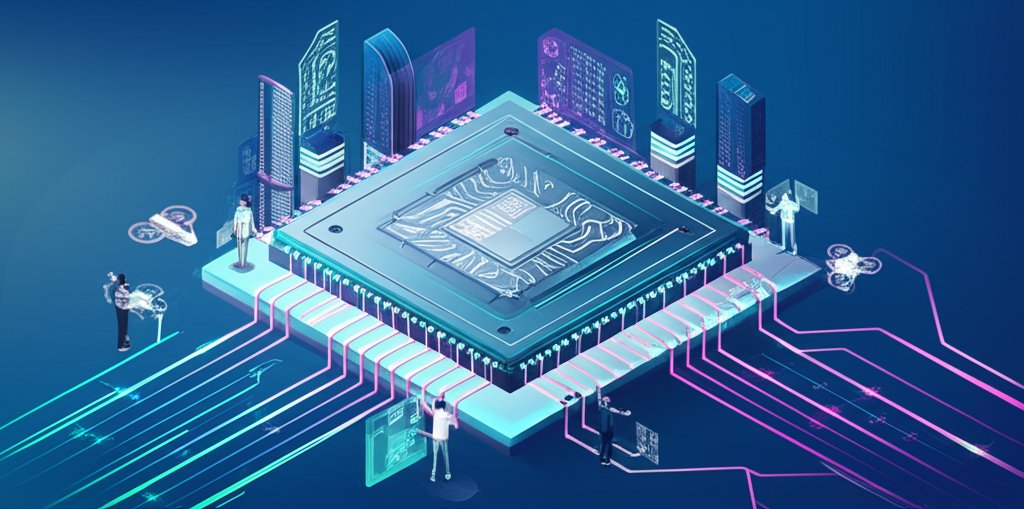
Imagine a world where the impossible becomes routine. Where personalized AI companions anticipate your needs, medical breakthroughs eradicate previously incurable diseases, and sustainable solutions reverse environmental damage with unprecedented efficiency. This isn’t a distant dream; it’s the near future, meticulously sculpted by the rapid evolution of cutting edge technology. These aren’t mere incremental improvements; they are seismic shifts, revolutionary breakthroughs that are fundamentally redefining what’s achievable, reshaping every industry, economy, and aspect of our daily existence at an electrifying pace.
If you’re eager to grasp the technologies that aren’t just making headlines today but are poised to utterly dominate tomorrow, you’ve arrived at the definitive guide. This article will not only demystify what constitutes truly cutting-edge technology but also explain its profound, universal importance. We’ll embark on a deep dive into the hottest future trends that are already beginning to forge our new world, explore their extensive impacts, and address the critical challenges they present. Prepare to explore the innovations that are propelling humanity forward into an era of boundless, transformative possibilities.
Defining Cutting-Edge Technology: The Vanguard of Innovation

At its core, cutting-edge technology represents the absolute forefront of scientific and engineering progress. It encompasses the most advanced, innovative, and transformative solutions currently available or in the final stages of development, relentlessly pushing the boundaries of what was previously considered achievable. Often referred to as “leading-edge” or “state-of-the-art,” it’s the “bleeding edge” – where new knowledge meets practical application, creating unparalleled capabilities.
What Truly Qualifies as Cutting-Edge?
Several distinct characteristics differentiate true cutting-edge technology from mere technological advancements:
Understanding what makes technology truly “cutting-edge” requires a look at the historical perspective of how far we’ve come, and there are plenty of interesting facts about technology that highlight just how rapidly innovation continues to unfold.
- Novelty and Originality: It introduces entirely new concepts, methods, or applications that haven’t existed before, or it represents such a radical improvement over existing solutions that it constitutes a new paradigm. This isn’t simply a faster chip; it’s a fundamentally new architecture for computing.
- Transformative and Disruptive Potential: Cutting-edge tech doesn’t just optimize existing processes; it revolutionizes them. It possesses the power to fundamentally alter entire industries, create entirely new markets, and solve complex problems with previously unimaginable efficiency and effectiveness, often disrupting established business models.
- Pushes Boundaries of Current Capabilities: Such technology typically requires overcoming significant scientific or engineering challenges, pushing the limits of current knowledge, materials, and resources. It is born from ambitious, often high-risk, research and development efforts.
- High Impact and Scalability: While often originating in specialized niches or research labs, truly cutting-edge technology possesses the inherent potential for widespread adoption across multiple sectors and can deliver significant, measurable benefits on a massive scale once matured.
- Future-Oriented and Rapidly Evolving: Many cutting-edge technologies are in their early adoption phases or even still in advanced development, signaling a clear trajectory toward future dominance. They are characterized by a relentless pace of updates, improvements, and new versions, demanding continuous adaptation.
Why Cutting-Edge Technology Matters for Everyone (And Every Business)
Understanding and strategically engaging with cutting-edge technology isn’t just a concern for tech giants or scientific institutions; it’s a critical imperative for businesses of all sizes, governments, and individuals across the globe.
- Economic Growth and Competitive Advantage: For businesses, embracing cutting-edge technology is vital for staying competitive, driving unparalleled efficiency, creating innovative products and services, and unlocking entirely new revenue streams. Nations that champion and foster such innovation invariably lead global economies and define future prosperity.
- Solving Grand Global Challenges: From the existential threats of climate change and the demand for sustainable energy to global healthcare crises, food security, and resource scarcity, cutting-edge technology offers the most powerful and often the only tools to tackle humanity’s most pressing and complex problems.
- Societal Advancement and Enhanced Quality of Life: These innovations profoundly enhance the human condition. They improve quality of life, streamline communication, expand access to education and healthcare, democratize information, and create novel forms of entertainment and human connection.
- Job Creation and Workforce Evolution: While automation driven by cutting-edge technology may displace some traditional roles, it simultaneously creates entirely new industries, professions, and demands for specialized skills. This fosters unprecedented economic dynamism and opens new, exciting career paths, emphasizing the importance of lifelong learning.
- Strategic National Security and Global Influence: Governments around the world leverage advancements in cutting-edge technology for defense, intelligence gathering, protecting critical infrastructure, and maintaining a technological edge that is crucial for geopolitical stability and influence on the global stage.
In essence, cutting edge technology is far more than a luxury or a niche interest; it is the indispensable engine of progress, a strategic imperative for collective prosperity, and the foundational blueprint for our shared collective future.
The Landscape of Revolutionary Cutting-Edge Technology Trends

The canvas of innovation is in a state of constant, exhilarating flux. However, certain trends stand out for their profound transformative potential, rapid evolution, and capacity to redefine how we interact with the world. Here are the hottest cutting-edge technology trends poised to reshape the coming decade and beyond:
To truly understand the scope of these advancements, it’s crucial to stay informed about emerging industry trends, which offer valuable insights into the trajectory of cutting-edge technologies.
Generative AI & Advanced Machine Learning: The Dawn of Intelligent Creation
While Artificial Intelligence (AI) has been a field of study for decades, recent monumental breakthroughs, particularly in Generative AI and advanced deep learning, have propelled it to the absolute forefront of cutting-edge technology. This isn’t merely about processing data; it’s about the unprecedented ability to create new, original content.
- What it is: Generative AI employs sophisticated algorithms, often in the form of Large Language Models (LLMs) or Diffusion Models, to create new content—including text, images, audio, video, and even intricate code—that is often indistinguishable from human-created output. Beyond this, Advanced Machine Learning encompasses self-improving algorithms, reinforcement learning (where AI learns through trial and error), and AI systems capable of learning effectively from minimal data.
- Why it’s cutting-edge: The shift from AI merely analyzing to AI actively creating unlocks unprecedented levels of automation, hyper-personalization, and augmented human creativity. It’s fundamentally transforming industries from entertainment, art, and marketing to scientific research, drug discovery, and software development.
- Future Trajectories:
- Hyper-Personalization at Scale: AI will generate bespoke experiences, content, and products tailored to every individual, from education to digital commerce.
- Autonomous Agent Networks: Collaborative AI systems will work together to achieve complex goals, managing workflows and decision-making with minimal human oversight.
- AI for Accelerated Scientific Discovery: AI will dramatically speed up drug discovery, advanced materials design, complex climate modeling, and fundamental physics research.
- Multimodal AI: Systems will seamlessly understand and generate across diverse data types—text, image, sound, video, and even sensory input—simultaneously, leading to more intuitive human-computer interaction.
- Real-World Applications & Impact:
- Content Creation: AI-powered tools like GPT-4, Midjourney, and Stable Diffusion are assisting writers, designers, musicians, and filmmakers in accelerating their creative processes.
- Customer Service: Advanced chatbots and virtual assistants provide more natural, intelligent, and effective customer interactions, resolving complex queries.
- Software Development: AI is generating code, debugging, automating testing, and assisting in comprehensive project management, boosting developer productivity.
- Healthcare: AI is designing novel molecules, diagnosing diseases from medical images with superior accuracy, and personalizing treatment plans for individual patients.
Quantum Computing: Unlocking Unprecedented Computational Power
Quantum computing represents a radical paradigm shift from classical computing, promising the ability to solve problems currently intractable for even the most powerful supercomputers, opening up new frontiers in countless scientific and industrial domains.
- What it is: Unlike classical computers that store information in bits (0 or 1), quantum computers utilize “qubits.” These qubits leverage quantum-mechanical phenomena like superposition (existing in multiple states simultaneously) and entanglement (where qubits become linked and share the same fate, regardless of distance). This allows quantum computers to process vast amounts of information in parallel, leading to exponential increases in computational power for highly specific tasks.
- Why it’s cutting-edge: Still in its nascent stages, the potential of quantum computing is truly enormous. It promises to unlock solutions to currently unsolvable problems in materials science, drug discovery, secure cryptography, complex optimization, and advanced artificial intelligence, far beyond the capabilities of today’s technology.
- Future Trajectories:
- Quantum Supremacy Milestones: Ongoing demonstrations of quantum computers solving problems that classical computers cannot realistically solve within a human lifetime will expand.
- Error Correction Improvements: Overcoming the inherent instability and fragility of qubits to build more robust, reliable, and scalable quantum machines is a critical area of development.
- Hybrid Quantum-Classical Algorithms: Combining specialized quantum processors with powerful classical computers will leverage the unique strengths of both to tackle complex real-world problems.
- Real-World Applications & Impact:
- Drug Discovery & Materials Science: Simulating complex molecular interactions with unprecedented accuracy to design new pharmaceuticals, catalysts, and novel materials (e.g., superconductors, highly efficient batteries).
- Financial Modeling: Optimizing intricate financial portfolios, performing more accurate risk assessments, and developing sophisticated trading strategies.
- Cryptography: While potentially capable of breaking current public-key encryption methods, quantum computing is also driving the development of new, inherently unhackable quantum encryption techniques.
- Logistics & Optimization: Solving complex logistical problems for global supply chains, transportation networks, and resource allocation.
Extended Reality (XR): Merging Digital and Physical Realities
Extended Reality (XR) is an expansive umbrella term that encompasses Virtual Reality (VR), Augmented Reality (AR), and Mixed Reality (MR), all designed to blend the digital and physical worlds to create incredibly immersive and interactive experiences. This cutting-edge technology is poised to fundamentally change how we interact with digital information.
- What it is:
- Virtual Reality (VR): Completely immerses users in a simulated digital environment, effectively shutting out the physical world. (e.g., Meta Quest headsets for gaming, training simulations, virtual meetings).
- Augmented Reality (AR): Overlays digital information, images, or experiences onto the real world, enhancing what you already see. (e.g., Snapchat filters, Pokémon Go, industrial maintenance applications displaying real-time data on machinery, IKEA Place for furniture placement).
- Mixed Reality (MR): Blends real and virtual objects, allowing them to interact and coexist in real-time within a shared environment, where digital objects respond to the physical world. (e.g., Microsoft HoloLens for collaborative 3D design, surgical planning, or remote assistance).
- Why it’s cutting-edge: XR is rapidly moving beyond niche gaming applications to revolutionize how we work, learn, communicate, and consume information. It promises far more intuitive, deeply engaging, and spatially aware experiences than traditional flat screens, blurring the lines between our physical and digital lives.
- Future Trajectories:
- Pervasive AR: Lightweight, stylish AR glasses evolving into a common, primary computational interface, seamlessly overlaying digital information onto daily life.
- Tactile and Olfactory Feedback: The integration of haptic gloves and smell generators to add realistic touch and scent to XR experiences, enabling full sensory immersion.
- The Metaverse: The development of interconnected, persistent virtual worlds that serve as platforms for social interaction, commerce, work, education, and entertainment, with user-generated content and economic systems.
- Neural Interfaces: Breakthroughs in technologies that allow for direct brain-computer interaction with XR environments, enabling control through thought.
- Real-World Applications & Impact:
- Training & Simulation: Highly realistic and safe simulations for surgeons, pilots, industrial workers, and military personnel, reducing risks and accelerating skill acquisition.
- Education: Immersive virtual classrooms, interactive learning experiences, and virtual field trips that bring subjects to life.
- Design & Engineering: Collaborative 3D design reviews, rapid prototyping, and remote product visualization for global teams.
- Healthcare: VR for pain management, anxiety disorders, PTSD therapy, and surgical planning; AR for guided procedures.
- Retail & E-commerce: Virtual try-ons for clothing and accessories, interactive product visualization in your home, and immersive shopping experiences.
Sustainable Technology (Green Tech): Innovating for a Resilient Future
As environmental concerns escalate and the urgency of climate action grows, technology focused on sustainability, often termed “Green Tech” or “Clean Tech,” is becoming one of the most critically important areas of cutting edge technology. It harnesses innovation to address climate change, mitigate resource depletion, and combat pollution on a global scale.
- What it is: This expansive category includes a vast array of technologies designed to drastically reduce humanity’s environmental footprint. Examples range from advanced renewable energy generation (solar, wind, geothermal) and groundbreaking energy storage solutions (next-gen batteries) to innovative carbon capture and utilization (CCU) systems, sustainable agriculture technologies, waste-to-energy solutions, eco-friendly materials science, and intelligent smart grids.
- Why it’s cutting-edge: Green tech is not merely about minimizing harm; it’s about actively reversing environmental damage, creating circular economies, and building resilient systems. These innovations are absolutely critical for global survival and prosperity, driving massive investment, accelerated research, and profound policy shifts worldwide.
- Future Trajectories:
- AI-Optimized Energy Grids: Intelligent systems will use AI to precisely manage fluctuating renewable energy sources and consumption patterns for maximum efficiency, stability, and cost-effectiveness.
- Direct Air Capture (DAC) at Scale: Technologies that literally pull carbon dioxide directly from the atmosphere will become more efficient and economically viable, operating at a scale significant enough to impact global carbon levels.
- Bio-fabrication & Lab-Grown Materials: The production of goods, food components (e.g., cultivated meat), and even construction materials with minimal environmental footprint, using biological processes instead of traditional resource-intensive methods.
- Advanced Battery and Energy Storage: Breakthroughs in solid-state batteries, flow batteries, and other long-duration storage solutions will enable seamless integration of intermittent renewables and power electric transportation.
- Precision Agriculture: Drones, IoT sensors, and AI will optimize crop yields, drastically reduce water usage, minimize pesticide and fertilizer application, and enhance food production efficiency.
- Real-World Applications & Impact:
- Energy Independence: Nations increasingly relying on diverse, locally generated renewable energy sources, reducing dependency on fossil fuels.
- Drastically Reduced Waste: Innovative recycling, upcycling, and waste-to-resource conversion processes minimize landfill waste and create valuable new products.
- Cleaner Air & Water: Technologies that actively remove pollutants from air and water sources, improving public health and ecosystem vitality.
- Sustainable Manufacturing: Industries adopting cleaner production methods, closed-loop systems, and environmentally friendly materials throughout their supply chains.
Advanced Robotics & Autonomous Systems: Intelligent Agents Everywhere
Robots are rapidly evolving beyond simple, repetitive industrial tasks to become intelligent, adaptable, and increasingly integrated into nearly every facet of our daily lives, making this a pivotal area for cutting-edge technology.
- What it is: This category encompasses a wide array of sophisticated machines, including advanced humanoid robots, collaborative robots (cobots) designed to work safely alongside humans, fully autonomous vehicles (cars, trucks, drones, ships), highly specialized delivery robots, and AI-powered automation systems capable of complex decision-making, navigation, and manipulation in unstructured, dynamic environments.
- Why it’s cutting-edge: Breakthroughs in AI, sophisticated sensor technology (vision, lidar), advanced materials, and mechanical engineering are enabling robots to perceive, reason, and act with unprecedented autonomy, dexterity, and versatility. This shift moves robots from being merely programmed tools to becoming truly intelligent, adaptable agents.
- Future Trajectories:
- General-Purpose Humanoid Robots: The development of robots capable of performing a wide range of complex tasks in diverse human-centric environments, from domestic chores to industrial assistance.
- Swarm Robotics: Large numbers of small, relatively simple robots working collaboratively to achieve highly complex goals that would be impossible for individual units, such as environmental monitoring or disaster response.
- Hyper-Personalized Logistics: Autonomous fleets, drone networks, and ground robots delivering goods with unmatched speed, precision, and efficiency, transforming supply chains and last-mile delivery.
- Robots in Service Industries: From hospitality and retail to elder care and personal assistance, robots will increasingly perform new social roles, augmenting human capabilities and filling labor gaps.
- Real-World Applications & Impact:
- Manufacturing: Flexible automation, increased productivity, enhanced precision, and significantly safer working conditions in factories and production facilities.
- Logistics & Delivery: Fully automated warehouses, sorting centers, and last-mile delivery services utilizing drones and ground-based autonomous vehicles.
- Healthcare: Surgical robots performing delicate procedures, patient monitoring systems, assistive devices for the elderly and disabled, and automated pharmacy dispensions.
- Exploration: Robots operating in hazardous, inaccessible, or extreme environments, such as deep-sea exploration, space missions, nuclear cleanup, and disaster zones.
Biotechnology & Gene Editing: Reshaping Life Itself
Biotechnology, particularly in revolutionary areas like gene editing and synthetic biology, stands as one of the most profound and ethically significant cutting-edge technology domains, promising to revolutionize medicine, agriculture, and our fundamental understanding of life itself.
- What it is: This field includes groundbreaking tools such as CRISPR-Cas9 for precise and efficient gene editing, personalized medicine (tailoring treatments based on an individual’s unique genetic makeup and biomarkers), advanced mRNA vaccine technology, synthetic biology (the engineering of new biological parts, devices, and systems), and sophisticated diagnostics powered by AI and genomic sequencing.
- Why it’s cutting-edge: These technologies offer the unprecedented ability to directly manipulate biological systems, potentially curing genetic diseases, developing novel therapies for cancer and autoimmune disorders, enhancing food production, and even engineering new life forms for specific purposes. The ethical implications and scientific potential are equally immense.
- Future Trajectories:
- In Vivo Gene Editing: Directly altering genes within a living human body to treat or prevent a vast array of diseases, moving beyond ex vivo (outside the body) approaches.
- CRISPR for Disease Prevention: Proactively modifying genes to prevent inherited conditions from ever manifesting, potentially at earlier stages of life.
- Organoids & ‘Organs-on-a-Chip’: The growth of miniature, lab-grown organs and intricate tissue systems for highly accurate drug testing, disease modeling, and eventually, regenerative medicine and transplantation.
- Personalized Microbiome Engineering: Tailoring an individual’s gut bacteria and other microbial communities to improve overall health, treat metabolic disorders, and enhance immune function.
- Advanced Bio-sensors: Real-time, non-invasive health monitoring devices and implants capable of detecting early signs of disease or predicting health events with remarkable accuracy.
- Real-World Applications & Impact:
- Curing Genetic Diseases: Potential treatments and cures for previously incurable conditions like cystic fibrosis, Huntington’s disease, sickle cell anemia, and certain forms of blindness.
- Cancer Therapies: Revolutionary immunotherapies like CAR T-cell therapy, which engineer a patient’s own immune cells to combat cancer more effectively.
- Agriculture: Creating disease-resistant crops, enhancing nutritional content, and improving yields to address global food security challenges.
- Pandemic Response: Rapid development and deployment of highly effective vaccines and diagnostics, as powerfully demonstrated by mRNA vaccines for COVID-19.
Edge Computing & Distributed Cloud: Real-time Intelligence, Everywhere
As the Internet of Things (IoT) proliferates exponentially and the demand for instantaneous, real-time data processing grows, Edge Computing and Distributed Cloud have emerged as absolutely essential and increasingly prominent areas of cutting-edge technology.
- What it is:
- Edge Computing: Involves processing data closer to its source of generation (at the “edge” of the network), rather than sending all data to a centralized cloud server. This means smart devices, sensors, and local micro-servers can analyze data instantly where it’s collected.
- Distributed Cloud: Extends public cloud services to different geographical locations, bringing cloud functionalities (compute, storage, databases, networking) physically closer to where they are needed, whether on-premises data centers, other remote data centers, or directly at the network edge.
- Why it’s cutting-edge: These architectural approaches dramatically reduce network latency, conserve precious bandwidth, enhance data security, and crucially enable real-time decision-making – a requirement for autonomous systems, industrial IoT, immersive XR experiences, and time-sensitive applications.
- Future Trajectories:
- Hyper-Distributed Architectures: Complex networks of interconnected edge devices, local mini-clouds, and central mega-clouds forming a seamless, intelligent computing fabric that spans the globe.
- AI at the Edge: Smaller, highly efficient, and specialized AI models running directly on edge devices, allowing for instant insights, predictive analytics, and autonomous actions without constant cloud dependency.
- 5G/6G Integration: Next-generation wireless networks (5G and the upcoming 6G) providing the unprecedented bandwidth, ultra-low latency, and massive connectivity necessary for widespread, robust edge computing adoption and deployment.
- Federated Learning: A privacy-preserving machine learning approach where AI models are collaboratively trained across many edge devices without needing to share raw, sensitive data centrally, enhancing data sovereignty and security.
- Real-World Applications & Impact:
- Autonomous Vehicles: Instantaneous processing of vast amounts of sensor data (cameras, lidar, radar) for navigation, obstacle detection, and critical safety decisions in milliseconds.
- Smart Factories & Industry 4.0: Real-time machine monitoring, predictive maintenance, automated quality control, and optimized production lines to minimize downtime and maximize efficiency.
- Smart Cities: Managing traffic flows, optimizing public safety systems (e.g., smart surveillance), controlling energy usage, and improving waste management with immediate data insights.
- Immersive XR: Delivering high-fidelity virtual and augmented reality experiences with minimal lag, ensuring smooth interaction and preventing motion sickness.
Next-Gen Cybersecurity: Protecting the Digital Frontier
With every groundbreaking technological advance, new vulnerabilities inevitably emerge, creating a continuous arms race between innovators and malicious actors. Therefore, cutting-edge technology in cybersecurity is absolutely crucial for protecting our increasingly digital, interconnected world from sophisticated and evolving threats.
- What it is: This dynamic area encompasses a range of advanced defensive and offensive technologies, including AI and machine learning-powered threat detection and automated response systems (XDR, SOAR), quantum-resistant cryptography (post-quantum cryptography), Zero Trust security models (assuming no entity can be trusted by default), behavioral biometrics for continuous authentication, and advanced methods for protecting data in highly distributed and cloud-native environments (e.g., homomorphic encryption).
- Why it’s cutting-edge: As cybercriminals, nation-states, and malicious actors increasingly leverage AI, automation, and even quantum computing in their attacks, cybersecurity defenses must evolve at an even faster pace. Innovation in cybersecurity is a constant, critical arms race, essential for maintaining trust, stability, and resilience in global digital infrastructure.
- Future Trajectories:
- AI-Native Security: Security systems that not only utilize AI for detection but are fundamentally designed around AI for proactive defense, autonomous threat hunting, and self-healing networks.
- Post-Quantum Cryptography (PQC): The development and standardization of new encryption algorithms that are provably resistant to attacks from future, large-scale quantum computers, safeguarding data for decades to come.
- Zero-Trust Everything: A pervasive security framework that dictates continuous verification for every user, device, and application attempting to access resources, regardless of their location or prior authentication, eliminating implicit trust.
- Behavioral Analytics for Identity: Utilizing unique user behaviors (e.g., typing patterns, mouse movements, gait) for continuous, passive authentication and anomaly detection, moving beyond static passwords.
- Real-World Applications & Impact:
- Enhanced Data Protection: Robustly securing sensitive personal, corporate, governmental, and critical infrastructure information from breaches and manipulation.
- Resilient Infrastructure: Protecting vital systems like power grids, financial networks, transportation systems, and healthcare facilities from crippling cyberattacks.
- Combating Cybercrime: More effective tools and strategies against ransomware, phishing, supply chain attacks, state-sponsored espionage, and intellectual property theft.
- Privacy Preservation: Technologies allowing for data analysis and collaboration while strictly maintaining user anonymity and safeguarding sensitive information.
Profound Impact and Critical Implications of Cutting-Edge Technology
The widespread adoption and integration of cutting-edge technology bring with them profound, multifaceted impacts that extend far beyond mere technical specifications. These innovations are radically reshaping our world, demanding careful consideration and










